

eLive Premium Auction 434
·
Los 8169
eLive Premium Auction 434
·
Los 8169
eLive Premium Auction 434
·
Los 8169
17.11.2025
13:00 Uhr
GRIECHISCHE MÜNZEN
·
BITHYNIA
MYRLEIA. Æs, 4. Jahrhundert v. Chr.;
Versteigert
17.11.2025
13:00 Uhr
GRIECHISCHE MÜNZEN
·
BITHYNIA
MYRLEIA. Æs, 4. Jahrhundert v. Chr.;
Schätzpreis : 25 €
Zuschlag
48 €
Meine Notizen
Beschreibung
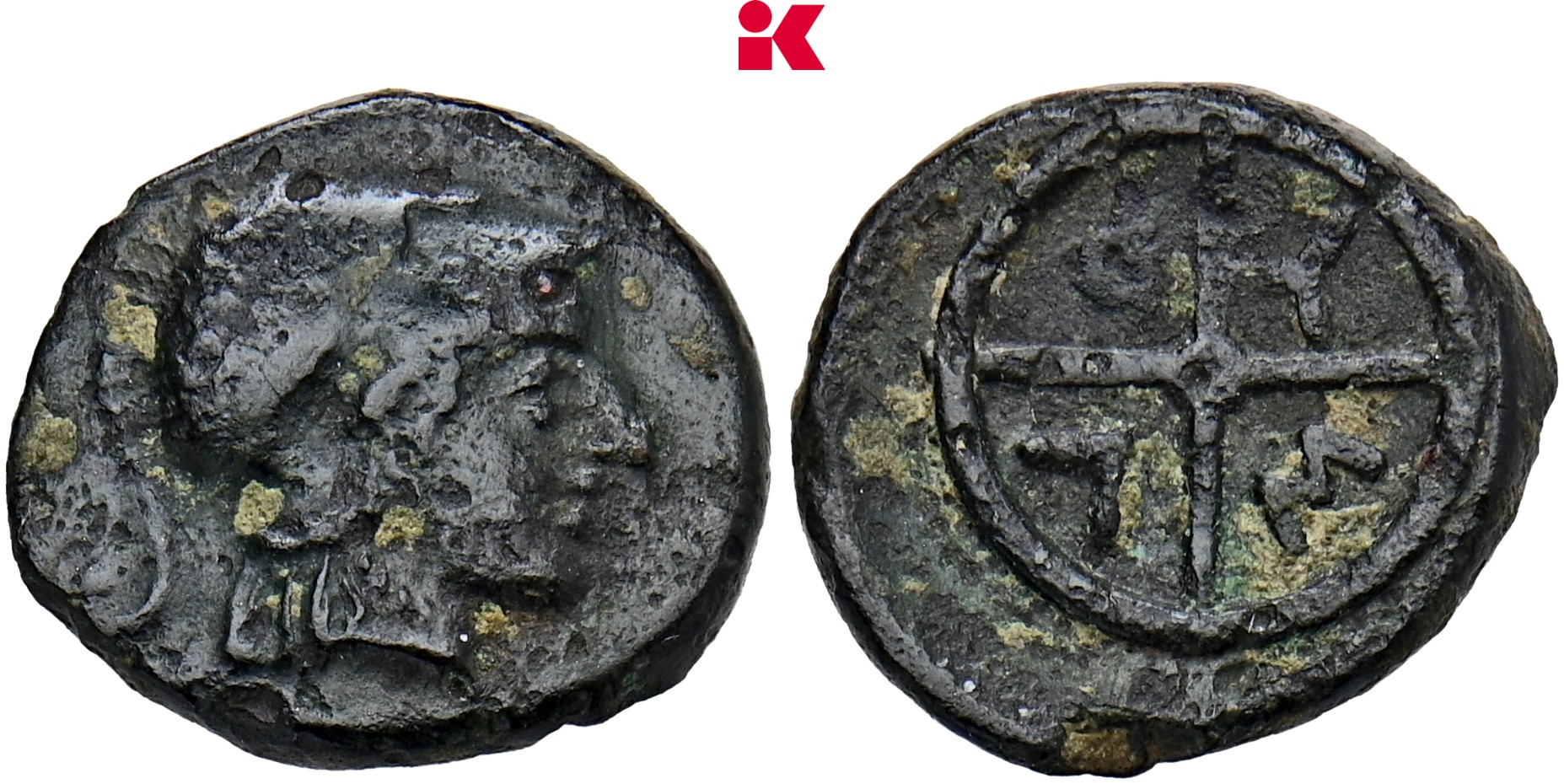
MYRLEIA. Æs, 4. Jahrhundert v. Chr.; 1,60 g Athenakopf r. mit korinthischem Helm//Rad. Waddington, Rec. gen. 1 (unter Apameia); Hoover 573.
RR Fast sehr schön
Durch eine Stele bezeugt, wird das sogenannte Koinon der Athena Ilias das erste Mal für das 4. Jahrhundert v. Chr. fassbar. Es handelte sich dabei um einen Verbund von poleis, der primär für die Ausrichtung der Festspiele (Panathenäen) zugunsten der Athena Ilias in Ilion zusammengetreten war, im weiteren Verlauf jedoch auch diplomatischen Einfluss auf politische Entscheidungsprozesse nehmen konnte. Obwohl der geografische Mittelpunkt des Koinons die Troas war, waren auch Städte wie Kalchedon und Myrleia Mitglieder. Die Wahl des Aversmotives verwundert vor diesem Hintergrund nicht. Siehe hierzu Chin, Marcus, Some Observations on Koina and Monetary Economy in Hellenistic Asia Minor, Gephyra 25, 2023, S. 189-221 bes. S. 191.
Um 202 v. Chr. wurde die Stadt Myrleia von Prusias I. in Anlehnung an den Namen seiner Ehefrau Apama in Apameia umbenannt, siehe Head, Historia Numorum S. 510.
A stela confirms that the so-called Koinon of Athena Ilias was first documented in the 4th century BC. Originally an association of poleis that came together to organize the Panathenaea festival for Athena Ilias in Ilion, it later had diplomatic influence on political decision-making processes. While the Koinon’s geographical center was the Troad, cities such as Calchedon and Myrleia were also members. Given this, the choice of obverse motif is not surprising. Cf. Chin, Marcus, Some Observations on Koina and Monetary Economy in Hellenistic Asia Minor, Gephyra 25, 2023, pp. 189-221 spec. p. 191.
Around 202 BC, Prusias I renamed the city of Myrleia Apameia in reference to his wife, Apama; see Head, Historia Numorum, p. 510.
RR Fast sehr schön
Durch eine Stele bezeugt, wird das sogenannte Koinon der Athena Ilias das erste Mal für das 4. Jahrhundert v. Chr. fassbar. Es handelte sich dabei um einen Verbund von poleis, der primär für die Ausrichtung der Festspiele (Panathenäen) zugunsten der Athena Ilias in Ilion zusammengetreten war, im weiteren Verlauf jedoch auch diplomatischen Einfluss auf politische Entscheidungsprozesse nehmen konnte. Obwohl der geografische Mittelpunkt des Koinons die Troas war, waren auch Städte wie Kalchedon und Myrleia Mitglieder. Die Wahl des Aversmotives verwundert vor diesem Hintergrund nicht. Siehe hierzu Chin, Marcus, Some Observations on Koina and Monetary Economy in Hellenistic Asia Minor, Gephyra 25, 2023, S. 189-221 bes. S. 191.
Um 202 v. Chr. wurde die Stadt Myrleia von Prusias I. in Anlehnung an den Namen seiner Ehefrau Apama in Apameia umbenannt, siehe Head, Historia Numorum S. 510.
A stela confirms that the so-called Koinon of Athena Ilias was first documented in the 4th century BC. Originally an association of poleis that came together to organize the Panathenaea festival for Athena Ilias in Ilion, it later had diplomatic influence on political decision-making processes. While the Koinon’s geographical center was the Troad, cities such as Calchedon and Myrleia were also members. Given this, the choice of obverse motif is not surprising. Cf. Chin, Marcus, Some Observations on Koina and Monetary Economy in Hellenistic Asia Minor, Gephyra 25, 2023, pp. 189-221 spec. p. 191.
Around 202 BC, Prusias I renamed the city of Myrleia Apameia in reference to his wife, Apama; see Head, Historia Numorum, p. 510.
Mehr anzeigen
Weniger anzeigen
Informationen zu Los 8169 aus eLive Premium Auction 434
| Nominal/Jahr | Æs, 4. Jahrhundert v. Chr.; |
|---|---|
| Seltenheit | RR |
| Gewicht | 1,60 g |
| Zitate | Waddington, Rec. gen. 1 (unter Apameia); Hoover 573 |