

eLive Premium Auction 434
·
Los 8131
eLive Premium Auction 434
·
Los 8131
eLive Premium Auction 434
·
Los 8131
17.11.2025
13:00 Uhr
GRIECHISCHE MÜNZEN
·
PONTUS
TRAPEZOUS. AR-Drachme, 4. Jahrhundert v. Chr.,
Versteigert
17.11.2025
13:00 Uhr
GRIECHISCHE MÜNZEN
·
PONTUS
TRAPEZOUS. AR-Drachme, 4. Jahrhundert v. Chr.,
Schätzpreis : 1.000 €
Zuschlag
6.750 €
Meine Notizen
Beschreibung
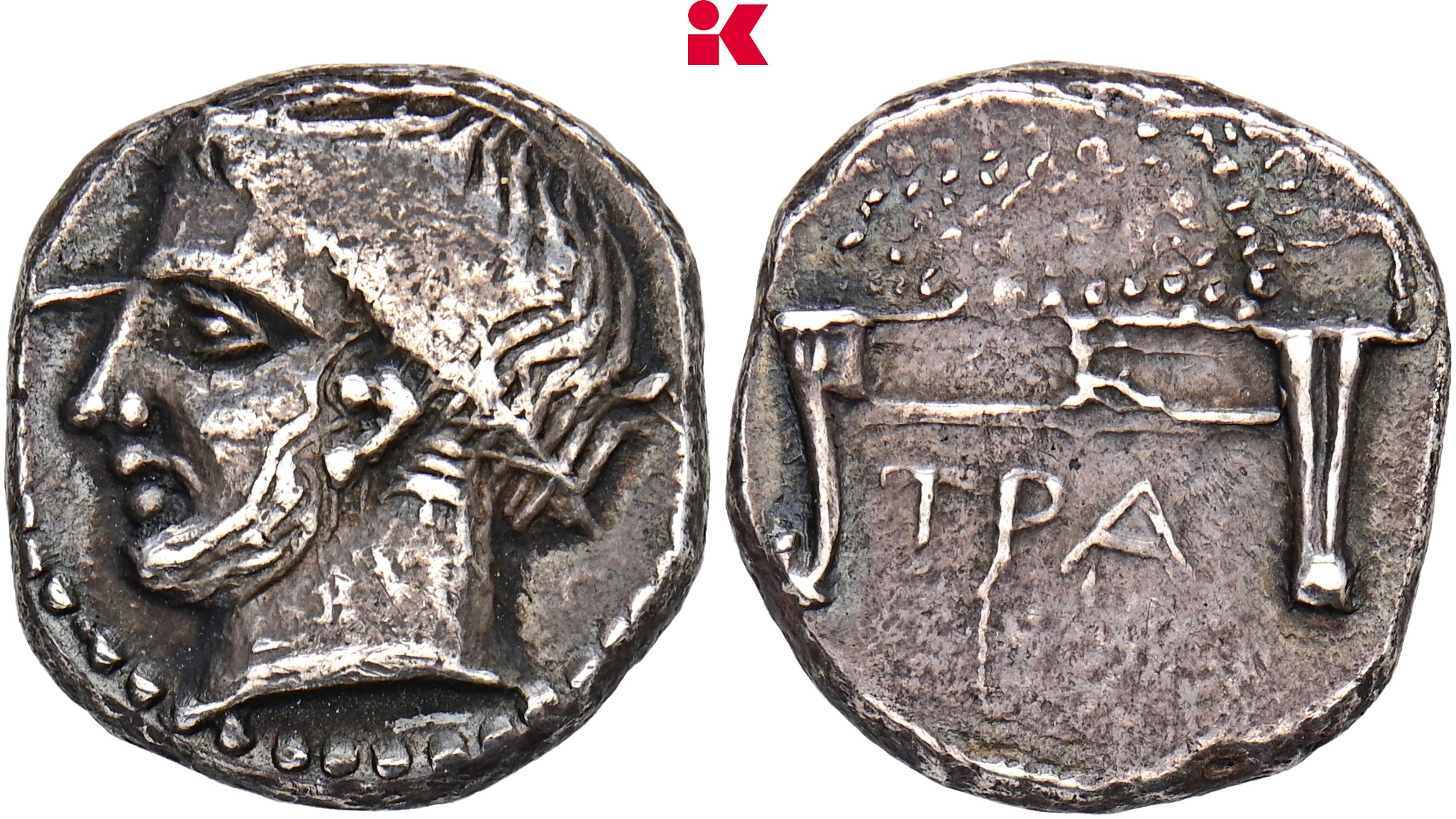
TRAPEZOUS. Õ-Drachme, 4. Jahrhundert v. Chr., 6,08 g Männlicher Kopf (Hermes ?) l.//Tisch, darauf Weintraube (oder Münzen ?). SNG BM 1294; SNG v. Aulock 6782 (dies Exemplar); Hoover 305.
Von großer Seltenheit. Feine Tönung, Prägeschwächen, sehr schön
Exemplar der Sammlung Hans von Aulock; der Auktion Bank Leu 33, Zürich 1983, Nr. 348; der Sammlung Jonathan P. Rosen, Auktion Münzen und Medaillen AG 72, Basel 1987, Nr. 612 und der Auktion Lanz 106, München 2001, Nr. 108.
Trapezous war auf einem kleinen Plateau (engl. tableland) an der Küste von Pontos angesiedelt. Dieser Lage, so Barclay Head, verdankte die polis auch ihren Namen, der sich vom griechischen τραπεξα (= Tisch, Wechslertisch oder Bank) ableitet. Der auf dem Revers dargestellte Tisch fungiert hier also als sprechendes Wappen. Die auf dem Tisch befindlichen Objekte werden in der Literatur entweder als Weintraube (Hoover 305) oder als Münzen (SNG BM 1294) angesprochen. Oliver Hoover glaubt, neben den runden Strukturen die Verästelung der Traube zu erkennen und folgt damit der schon von Head vorgetragenen Interpretation der Trauben als Allusion für die Fruchtbarkeit der geografischen Umgebung. Münzen ließen sich hingegen wiederum über den griechischen Wortstamm und dessen Bedeutung als Wechslertisch interpretieren.
Der Aversdarstellung kann sich interpretatorisch über die Geschichte der Stadtgründung genähert werden. Die erste Besiedlung ging dabei von Arkadien aus, wo bereits eine Stadt gleichen Namens existierte, die ihre Benennung jedoch einem Gründungsheros verdankte. Vor diesem Hintergrund darf auch die oben erwähnte These Heads, die geografische Lage habe die Namensfindung beeinflusst, hinterfragt werden. Arkadien gilt mythologisch als Geburtsregion des Gottes Hermes. Die Identifikation des Kopfes auf der Münze als Hermes basiert folglich auf der Annahme, dass die Stadtgründer ihre kultischen Vorstellungen in der neuen Siedlung implementierten. Die ikonografische Darstellung auf der Münze, die jedweder Attribuierung entbehrt und zudem einen bärtigen Kopf zeigt, macht eine Interpretation als Hermes allerdings unwahrscheinlich. Siehe hierzu Head, Barclay, On Some Rare Greek Coins Recently Acquired by the British Museum, NC 11, 1871, S. 166-168 bes. S. 167; Hoover, Oliver, Handbook of the Coins of the Northern and Central Anatolia, Lancaster/London 2012, S. 97; von Mosch, Hans-Christoph, Hadrian's "Sandalenlöser" - der Hermes des Lysipp auf Münzen aus Trapezous, Amastris und Markianopolis, JNG 63, 2013, S. 93-149 bes. 96-97.
Trapezous was located on a small tableland on the coast of Pontos. According to Barclay Head, the city’s name is derived from the Greek word τραπέξα (meaning table, exchange table or bench) and refers to its location. The table depicted on the reverse thus functions as a coat of arms. The objects on the table are referred to in the literature as either grapes (Hoover 305) or coins (SNG BM 1294). In addition to the round structures, Oliver Hoover sees grape branches in this motif, thus following Head’s interpretation of grapes as an allusion to the fertility of the geographical environment. Coins, on the other hand, could be interpreted to refer to an exchange table, which would also fit the Greek word. The obverse depiction can be interpreted in relation to the history of the town’s foundation. The first settlers came from Arcadia, where a city with the same name already existed – but it was named after a founding hero. Against this background, Head’s aforementioned suggestion that the geographical location influenced the choice of name can be called into question. In mythology, Arcadia is regarded as the birthplace of the god Hermes. Therefore, identifying the head on the coin as Hermes is based on the assumption that the city founders incorporated their religious beliefs into the new settlement. However, the iconographic representation on the coin lacks any attributes and shows a bearded head, making an interpretation as Hermes unlikely. Cf. Head, Barclay, On Some Rare Greek Coins Recently Acquired by the British Museum, NC 11, 1871. pp. 166-168 spec. p. 167; Hoover, Oliver, Handbook of the Coins of the Northern and Central Anatolia, Lancaster/London 2012, p. 97; von Mosch, Hans-Christoph, Hadrian’s “Sandalenlöser” - der Hermes des Lysipp auf Münzen aus Trapezous, Amastris und Markianopolis, JNG 63, 2013, pp. 93-149 spec. 96-97.
Von großer Seltenheit. Feine Tönung, Prägeschwächen, sehr schön
Exemplar der Sammlung Hans von Aulock; der Auktion Bank Leu 33, Zürich 1983, Nr. 348; der Sammlung Jonathan P. Rosen, Auktion Münzen und Medaillen AG 72, Basel 1987, Nr. 612 und der Auktion Lanz 106, München 2001, Nr. 108.
Trapezous war auf einem kleinen Plateau (engl. tableland) an der Küste von Pontos angesiedelt. Dieser Lage, so Barclay Head, verdankte die polis auch ihren Namen, der sich vom griechischen τραπεξα (= Tisch, Wechslertisch oder Bank) ableitet. Der auf dem Revers dargestellte Tisch fungiert hier also als sprechendes Wappen. Die auf dem Tisch befindlichen Objekte werden in der Literatur entweder als Weintraube (Hoover 305) oder als Münzen (SNG BM 1294) angesprochen. Oliver Hoover glaubt, neben den runden Strukturen die Verästelung der Traube zu erkennen und folgt damit der schon von Head vorgetragenen Interpretation der Trauben als Allusion für die Fruchtbarkeit der geografischen Umgebung. Münzen ließen sich hingegen wiederum über den griechischen Wortstamm und dessen Bedeutung als Wechslertisch interpretieren.
Der Aversdarstellung kann sich interpretatorisch über die Geschichte der Stadtgründung genähert werden. Die erste Besiedlung ging dabei von Arkadien aus, wo bereits eine Stadt gleichen Namens existierte, die ihre Benennung jedoch einem Gründungsheros verdankte. Vor diesem Hintergrund darf auch die oben erwähnte These Heads, die geografische Lage habe die Namensfindung beeinflusst, hinterfragt werden. Arkadien gilt mythologisch als Geburtsregion des Gottes Hermes. Die Identifikation des Kopfes auf der Münze als Hermes basiert folglich auf der Annahme, dass die Stadtgründer ihre kultischen Vorstellungen in der neuen Siedlung implementierten. Die ikonografische Darstellung auf der Münze, die jedweder Attribuierung entbehrt und zudem einen bärtigen Kopf zeigt, macht eine Interpretation als Hermes allerdings unwahrscheinlich. Siehe hierzu Head, Barclay, On Some Rare Greek Coins Recently Acquired by the British Museum, NC 11, 1871, S. 166-168 bes. S. 167; Hoover, Oliver, Handbook of the Coins of the Northern and Central Anatolia, Lancaster/London 2012, S. 97; von Mosch, Hans-Christoph, Hadrian's "Sandalenlöser" - der Hermes des Lysipp auf Münzen aus Trapezous, Amastris und Markianopolis, JNG 63, 2013, S. 93-149 bes. 96-97.
Trapezous was located on a small tableland on the coast of Pontos. According to Barclay Head, the city’s name is derived from the Greek word τραπέξα (meaning table, exchange table or bench) and refers to its location. The table depicted on the reverse thus functions as a coat of arms. The objects on the table are referred to in the literature as either grapes (Hoover 305) or coins (SNG BM 1294). In addition to the round structures, Oliver Hoover sees grape branches in this motif, thus following Head’s interpretation of grapes as an allusion to the fertility of the geographical environment. Coins, on the other hand, could be interpreted to refer to an exchange table, which would also fit the Greek word. The obverse depiction can be interpreted in relation to the history of the town’s foundation. The first settlers came from Arcadia, where a city with the same name already existed – but it was named after a founding hero. Against this background, Head’s aforementioned suggestion that the geographical location influenced the choice of name can be called into question. In mythology, Arcadia is regarded as the birthplace of the god Hermes. Therefore, identifying the head on the coin as Hermes is based on the assumption that the city founders incorporated their religious beliefs into the new settlement. However, the iconographic representation on the coin lacks any attributes and shows a bearded head, making an interpretation as Hermes unlikely. Cf. Head, Barclay, On Some Rare Greek Coins Recently Acquired by the British Museum, NC 11, 1871. pp. 166-168 spec. p. 167; Hoover, Oliver, Handbook of the Coins of the Northern and Central Anatolia, Lancaster/London 2012, p. 97; von Mosch, Hans-Christoph, Hadrian’s “Sandalenlöser” - der Hermes des Lysipp auf Münzen aus Trapezous, Amastris und Markianopolis, JNG 63, 2013, pp. 93-149 spec. 96-97.
Mehr anzeigen
Weniger anzeigen
Informationen zu Los 8131 aus eLive Premium Auction 434
| Nominal/Jahr | AR-Drachme, 4. Jahrhundert v. Chr., |
|---|---|
| Seltenheit | Von großer Seltenheit. |
| Gewicht | 6,08 g |
| Zitate | SNG BM 1294; SNG v. Aulock 6782 (dies Exemplar); Hoover 305 |