

eLive Premium Auction 434
·
Los 8354
eLive Premium Auction 434
·
Los 8354
eLive Premium Auction 434
·
Los 8354
17.11.2025
13:00 Uhr
GRIECHISCHE MÜNZEN
·
TROAS
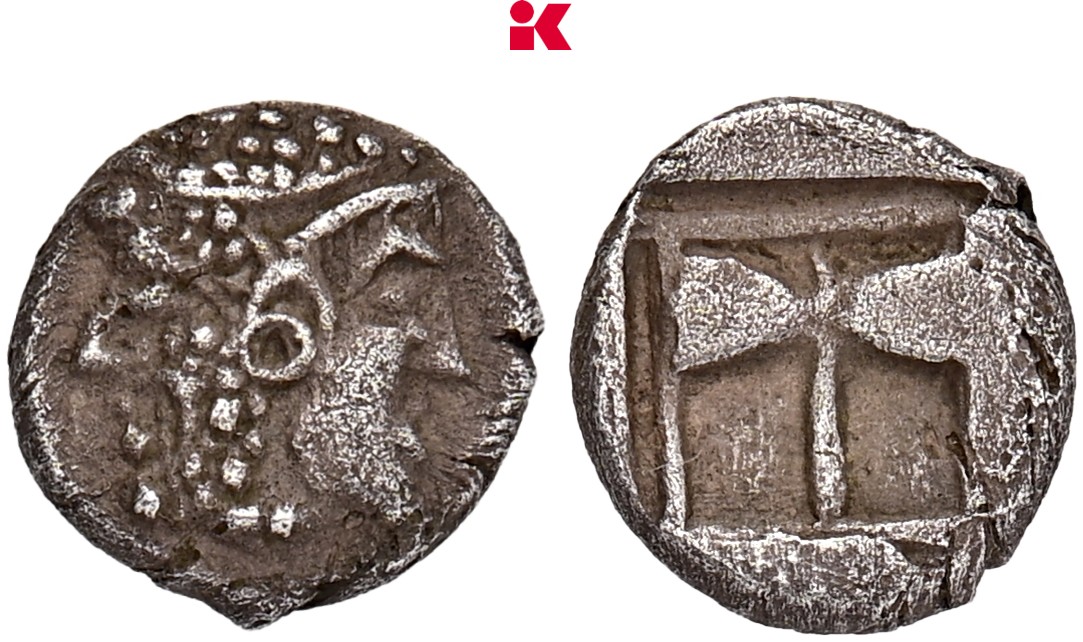
TENEDOS. AR-Obol, 470/450 v. Chr.;
Versteigert
17.11.2025
13:00 Uhr
GRIECHISCHE MÜNZEN
·
TROAS
TENEDOS. AR-Obol, 470/450 v. Chr.;
Schätzpreis : 50 €
Zuschlag
180 €
Meine Notizen
Beschreibung
TENEDOS. Õ-Obol, 470/450 v. Chr.; 0,57 g Janusförmiger Kopf (bärtiger Männerkopf l., Frauenkopf r.)//In Incusum: Doppelaxt in Linienquadrat. SNG Cop. -; SNG v. Aulock -; Hoover 381 var. (Köpfe gespiegelt); Corpus Nummorum Online cn type 13124.
RR Min. korrodiert, sehr schön
Exemplar der Auktion Bankhaus Aufhäuser 12, München 1996, Nr. 112.
Die Doppelaxt ist das Parasemon von Tenedos. Sowohl die Münzen der Stadt als auch andere (archäologische) Quellen verwenden immer wieder dieses Symbol. So überliefert Plutarch, dass die Bewohner von Tenedos eine Axt in ihrem Schatzhaus in Delphi verwahrten, während Pausanias von Axt-Opferungen durch die Tenedier berichtet. Die wohl eindrucksvollste Überlieferung, deren Realitätsgehalt jedoch hinterfragt werden kann, verdanken wir indes Stephanus Byzantius, wenn er im Sinne der aristotelischen Schule berichtet, auf Tenedos habe ein König das Gesetz erlassen, wer zweier Ehebrecher habhaft werde, solle beide mit einer Axt richten. Als nun der Sohn des Königs des Ehebruchs bezichtigt wurde, scheute der König nicht davor zurück, dieses Gesetz anzuwenden. Münzen, die auf der einen Seite einen zweigesichtigen Kopf und auf der anderen Seite eine Axt zeigen, sollten infolgedessen immer an das Schicksal des Sohnes erinnern. Siehe hierzu Kisbali, Tamás, Two Faces and Many Interpretations: A Note on the Janiform Coinage of Tenedos, NumAntCl 49, 2020, S. 27-37 bes. 30-31; Meadows, Andrew, The Double-Axe Mint: The Coinage of Tenedos in the Third and Second Centuries BC, in: Meadows, Andrew/Wartenberg, Ute (Hrsg.), Presbeus. Studies in Ancient Coinage Presented to Richard Ashton, New York 2021, S. 103-152 bes. 127-128; Stephanus Byzantius s.v. 91. Τενεδος.
The double-axe is the parasemon of Tenedos. The symbol is used repeatedly on the city’s coins and in other (archaeological) sources. Plutarch, for example, reports that the inhabitants of Tenedos kept an axe in their treasury at Delphi, and Pausanias recounts axe sacrifices performed by the Tenedians. However, the most impressive – albeit questionable – account is that of Stephanus Byzantius, who, in accordance with the Aristotelian school, reports that a king in Tenedos had issued a law according to which anyone who caught two adulterers should execute them both with an axe. When the king’s son was accused of adultery, the king did not shy away from applying this law. Consequently, coins showing a two-faced head on one side and an axe on the other were always minted to commemorate the son’s fate. Cf. on this subject: Kisbali, Tamás, Two Faces and Many Interpretations: A Note on the Janiform Coinage of Tenedos, NumAntCl 49, 2020, pp. 27-37 spec. 30-31; Meadows, Andrew, The Double-Axe Mint: The Coinage of Tenedos in the Third and Second Centuries BC, in: Meadows, Andrew/Wartenberg, Ute (eds.), Presbeus. Studies in Ancient Coinage Presented to Richard Ashton, New York 2021, pp. 103-152 esp. 127-128; Stephanus Byzantius s.v. 91. Τενεδος.
RR Min. korrodiert, sehr schön
Exemplar der Auktion Bankhaus Aufhäuser 12, München 1996, Nr. 112.
Die Doppelaxt ist das Parasemon von Tenedos. Sowohl die Münzen der Stadt als auch andere (archäologische) Quellen verwenden immer wieder dieses Symbol. So überliefert Plutarch, dass die Bewohner von Tenedos eine Axt in ihrem Schatzhaus in Delphi verwahrten, während Pausanias von Axt-Opferungen durch die Tenedier berichtet. Die wohl eindrucksvollste Überlieferung, deren Realitätsgehalt jedoch hinterfragt werden kann, verdanken wir indes Stephanus Byzantius, wenn er im Sinne der aristotelischen Schule berichtet, auf Tenedos habe ein König das Gesetz erlassen, wer zweier Ehebrecher habhaft werde, solle beide mit einer Axt richten. Als nun der Sohn des Königs des Ehebruchs bezichtigt wurde, scheute der König nicht davor zurück, dieses Gesetz anzuwenden. Münzen, die auf der einen Seite einen zweigesichtigen Kopf und auf der anderen Seite eine Axt zeigen, sollten infolgedessen immer an das Schicksal des Sohnes erinnern. Siehe hierzu Kisbali, Tamás, Two Faces and Many Interpretations: A Note on the Janiform Coinage of Tenedos, NumAntCl 49, 2020, S. 27-37 bes. 30-31; Meadows, Andrew, The Double-Axe Mint: The Coinage of Tenedos in the Third and Second Centuries BC, in: Meadows, Andrew/Wartenberg, Ute (Hrsg.), Presbeus. Studies in Ancient Coinage Presented to Richard Ashton, New York 2021, S. 103-152 bes. 127-128; Stephanus Byzantius s.v. 91. Τενεδος.
The double-axe is the parasemon of Tenedos. The symbol is used repeatedly on the city’s coins and in other (archaeological) sources. Plutarch, for example, reports that the inhabitants of Tenedos kept an axe in their treasury at Delphi, and Pausanias recounts axe sacrifices performed by the Tenedians. However, the most impressive – albeit questionable – account is that of Stephanus Byzantius, who, in accordance with the Aristotelian school, reports that a king in Tenedos had issued a law according to which anyone who caught two adulterers should execute them both with an axe. When the king’s son was accused of adultery, the king did not shy away from applying this law. Consequently, coins showing a two-faced head on one side and an axe on the other were always minted to commemorate the son’s fate. Cf. on this subject: Kisbali, Tamás, Two Faces and Many Interpretations: A Note on the Janiform Coinage of Tenedos, NumAntCl 49, 2020, pp. 27-37 spec. 30-31; Meadows, Andrew, The Double-Axe Mint: The Coinage of Tenedos in the Third and Second Centuries BC, in: Meadows, Andrew/Wartenberg, Ute (eds.), Presbeus. Studies in Ancient Coinage Presented to Richard Ashton, New York 2021, pp. 103-152 esp. 127-128; Stephanus Byzantius s.v. 91. Τενεδος.
Mehr anzeigen
Weniger anzeigen
Informationen zu Los 8354 aus eLive Premium Auction 434
| Nominal/Jahr | AR-Obol, 470/450 v. Chr.; |
|---|---|
| Seltenheit | RR |
| Gewicht | 0,57 g |
| Zitate | SNG Cop. -; SNG v. Aulock -; Hoover 381 var. (Köpfe gespiegelt); Corpus Nummorum Online cn type 13124 |