

eLive Premium Auction 434
·
Lot 8817
eLive Premium Auction 434
·
Lot 8817
eLive Premium Auction 434
·
Lot 8817
17 Nov 2025
1:00 pm
GRIECHISCHE MÜNZEN
·
CAPPADOCIA
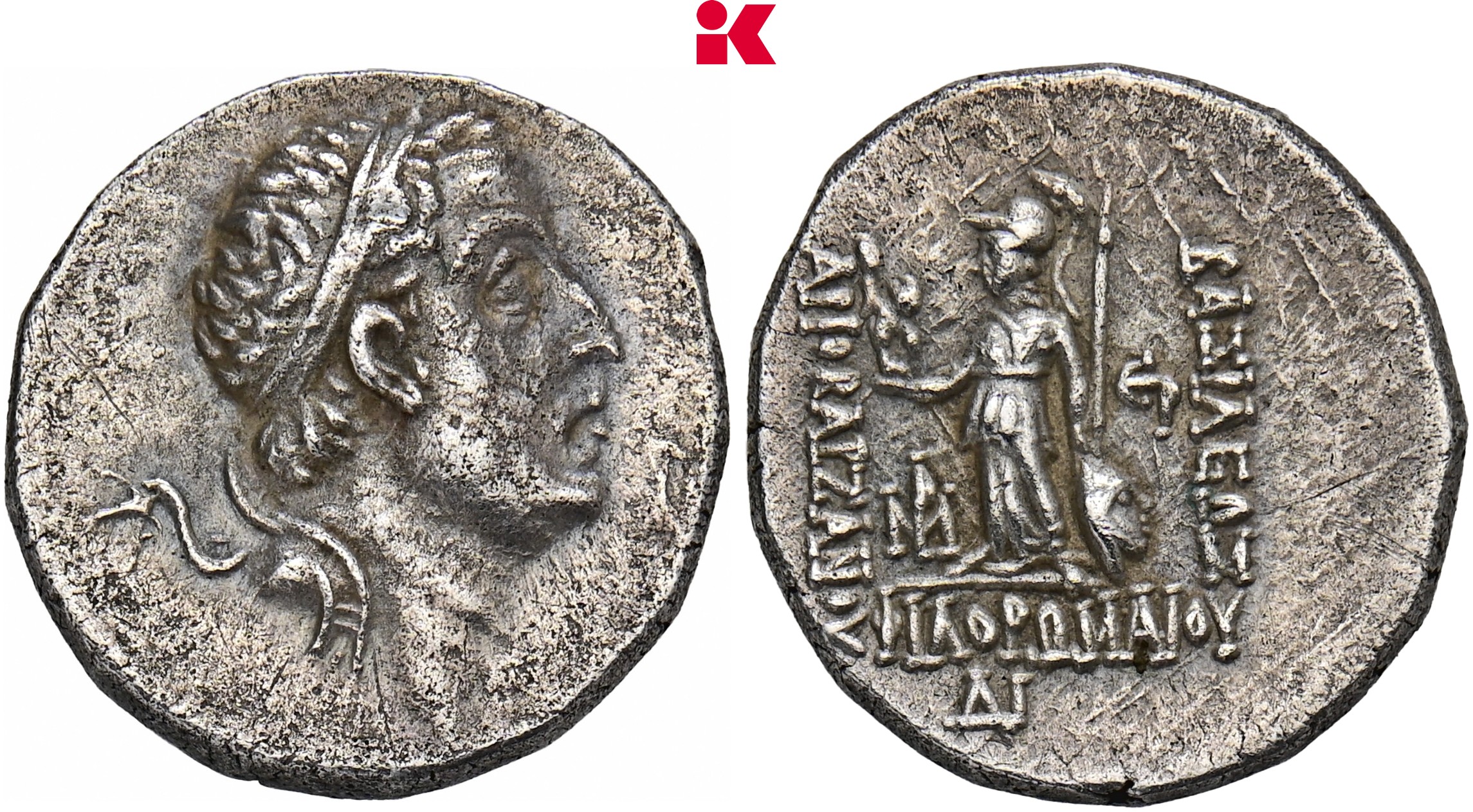
KÖNIGREICH. Ariobarzanes I., 96-63 v. Chr. AR-Drachme, Jahr 14 (= 82/81 v. Chr.), Ariaratheia;
Sold
17 Nov 2025
1:00 pm
GRIECHISCHE MÜNZEN
·
CAPPADOCIA
KÖNIGREICH. Ariobarzanes I., 96-63 v. Chr. AR-Drachme, Jahr 14 (= 82/81 v. Chr.), Ariaratheia;
Estimated price : €30
Hammer price
€70
My notes
Description
KÖNIGREICH. Ariobarzanes I., 96-63 v. Chr. Õ-Drachme, Jahr 14 (= 82/81 v. Chr.), Ariaratheia; 4,03 g Kopf r. mit Diadem//Athena Nikephoros steht l. Simonetta² 29 a; Hoover 850; Ganschow -.
Kl. Kratzer, min. korrodiert, gutes sehr schön
Strabo berichtet in seiner Geographika (XII, 2. 11), dass Kappadokien von Rom, nachdem der letzte König der Ariarathiden verstorben war, die Freiheit, d. h. die Unabhängigkeit als Land mit eigenen Gesetzen, angeboten worden war. Die Kappadokier seien jedoch vor der eigenen Freiheit zurückgeschreckt und hätten Rom angefleht, einen neuen König einzusetzen. Dieser sei in der Person des Ariobarzanes I. aus einer Wahl hervorgegangen. Hierin zeigt sich selbstverständlich verherrlichender Topos des antiken Geografen. Gleichzeitig erfahren wir jedoch, dass Ariobarzanes I. zuvor zwar zur Oberschicht Kappadokiens gehört haben dürfte, mit ihm aber eine neue Dynastie gegründet wurde. Die Verbindung mit und die Abhängigkeit von Rom zeigte sich dabei auch in dem von ihm gewählten Namensbestandteil Philorhomaios ("Freund der Römer"). Siehe hierzu Speidel, Michael A., The Hellenistic Kingdom of Cappadocia, in: Tekin, Oguz (Hrsg.), Hellenistic and Roman Anatolia, Istanbul 2019, S. 118-131 bes. S. 125-126; zu der Frage, ob zwischen den Ariarathiden und den Ariobarzaniden eine dynastische Verbindung bestand, siehe auch Ballesteros Pastor, Luis, The Origins of the Ariobarzanid Dynasty, Gephyra 20, 2020, S. 61-78 bes. S. 70.
In his Geography (XII, 2. 11), Strabo recounts that Rome had offered Cappadocia freedom – i.e., independence as a country with its own law – after the last king of the Ariarathid dynasty had died. However, the Cappadocians shied away from their independence, begging Rome to appoint a new king. Ariobarzanes I emerged as this new king following an election, Strabo recounts. This is, of course, an idealized narrative created by an ancient geographer. Nevertheless, we learn that, although Ariobarzanes I may have previously belonged to Cappadocia’s upper class, he was the founder of a new dynasty. The connection with and the dependence on Rome is also reflected in his choice of making “Philorhomaios” (friend of the Romans) part of his name. Cf. Speidel, Michael A., The Hellenistic Kingdom of Cappadocia, in: Tekin, Oguz (ed.), Hellenistic and Roman Anatolia, Istanbul 2019, pp. 118-131 spec. pp. 125-126; on the question of whether there was a dynastic link between the Ariarathids and the Ariobarzanids cf. Ballesteros Pastor, Luis, The Origins of the Ariobarzanid Dynasty, Gephyra 20, 2020, pp. 61-78 spec. p. 70.
Kl. Kratzer, min. korrodiert, gutes sehr schön
Strabo berichtet in seiner Geographika (XII, 2. 11), dass Kappadokien von Rom, nachdem der letzte König der Ariarathiden verstorben war, die Freiheit, d. h. die Unabhängigkeit als Land mit eigenen Gesetzen, angeboten worden war. Die Kappadokier seien jedoch vor der eigenen Freiheit zurückgeschreckt und hätten Rom angefleht, einen neuen König einzusetzen. Dieser sei in der Person des Ariobarzanes I. aus einer Wahl hervorgegangen. Hierin zeigt sich selbstverständlich verherrlichender Topos des antiken Geografen. Gleichzeitig erfahren wir jedoch, dass Ariobarzanes I. zuvor zwar zur Oberschicht Kappadokiens gehört haben dürfte, mit ihm aber eine neue Dynastie gegründet wurde. Die Verbindung mit und die Abhängigkeit von Rom zeigte sich dabei auch in dem von ihm gewählten Namensbestandteil Philorhomaios ("Freund der Römer"). Siehe hierzu Speidel, Michael A., The Hellenistic Kingdom of Cappadocia, in: Tekin, Oguz (Hrsg.), Hellenistic and Roman Anatolia, Istanbul 2019, S. 118-131 bes. S. 125-126; zu der Frage, ob zwischen den Ariarathiden und den Ariobarzaniden eine dynastische Verbindung bestand, siehe auch Ballesteros Pastor, Luis, The Origins of the Ariobarzanid Dynasty, Gephyra 20, 2020, S. 61-78 bes. S. 70.
In his Geography (XII, 2. 11), Strabo recounts that Rome had offered Cappadocia freedom – i.e., independence as a country with its own law – after the last king of the Ariarathid dynasty had died. However, the Cappadocians shied away from their independence, begging Rome to appoint a new king. Ariobarzanes I emerged as this new king following an election, Strabo recounts. This is, of course, an idealized narrative created by an ancient geographer. Nevertheless, we learn that, although Ariobarzanes I may have previously belonged to Cappadocia’s upper class, he was the founder of a new dynasty. The connection with and the dependence on Rome is also reflected in his choice of making “Philorhomaios” (friend of the Romans) part of his name. Cf. Speidel, Michael A., The Hellenistic Kingdom of Cappadocia, in: Tekin, Oguz (ed.), Hellenistic and Roman Anatolia, Istanbul 2019, pp. 118-131 spec. pp. 125-126; on the question of whether there was a dynastic link between the Ariarathids and the Ariobarzanids cf. Ballesteros Pastor, Luis, The Origins of the Ariobarzanid Dynasty, Gephyra 20, 2020, pp. 61-78 spec. p. 70.
Show more'
Show less
Information for lot 8817 from eLive Premium Auction 434
| Nominal/Year | AR-Drachme, Jahr 14 (= 82/81 v. Chr.), |
|---|---|
| Mint | Ariaratheia; |
| Weight | 4,03 g |
| Quotes | Simonetta² 29 a; Hoover 850; Ganschow - |