

eLive Premium Auction 434
·
Lot 8648
eLive Premium Auction 434
·
Lot 8648
eLive Premium Auction 434
·
Lot 8648
17 Nov 2025
1:00 pm
GRIECHISCHE MÜNZEN
·
CARIA
KOS. AR-Didrachme, 345/340 v. Chr.,
Sold
17 Nov 2025
1:00 pm
GRIECHISCHE MÜNZEN
·
CARIA
KOS. AR-Didrachme, 345/340 v. Chr.,
Estimated price : €500
Hammer price
€1,050
My notes
Description
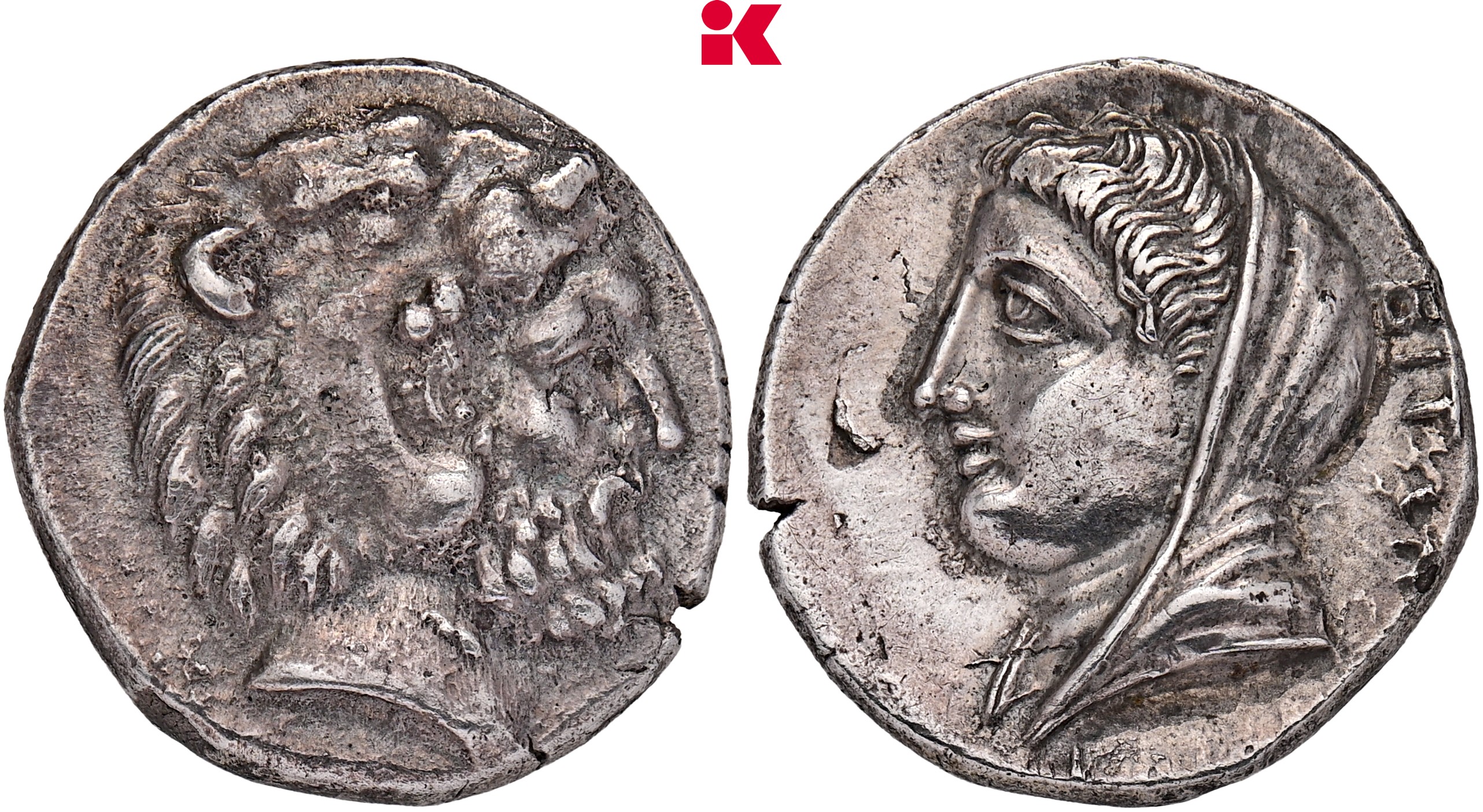
KOS. Õ-Didrachme, 345/340 v. Chr., Magistrat Biton; 6,95 g. Herakleskopf im Löwenfell r.//Weiblicher Kopf l. mit Schleier. Ashton u. a., The Pixodaros Hoard 32 b (dies Exemplar); Ingvaldsen 36 b (dies Exemplar); Historia Numorum Online 352 (temporary number); Hoover 1306.
Revers min. gereinigt, fast vorzüglich
Exemplar der Liste Leu Numismatik AG, Zürich Herbst 1998, Nr. 76 und der Auktion Giessener Münzhandlung 96, München 1999, Nr. 205.
In der Vergangenheit wurde mehrfach versucht, die dargestellten Personen als Maussolos und dessen Gattin, Artemisia, zu identifizieren. Hierin zeigt sich jedoch nur der Wunsch, ein schlüssiges Narrativ zwischen historischen Entwicklungen und Münzprägung zu entwickeln. Die Interpretation des Averses als Herakles ist hinsichtlich der mythischen Verknüpfung zwischen Kos und dem Heros sowie der bezeugten religiösen Kulte auf Kos deutlich schlüssiger. Hinsichtlich des Reverses existieren ebenfalls keine Anhaltspunkte, die individuelle Porträtzüge vermuten lassen. Vielmehr wäre es ein singulärer Einzelfall, dass eine Polis in klassischer Zeit eine (Co-)Regentin auf ihren Münzen darstellte, noch dazu in Angleichung an eine Göttin. Sicher ist indes, dass der weibliche Kopf einem ikonografischen Typ entsprach, den die Menschen auf Kos innerhalb ihres sozio-religiösen Kontextes deuten konnten, den wir heute jedoch (noch) nicht begreifen. Plausibilisieren lässt sich allerdings vor dem Hintergrund des religiösen Lebens auf Kos eine Identifikation als Demeter. Siehe hierzu Ingvaldsen, Hakon, Cos - Coinage and Society. The chronology and function of a city-state coinage in the Classical and Hellenistic period, c.390 - c.170 BC, Oslo 2002, S. 64-65 und 69-70.
Several attempts have been made in the past to identify the persons depicted as Maussolos and his wife, Artemisia. However, this merely reflects the desire to establish a coherent narrative linking historical developments and coinage. Interpreting the obverse as Heracles is much more conclusive with regard to the mythical link between Kos and the hero, as well as the attested religious cults on Kos. Regarding the reverse, there is also no evidence to suggest that these are the portraits of individuals. In fact, it would be highly unusual for a polis in classical times to depict a female (co-)regent on its coins, especially in imitation of a goddess. What is certain is that the female head corresponded to an iconographic type that the people of Kos could interpret in the context of their society and religion, but which we cannot (yet) understand today. However, against the backdrop of religious life on Kos, the identification of the depiction as Demeter is a plausible theory. Cf. Ingvaldsen, Hakon, Cos - Coinage and Society. The chronology and function of a citystate coinage in the Classical and Hellenistic period, c.390 - c.170 BC, Oslo 2002, pp. 64-65 and 69-70.
Revers min. gereinigt, fast vorzüglich
Exemplar der Liste Leu Numismatik AG, Zürich Herbst 1998, Nr. 76 und der Auktion Giessener Münzhandlung 96, München 1999, Nr. 205.
In der Vergangenheit wurde mehrfach versucht, die dargestellten Personen als Maussolos und dessen Gattin, Artemisia, zu identifizieren. Hierin zeigt sich jedoch nur der Wunsch, ein schlüssiges Narrativ zwischen historischen Entwicklungen und Münzprägung zu entwickeln. Die Interpretation des Averses als Herakles ist hinsichtlich der mythischen Verknüpfung zwischen Kos und dem Heros sowie der bezeugten religiösen Kulte auf Kos deutlich schlüssiger. Hinsichtlich des Reverses existieren ebenfalls keine Anhaltspunkte, die individuelle Porträtzüge vermuten lassen. Vielmehr wäre es ein singulärer Einzelfall, dass eine Polis in klassischer Zeit eine (Co-)Regentin auf ihren Münzen darstellte, noch dazu in Angleichung an eine Göttin. Sicher ist indes, dass der weibliche Kopf einem ikonografischen Typ entsprach, den die Menschen auf Kos innerhalb ihres sozio-religiösen Kontextes deuten konnten, den wir heute jedoch (noch) nicht begreifen. Plausibilisieren lässt sich allerdings vor dem Hintergrund des religiösen Lebens auf Kos eine Identifikation als Demeter. Siehe hierzu Ingvaldsen, Hakon, Cos - Coinage and Society. The chronology and function of a city-state coinage in the Classical and Hellenistic period, c.390 - c.170 BC, Oslo 2002, S. 64-65 und 69-70.
Several attempts have been made in the past to identify the persons depicted as Maussolos and his wife, Artemisia. However, this merely reflects the desire to establish a coherent narrative linking historical developments and coinage. Interpreting the obverse as Heracles is much more conclusive with regard to the mythical link between Kos and the hero, as well as the attested religious cults on Kos. Regarding the reverse, there is also no evidence to suggest that these are the portraits of individuals. In fact, it would be highly unusual for a polis in classical times to depict a female (co-)regent on its coins, especially in imitation of a goddess. What is certain is that the female head corresponded to an iconographic type that the people of Kos could interpret in the context of their society and religion, but which we cannot (yet) understand today. However, against the backdrop of religious life on Kos, the identification of the depiction as Demeter is a plausible theory. Cf. Ingvaldsen, Hakon, Cos - Coinage and Society. The chronology and function of a citystate coinage in the Classical and Hellenistic period, c.390 - c.170 BC, Oslo 2002, pp. 64-65 and 69-70.
Show more'
Show less
Information for lot 8648 from eLive Premium Auction 434
| Nominal/Year | AR-Didrachme, 345/340 v. Chr., |
|---|---|
| Quotes | Ashton u. a., The Pixodaros Hoard 32 b (dies Exemplar); Ingvaldsen 36 b (dies Exemplar); Historia Numorum Online 352 (temporary number); Hoover 1306 |