

Auction 432
·
Lot 5522
Auction 432
·
Lot 5522
Auction 432
·
Lot 5522
10 Nov 2025
10:00 am
MÜNZEN UND MEDAILLEN AUS ÜBERSEE
·
CHINA
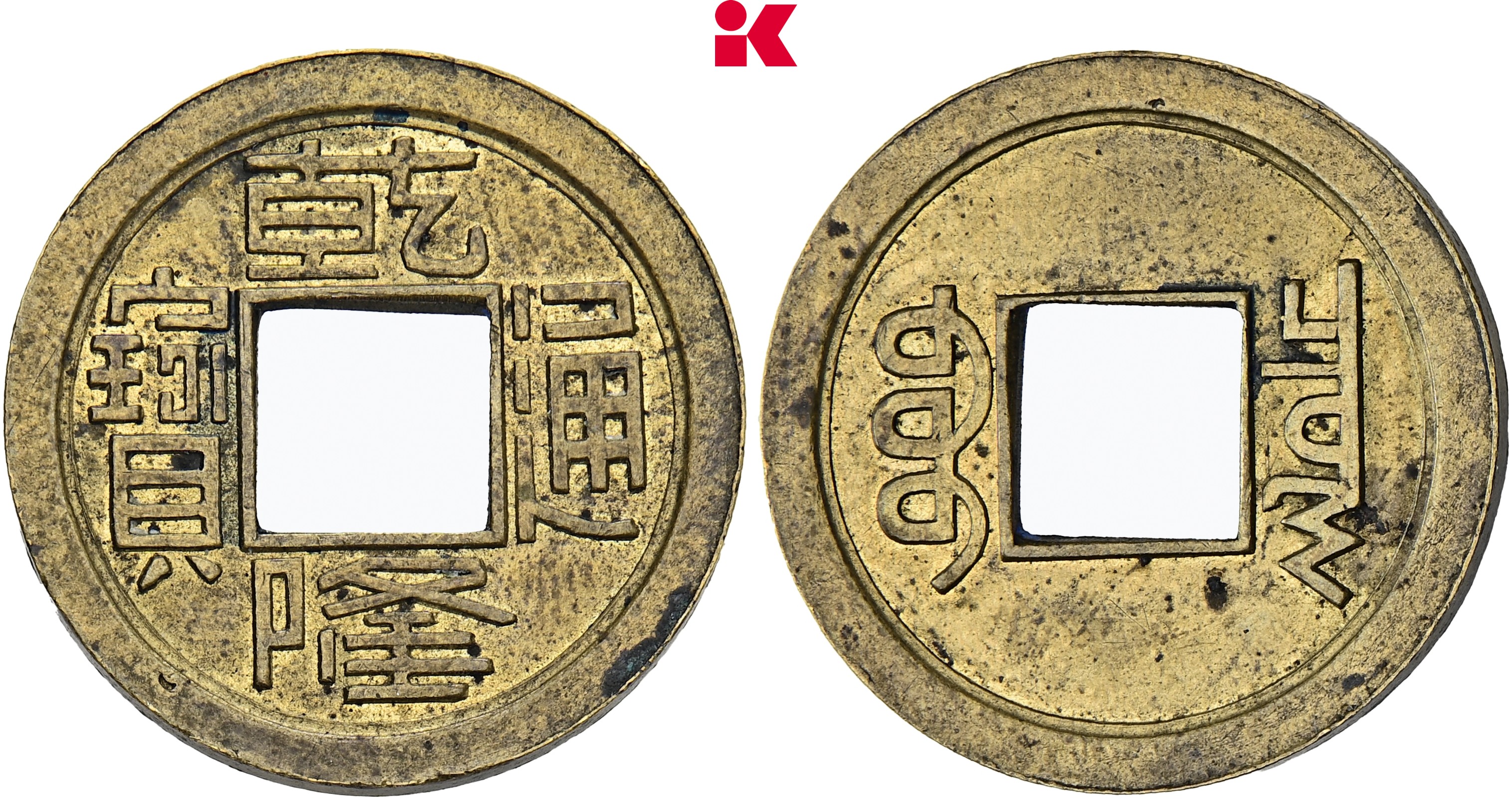
Qing Dynastie, 1644-1912. Qian Lon Tan Bao. Cash, o.J. (ca. 1866-1870), Heaton.
Sold
10 Nov 2025
10:00 am
MÜNZEN UND MEDAILLEN AUS ÜBERSEE
·
CHINA
Qing Dynastie, 1644-1912. Qian Lon Tan Bao. Cash, o.J. (ca. 1866-1870), Heaton.
Estimated price : €15,000
Hammer price
€13,000
My notes
Description
Qing Dynastie, 1644-1912. Qian Lon Tan Bao. Cash, o.J. (ca. 1866-1870), Heaton. Probe; 3,58 g. Mit glattem Rand.
Von allergrößter Seltenheit. Vorzüglich-Stempelglanz
Qian Long Tong Bao 乾隆通寶, AE cash pattern with plain edge, c. 1866-1870s. On the obverse four Chinese characters of Qian Long Tong Bao 乾隆通寶 on the reverse Manchu inscription of Bao Quan ᠪᠣᠣ ᠴᡳᠣᠸᠠᠨ (Ministry of Revenue Mint). Struck at the Heaton mint in Birmingham.
This unpublished pattern was struck as a presentation piece by the Heaton Mint, as a demonstration of the quality of coinage which could be achieved with their machinery. This pattern is the only Heaton Mint pattern of the period which imitates a real Chinese cash issue. The most interesting aspect is that the weight standard of the pattern is not that of the circulating Chinese coinage of the late 19th century. Instead, it is a faithful imitation of a Chinese cash coin of the Qianlong period, including the weight, and the reverse design (despite the mintmark, the Ministry of Revenue Mint never made milled coins).
We believe that this pattern was designed by the Heaton Mint speculatively to advertise their business to the Chinese government, rather than on an order from a Chinese ministry. This explains why an extremely common, but outdated coin type was chosen. There are several other Heaton related patterns of this period known:
Type 1: Chinese characters of 乾隆通寶 on obverse and English legend Ralph Heaton & Sons, Birmingham, England in reverse (see Baldwin’s Hong Kong Auction 49, lot 875). This type was the first discovered, plated and published in James O. Sweeny, A Numismatic History of the Birmingham Mint, Birmingham, 1981.
Type 2: English legend only with different varieties (see Baldwin’s Hong Kong Auction 46, lot 298; Baldwin’s Hong Kong Auction 49, lot 876; Baldwin’s Hong Kong Auction 51, lot 654, 655)
The design of the obverse of our piece is very similar to that of Type 1 in style, indicating that Heaton was responsible for the manufacture. The only dated example is Type 2, whichs dates 1866. In this year there was an informal diplomatic mission to Europe (the Binchun Mission). The Binchun Mission visited the Royal Mint in London on May 25, 1866, and they also visited Birmingham's industries between 7th to 9th June 1866, with some members staying until June 10, 1866. During the visit the mission had many communications with local industrialists. Although Chinese officers did not visit the Heaton Mint in 1866, it does not mean they did not have communication with Heaton, it is quite possibly that the Heaton Mint got in touch with Chinese officers, maybe at the Royal Mint or in Birmingham, especially because of the close working relationship between the Heaton Mint and the Royal Mint in this period.
This means the terminus post quem is 1866 and the terminus ante quem should be 1886. The reason is, that by that date the Heaton Mint already had a commercial relationship with the Chinese government. In 1886, Wu Dacheng, the governor of Guangdong, also a calligrapher, wrote the Chinese characters for the Heaton Mint sets of the Guangdong dollar and fractions. The dies were prepared by 1888, and schematic drawings were published in Graphics, May 19, 1888. The contract between the Heaton Mint and Guangdong Governor Zhang Zhidong was signed in 1887 by the Chinese Envoy Liu Guifen. It seems unlikely that the Heaton mint would have made a speculative pattern after this date given their ongoing commercial relationship with the Chinese government.
In conclusion the production of the Heaton pattern was initiated after Chinese officials visited the London Mint and Birmingham industries. The mint designed and produced trial patterns independently, without communicating with the Chinese officials, and it was not an order from a Chinese mint. Although the details of the communication during the visit of the Binchun Mission of 1866 are unknown, the officials did praise the speed and uniformity of Western mints in their diaries. The mint, aware of its advantages, took the initiative to design Chinese-style cash coins in order to compete for orders. The two known mints involved in the competition were the Paris Mint and the Heaton Mint. The production of those types of patterns likely occurred between 1866 and the early 1870s. Perhaps these trial patterns were later displayed to local Chinese officials through various channels or sent to the Chinese envoy in London. The latter seems particularly likely because the earliest Guangdong-Heaton contract in 1887 was handled by the envoy on behalf of the Governor of Guangdong.
The Heaton Mint pattern cash therefore represents an important step in the development of Chinese-European numismatic relationships.
Dieses Los unterliegt der Regelbesteuerung. / This lot cannot be sold under the margin scheme.
Von allergrößter Seltenheit. Vorzüglich-Stempelglanz
Qian Long Tong Bao 乾隆通寶, AE cash pattern with plain edge, c. 1866-1870s. On the obverse four Chinese characters of Qian Long Tong Bao 乾隆通寶 on the reverse Manchu inscription of Bao Quan ᠪᠣᠣ ᠴᡳᠣᠸᠠᠨ (Ministry of Revenue Mint). Struck at the Heaton mint in Birmingham.
This unpublished pattern was struck as a presentation piece by the Heaton Mint, as a demonstration of the quality of coinage which could be achieved with their machinery. This pattern is the only Heaton Mint pattern of the period which imitates a real Chinese cash issue. The most interesting aspect is that the weight standard of the pattern is not that of the circulating Chinese coinage of the late 19th century. Instead, it is a faithful imitation of a Chinese cash coin of the Qianlong period, including the weight, and the reverse design (despite the mintmark, the Ministry of Revenue Mint never made milled coins).
We believe that this pattern was designed by the Heaton Mint speculatively to advertise their business to the Chinese government, rather than on an order from a Chinese ministry. This explains why an extremely common, but outdated coin type was chosen. There are several other Heaton related patterns of this period known:
Type 1: Chinese characters of 乾隆通寶 on obverse and English legend Ralph Heaton & Sons, Birmingham, England in reverse (see Baldwin’s Hong Kong Auction 49, lot 875). This type was the first discovered, plated and published in James O. Sweeny, A Numismatic History of the Birmingham Mint, Birmingham, 1981.
Type 2: English legend only with different varieties (see Baldwin’s Hong Kong Auction 46, lot 298; Baldwin’s Hong Kong Auction 49, lot 876; Baldwin’s Hong Kong Auction 51, lot 654, 655)
The design of the obverse of our piece is very similar to that of Type 1 in style, indicating that Heaton was responsible for the manufacture. The only dated example is Type 2, whichs dates 1866. In this year there was an informal diplomatic mission to Europe (the Binchun Mission). The Binchun Mission visited the Royal Mint in London on May 25, 1866, and they also visited Birmingham's industries between 7th to 9th June 1866, with some members staying until June 10, 1866. During the visit the mission had many communications with local industrialists. Although Chinese officers did not visit the Heaton Mint in 1866, it does not mean they did not have communication with Heaton, it is quite possibly that the Heaton Mint got in touch with Chinese officers, maybe at the Royal Mint or in Birmingham, especially because of the close working relationship between the Heaton Mint and the Royal Mint in this period.
This means the terminus post quem is 1866 and the terminus ante quem should be 1886. The reason is, that by that date the Heaton Mint already had a commercial relationship with the Chinese government. In 1886, Wu Dacheng, the governor of Guangdong, also a calligrapher, wrote the Chinese characters for the Heaton Mint sets of the Guangdong dollar and fractions. The dies were prepared by 1888, and schematic drawings were published in Graphics, May 19, 1888. The contract between the Heaton Mint and Guangdong Governor Zhang Zhidong was signed in 1887 by the Chinese Envoy Liu Guifen. It seems unlikely that the Heaton mint would have made a speculative pattern after this date given their ongoing commercial relationship with the Chinese government.
In conclusion the production of the Heaton pattern was initiated after Chinese officials visited the London Mint and Birmingham industries. The mint designed and produced trial patterns independently, without communicating with the Chinese officials, and it was not an order from a Chinese mint. Although the details of the communication during the visit of the Binchun Mission of 1866 are unknown, the officials did praise the speed and uniformity of Western mints in their diaries. The mint, aware of its advantages, took the initiative to design Chinese-style cash coins in order to compete for orders. The two known mints involved in the competition were the Paris Mint and the Heaton Mint. The production of those types of patterns likely occurred between 1866 and the early 1870s. Perhaps these trial patterns were later displayed to local Chinese officials through various channels or sent to the Chinese envoy in London. The latter seems particularly likely because the earliest Guangdong-Heaton contract in 1887 was handled by the envoy on behalf of the Governor of Guangdong.
The Heaton Mint pattern cash therefore represents an important step in the development of Chinese-European numismatic relationships.
Dieses Los unterliegt der Regelbesteuerung. / This lot cannot be sold under the margin scheme.
Show more'
Show less
Information for lot 5522 from Auction 432
| Nominal/Year | Cash, o.J. (ca. 1866-1870), |
|---|---|
| Mint | Heaton. |
| Rarity | Von allergrößter Seltenheit. |