

eLive Premium Auction 434
·
Lot 8095
eLive Premium Auction 434
·
Lot 8095
eLive Premium Auction 434
·
Lot 8095
17 Nov 2025
1:00 pm
GRIECHISCHE MÜNZEN
·
MACEDONIA
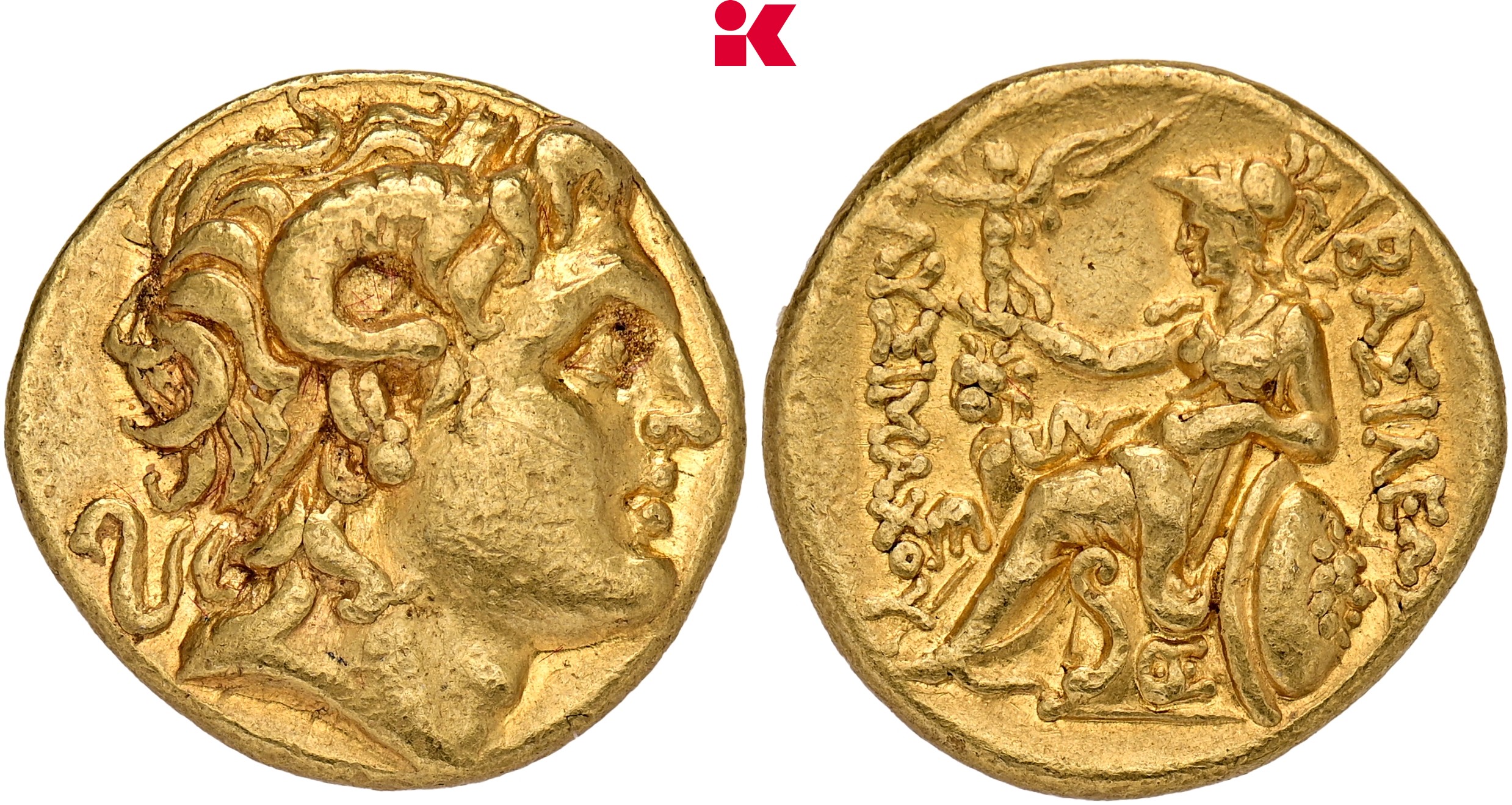
KÖNIGREICH. Ptolemaios Keraunos, 281-279 v. Chr. AV-Stater nach Lysimachos-Typ, 281/280 v. Chr., Lysimacheia;
17 Nov 2025
1:00 pm
GRIECHISCHE MÜNZEN
·
MACEDONIA
KÖNIGREICH. Ptolemaios Keraunos, 281-279 v. Chr. AV-Stater nach Lysimachos-Typ, 281/280 v. Chr., Lysimacheia;
Estimated price : €10,000
Hammer price
—
My notes
Description
KÖNIGREICH. Ptolemaios Keraunos, 281-279 v. Chr. Ô-Stater nach Lysimachos-Typ, 281/280 v. Chr., Lysimacheia; 8,43 g Alexanderkopf r. mit Diadem und Ammonshorn//Athena Nikephoros sitzt l., davor Löwenkopf l. und Elefant l., auf dem Thron Monogramm. Corpus Numorum Online -; Hollstein in SNR 74, 1994, S. 14 Abb. 3; Hoover -; Müller -, vergl. 55 (Tetradrachme); Thompson in Essays Robinson -.
RR Kl. Kratzer auf dem Avers, sehr schön-vorzüglich
Die Zuweisung dieses seltenen Staters an Ptolemaios Keraunos fußt maßgeblich auf der Arbeit Wilhelm Hollsteins. Er schließt sich Müller (1857, S. 48-49) an, wenn er den Löwenkopf auf dem Revers mit Lysimacheia assoziiert und ihn als persönliches Symbol des Lysimachos identifiziert. Den Elefanten hingegen, den Müller noch als zweites Städtesymbol verstanden hatte, interpretiert Hollstein weniger metaphorisch und sieht in ihm einen Verweis auf real existierende Kriegselefanten. Daraus ergibt sich die Überlegung, dass Lysimachos zwar möglicherweise ab 301 v. Chr. über einige Kriegselefanten verfügte, die er aus der siegreichen Schlacht bei Ipsos aus den Reihen des Antigonos und des Demetrios übernommen haben könnte, der numismatische Aktualitätsbezug jedoch dadurch geschmälert wurde, dass der Münztyp Alexander/Athena für Lysimachos erst ab 297 v. Chr. datiert wird. Ein so später Verweis auf die erbeuteten Elefanten wäre überaus unüblich. Gleichzeitig verweise der Stil des vorliegenden Stücks, so Hollstein, auf eine Datierung um 280 v. Chr. Damit könnte es sich um eine Prägung des Lysimachos handeln, die in seinem letzten Jahr, möglicherweise während der Vorbereitungen der Schlacht gegen Seleukos bei Kouropedion, entstand. Dagegen spricht jedoch, dass die Zahl der Elefanten des Lysimachos im Vergleich mit denen des Seleukos so klein gewesen sein dürfte, dass ein numismatischer Verweis auf die Tiere wohl kaum erfolgte.
Infolgedessen muss eine posthume Entstehung in Betracht gezogen werden.
Historisch schloss sich an die Niederlage des Lysimachos eine Auseinandersetzung zwischen Seleukos und Ptolemaios Keraunos an, aus der letzterer siegreich hervorging und anschließend nach Lysimacheia floh. Dort nahm er den Königstitel an, übernahm anschließend das zurückgebliebene Heer des Seleukos und bemächtigte sich möglicherweise der Kriegselefanten des Verstorbenen. Denkbar im Hinblick auf Keraunos wäre jedoch auch, dass beide Symbole - sowohl der Löwenkopf als auch der Elefant - nur legatimatorische Funktionen erfüllten und durch die Anlehnung an Lysimachos die eigene Herrschaft stabilisieren sollten. Daraus ergäbe sich dann, dass auch Lysimacheia als Prägestätte angezweifelt werden kann. Siehe hierzu Hollstein, Wilhelm, Münzen des Ptolemaios Keraunos, SNR 74, 1995, S. 13-24.
The reason why this rare stater is widely attributed to Ptolemy Ceraunus is the work of Wilhelm Hollstein. Like Müller (1857, pp. 48-49), Hollstein associates the lion’s head on the reverse with Lysimacheia, identifying it as a personal symbol of Lysimachus. By contrast, Hollstein takes a more literal approach to the elephant, which Müller interpreted as the symbol of a second city, seeing it as a reference to actual war elephants. This could suggest that Lysimachus may have had some war elephants as early as in 301 BC, which he had possibly taken from the ranks of Antigonus and Demetrius at the victorious battle at Ipsos. However, the numismatic reference to this event is weakened by the fact that the Alexander/Athena coin type for Lysimachus cannot be dated earlier than 297 BC. It would be highly unusual to find a reference to the captured elephants on coins struck this late. Moreover, according to Hollstein, the style of the present piece suggests that it was created around 280 BC. It could therefore be a coin issued by Lysimachus in his final year, possibly during the preparations for the Battle of Corupedium against Seleucus. However, this theory is contradicted by the fact that Lysimachus probably had far fewer elephants than Seleucus, which is why it would be very unlikely for a coin to refer to these animals. Consequently, the possibility of a posthumous creation must be considered. Following Lysimachus’s defeat, there was a conflict between Seleucus and Ptolemy Ceraunus, in which the latter emerged victorious. He then fled to Lysimacheia. There, he assumed the title of king, taking over Seleucus’s army, which had been left behind, as well as possibly seizing the war elephants of the deceased. Another possible theory regarding the assumption that the piece was issued under Ceraunus it that both symbols – the lion’s head and the elephant –served legitimatory functions only and were intended to stabilize his rule through association with Lysimachus. This would mean that the authenticity of Lysimacheia as a minting site could be called into question. Cf. Hollstein, Wilhelm, Münzen des Ptolemaios Keraunos, SNR 74, 1995, pp. 13-24.
RR Kl. Kratzer auf dem Avers, sehr schön-vorzüglich
Die Zuweisung dieses seltenen Staters an Ptolemaios Keraunos fußt maßgeblich auf der Arbeit Wilhelm Hollsteins. Er schließt sich Müller (1857, S. 48-49) an, wenn er den Löwenkopf auf dem Revers mit Lysimacheia assoziiert und ihn als persönliches Symbol des Lysimachos identifiziert. Den Elefanten hingegen, den Müller noch als zweites Städtesymbol verstanden hatte, interpretiert Hollstein weniger metaphorisch und sieht in ihm einen Verweis auf real existierende Kriegselefanten. Daraus ergibt sich die Überlegung, dass Lysimachos zwar möglicherweise ab 301 v. Chr. über einige Kriegselefanten verfügte, die er aus der siegreichen Schlacht bei Ipsos aus den Reihen des Antigonos und des Demetrios übernommen haben könnte, der numismatische Aktualitätsbezug jedoch dadurch geschmälert wurde, dass der Münztyp Alexander/Athena für Lysimachos erst ab 297 v. Chr. datiert wird. Ein so später Verweis auf die erbeuteten Elefanten wäre überaus unüblich. Gleichzeitig verweise der Stil des vorliegenden Stücks, so Hollstein, auf eine Datierung um 280 v. Chr. Damit könnte es sich um eine Prägung des Lysimachos handeln, die in seinem letzten Jahr, möglicherweise während der Vorbereitungen der Schlacht gegen Seleukos bei Kouropedion, entstand. Dagegen spricht jedoch, dass die Zahl der Elefanten des Lysimachos im Vergleich mit denen des Seleukos so klein gewesen sein dürfte, dass ein numismatischer Verweis auf die Tiere wohl kaum erfolgte.
Infolgedessen muss eine posthume Entstehung in Betracht gezogen werden.
Historisch schloss sich an die Niederlage des Lysimachos eine Auseinandersetzung zwischen Seleukos und Ptolemaios Keraunos an, aus der letzterer siegreich hervorging und anschließend nach Lysimacheia floh. Dort nahm er den Königstitel an, übernahm anschließend das zurückgebliebene Heer des Seleukos und bemächtigte sich möglicherweise der Kriegselefanten des Verstorbenen. Denkbar im Hinblick auf Keraunos wäre jedoch auch, dass beide Symbole - sowohl der Löwenkopf als auch der Elefant - nur legatimatorische Funktionen erfüllten und durch die Anlehnung an Lysimachos die eigene Herrschaft stabilisieren sollten. Daraus ergäbe sich dann, dass auch Lysimacheia als Prägestätte angezweifelt werden kann. Siehe hierzu Hollstein, Wilhelm, Münzen des Ptolemaios Keraunos, SNR 74, 1995, S. 13-24.
The reason why this rare stater is widely attributed to Ptolemy Ceraunus is the work of Wilhelm Hollstein. Like Müller (1857, pp. 48-49), Hollstein associates the lion’s head on the reverse with Lysimacheia, identifying it as a personal symbol of Lysimachus. By contrast, Hollstein takes a more literal approach to the elephant, which Müller interpreted as the symbol of a second city, seeing it as a reference to actual war elephants. This could suggest that Lysimachus may have had some war elephants as early as in 301 BC, which he had possibly taken from the ranks of Antigonus and Demetrius at the victorious battle at Ipsos. However, the numismatic reference to this event is weakened by the fact that the Alexander/Athena coin type for Lysimachus cannot be dated earlier than 297 BC. It would be highly unusual to find a reference to the captured elephants on coins struck this late. Moreover, according to Hollstein, the style of the present piece suggests that it was created around 280 BC. It could therefore be a coin issued by Lysimachus in his final year, possibly during the preparations for the Battle of Corupedium against Seleucus. However, this theory is contradicted by the fact that Lysimachus probably had far fewer elephants than Seleucus, which is why it would be very unlikely for a coin to refer to these animals. Consequently, the possibility of a posthumous creation must be considered. Following Lysimachus’s defeat, there was a conflict between Seleucus and Ptolemy Ceraunus, in which the latter emerged victorious. He then fled to Lysimacheia. There, he assumed the title of king, taking over Seleucus’s army, which had been left behind, as well as possibly seizing the war elephants of the deceased. Another possible theory regarding the assumption that the piece was issued under Ceraunus it that both symbols – the lion’s head and the elephant –served legitimatory functions only and were intended to stabilize his rule through association with Lysimachus. This would mean that the authenticity of Lysimacheia as a minting site could be called into question. Cf. Hollstein, Wilhelm, Münzen des Ptolemaios Keraunos, SNR 74, 1995, pp. 13-24.
Show more'
Show less
Information for lot 8095 from eLive Premium Auction 434
| Nominal/Year | AV-Stater nach Lysimachos-Typ, 281/280 v. Chr., |
|---|---|
| Mint | Lysimacheia; |
| Rarity | RR |
| Weight | 8,43 g |