

Auction 419
·
Lot 370
Auction 419
·
Lot 370
Auction 419
·
Lot 370
17 Mar 2025
10:00 am
RÖMISCHE MÜNZEN
·
MÜNZEN DER RÖMISCHEN KAISERZEIT
Tiberius, 14-37 für Livia. Æ-Dupondius, 22/23, Rom;
Sold
17 Mar 2025
10:00 am
RÖMISCHE MÜNZEN
·
MÜNZEN DER RÖMISCHEN KAISERZEIT
Tiberius, 14-37 für Livia. Æ-Dupondius, 22/23, Rom;
Estimated price : €2,500
Hammer price
€3,000
My notes
Description
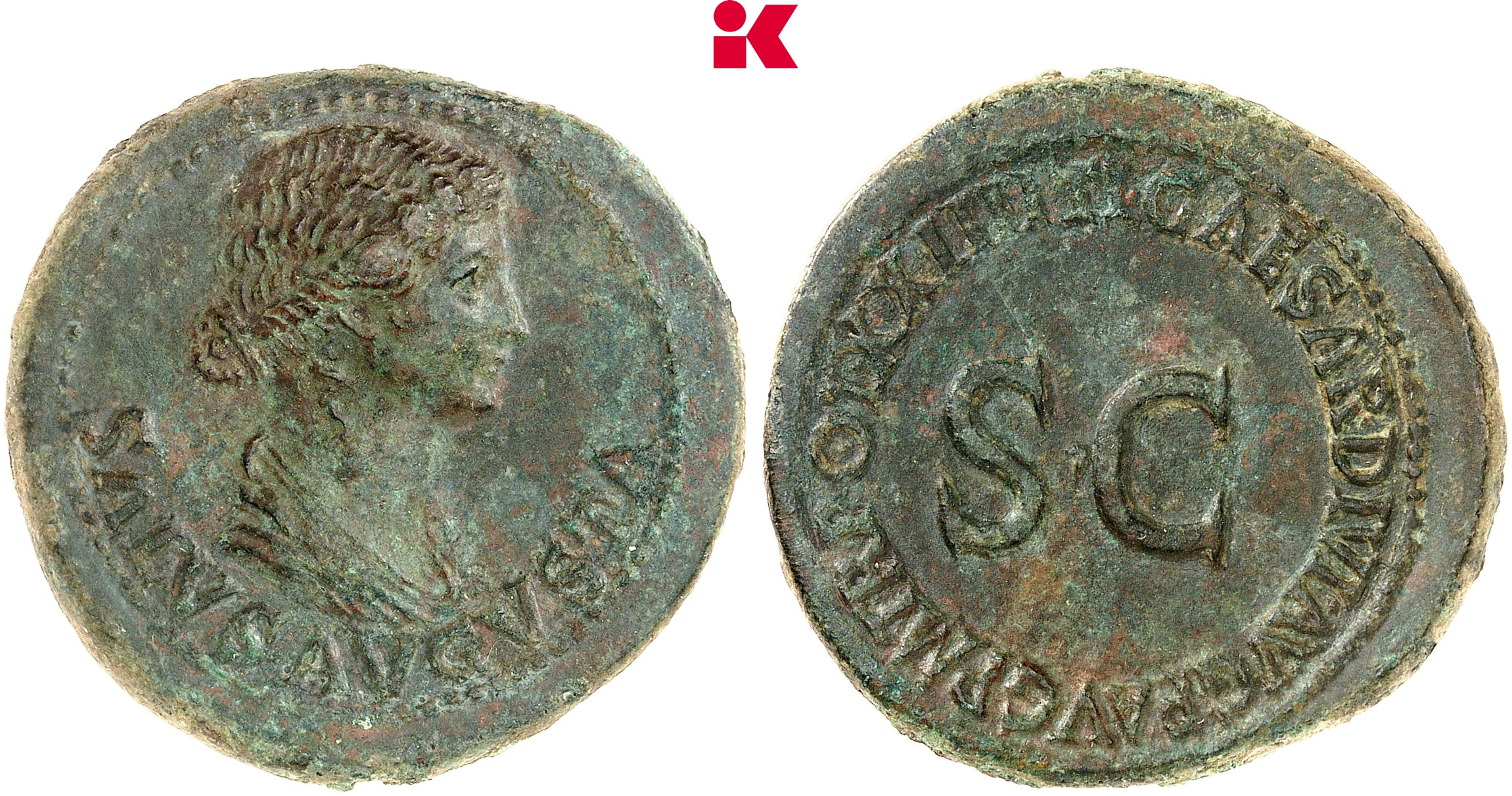
Tiberius, 14-37 für Livia. Æ-Dupondius, 22/23, Rom; 14,09 g Drapierte Büste der Livia als Salus r.//SC. BMC 82; Coh. 5; RIC² 47.
Herrliches Porträt, schöne grüne Patina auf breitem Schrötling, etwas geglättet, vorzüglich
Aus der Sammlung eines Juristen.
Exemplar der Auktion Lanz 158, München 2014, Nr. 478.
Unser Sammler schreibt zu dem Stück: "Von den drei unter Tiberius ausgegebenen Dupondien tragen zwei, (und zwar die mit Salus Augusta bzw. Justitia auf der Vorderseite) den Namen des Kaisers, während der dritte Typ (mit dem Bild der Pietas auf der Vorderseite) den Namen seines Sohnes Drusus zeigt. Während alle drei Typen im RIC der Livia zugeordnet werden, ist es unbestritten der erste Typ (Salus Augusta), der das realistische Porträt von Augustus' Gattin zeigt. Der Typ mit Salus Augusta weist im Gegensatz zu denen mit Justitia und Pietas auch zwei spezielle Bezüge zur Biographie Livias auf. Zum einem bezieht sich die Darstellung der Salus vermutlich auf die Heilung von einer ernsten, lebensbedrohlichen Krankheit Livias im Jahr 22 n.Chr. (Tacitus, Annales, III, 64). Zum anderen wurde ihr in Folge der - im Testament des Augustus bestimmten - Adoption in die julische Kaiserfamilie (Tacitus, ibid., I, 8, 1) als erster Frau der Titel Augusta verliehen. Stilistisch weist W.H. Gross (Iulia Augusta: Untersuchungen zur Grundlegung einer Livia-Ikonographie, Göttingen 1962, S. 19) darauf hin, dass Salus Augusta auf dieser Münze die Züge Livias trägt. In jüngerer Zeit hat S.E.Wood (Imperial Women. A Study in Public Images, 40 BC - 68 AD, Leiden 2001, S. 109) bemerkt, dass die gebogene Nase, der schmale Mund und die weiche Kinnlinie der Salus im Gegensatz zu den idealisierten Zügen von Justitia und Pietas stehen. Daher dürfte das Porträt der Salus Augusta korrekterweise mit der Gemahlin des Augustus identifiziert werden, weil es im Gegensatz zu den abstrakteren Büsten der anderen beiden Dupondii realistische und individuelle physiognomische Details zeigt, die das Gesicht einer lebendigen Figur erkennen lassen. Der Einwand, dass die jugendlich erscheinende Kaiserin zum Zeitpunkt der Prägung bereits 79 Jahre alt war, ist nicht stichhaltig. In der offiziellen Ikonographie dieser Zeit, die von der Reinheit und formalen Eleganz des klassischen Griechenlands beeinflusst war, spielen Alterserscheinungen eine untergeordnete Rolle. Weder Augustus noch Tiberius altern auf ihren Münzen."
"Of the three Tiberian issues of dupondii, two of which in the name of the emperor (bearing on the obverse the personification of Salus Augusta and Iustitia respectively) and one in the name of his son Drusus (with the image of Pietas), expressly referred to as “coins of Livia” in the Royal Imperial Coinage of Mattingly and Sydenham, it is arguably the first to provide us with the most realistic portrait of Augustus’ wife.
Indeed, the type of Salus Augusta, differently from those of Iustitia and Pietas, shows two peculiarities being specifically related to the biography of Livia. First, Salus is thought to be an allegory of the recovery from the major illness which had hit her in 22 AD, causing fear for her own life (Tacitus, Annales, III, 64). Furthermore, she was the first woman officially bestowed with the title of Augusta, upon her adoption into the Julian family (September 14 AD), in accordance with Augustus’ will (Tacitus, ibid., I, 8, 1).
From a stylistic point of view, W.H. Gross (Iulia Augusta: Untersuchungen zur Grundlegung einer Livia-Ikonographie, Göttingen 1962, p. 19) argues that in the features of Salus Augusta are surely contained those of Livia; more recently, S.E. Wood (Imperial Women. A Study in Public Images, 40 BC - 68 AD, Leiden 2001, p. 109), in comparing the three “coins of Livia”, remarks that the arched nose, the small mouth and the soft chin-line of Salus are in contrast with the ideal features of Iustitia and Pietas. Thus, the profile of Salus Augusta may correctly be identified with the real image of Augustus’ wife, since, unlike the impersonal heads of the two other dupondii, it reveals veristic and individualized physiognomic details, to the extent of being recognizable as a portrait of a living figure. The objection that, when this issue was struck, the empress was already 79 years old, an age which the much younger features depicted on it do not suit, would not prove decisive. In fact, in the official iconography of the period, influenced by the purity and formal elegance of the classical Greek art, biographical details cease to matter: neither Augustus nor Tiberius age on their coins."
Herrliches Porträt, schöne grüne Patina auf breitem Schrötling, etwas geglättet, vorzüglich
Aus der Sammlung eines Juristen.
Exemplar der Auktion Lanz 158, München 2014, Nr. 478.
Unser Sammler schreibt zu dem Stück: "Von den drei unter Tiberius ausgegebenen Dupondien tragen zwei, (und zwar die mit Salus Augusta bzw. Justitia auf der Vorderseite) den Namen des Kaisers, während der dritte Typ (mit dem Bild der Pietas auf der Vorderseite) den Namen seines Sohnes Drusus zeigt. Während alle drei Typen im RIC der Livia zugeordnet werden, ist es unbestritten der erste Typ (Salus Augusta), der das realistische Porträt von Augustus' Gattin zeigt. Der Typ mit Salus Augusta weist im Gegensatz zu denen mit Justitia und Pietas auch zwei spezielle Bezüge zur Biographie Livias auf. Zum einem bezieht sich die Darstellung der Salus vermutlich auf die Heilung von einer ernsten, lebensbedrohlichen Krankheit Livias im Jahr 22 n.Chr. (Tacitus, Annales, III, 64). Zum anderen wurde ihr in Folge der - im Testament des Augustus bestimmten - Adoption in die julische Kaiserfamilie (Tacitus, ibid., I, 8, 1) als erster Frau der Titel Augusta verliehen. Stilistisch weist W.H. Gross (Iulia Augusta: Untersuchungen zur Grundlegung einer Livia-Ikonographie, Göttingen 1962, S. 19) darauf hin, dass Salus Augusta auf dieser Münze die Züge Livias trägt. In jüngerer Zeit hat S.E.Wood (Imperial Women. A Study in Public Images, 40 BC - 68 AD, Leiden 2001, S. 109) bemerkt, dass die gebogene Nase, der schmale Mund und die weiche Kinnlinie der Salus im Gegensatz zu den idealisierten Zügen von Justitia und Pietas stehen. Daher dürfte das Porträt der Salus Augusta korrekterweise mit der Gemahlin des Augustus identifiziert werden, weil es im Gegensatz zu den abstrakteren Büsten der anderen beiden Dupondii realistische und individuelle physiognomische Details zeigt, die das Gesicht einer lebendigen Figur erkennen lassen. Der Einwand, dass die jugendlich erscheinende Kaiserin zum Zeitpunkt der Prägung bereits 79 Jahre alt war, ist nicht stichhaltig. In der offiziellen Ikonographie dieser Zeit, die von der Reinheit und formalen Eleganz des klassischen Griechenlands beeinflusst war, spielen Alterserscheinungen eine untergeordnete Rolle. Weder Augustus noch Tiberius altern auf ihren Münzen."
"Of the three Tiberian issues of dupondii, two of which in the name of the emperor (bearing on the obverse the personification of Salus Augusta and Iustitia respectively) and one in the name of his son Drusus (with the image of Pietas), expressly referred to as “coins of Livia” in the Royal Imperial Coinage of Mattingly and Sydenham, it is arguably the first to provide us with the most realistic portrait of Augustus’ wife.
Indeed, the type of Salus Augusta, differently from those of Iustitia and Pietas, shows two peculiarities being specifically related to the biography of Livia. First, Salus is thought to be an allegory of the recovery from the major illness which had hit her in 22 AD, causing fear for her own life (Tacitus, Annales, III, 64). Furthermore, she was the first woman officially bestowed with the title of Augusta, upon her adoption into the Julian family (September 14 AD), in accordance with Augustus’ will (Tacitus, ibid., I, 8, 1).
From a stylistic point of view, W.H. Gross (Iulia Augusta: Untersuchungen zur Grundlegung einer Livia-Ikonographie, Göttingen 1962, p. 19) argues that in the features of Salus Augusta are surely contained those of Livia; more recently, S.E. Wood (Imperial Women. A Study in Public Images, 40 BC - 68 AD, Leiden 2001, p. 109), in comparing the three “coins of Livia”, remarks that the arched nose, the small mouth and the soft chin-line of Salus are in contrast with the ideal features of Iustitia and Pietas. Thus, the profile of Salus Augusta may correctly be identified with the real image of Augustus’ wife, since, unlike the impersonal heads of the two other dupondii, it reveals veristic and individualized physiognomic details, to the extent of being recognizable as a portrait of a living figure. The objection that, when this issue was struck, the empress was already 79 years old, an age which the much younger features depicted on it do not suit, would not prove decisive. In fact, in the official iconography of the period, influenced by the purity and formal elegance of the classical Greek art, biographical details cease to matter: neither Augustus nor Tiberius age on their coins."
Show more'
Show less
Information for lot 370 from Auction 419
| Nominal/Year | Æ-Dupondius, 22/23, |
|---|---|
| Mint | Rom; |
| Weight | 14,09 g |
| Quotes | BMC 82; Coh. 5; RIC² 47 |