

eLive Premium Auction 434
·
Lot 8045
eLive Premium Auction 434
·
Lot 8045
eLive Premium Auction 434
·
Lot 8045
17 Nov 2025
1:00 pm
GRIECHISCHE MÜNZEN
·
THRACIA
IMBROS. Æs, 386/261 v.Chr.;
Sold
17 Nov 2025
1:00 pm
GRIECHISCHE MÜNZEN
·
THRACIA
IMBROS. Æs, 386/261 v.Chr.;
Estimated price : €75
Hammer price
€155
My notes
Description
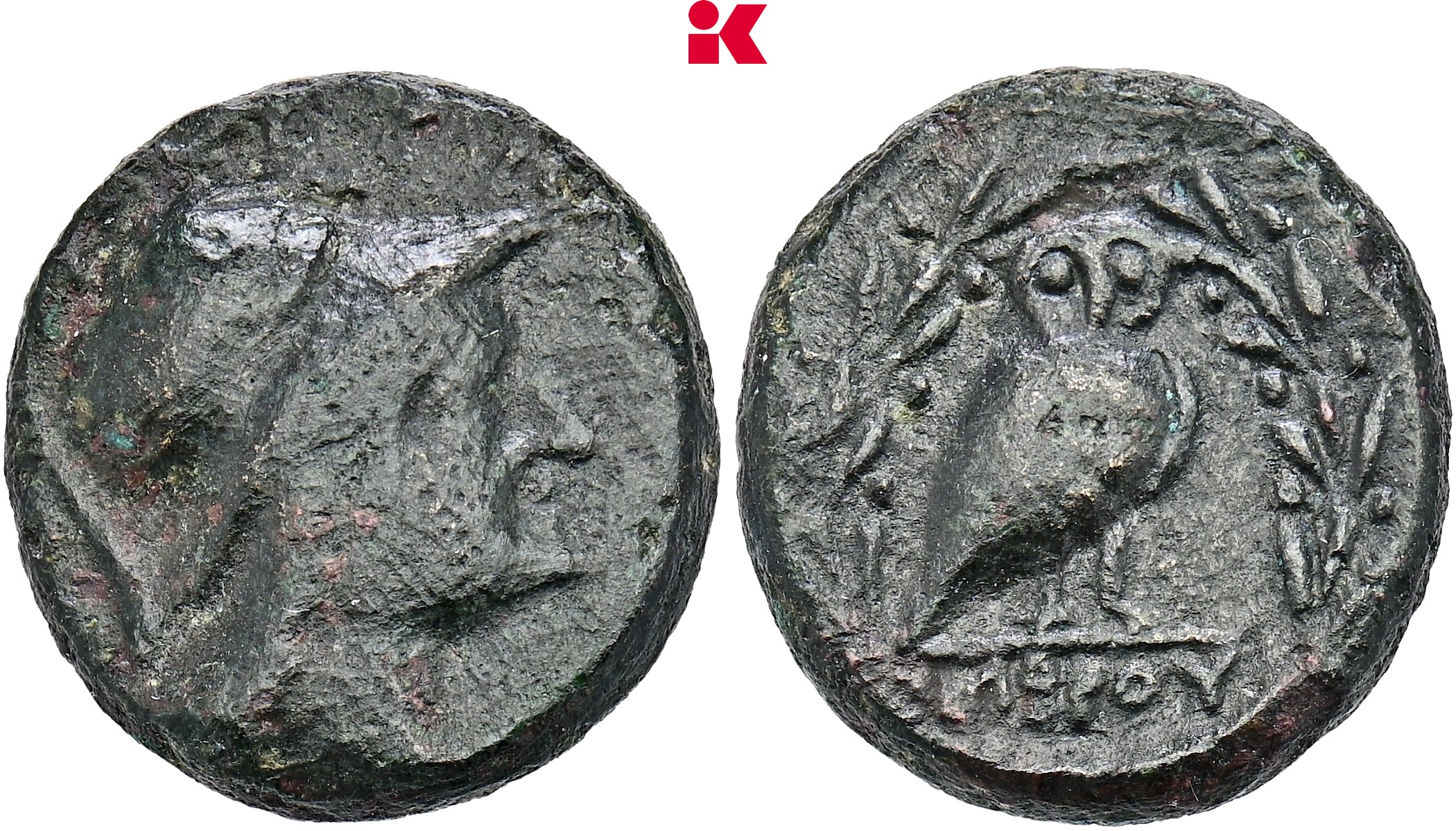
IMBROS. Æs, 386/261 v.Chr.; 4,00 g Athenakopf r. mit korinthischem Helm//In Lorbeerkranz: Eule steht v. v. Corpus Nummorum Online cn type 8727; Hoover 276.
RR Felder min. geglättet, fast sehr schön
Exemplar der Auktion Jacquier 25, Kehl am Rhein 2000, Nr. 65.
Imbros wechselvolle Geschichte ist nicht zuletzt in der strategisch wichtigen Lage der Insel begründet. Sie befindet sich in der Nordostägäis, nahe des Zugangs zu den Dardanellen. Die Zuweisung der Insel zum griechischen Thrakien basiert jedoch im Grunde auf einer anachronistischen Quelle, wenn auf Klaudios Ptolemaios verwiesen wird, der lediglich den Status quo für das zweite nachchristliche Jahrhundert und damit für die römische Provinz Thracia abbildet. Politisch betrachtet gehörte Imbros nämlich zunächst ab 512 v. Chr. zur persischen Machtsphäre, bevor es Miltiades dem Jüngeren Anfang des 5. Jahrhunderts gelang, die Insel in den athenischen Machtbereich einzugliedern. Dass Athen auch kulturell einen großen Einfluss auf Imbros hatte, zeigt sich an der vorliegenden Münze. Einerseits ist die Verbindung Athenas mit der Eule zweifellos ein attisches Motiv. Andererseits kann der auf dem Revers verwendete Genitiv "ΙΜΒΡΟΥ" ("(Münze) aus Imbros") dahingehend interpretiert werden, dass sich die Bewohner eben nicht als Imbrier, sondern als Athener auf Imbros verstanden. Siehe hierzu Hoover, Oliver, Handbook of Greek Coinage 6, Lancaster/London 2010, S. 65; Ruhl, Bärbel, Neue Forschungen zu den Athenern auf der Insel Imbros, in: Schmidts, Thomas/Triantafillidis, Ioannis (Hrsg.), Mare Thracium. Archaeology and History of Coastal Landscapes and Islands of the Thracian Sea during Antiquity and the Byzantine Era. International Workshop within the Framework of the DFG Project "The Thracian harbour city Ainos in Roman and Byzantine times - the development of a traffic hub in a changing environment", Heidelberg 2023, S. 183-200.
Imbros’ eventful history is largely the result of the island’s strategically important location. Situated in the north-east of the Aegean Sea, it lies close to the entrance of the Dardanelles. However, attributing the island to Greek Thrace is essentially based on an anachronistic source when reference is made to Claudius Ptolemy, who merely represents the status quo for the second century AD and thus for the Roman province of Thracia. From a political perspective, Imbros was initially under the influence of the Persians from 512 BC, until Miltiades the Younger succeeded in incorporating the island into the Athenian sphere of influence at the beginning of the 5th century BC. The fact that Athens also had a significant cultural influence on Imbros is evidenced by this coin. For one, the combination of Athena and an owl is undoubtedly an Attic motif. Additionally, the genitive “ΙΜΒΡΟΥ” ((coin) from Imbros) on the reverse suggests that the inhabitants did not identify themselves as Imbrians but rather as Athenians on Imbros. Cf. Hoover, Oliver, Handbook of Greek Coinage 6, Lancaster/London 2010, p. 65; Ruhl, Bärbel, Neue Forschungen zu den Athenern auf der Insel Imbros, in: Schmidts, Thomas/Triantafillidis, Ioannis (eds.), Mare Thracium. Archaeology and History of Coastal Landscapes and Islands of the Thracian Sea during Antiquity and the Byzantine Era. International Workshop within the Framework of the DFG Project “The Thracian harbour city Ainos in Roman and Byzantine times - the development of a traffic hub in a changing environment”, Heidelberg 2023, pp. 183-200.
RR Felder min. geglättet, fast sehr schön
Exemplar der Auktion Jacquier 25, Kehl am Rhein 2000, Nr. 65.
Imbros wechselvolle Geschichte ist nicht zuletzt in der strategisch wichtigen Lage der Insel begründet. Sie befindet sich in der Nordostägäis, nahe des Zugangs zu den Dardanellen. Die Zuweisung der Insel zum griechischen Thrakien basiert jedoch im Grunde auf einer anachronistischen Quelle, wenn auf Klaudios Ptolemaios verwiesen wird, der lediglich den Status quo für das zweite nachchristliche Jahrhundert und damit für die römische Provinz Thracia abbildet. Politisch betrachtet gehörte Imbros nämlich zunächst ab 512 v. Chr. zur persischen Machtsphäre, bevor es Miltiades dem Jüngeren Anfang des 5. Jahrhunderts gelang, die Insel in den athenischen Machtbereich einzugliedern. Dass Athen auch kulturell einen großen Einfluss auf Imbros hatte, zeigt sich an der vorliegenden Münze. Einerseits ist die Verbindung Athenas mit der Eule zweifellos ein attisches Motiv. Andererseits kann der auf dem Revers verwendete Genitiv "ΙΜΒΡΟΥ" ("(Münze) aus Imbros") dahingehend interpretiert werden, dass sich die Bewohner eben nicht als Imbrier, sondern als Athener auf Imbros verstanden. Siehe hierzu Hoover, Oliver, Handbook of Greek Coinage 6, Lancaster/London 2010, S. 65; Ruhl, Bärbel, Neue Forschungen zu den Athenern auf der Insel Imbros, in: Schmidts, Thomas/Triantafillidis, Ioannis (Hrsg.), Mare Thracium. Archaeology and History of Coastal Landscapes and Islands of the Thracian Sea during Antiquity and the Byzantine Era. International Workshop within the Framework of the DFG Project "The Thracian harbour city Ainos in Roman and Byzantine times - the development of a traffic hub in a changing environment", Heidelberg 2023, S. 183-200.
Imbros’ eventful history is largely the result of the island’s strategically important location. Situated in the north-east of the Aegean Sea, it lies close to the entrance of the Dardanelles. However, attributing the island to Greek Thrace is essentially based on an anachronistic source when reference is made to Claudius Ptolemy, who merely represents the status quo for the second century AD and thus for the Roman province of Thracia. From a political perspective, Imbros was initially under the influence of the Persians from 512 BC, until Miltiades the Younger succeeded in incorporating the island into the Athenian sphere of influence at the beginning of the 5th century BC. The fact that Athens also had a significant cultural influence on Imbros is evidenced by this coin. For one, the combination of Athena and an owl is undoubtedly an Attic motif. Additionally, the genitive “ΙΜΒΡΟΥ” ((coin) from Imbros) on the reverse suggests that the inhabitants did not identify themselves as Imbrians but rather as Athenians on Imbros. Cf. Hoover, Oliver, Handbook of Greek Coinage 6, Lancaster/London 2010, p. 65; Ruhl, Bärbel, Neue Forschungen zu den Athenern auf der Insel Imbros, in: Schmidts, Thomas/Triantafillidis, Ioannis (eds.), Mare Thracium. Archaeology and History of Coastal Landscapes and Islands of the Thracian Sea during Antiquity and the Byzantine Era. International Workshop within the Framework of the DFG Project “The Thracian harbour city Ainos in Roman and Byzantine times - the development of a traffic hub in a changing environment”, Heidelberg 2023, pp. 183-200.
Show more'
Show less
Information for lot 8045 from eLive Premium Auction 434
| Nominal/Year | Æs, 386/261 v.Chr.; |
|---|---|
| Rarity | RR |
| Weight | 4,00 g |
| Quotes | Corpus Nummorum Online cn type 8727; Hoover 276 |