

eLive Premium Auction 434
·
Lot 8317
eLive Premium Auction 434
·
Lot 8317
eLive Premium Auction 434
·
Lot 8317
17 Nov 2025
1:00 pm
GRIECHISCHE MÜNZEN
·
TROAS
GENTINOS.
17 Nov 2025
1:00 pm
GRIECHISCHE MÜNZEN
·
TROAS
GENTINOS.
Estimated price : €75
Hammer price
—
My notes
Description
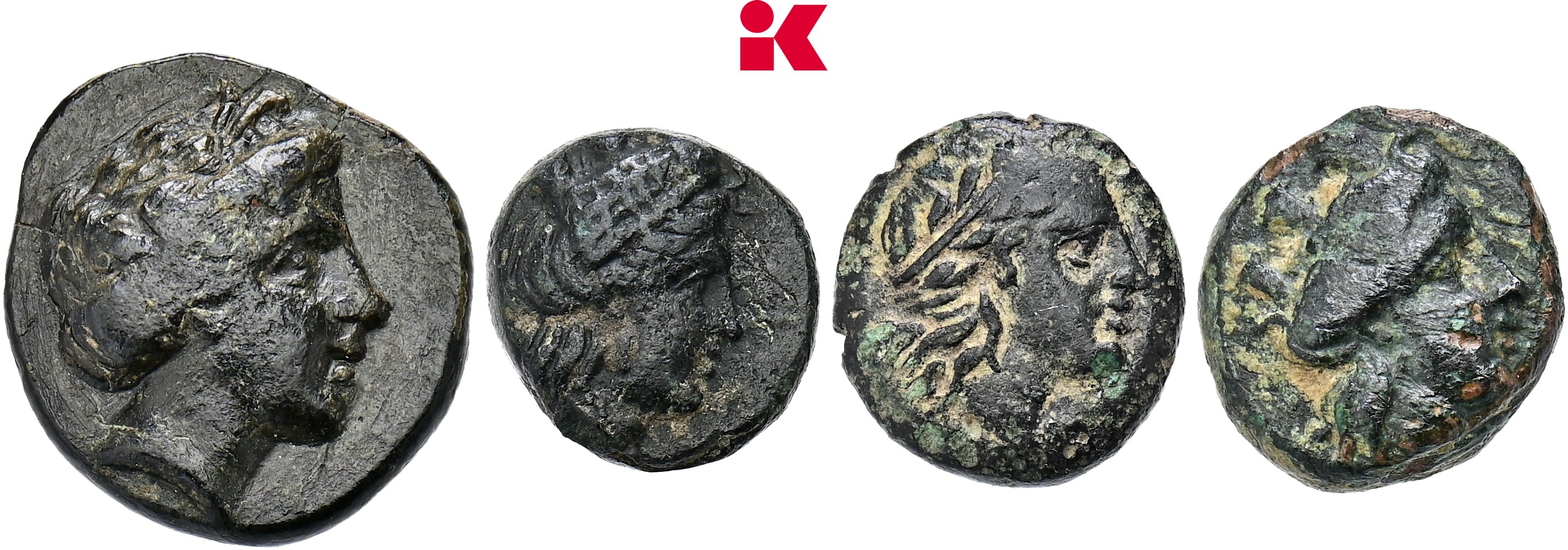
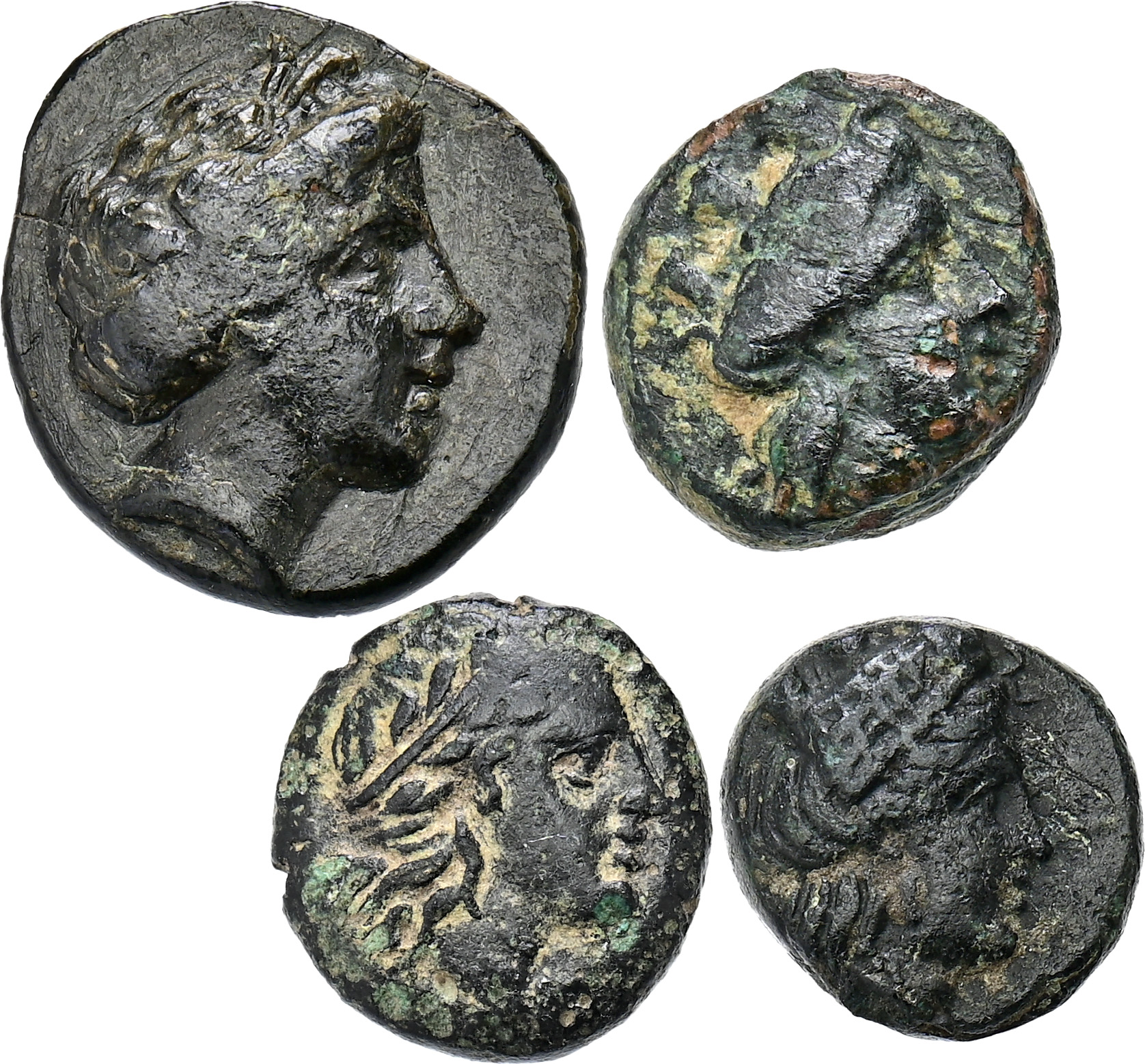
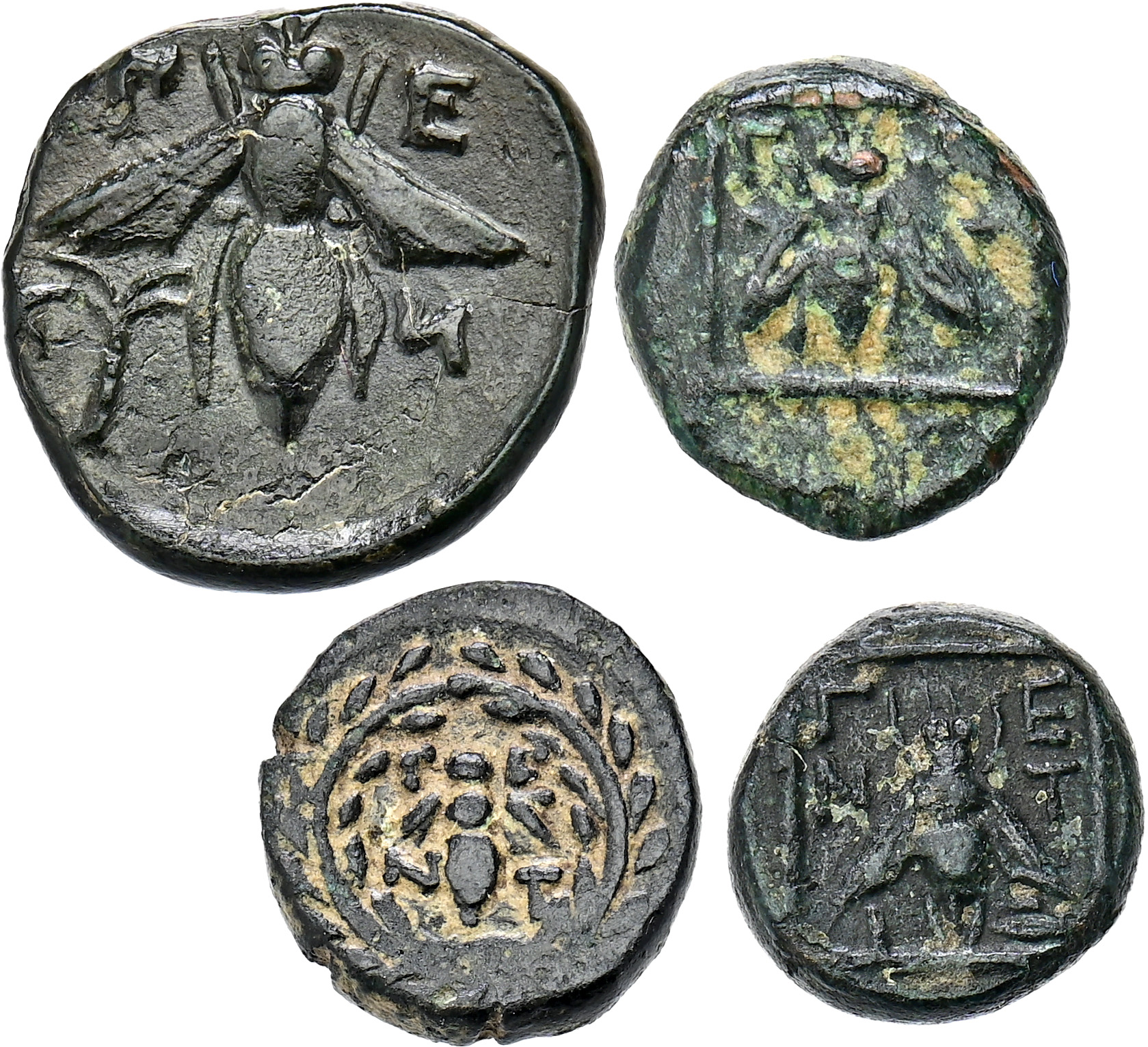
GENTINOS. Kleines Lot: a) Æs, 350/300 v. Chr.; 2,10 g. Weiblicher Kopf r.//Biene, l. Palme. Corpus Nummorum Online cn type 5155. b) Æs, 350/300 v. Chr.; 1,24 g. Weiblicher Kopf r. mit Mauerkrone//Biene im Linienquadrat, r. Efeublatt. Corpus Nummorum Online cn type 5129. c) Æs, 350/300 v. Chr.; 1,46 g. Wie zuvor. d) Æs, 350/300 v. Chr.; 1,19 g. Apollokopf r.//Biene in Lorbeerkranz. Corpus Nummorum Online cn type 5162 var.
4 Stück. Min. geglättet, sehr schön
Exemplare a) der Auktion Bankhaus Aufhäuser 9, München 1992, Nr. 92 und der Auktion Münzen und Medaillen GmbH 17, Stuttgart 2005, Nr. 801; b) erworben im Juli 2003; c) erworben im September 2002 und d) erworben im Juli 2003.
Das kleine troadische Städtchen Gentinos ist noch nicht mit letzter Sicherheit lokalisiert. Einer mythischen Überlieferung nach soll es von einem Sohn des Äneas gegründet worden sein. Seine Münzen zeigen auf dem Revers stereotyp eine Biene, auf den Vorderseiten wechseln ein Nymphenkopf, der Kopf der Stadtgöttin mit Mauerkrone und ein Apollokopf. Alles spricht dafür, dass Gentinos auf dem 150 m hohen Ballı Dağ/Honigberg, lag. Offensichtlich waren um diesen Hügel oberhalb des Skamanders/Kara Menderes – südöstlich von Ilion/Troja – wilde Bienen in großer Zahl noch in jener Zeit zu sehen, als Türken dem Berg diesen Namen gaben. Der Kopf einer Nymphe auf den Münzen von Gentinos passt gut zu dieser Lokalisierung: In dem nahen Örtchen Pınarbaşı sprudeln bis heute Kırk Göz (wörtlich: 40 Augen), eine kaum zählbare Anzahl von Quellen. Ganz unbedeutend kann die kleine Stadt nicht gewesen sein, denn sie zahlte im 5. Jhdt. v. Chr. Mitgliedsbeiträge zum Delisch-attischen Seebund. J.M. Cook, The Troad. An Archaeological and Topographical Study, Oxford 1973, 139 f. [JN]
The small town of Gentinos in the Troad has not yet been located with absolute certainty. According to myth, it was founded by a son of Aeneas. Its coins feature a stereotypical bee on the reverse, while the obverse alternates between the head of a nymph, the head of the city goddess wearing a mural crown, and the head of Apollo. All evidence suggests that Gentinos was located on Ballı Dağ/Honey Mountain, which is 150 meters high. Apparently, when the Turks gave the mountain this name, wild bees could still be seen in large numbers around the hill above Scamander/Kara Menderes, to the south-east of Ilion/Troy. The depiction of the head of a nymph on the coins from Gentinos matches this location: in the nearby village of Pınarbaşı, you can still see a myriad of active springs known as Kırk Göz (literally “40 eyes”) today. The small town cannot have been completely unimportant as it paid membership fees to the Delian-Attic League in the 5th century BC. J.M. Cook, The Troad. An Archaeological and Topographical Study, Oxford 1973, p. 139 f. [JN]
4 Stück. Min. geglättet, sehr schön
Exemplare a) der Auktion Bankhaus Aufhäuser 9, München 1992, Nr. 92 und der Auktion Münzen und Medaillen GmbH 17, Stuttgart 2005, Nr. 801; b) erworben im Juli 2003; c) erworben im September 2002 und d) erworben im Juli 2003.
Das kleine troadische Städtchen Gentinos ist noch nicht mit letzter Sicherheit lokalisiert. Einer mythischen Überlieferung nach soll es von einem Sohn des Äneas gegründet worden sein. Seine Münzen zeigen auf dem Revers stereotyp eine Biene, auf den Vorderseiten wechseln ein Nymphenkopf, der Kopf der Stadtgöttin mit Mauerkrone und ein Apollokopf. Alles spricht dafür, dass Gentinos auf dem 150 m hohen Ballı Dağ/Honigberg, lag. Offensichtlich waren um diesen Hügel oberhalb des Skamanders/Kara Menderes – südöstlich von Ilion/Troja – wilde Bienen in großer Zahl noch in jener Zeit zu sehen, als Türken dem Berg diesen Namen gaben. Der Kopf einer Nymphe auf den Münzen von Gentinos passt gut zu dieser Lokalisierung: In dem nahen Örtchen Pınarbaşı sprudeln bis heute Kırk Göz (wörtlich: 40 Augen), eine kaum zählbare Anzahl von Quellen. Ganz unbedeutend kann die kleine Stadt nicht gewesen sein, denn sie zahlte im 5. Jhdt. v. Chr. Mitgliedsbeiträge zum Delisch-attischen Seebund. J.M. Cook, The Troad. An Archaeological and Topographical Study, Oxford 1973, 139 f. [JN]
The small town of Gentinos in the Troad has not yet been located with absolute certainty. According to myth, it was founded by a son of Aeneas. Its coins feature a stereotypical bee on the reverse, while the obverse alternates between the head of a nymph, the head of the city goddess wearing a mural crown, and the head of Apollo. All evidence suggests that Gentinos was located on Ballı Dağ/Honey Mountain, which is 150 meters high. Apparently, when the Turks gave the mountain this name, wild bees could still be seen in large numbers around the hill above Scamander/Kara Menderes, to the south-east of Ilion/Troy. The depiction of the head of a nymph on the coins from Gentinos matches this location: in the nearby village of Pınarbaşı, you can still see a myriad of active springs known as Kırk Göz (literally “40 eyes”) today. The small town cannot have been completely unimportant as it paid membership fees to the Delian-Attic League in the 5th century BC. J.M. Cook, The Troad. An Archaeological and Topographical Study, Oxford 1973, p. 139 f. [JN]
Show more'
Show less
Information for lot 8317 from eLive Premium Auction 434
| Unique quantity | 4 Stück. |
|---|