On May 31, 1842, Frederick William IV founded the Peace Class of the Order Pour le Mérite, at the suggestion of Alexander von Humboldt, under the designation Pour le Mérite for Sciences and Arts. The order was intended to honour outstanding figures in the humanities, the natural sciences, and medicine. Membership was restricted exclusively to men. Appointments were made on royal recommendation but required the consent of the order's existing members.
Grand Prize-Medal for Science
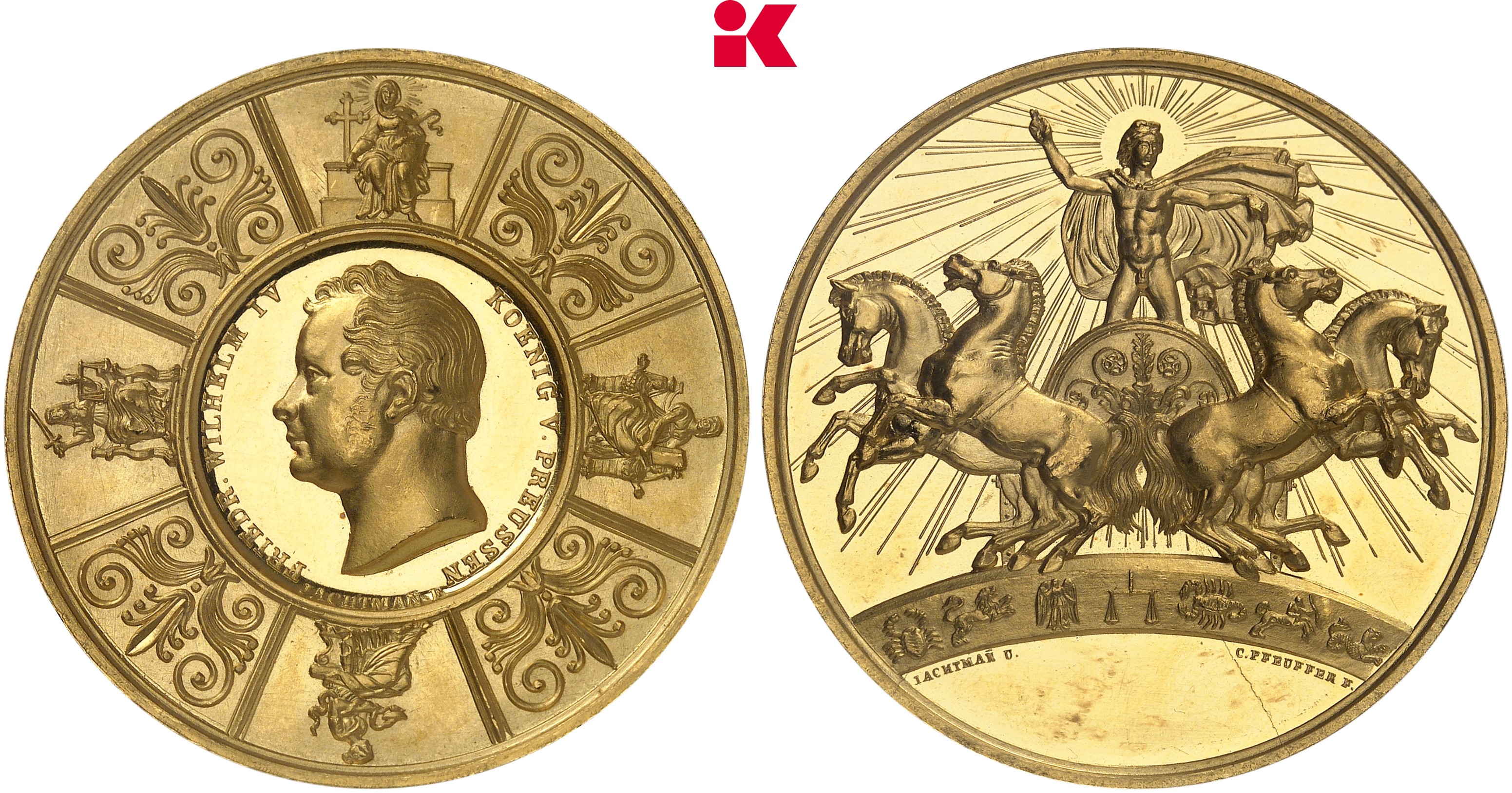
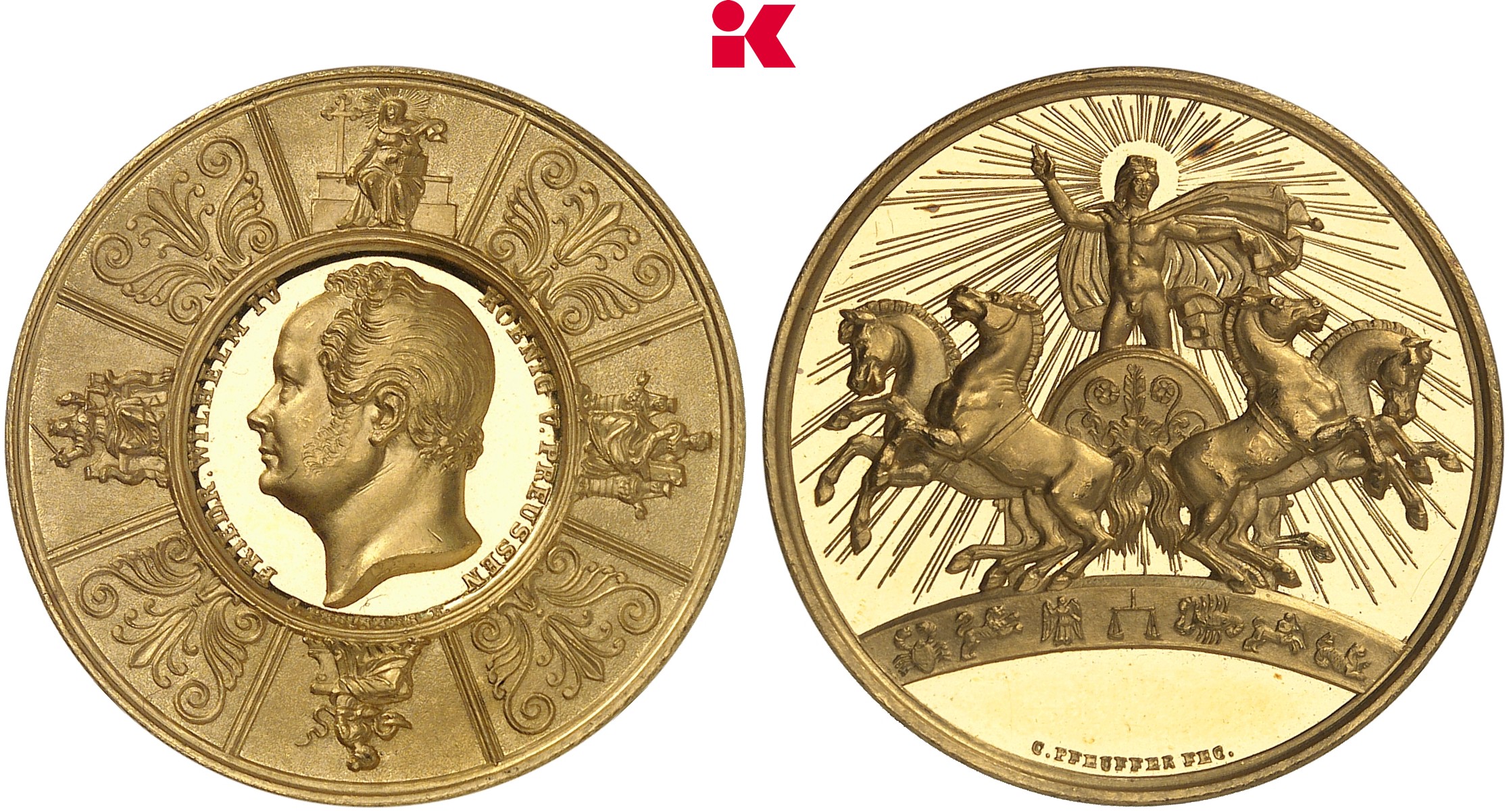
One may well ask why Frederick William IV, in that very same year of 1842, also commissioned new dies for the Grand Prize Medal for Science — dies which the medallist Johann Ludwig Jachtmann delivered shortly before his death on July 26, 1842. A small clue may be found in the design of the obverse. It is structured in perfect parallel to the Grand Prize Medal of the Academy of Arts and shows, alongside the portrait of the ruler, four personifications arranged in four fields: at the top, Theology bearing a cross and her nimbus; to her left, Jurisprudence, holding a sword in one hand and scales in the other; at the bottom, Medicine in the style of the ancient goddess Hygieia, feeding a serpent from a bowl; and to the right — but what is this figure intended to represent? On account of its classicising appearance, this figure is generally interpreted as Archaeology.
This raises the question of why Archaeology in particular should appear on equal footing with the three traditional faculties of the university. One would rather expect the fourth faculty — the Faculty of Philosophy — which in 1840 encompassed not only Archaeology and all the humanities, but the natural sciences as well. Yet it is indeed the philosophical faculty that appears as the fourth allegory. It is shown seated upon a throne flanked by two statues of Artemis Ephesia — a goddess frequently chosen in the nineteenth century as a symbol of the cosmos and all its manifestations, as we also know from the Kosmos Medal (Lot 154).
The Grand Prize Medal thus encompasses all the classical disciplines of academic scholarship. This may suggest that Frederick William IV wished to reserve for himself the right to award a prize for science independently of the Pour le Mérite. After all, he had explicitly excluded theologians from receiving that order — yet on the Grand Prize Medal, Theology appears as a full part of the academic world. With this medal, the king perhaps retained the ability to honour scholars he personally considered outstanding, without being bound by the judgement of the expert commission.
Grand Prize Medal of the Academy of Arts
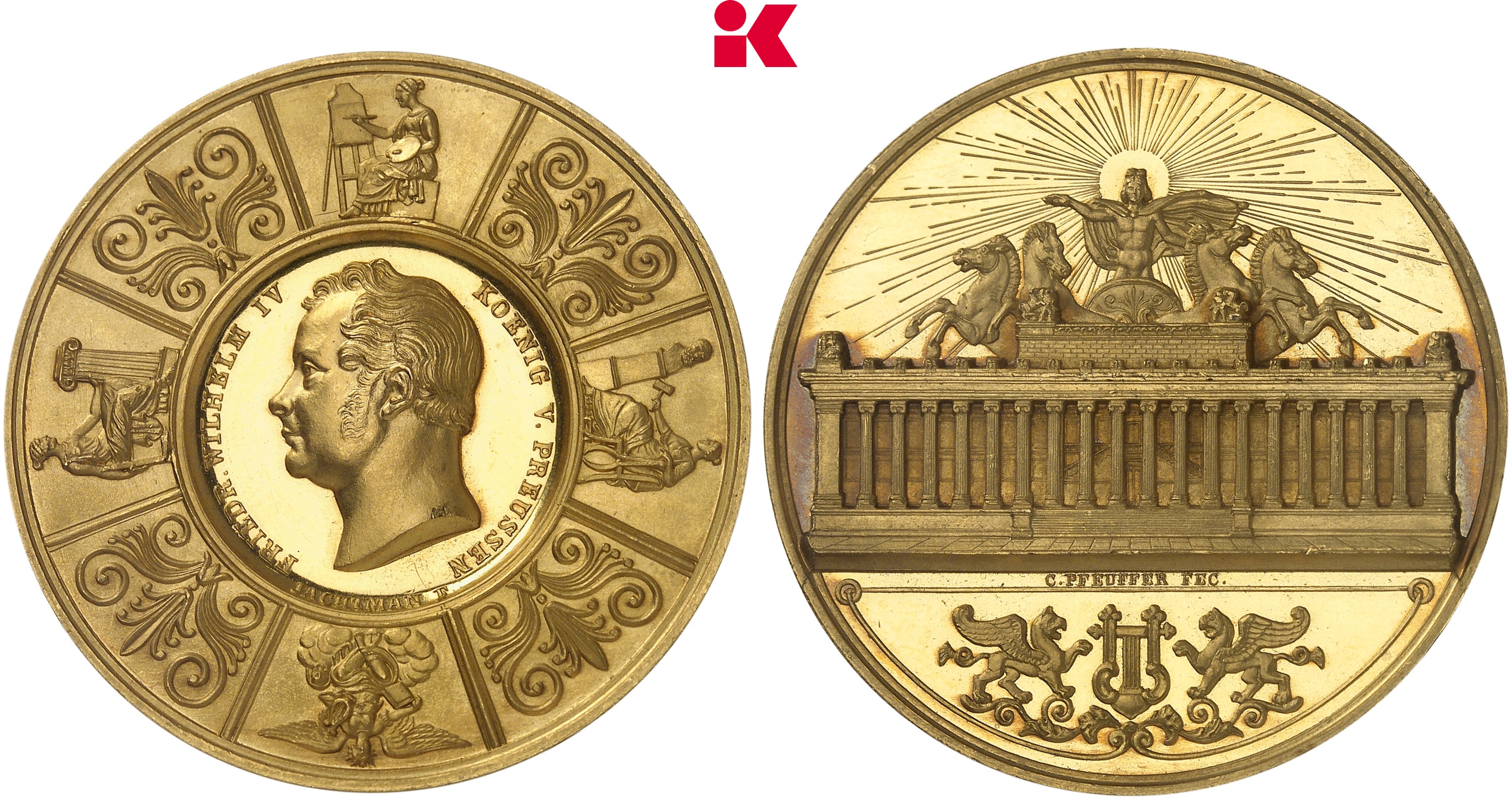
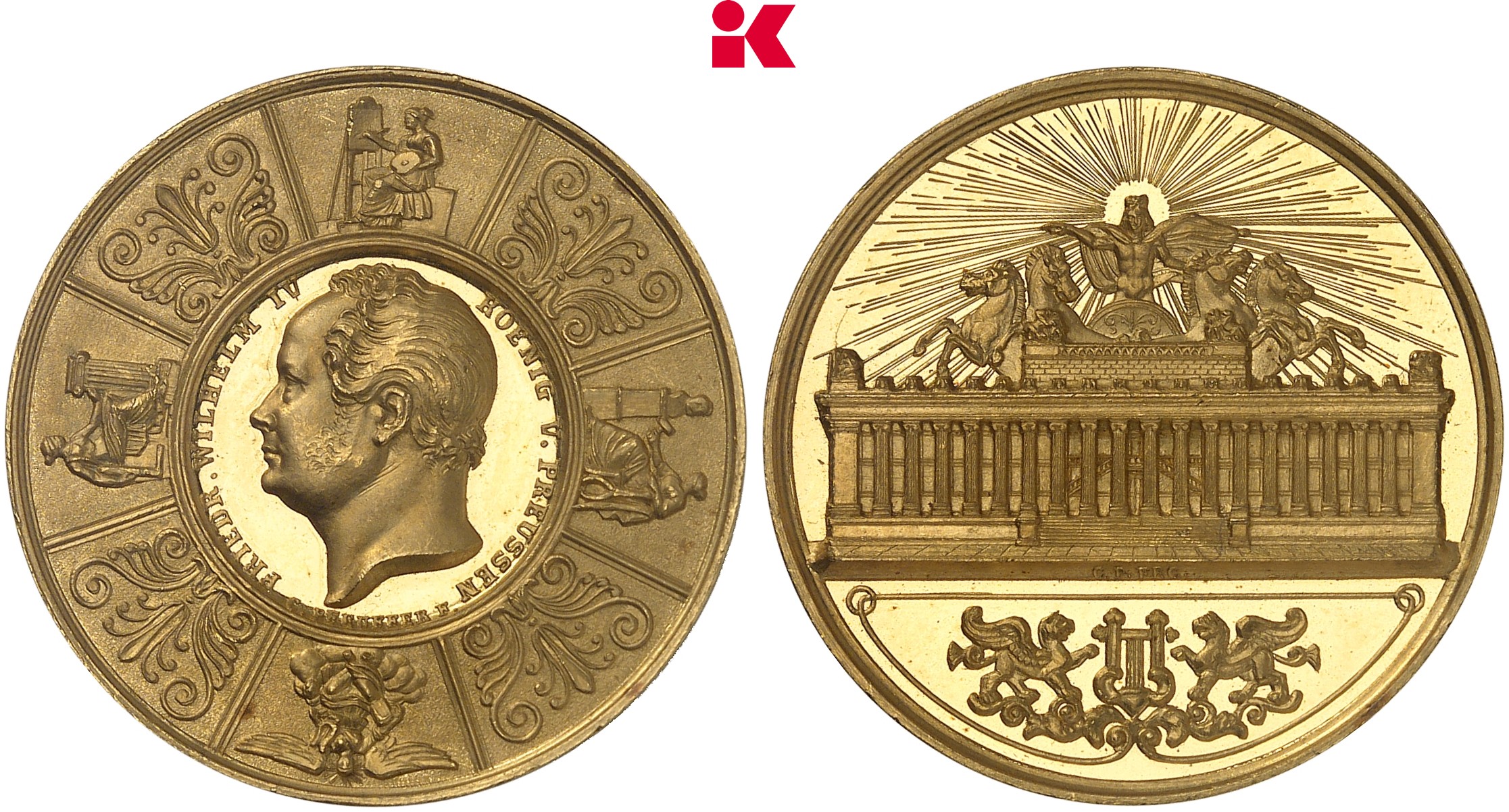
The obverse of the Grand Prize Medal of the Academy of Arts is designed in an entirely identical manner and may originally have been intended for a similar purpose — namely, to honour individuals who, in the king's estimation, had distinguished themselves in one of the arts. For its four fields depict not only the visual arts — Painting (top), Sculpture (right), and Architecture (left) — but also the performing arts, represented in the lowest field by a winged genius bearing a lyre and a book.
We know that before 1842, the Grand Medal for Art and Sciences was also awarded to actresses such as Sophie Friederike Krickeberg (1837) and Johanna Franul von Weißenthurn (1839). After 1842, however, the performing arts were no longer considered for the award. The celebrated singer Jenny Lind, who is said to have captivated Frederick William IV in 1844, did not receive this distinction.
The grand and small prize medals in fact developed into an honour conferred by the Prussian Academy of Arts from 1846 onwards upon visual artists who had exhibited particularly impressive works during the Academy exhibitions. The first awards were made in 1846. Those honoured with the Grand Prize Medal included:
• Karl Begas, sculptor — later involved in the Berlin Victory Avenue
• Franz Krüger, court painter to Frederick William IV
• Karl Schorn, history painter
• Ludwig Wichmann, sculptor — a contributor to the Berlin Kreuzberg Monument
• Eduard Magnus, portraitist
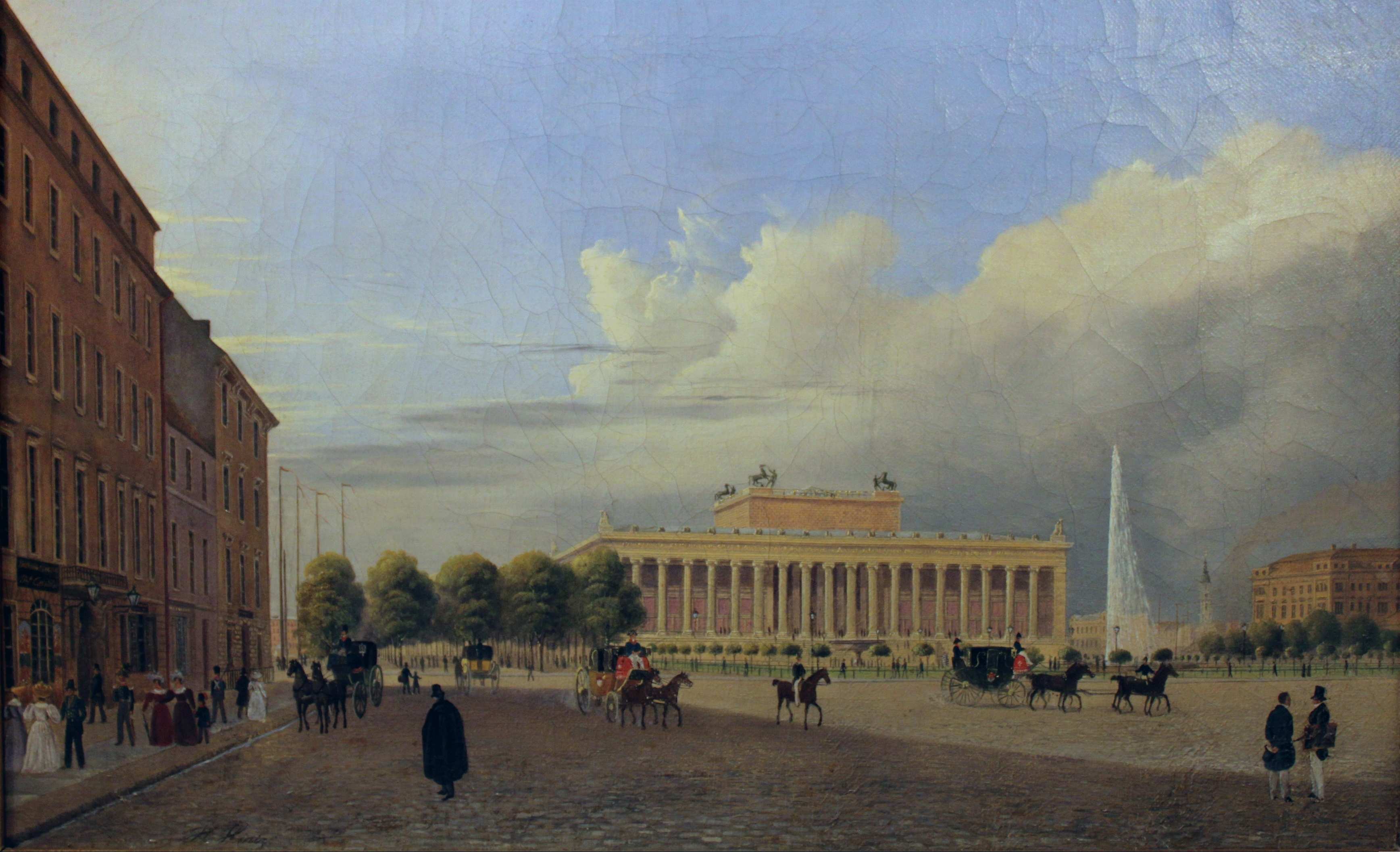
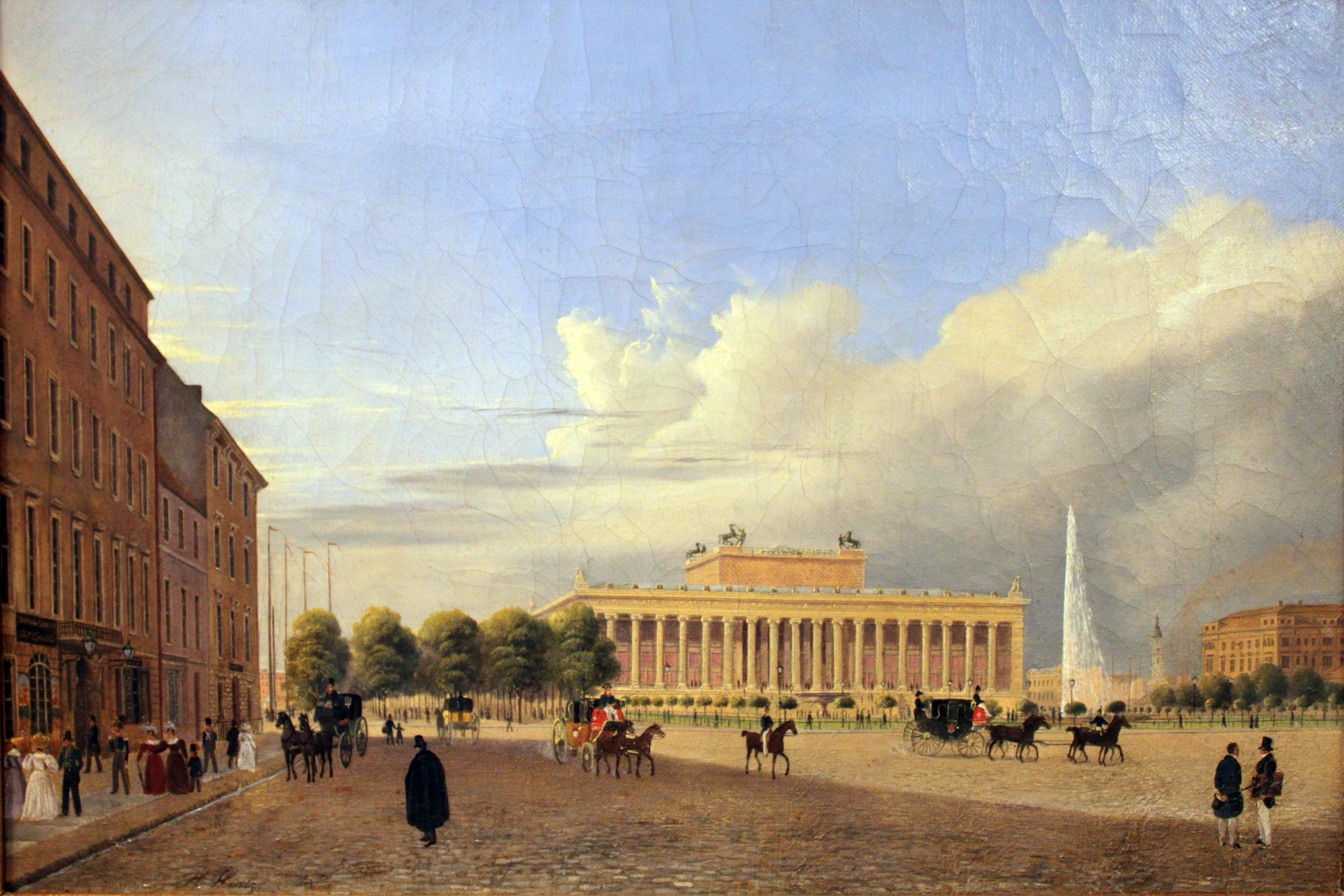
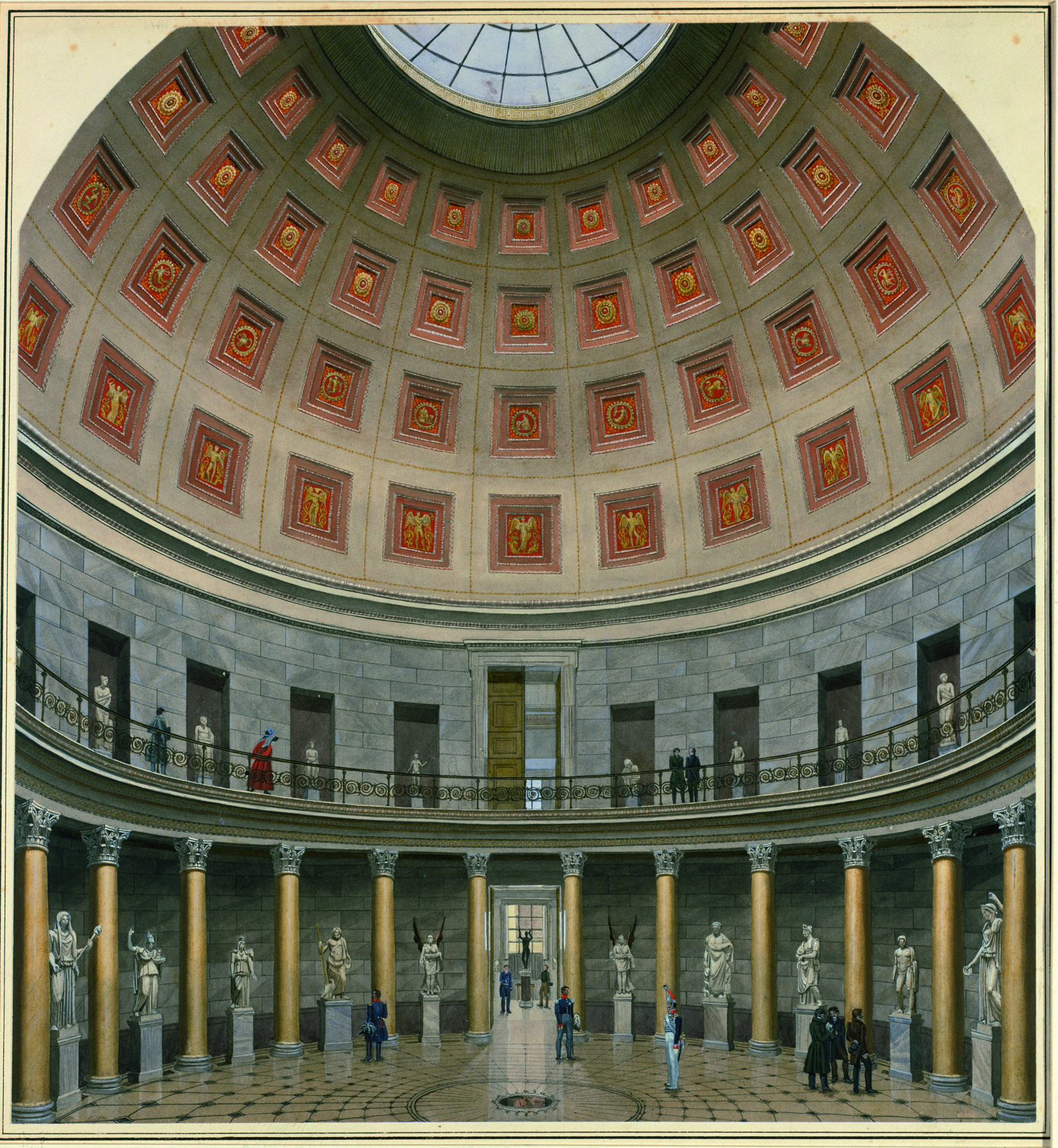
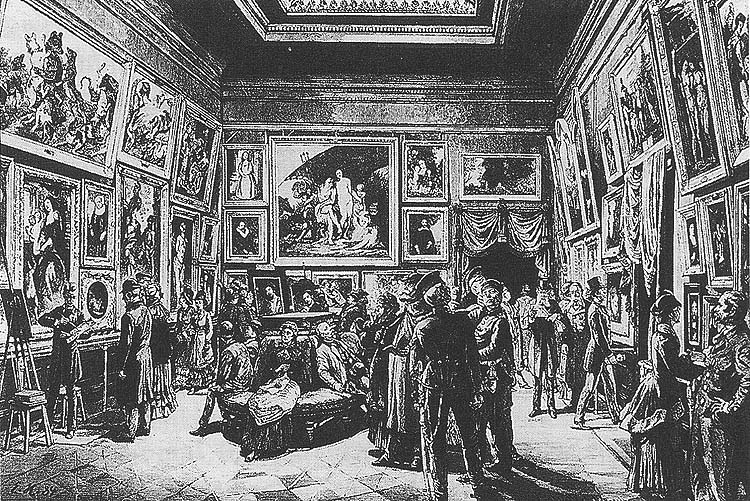
The medal masterfully illustrates the differing regard in which the visual and the performing arts were held under Frederick William IV. This is also expressed on the reverse of the medal, which depicts the Altes Museum in the Lustgarten — where visitors could behold what the nineteenth century considered the highest art: works of painting and sculpture.