

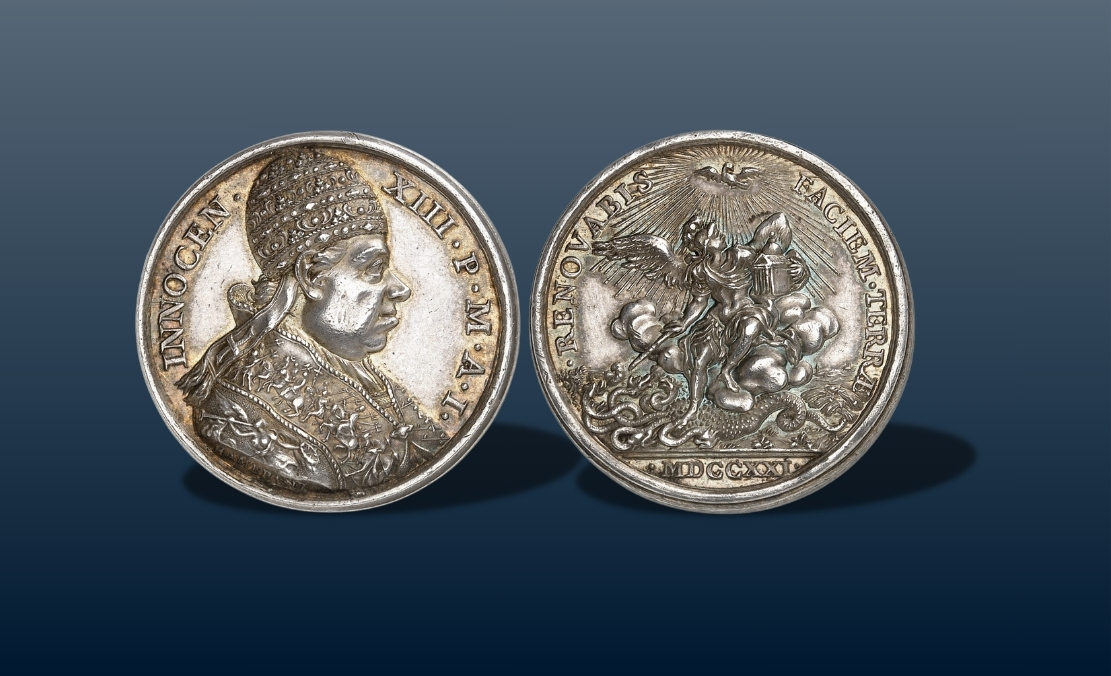


On 18 March 2024, we will offer a special collection with coins and medals of the popes. Ever since the late 16th century, these issues probably served the main purpose of promoting the Catholic Church’s policies throughout the world on behalf of its supreme leader. The fact that these coins could also be used for payment purposes seems to have been overshadowed by their main objective. The manifold depictions inspired collectors to systematically build up ensembles of these pieces of high artistic value. So there is reason to argue that the numerous coins and medals of the popes were mainly issued for representative purposes and to be sold to collectors. This is a similar phenomenon to what we experience regarding Vatican euro coins today, as these pieces can also hardly ever be found in circulation.
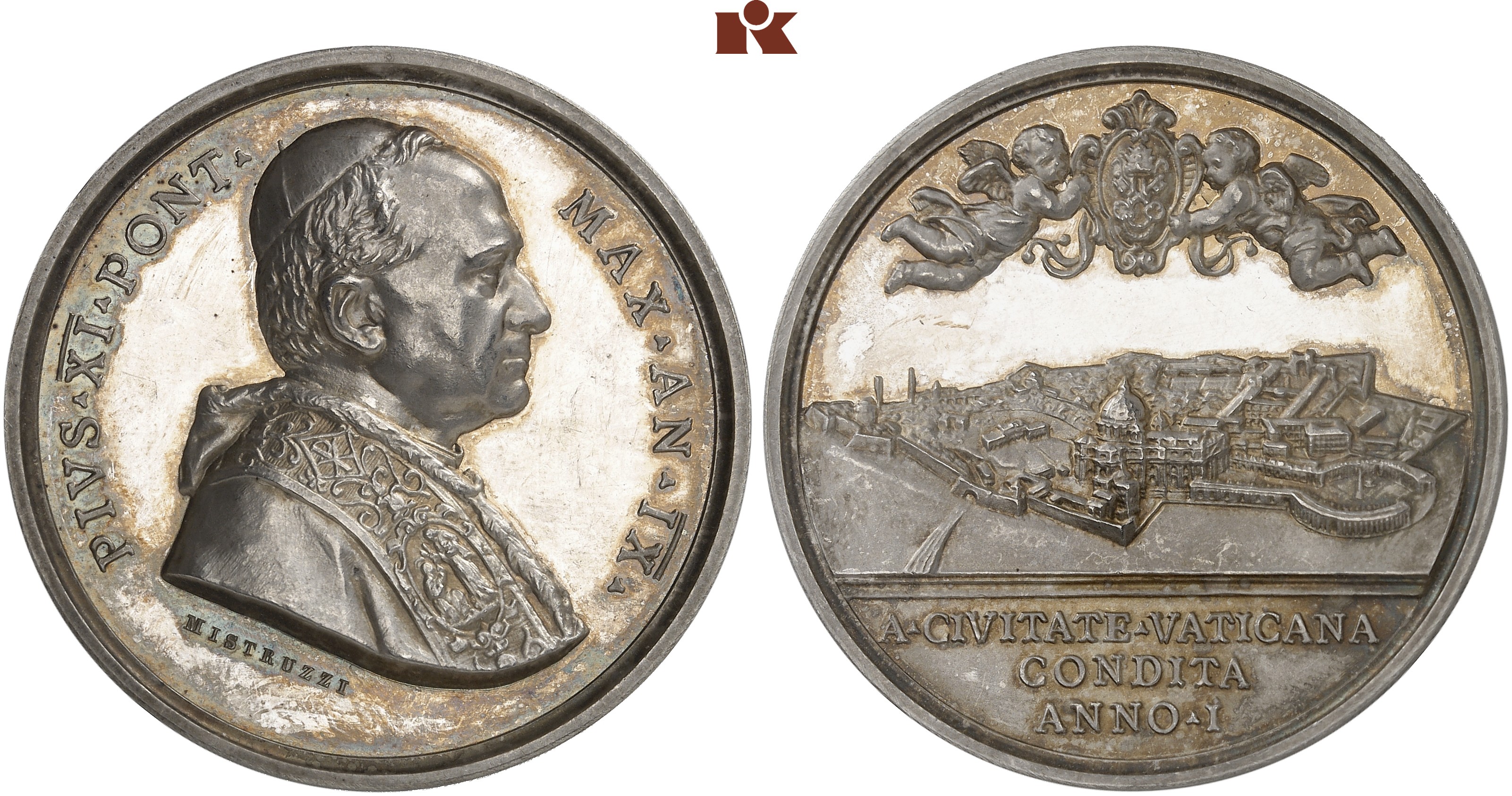
Pius XI.
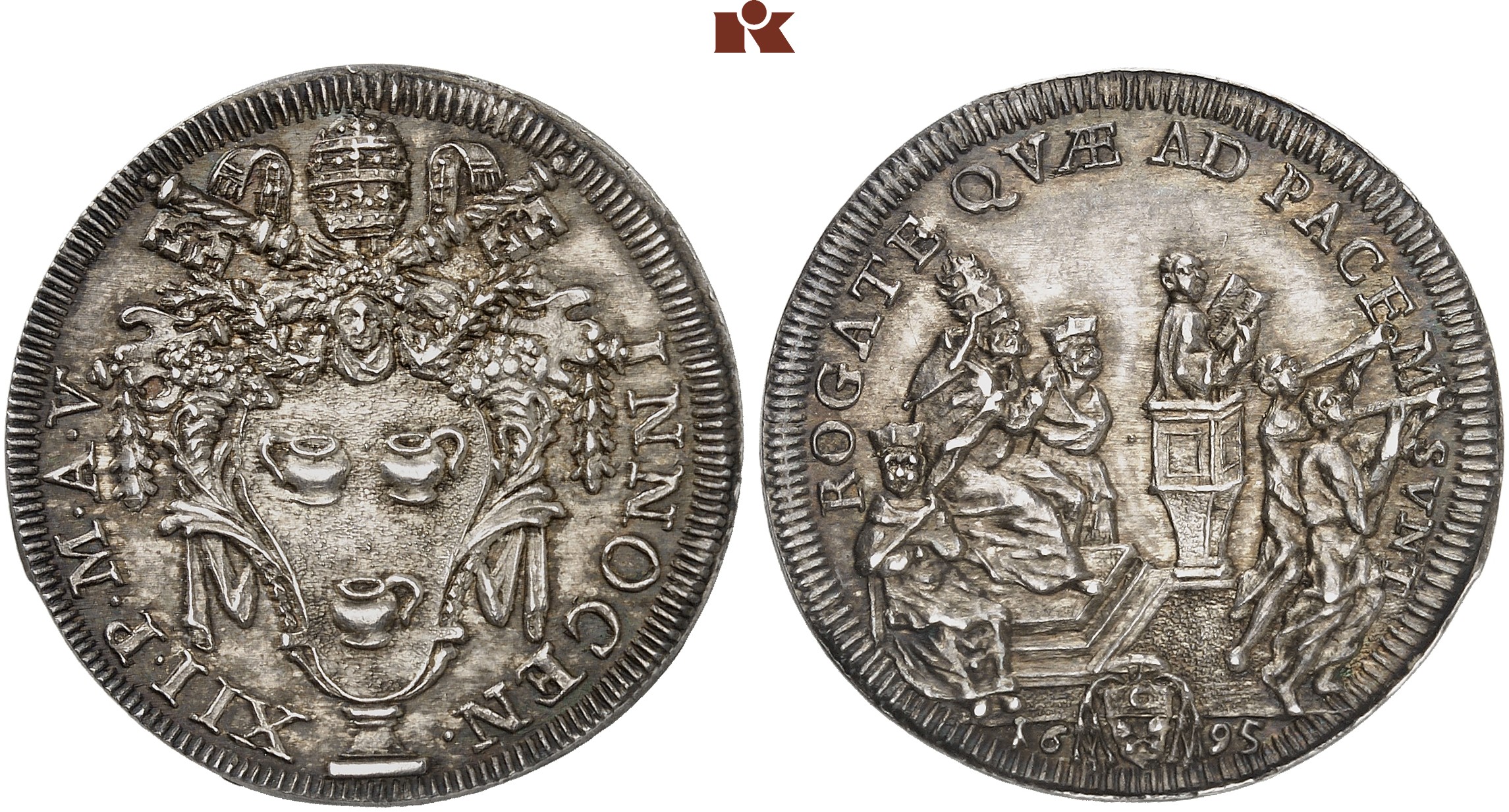
Innocent XII.
Showpiece. Extremely fine to FDC.
From Künker auction 403 (18 March 2024), No. 1474.

Innocent XIII.
Original strike. Extremely fine.
From Künker auction 403 (18 March 2024), No. 1543.
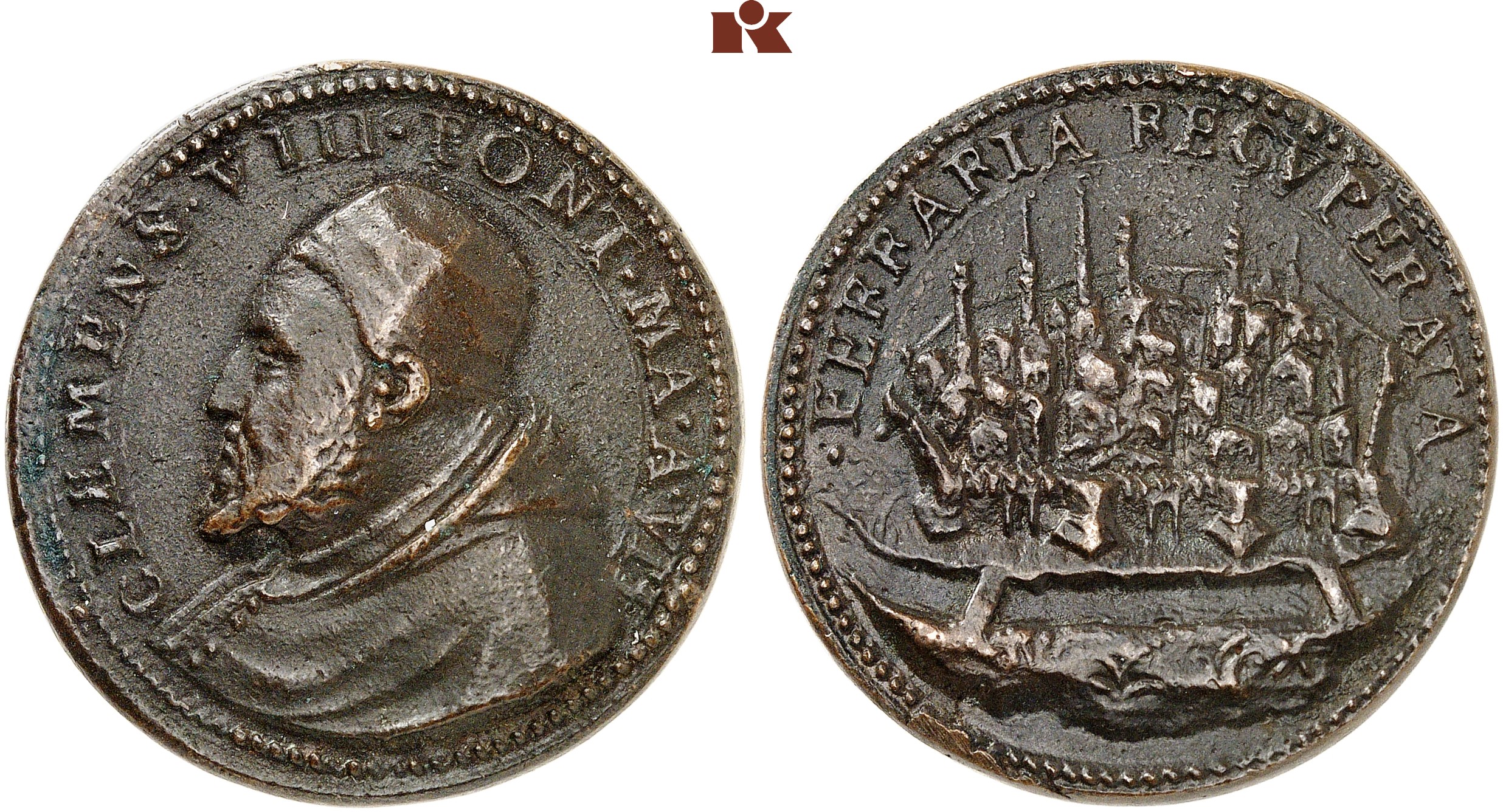
Clement VIII.
Very fine.
From Künker auction 403 (18 March 2024), No. 1348.
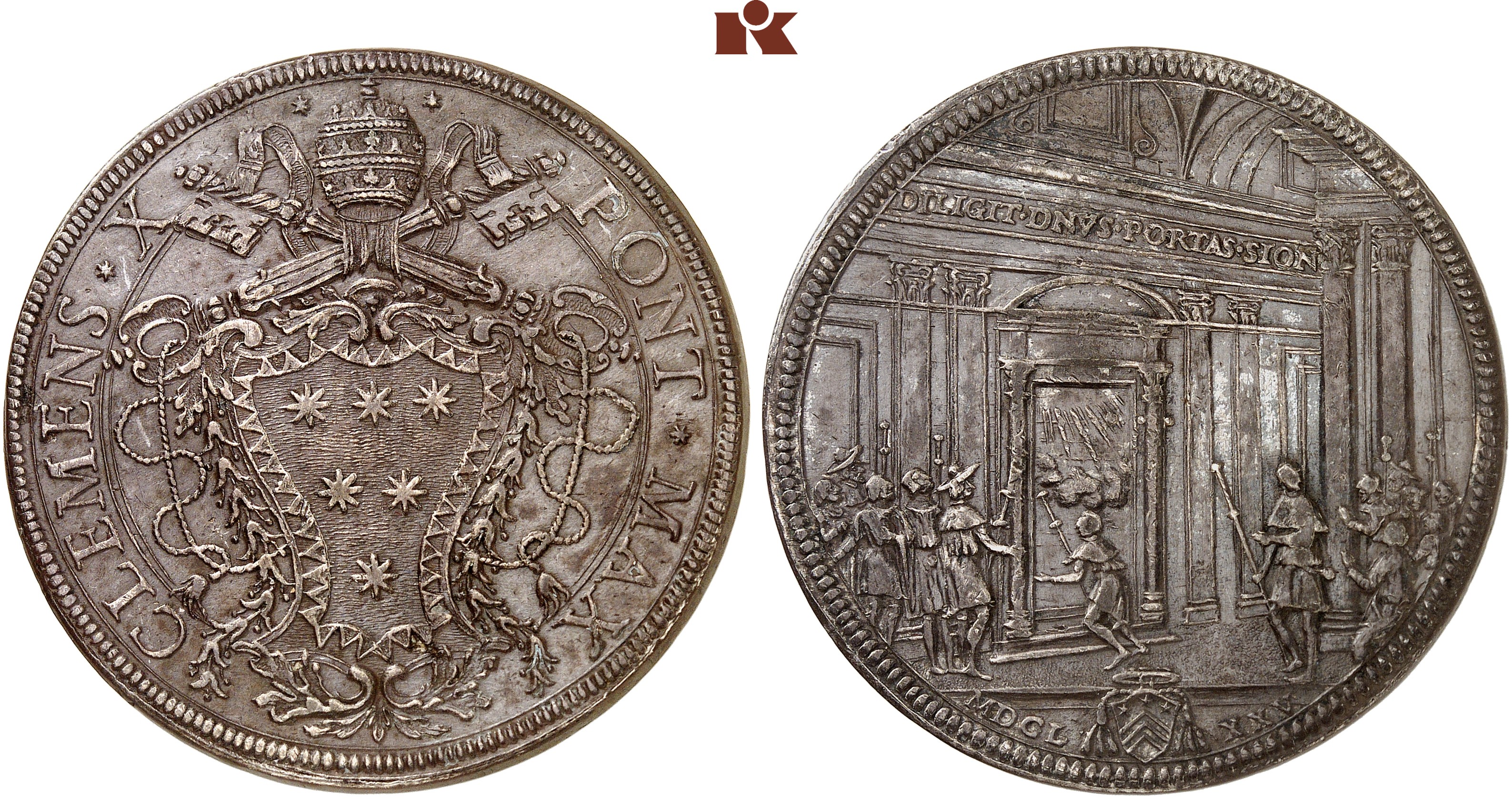
Clement X.
From Künker auction 403 (18 March 2024), No. 1387.
The papal production of coins and medals was of course stimulated by the demand of visitors to Rome. Those who produced the coins readily opted for depictions that were sure to appeal to tourists. Of course, the Catholic faith was at the center, but the abundance of buildings and scenes with crowds of people is striking. They must have been more popular with tourists! Here, too, many aspects remind us of modern phenomena of commemorative coinage, which focuses on the needs and wishes of collectors. Papal issues present the image of Rome that tourists would expect and wanted to show to their loved ones at home.
The catalog for Künker’s upcoming auction 403 provides you with an opportunity to immerse yourself in one of the oldest fields of numismatic interest. If you understand German and want to learn more about the historical background, we recommend “Die Silberne Stadt – Rom im Spiegel seiner Medaillen” of the State Coin Collection in Munich, published in 2021 by Hirmer Verlag and edited by Matteo Burioni and Martin Hirsch. We relied on this work regarding many details in this article. Another interesting read is the work “Glänzende Propaganda – Kirchengeschichte auf Papstmedaillen” by Kay Ehling and Jörg Ernesti, published in 2019 by the Herder Verlag.
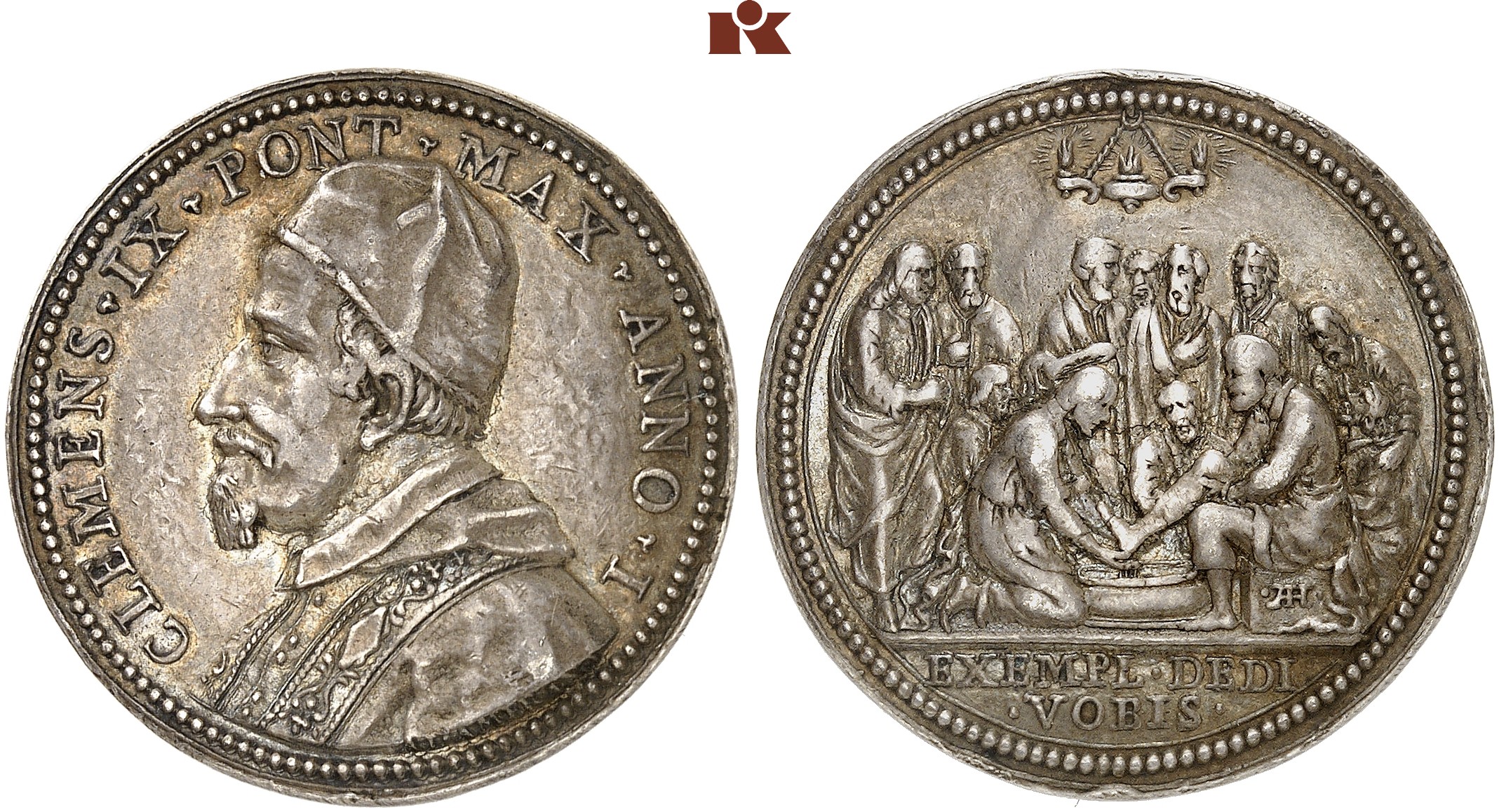
Clement IX.
Very fine to extremely fine.
From Künker auction 403 (18 March 2024), No. 1380.
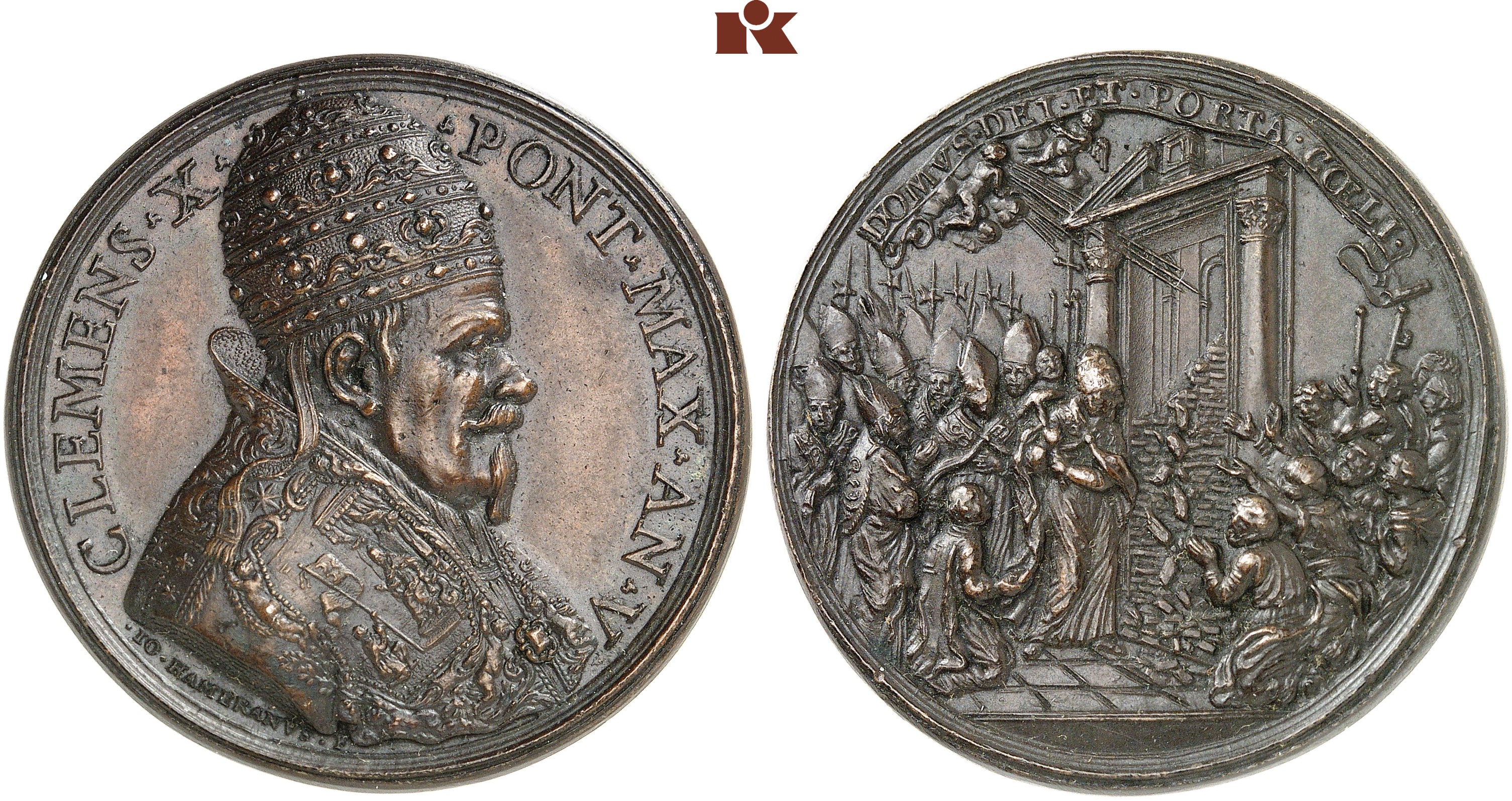
Clement X.
Extremely fine.
From Künker auction 403 (18 March 2024), No. 1399.
What started in the mid-16th century became a wide-spread phenomenon in the late 18th century. The years after the end of the Seven Years’ War and before Napoleon’s campaigns are today regarded as the golden age of grand tours. English lords in particular travelled to Rome and bought anything they could get their hands on. Thus, London developed into a center of auctions offering papal coins and medals. In the 18th century, almost 100 of such sales took place in London. However, auction catalogs did not always distinguish between coins and medals. This is hardly surprising as inexperienced numismatists still struggle to differentiate between both categories today. The coins have beautiful reverse motifs and can be easily mistaken for medals, and were just as readily exported to Europe as souvenirs.