

.jpg)
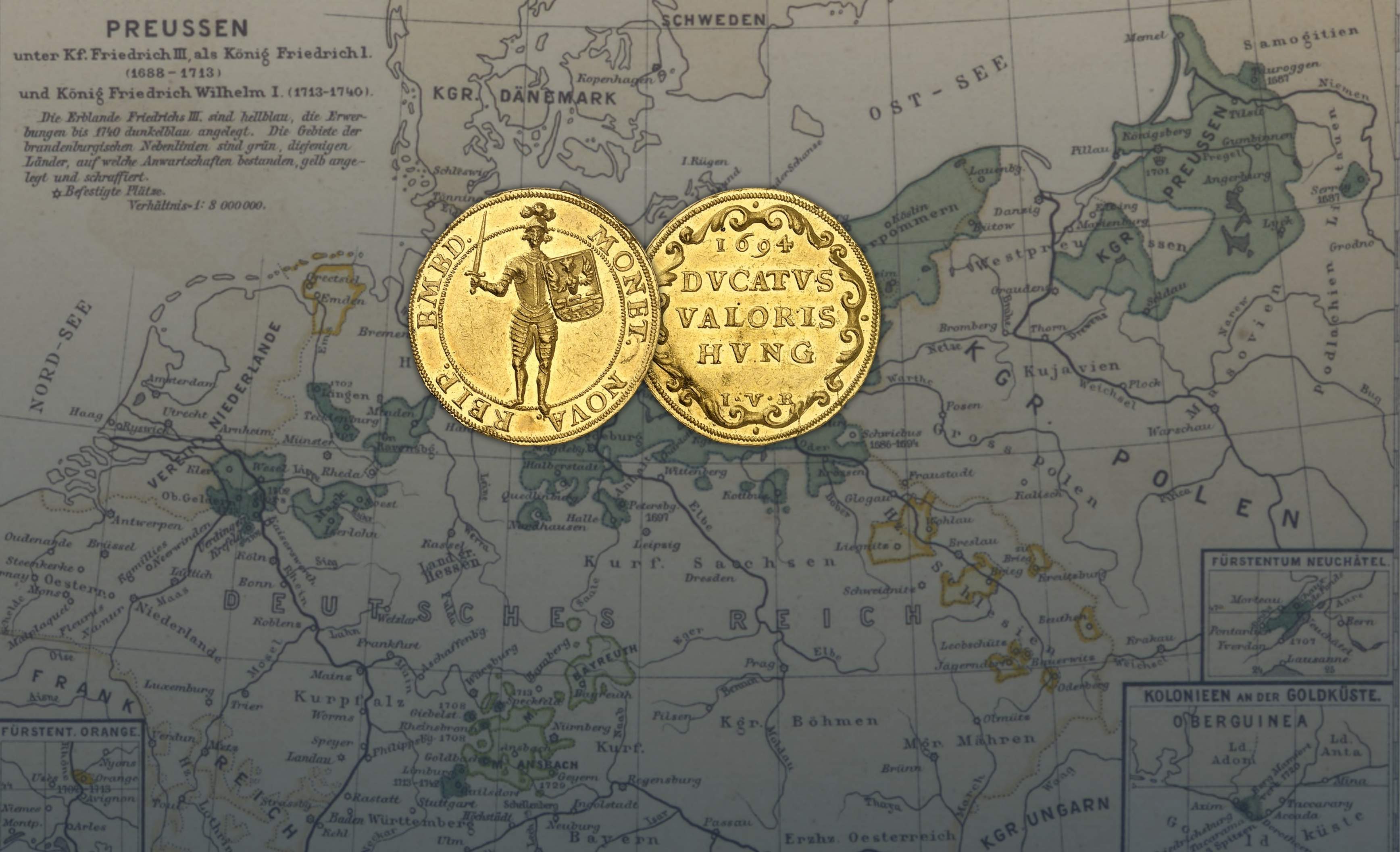
The Republic of Emden issued a magnificent ducat in 1694. It features a motif that can also be found on the much more common ducats minted in 1689. The translated inscription reads New Coin of the Republic of Emden and the coin depicts an armored warrior, carrying a sword in his right hand and a shield in his left. This is remarkable. After all, the statue depicted on the specimen strongly resembles the Roland statues that can still be seen in many free Hanseatic cities today. These armored warriors with sword and shield established themselves as a symbol of free imperial cities in the north. Emden, however, was anything but free in 1694.
A Complicated Relationship between Count and City
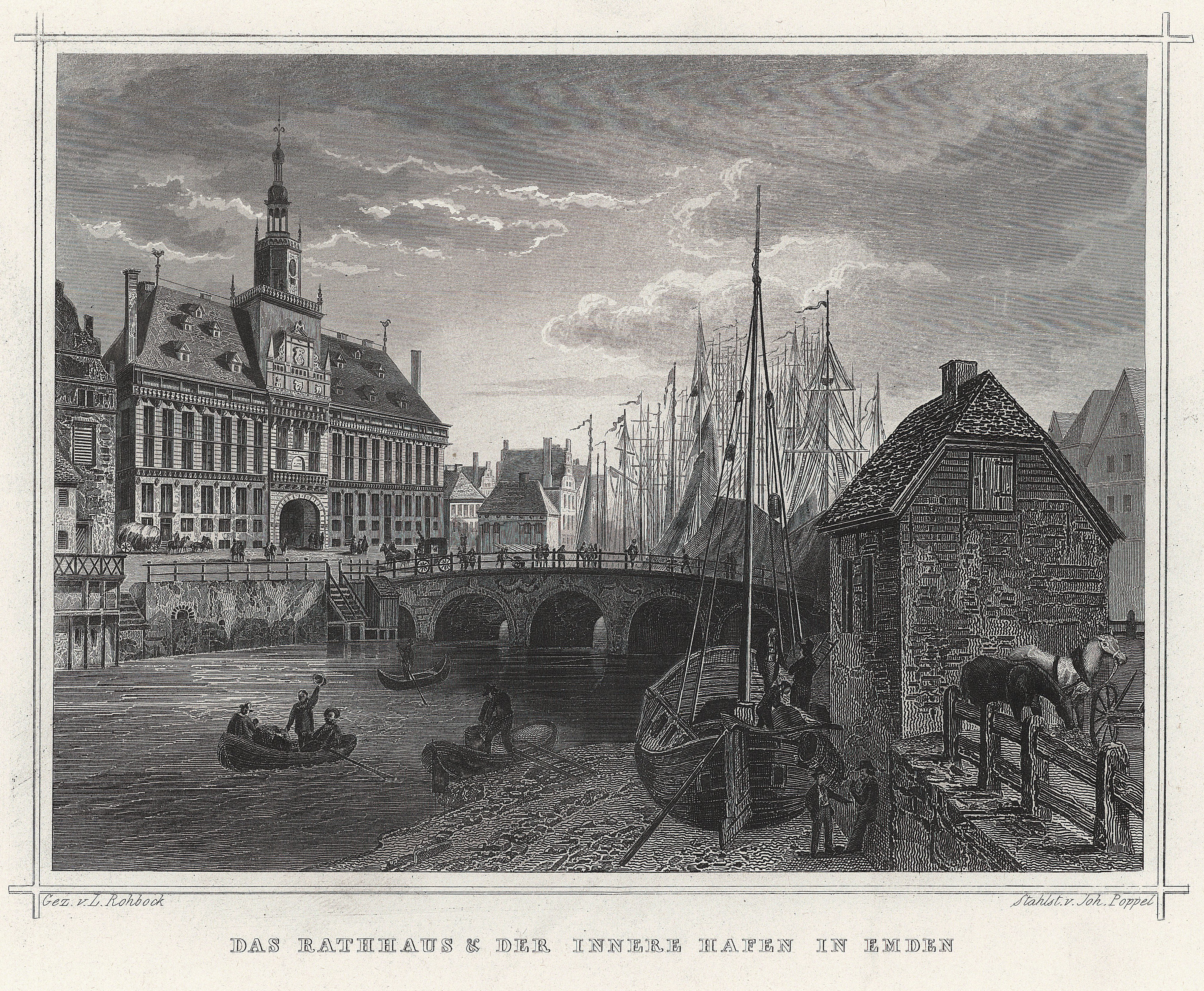
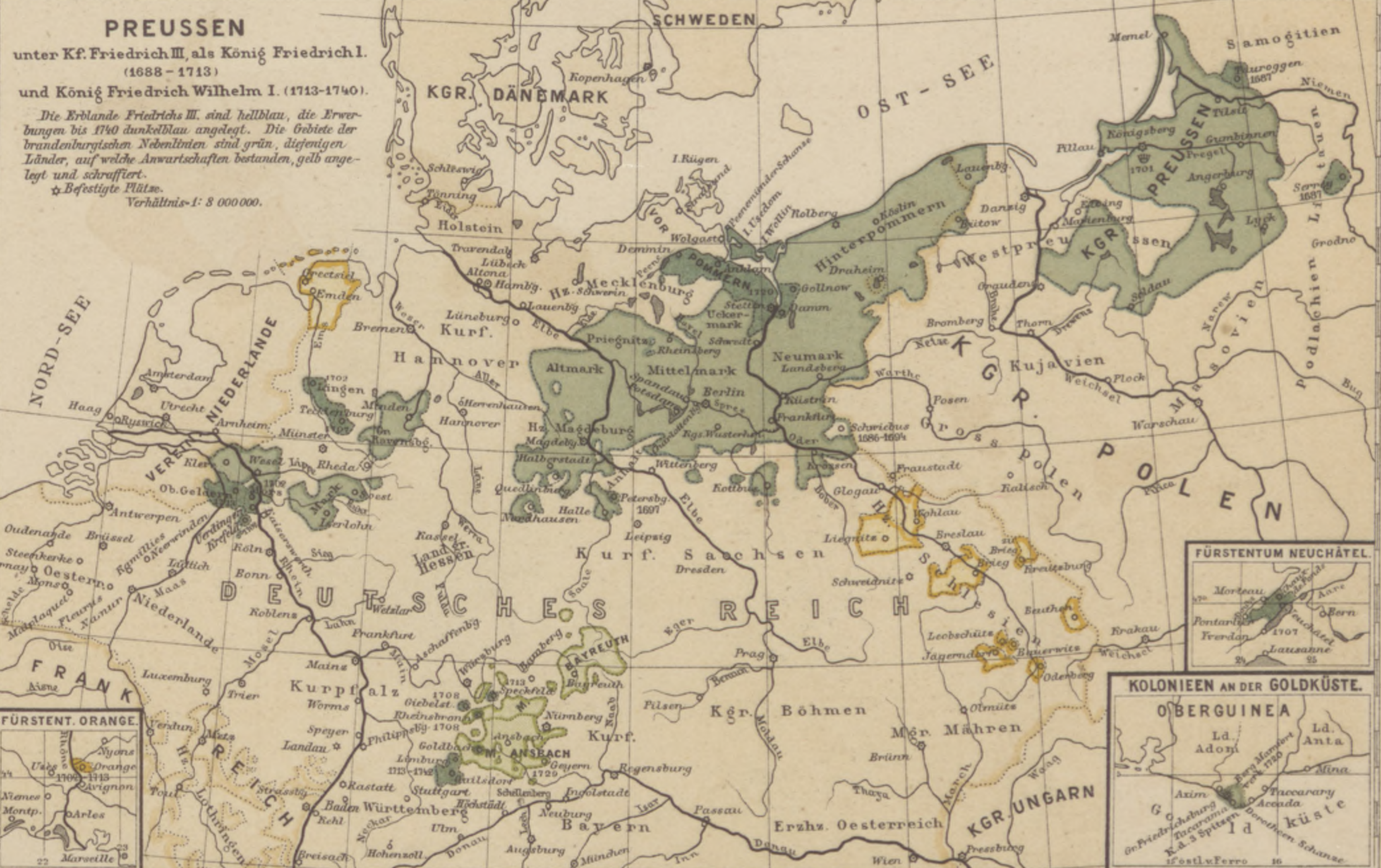
Unlike for example Bremen, Halberstadt and Stendal, Emden did not enjoy the status of a free imperial city in 1694. Consequently, its citizens were forbidden from erecting a Roland statue in a prominent location. This required a special right that was the privilege of free imperial cities – and Emden simply did not have this privilege. The citizens of Emden were subject to the Count of East Frisia, and this relationship was extremely conflict-ridden as the city was striving for political and economic autonomy. The count tried to thwart their efforts. Emden was prosperous, earning good money from its conveniently located harbor with access to the North Sea. And political connections came about quite naturally. After all, the Netherlands was right next door. And the Ems River provided the Prussians with a waterway that was navigable by smaller ships, connecting Emden to their territory around Lingen and Tecklenburg.
Understandably, the city of Emden wanted to free itself from the count’s rule in order to take advantage of the many opportunities offered by this harbor. The coin’s design should be interpreted against this backdrop. Choosing this motif enabled the people of Emden to assert their claims without violating the rules. Of course, they did not depict a Roland statue. So why would anyone blame the people of Emden if the armored warrior resembled a Roland statue? And why would anyone think it was Emden’s fault if the count took this as a provocation? Today, one might refer to the situation as a toxic atmosphere. And indeed, the tensions between the city and the count had escalated so much that two garrisons were stationed in Emden to ensure peace in the year this ducat was minted. One group of soldiers came from the States General of the Netherlands, the other from Brandenburg. They competed with each other to see who could better protect peace in Emden.
The Hohenzollerns and Their View of World Trade
The House of Hohenzollern had great ambitions at that time. Only seven years after this coin was minted, Frederick III was crowned King in Prussia as Frederick I. So it was no surprise that Emden played a central role in the Hohenzollern’s plans for territorial expansion! Frederick exploited the fact that the Habsburg Emperor Leopold I was caught up in political, military and economic difficulties. The Ottoman war and conflicts with the French king, Louis XIV, required significant resources. It was challenging for an emperor, whose country was only slowly recovering from the aftermath of the Thirty Years’ War, to find these resources. At the same time, powerful imperial princes were striving to obtain ever greater independence. They constantly found new loopholes in imperial law that allowed them to play the political game according to their own rules. Briefly said: Leopold could not afford to risk a conflict with the ambitious Elector of Brandenburg. If Frederick III broke imperial law and used armed force to seize Emden, a city inclined to support him, from the Count of East Frisia, Leopold I would be left with few options. He did not have the resources to deploy his own troops. Moreover, Brandenburg was the most important power in the Lower Saxon Circle, which would have been responsible for punishing the lawbreaker. Therefore, the emperor’s reputation would suffer a considerable blow if Brandenburg were to assert its ambitions for the harbor city without being punished for it.
The Solution: Expectantia
The diplomats of Leopold I found the perfect solution. It did not affect the legal status of the Counts of East Frisia, but gave Frederick III hope and legal certainty without undermining the emperor’s authority. The solution was called “expectantia”. This legal term referred to the imperial guarantee of a dynasty’s entitlement to another dynasty’s possessions should the latter become extinct. And dynasties died out time and again. This was not unusual. The House of Cirksena shared this fate. In 1744, the last male heir, Count Carl Edzard of East Frisia, died. This meant that the “expectantia” could be implemented. Emperor Charles VII of the House of Wittelsbach thus secured Prussian support against the Habsburgs. And as early as in 1751, Frederick the Great founded the Royal Prussian Asiatic Company based in Emden. Its first ships left the harbor in 1753.
.jpg)
And What Does Hungary Have to Do with Emden?
Let us take a look at the reverse of this coin. It has a very simple design and bears only the year and a legend that reads (translated) Ducat with the Value of a Hungarian [Ducat] in a Rocaille frame. This too was adopted exactly as it appeared on the 1689 ducats. But why do all these ducats bear this inscription? It was unnecessary to indicate the nominal value of a coin minted according to the imperial coinage system. But this is precisely the point. This ducat did not comply with the provisions of the imperial coinage regulation of 1559. The legend enabled Emden to avoid an official inspection of the coin’s fineness. It was common knowledge that Hungary was experiencing economic difficulties as a result of the Ottoman wars. The Kremnica mint, where the Habsburgs had their ducats minted for Hungary, was experiencing problems with its gold supply. Consequently, their coins were slightly lighter and had a lower fineness. This was no problem for the Habsburgs. After all, Kremnica was not located on imperial territory and was not required to comply with the imperial coinage regulation. This was convenient for Emden. The city found a way to cheat the system. Its ducat was never intended to be used in transactions anyway. It served representative purposes and was used as a diplomatic gift. That is why these coins are so rare today. We only know of three specimens to have survived. Two of them are kept at the East Frisian State Museum. One – the best-preserved specimen – is in private ownership. It will be offered on 7 October 2025 at an estimate of 20,000 euros. It will be exciting to see what hammer price the coin fetches.