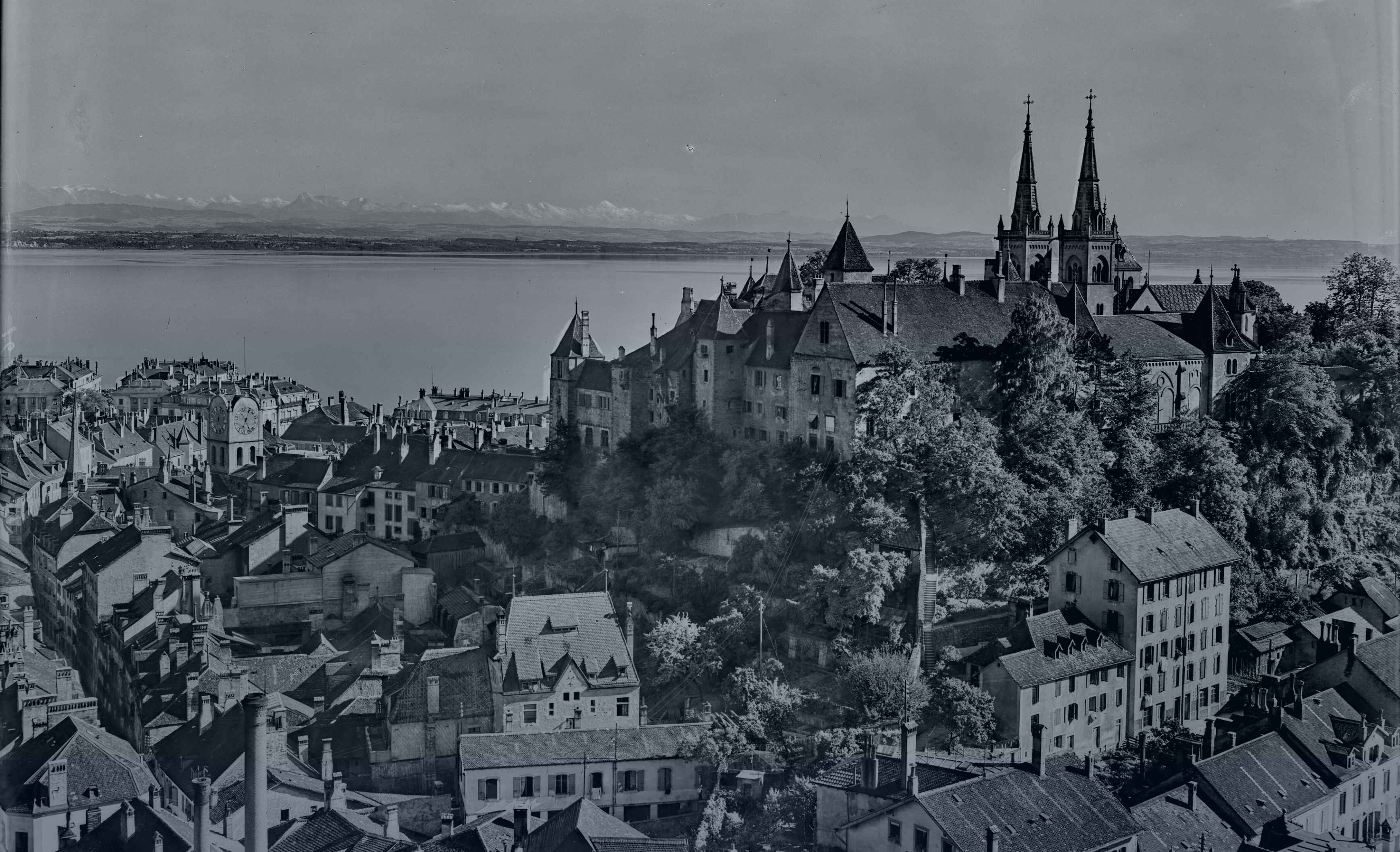
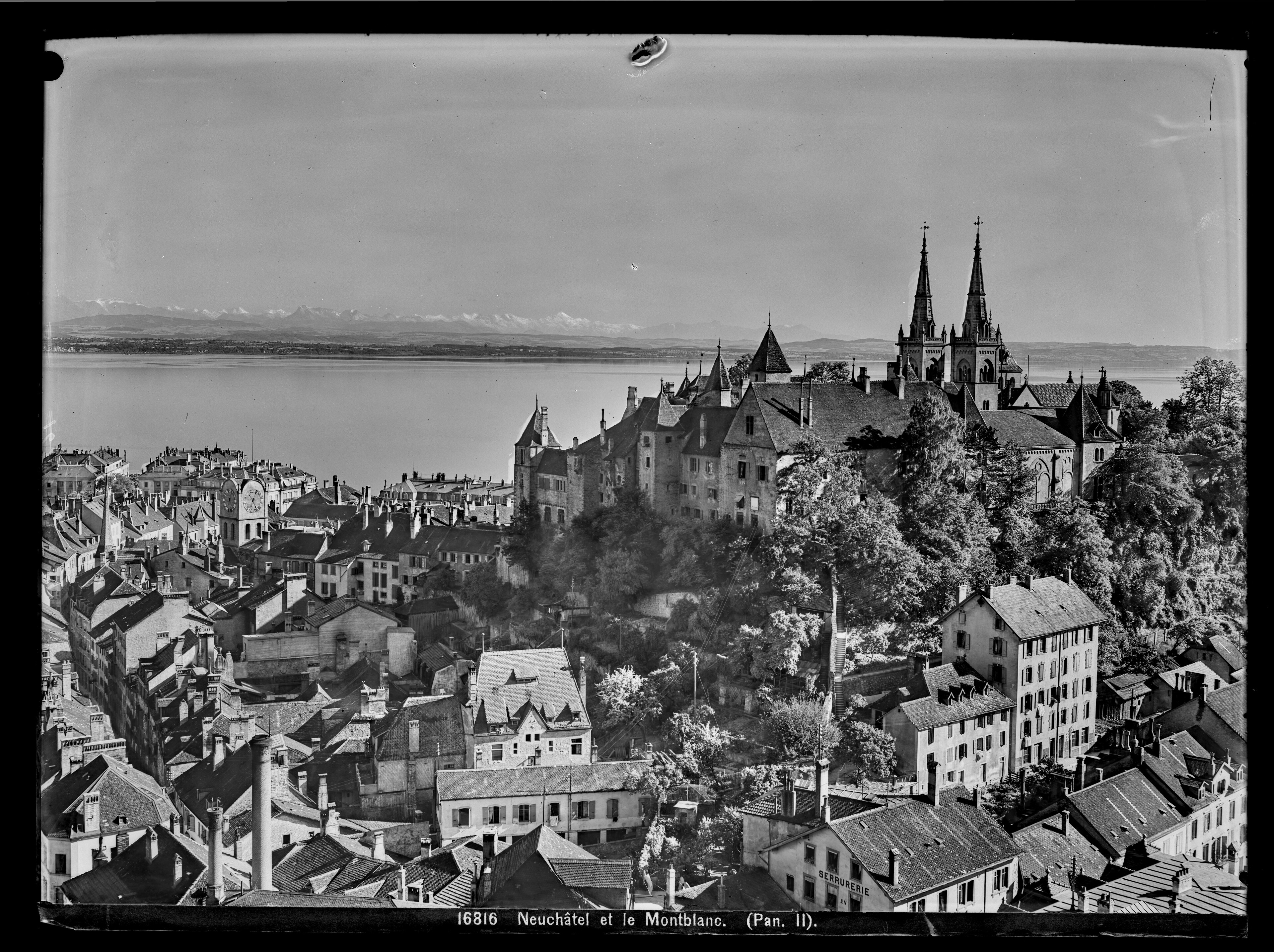
Since 1707, Neuchâtel had belonged to Prussia. Its kings governed the principality in personal union. The geographical distance made it easy for local administrators and governors to mediate between the interests of the sovereign residing in Berlin and the citizens of Neuchâtel. When Napoleon forced King Frederick William III to renounce the throne of the principality, this represented a significant deterioration in the political and economic situation of Neuchâtel's inhabitants.
Soldiers for Napoleon
Although Neuchâtel was not incorporated into France but instead received its own prince in the form of Louis-Alexandre Berthier, the country was required to contribute far more in taxes and soldiers to France. Neuchâtel provided six companies which, on account of their yellow uniforms, became known as the "canaries" (Canaris). They fought between 1806 and 1813 on almost every theater of war. Many died, and recruitment was carried out repeatedly. It has been calculated that a total of 2,000 men fought as Canaris. With an estimated total population of approximately 25,000 to 28,000 inhabitants, this amounts to 30 percent of all young men in the country. By 1814, only 46 of them are said to have returned home — a death rate of 96 percent.
A Royal Visit following the Victory at Paris
One can well imagine the feelings of Neuchâtel's citizens when they learned that the Allies had triumphed at Paris and that peace was to be expected. It is easy to understand why they now held very different sentiments towards the House of Hohenzollern. Frederick William III experienced this firsthand when, together with Crown Prince Frederick William (IV), he paid a visit to the Principality of Neuchâtel on his return journey from Paris. On July 12, 1814, he made a ceremonial entry into the capital. It was the first visit by a Prussian monarch to this distant part of the kingdom. Frederick William remained for several days. Alongside official receptions, the programme included — as was customary on such visits — tours of local workshops and craftsmen. During a visit to the town of La Chaux-de-Fonds, a delegation of local artisans presented Frederick William III with a very special gift as an expression of their gratitude.
The Watchmaking Industry in La Chaux-de-Fonds and its Gift for the King
Since the mid-eighteenth century, La Chaux-de-Fonds had developed into a centre of the watchmaking industry. It offered younger sons of tradesmen and farmers — those who could find no livelihood in their father's household but possessed artistic talent — a well-paid alternative. However, the watchmaking industry had suffered particularly severely under Napoleon: many engravers, movement makers, and enamellers had been conscripted into the army. In addition, the crucial British market had collapsed due to the Continental Blockade.
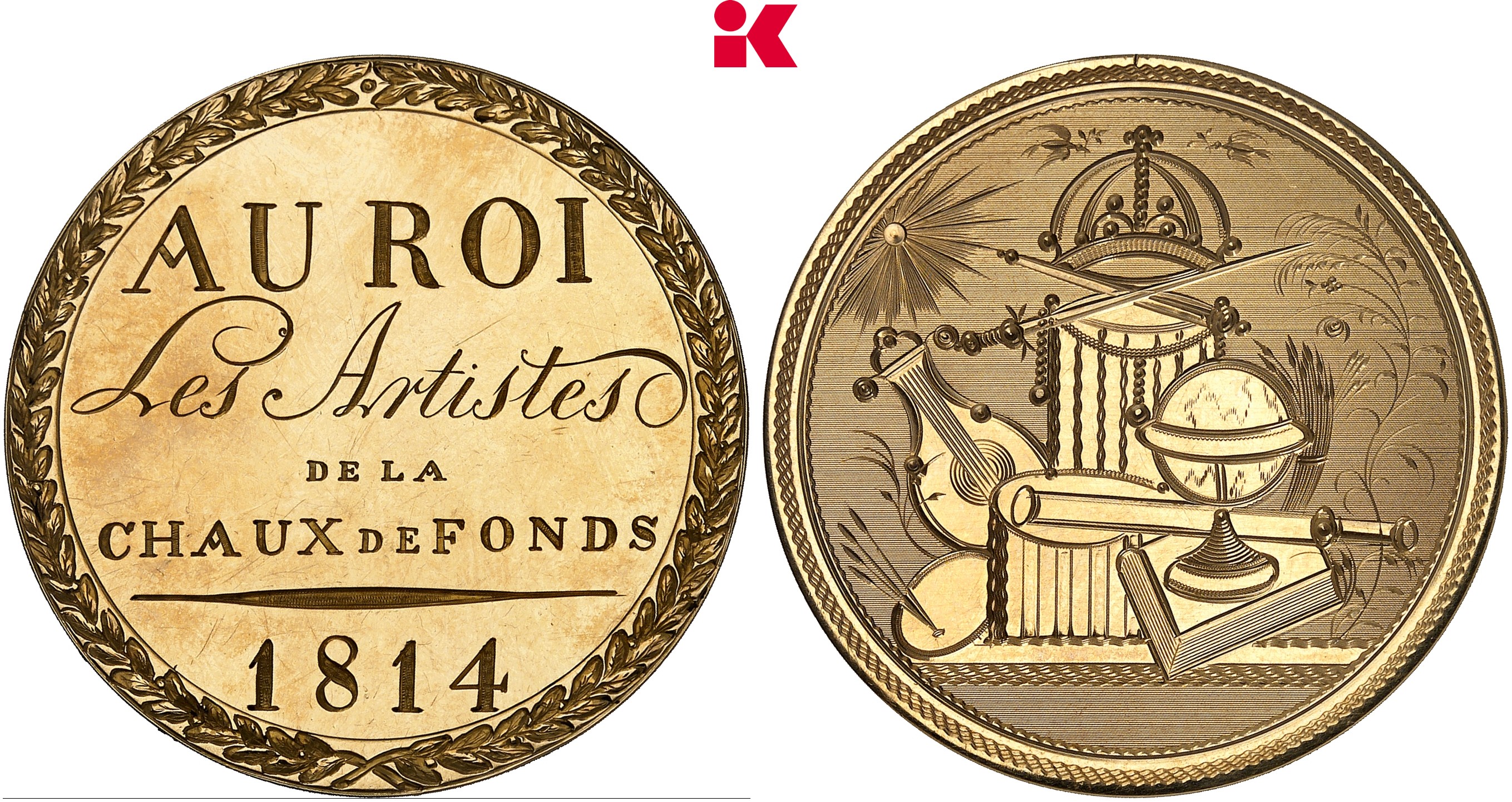
The watchmakers of La Chaux-de-Fonds thus seized upon Frederick William III's visit to express their gratitude for the end of the war, which was owed in large part to Prussia, through the gift offered in our auction as Lot 100. Using the techniques available to them as watchmakers, they created a kind of medal. They engraved it, employed guilloché work for the fine patterns in the field, and incorporated applied metalwork. On the reverse, the donors immortalised themselves with the inscription: "To the King, the Artisans of Chaux-de-Fonds, 1814."
This piece is a highly exceptional medal, existing moreover in only a single example. In 1840 it was found among the estate of Frederick William III in his apartments at Charlottenburg Palace. Together with other mementos of the 1814 campaign, he had kept the medal in the desk of his Blue Room. This is not to say that a similar piece does not exist. In 1819, the King visited Neuchâtel once more, this time with his eldest sons. The visit is commemorated in the Musée d'art et d'histoire by a service from the Royal Porcelain Manufactory (KPM), brought as a gift by Crown Prince Frederick William (IV). He too received gifts, among them another medal made by the watchmakers of La Chaux-de-Fonds, which is illustrated in Gunter Mues and Manfred Olding, Die Medaillen der preussischen Könige von 1786 bis 1870, Vol. III (2022), p. 32.
The two medals of 1814 and 1819 are of the greatest historical significance for the history of Neuchâtel and illustrate in a striking manner how relieved many people across Europe were at the end of the Napoleonic Wars.