

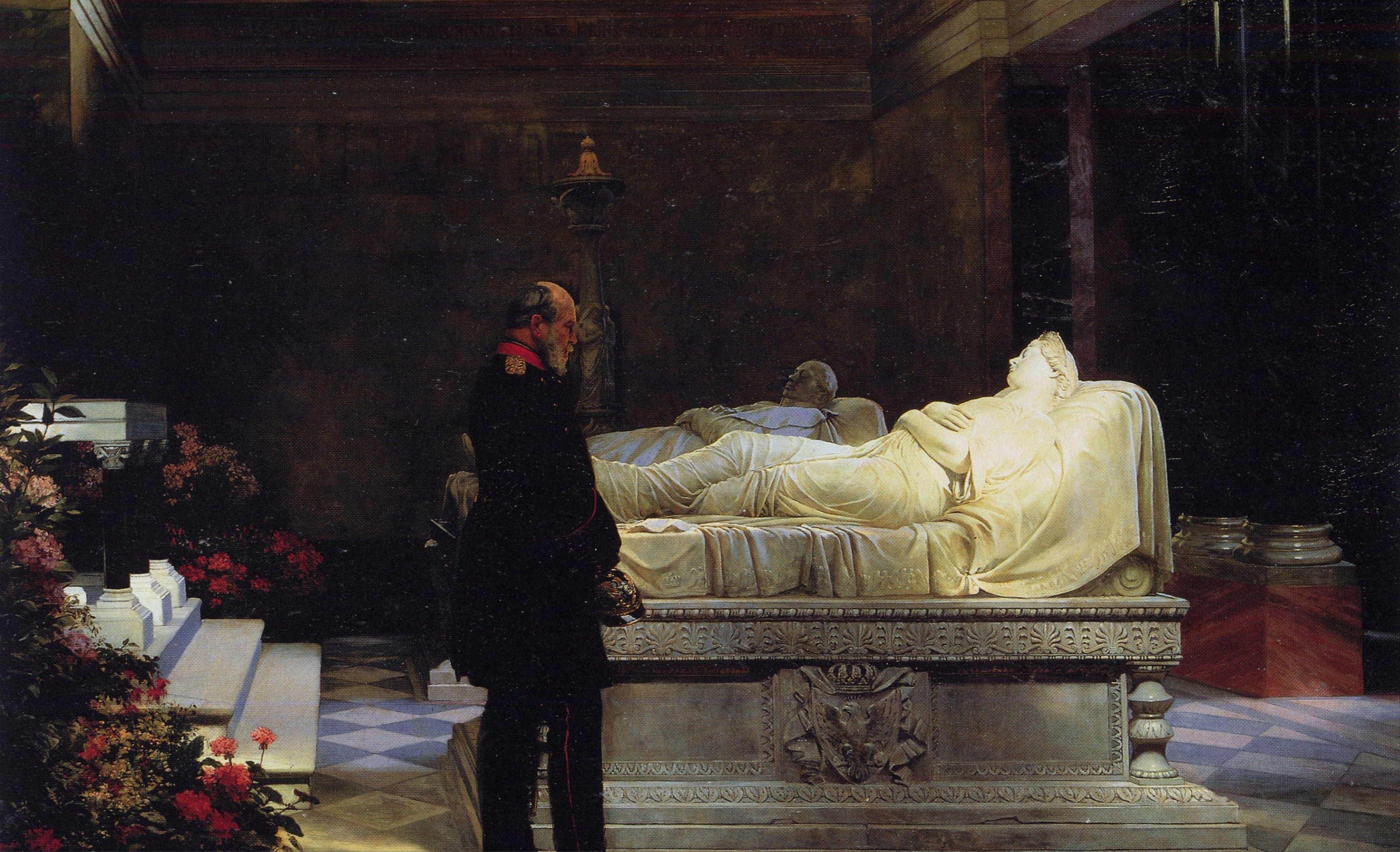
“If Queen Luise had arrived at the beginning of the negotiations in Tilsit, she would have had greater influence on the outcome.” This compliment came from Napoleon himself. After her early death, Luise would become an icon of the Prussian will to resist. For Frederick William IV and William I, she was the beloved mother for whose premature death they held Napoleon responsible.
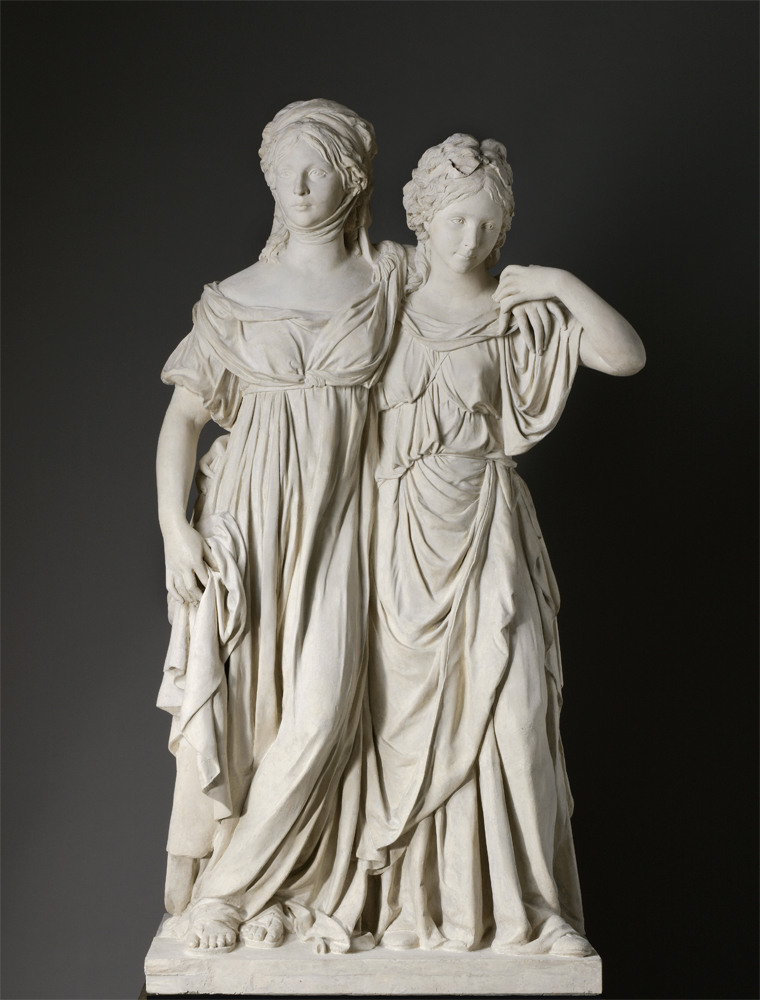
A charming Princess
Even before her marriage, Luise was celebrated for her beauty. When she and her sister were introduced to Frederick William II in March 1793, he wrote of the encounter: “When I saw the angels for the first time, ... I was so struck by their beauty that I was completely beside myself. ... I greatly wished that my sons might see them and fall in love with them.” Only a few days later, the Crown Prince proposed marriage to Luise. In the same year, the 17-year-old princess married Frederick William. Her fresh and approachable manner quickly won the hearts of her subjects.
Caption: Johann Gottfried Schadow: The Princesses Group, depicting Crown Princess Luise and Princess Friederike of Prussia, marble, 1797. Source: bpk / Nationalgalerie, SMB / Andres Kilger.
Sovereign in Difficult Times
On November 16, 1797, Frederick William II died. His eldest son, Frederick William III, succeeded him. At only 21 years of age, Luise became Queen of Prussia. She developed into the central figure of the Prussian war party, which persuaded Frederick William to declare war on France on October 9, 1806. As already described, this decision led to the defeat of the Prussian army and the flight of the royal family.
The Supplication at Tilsit
The peace negotiations at Tilsit proved difficult. Prussian diplomats hoped for more favorable terms if the charming queen personally appealed to Napoleon. Thus occurred Luise’s famous supplication before Napoleon on July 6, 1807 in Tilsit. Although Napoleon complimented her on her dress, he remained firm in political matters. He wrote to Joséphine: “The Queen of Prussia is truly charming; she is full of coquetry toward me. But do not be jealous, for I am like waxed canvas from which everything simply slides away. It would cost me dearly to play the gallant.”
Exile in Königsberg
Deeply depressed, the royal couple remained with their children in Memel and Königsberg. A return to occupied Berlin was out of the question. Luise suffered greatly from the climate, the enforced austerity, and her constant illnesses. Only on December 23, 1809 did the family return to the capital, an event commemorated by medals (Lots 91–93).
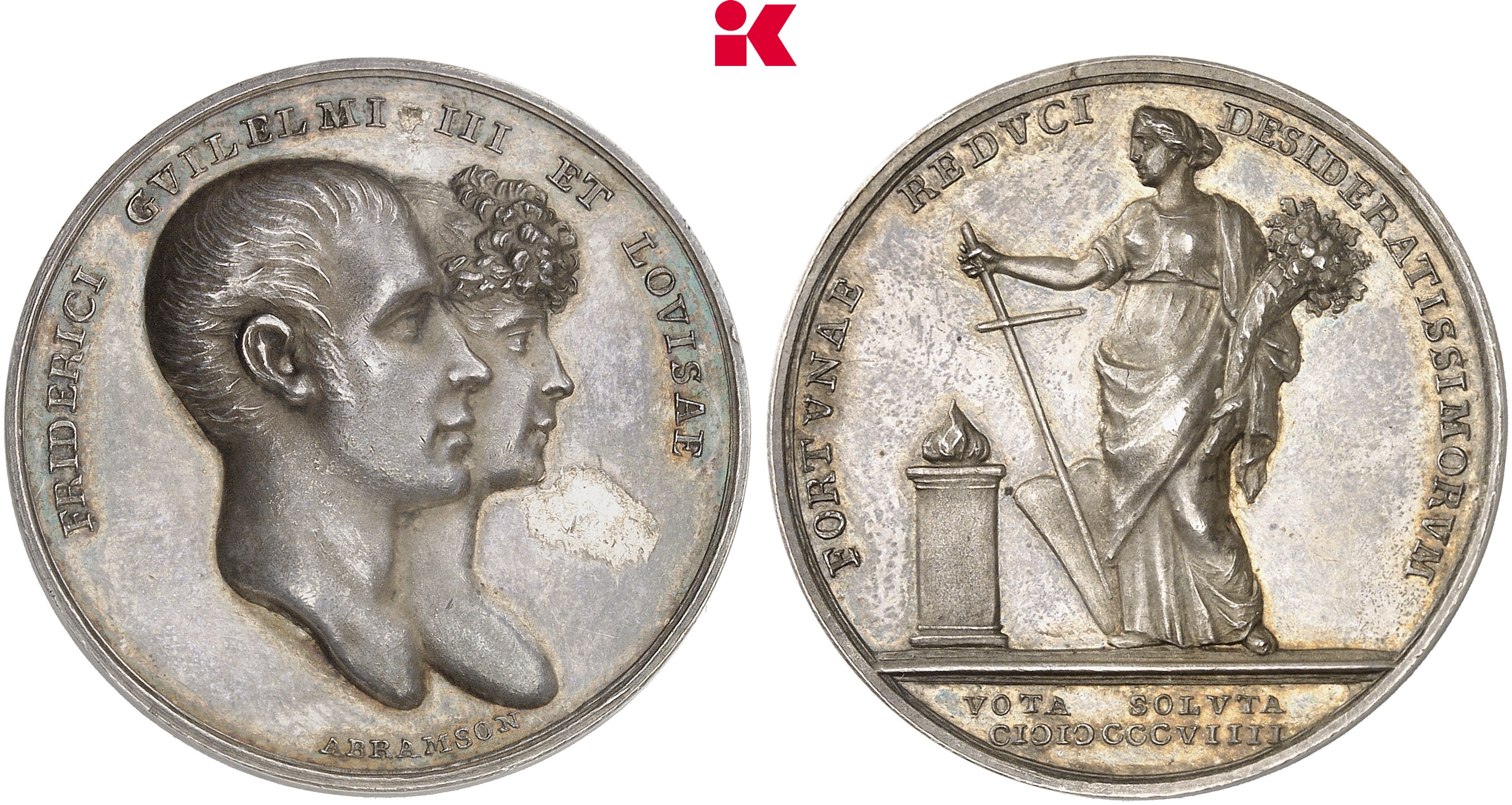
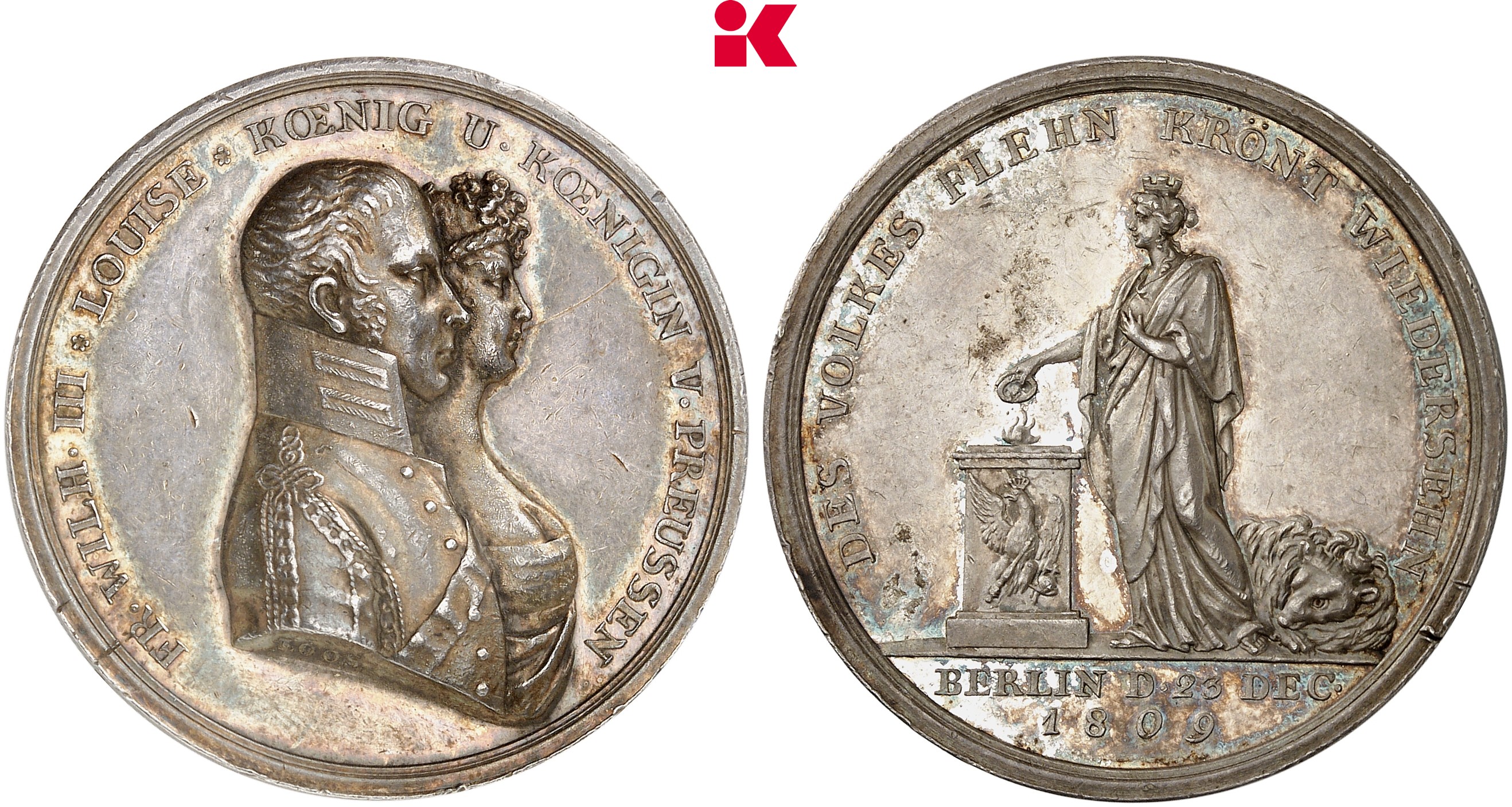
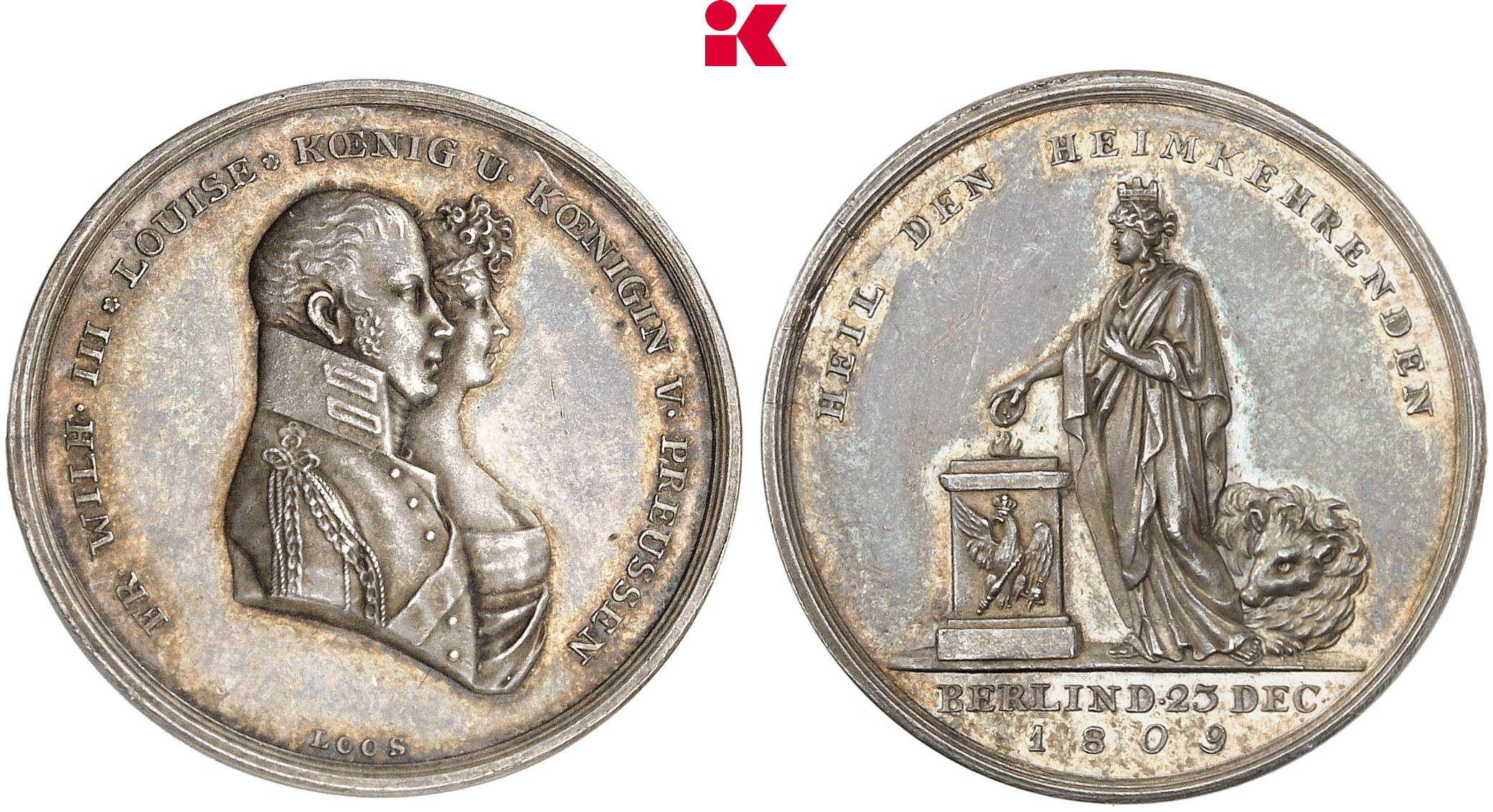
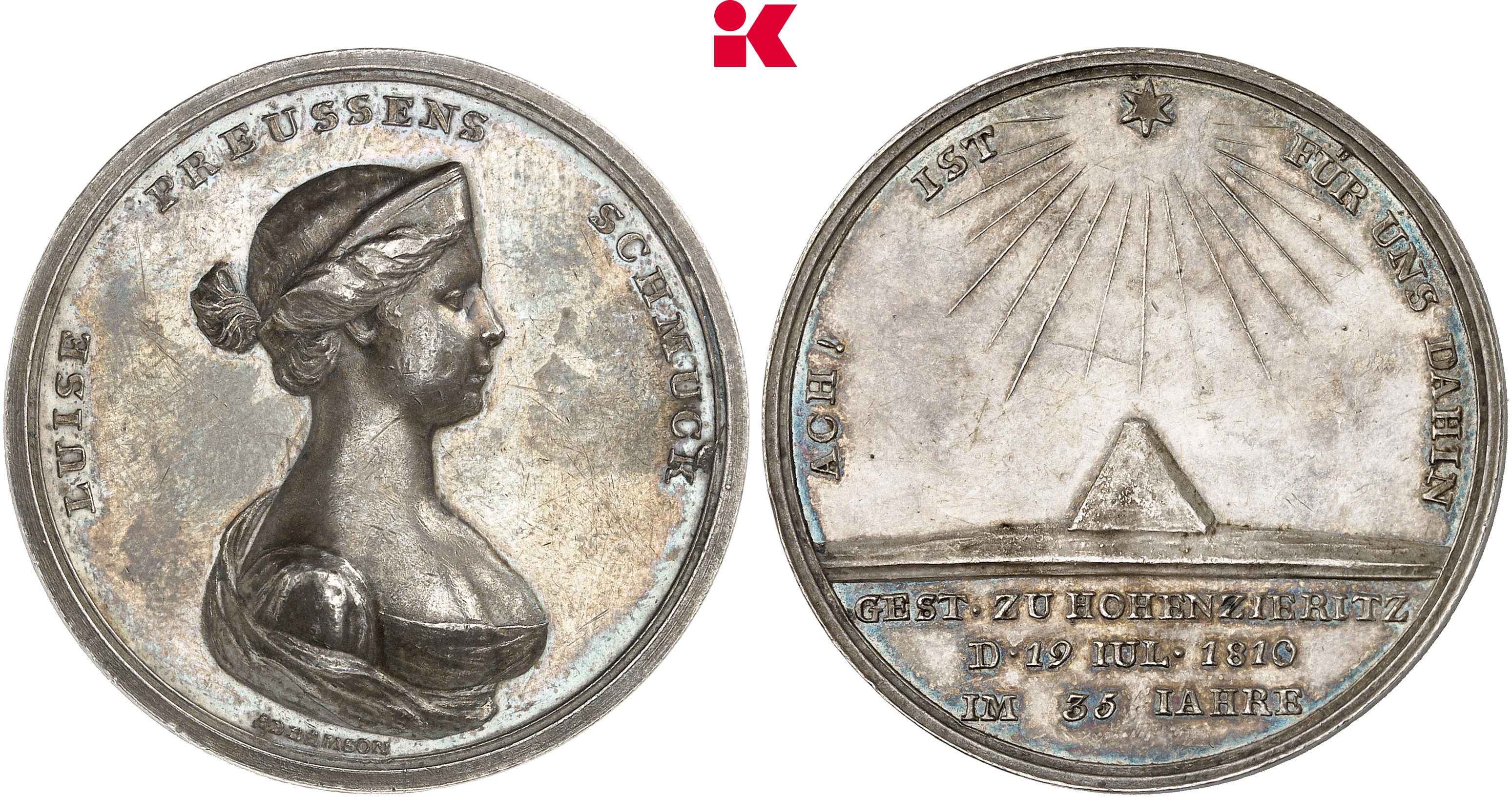
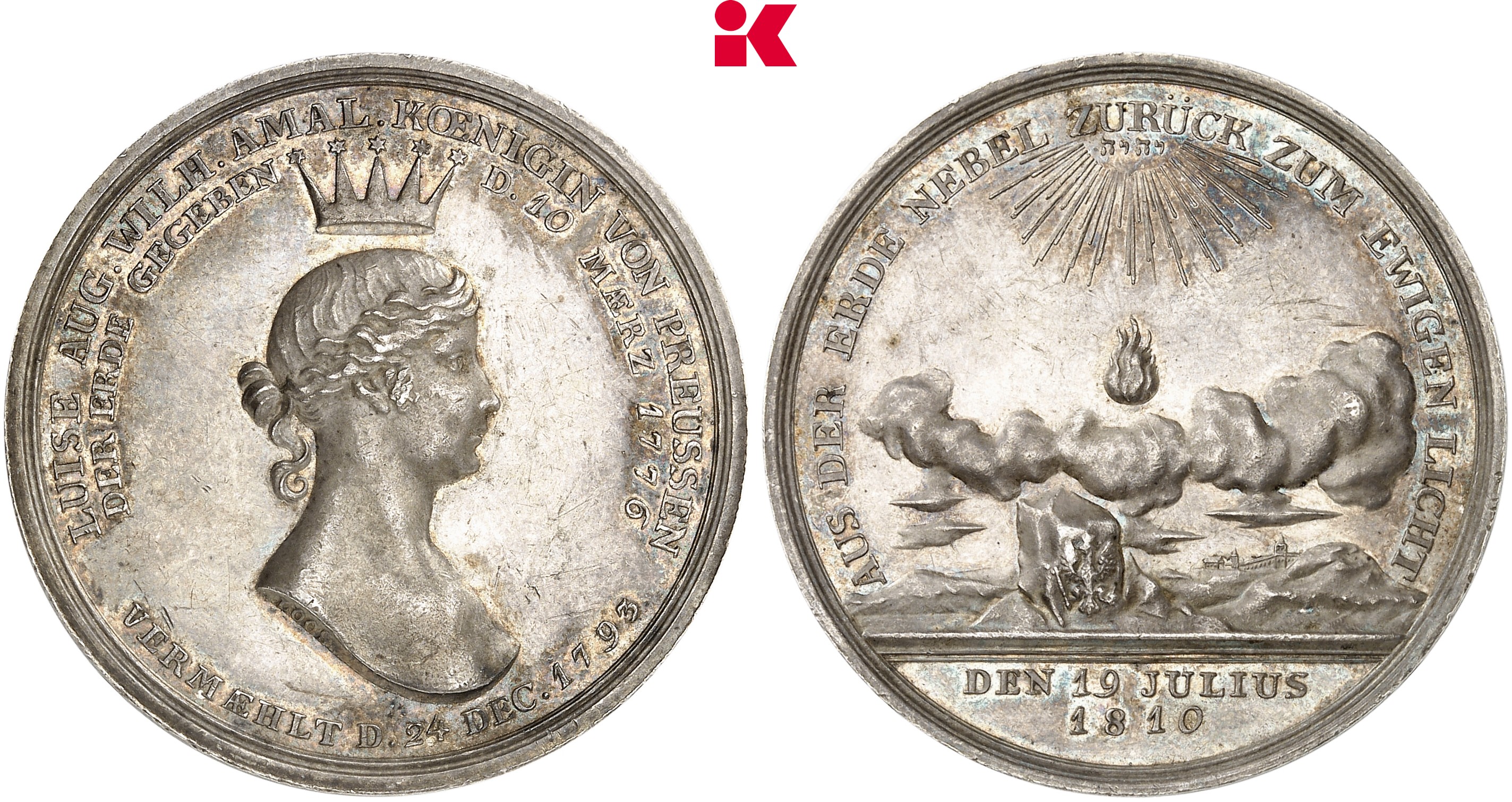
By that time, Luise’s health had already deteriorated severely. During a stay at her father’s summer residence in Hohenzieritz, she contracted pneumonia, which rapidly worsened. Her husband and her two eldest sons arrived just in time to stand at her deathbed on July 19, 1810.
The Myth of Luise of Prussia
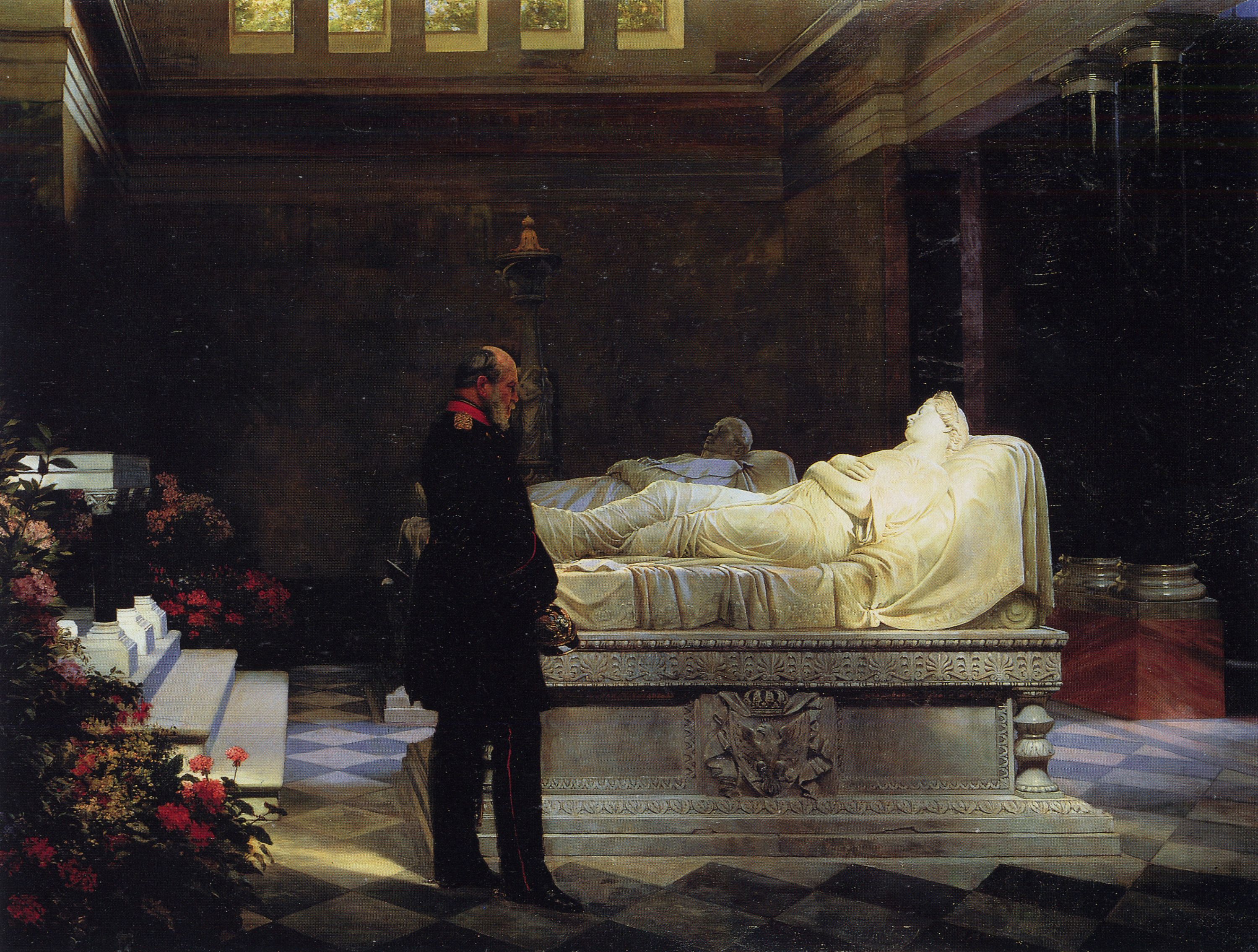
After her death, the queen became an icon. Her unpretentious behavior, oriented toward bourgeois ideals, offered Prussian citizens a figure with whom they could identify — especially those who rejected the radicalism of the French Revolution. It was not only the medals struck upon her death (Lots 94 and 95) that spread her image. Schadow’s famous Princesses Group, for example, was offered for purchase in a wide variety of materials. The mausoleum in the park of Charlottenburg Palace, where Luise was buried, developed into a national place of pilgrimage. Wilhelm I demonstratively visited it after the outbreak of the Franco-Prussian War before departing to fight against Napoleon III.