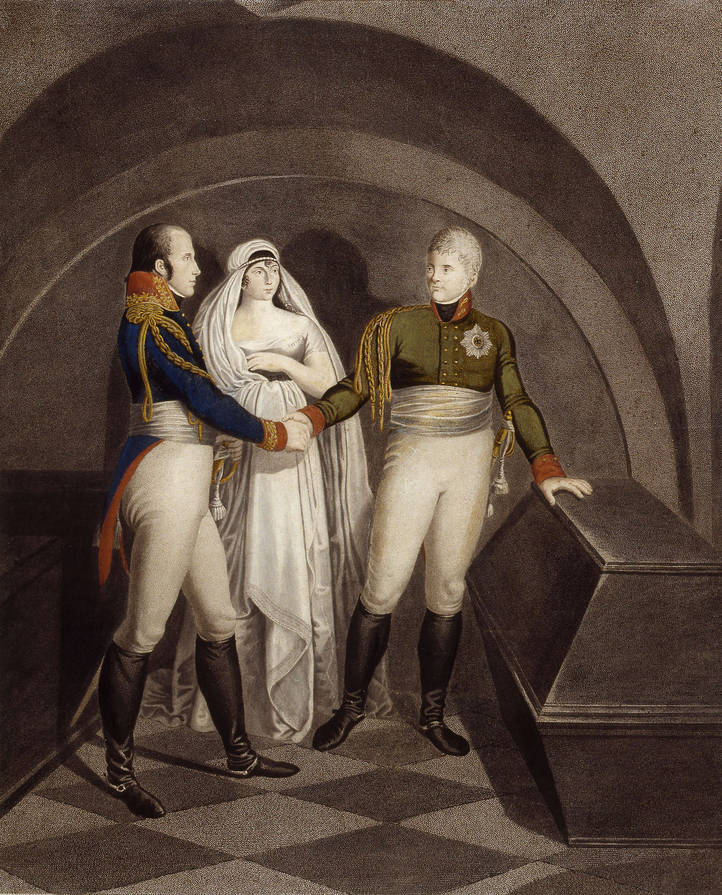
From June 10 to 16, 1802, just a few kilometres from the Russian-Prussian border, Frederick William III and his wife Louise met with Alexander I — who had ascended to the throne only a year earlier — in Memel. This was something remarkable: it was the first meeting between a tsar and a Prussian ruler since Peter the Great had exchanged "Tall Fellows" with Frederick William I for the Amber Room in 1716.
The sympathy was mutual. The two men were of the same age and shared the same outlook on life. Alexander would sit with Louise each morning at breakfast, where homemade hot chocolate was served. The friendship that took shape in Memel was to last a lifetime and carry political consequences as well.
The Rise of Prussia
This shared friendship held firm even when the royal family fled eastward following the defeat at Jena and Auerstedt. Alexander I hastened personally to Memel to offer them his assistance. And even though Russia suffered defeat against France at the time, mutual respect continued to grow throughout the peace negotiations at Tilsit, and Alexander invited the royal couple to spend the winter of 1808/09 with him in St. Petersburg.
The Treaty of Kalisch between Prussia and Russia in February 1813 marked the beginning of the Wars of Liberation. Together they won the Battle of the Nations at Leipzig; together they marched into Paris. Together they negotiated in Vienna, and thanks to Russian support, Prussia was able to significantly expand its territory. Together they concluded the Holy Alliance, to suppress revolutionary unrest in the future.
The Marriage of Charlotte and Nicholas I.
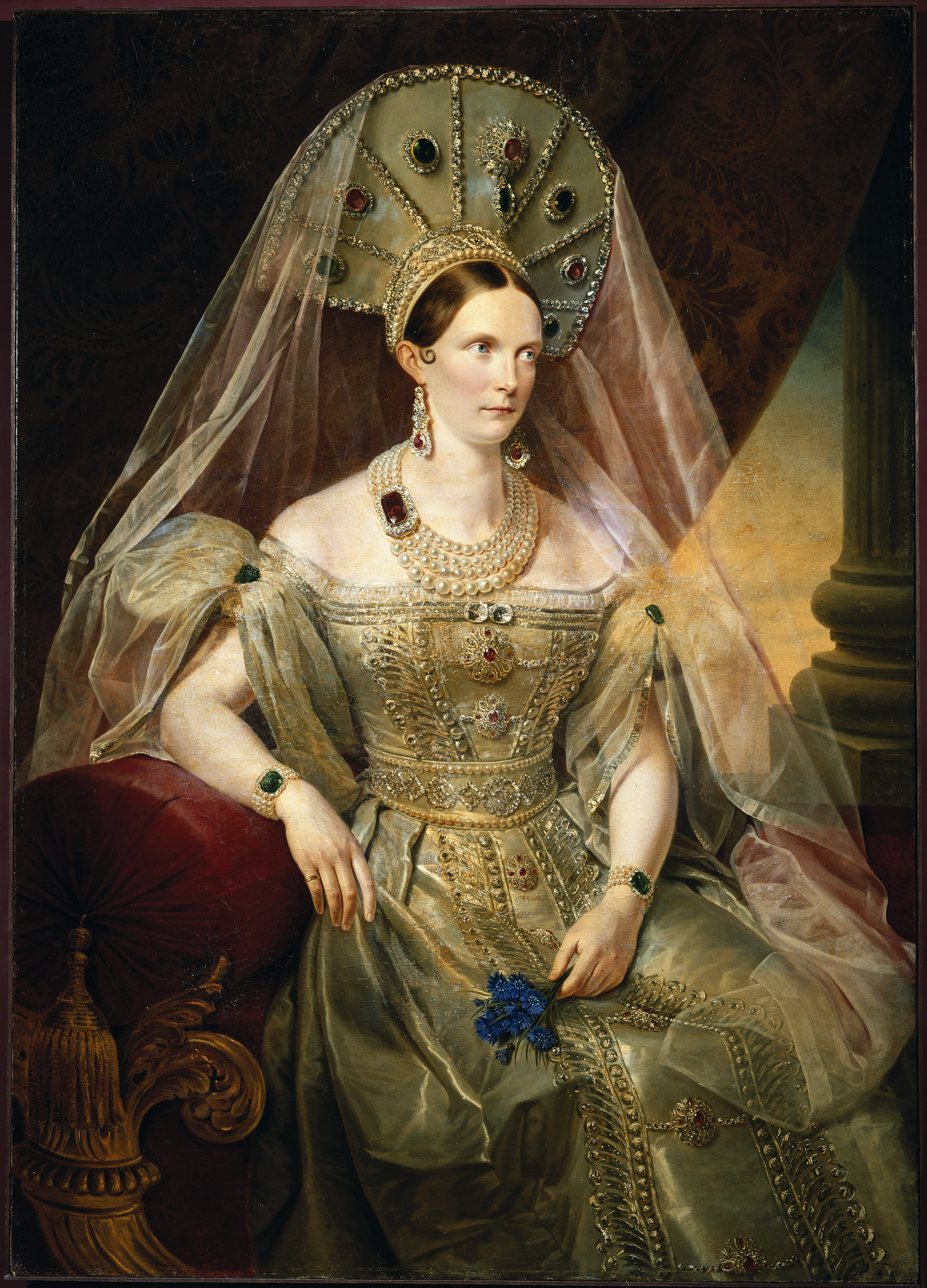
On March 6, 1814, the nearly sixteen-year-old Prussian Princess Charlotte — the eldest daughter of Louise and Frederick William — encountered the almost eighteen-year-old Nicholas. He was the younger brother of Emperor Alexander I. A year later, the two became engaged. What was politically desired was, fortunately, also founded on genuine affection, which was to deepen over the years.
Alexander I's wife, Empress Elisabeth, was already 38 years old at the time of the marriage and, following two miscarriages, did not expect to have further children. As a result, Nicholas stood second in line to the throne at the time of his wedding to Charlotte on July 5, 1817 — behind his brother Constantine.
When Constantine renounced his claim to the throne following his father's death, Nicholas and Charlotte ascended to the Russian imperial throne. It was a family visit when Nicholas spent several months in Berlin after his wife's first miscarriage. The royal family travelled to visit their daughter and sister when Frederick William III and his children journeyed to St. Petersburg. Letters were exchanged eagerly, above all between William I and Charlotte, who were close to one another both personally and politically. In their correspondence, family matters and politics regularly intertwine.
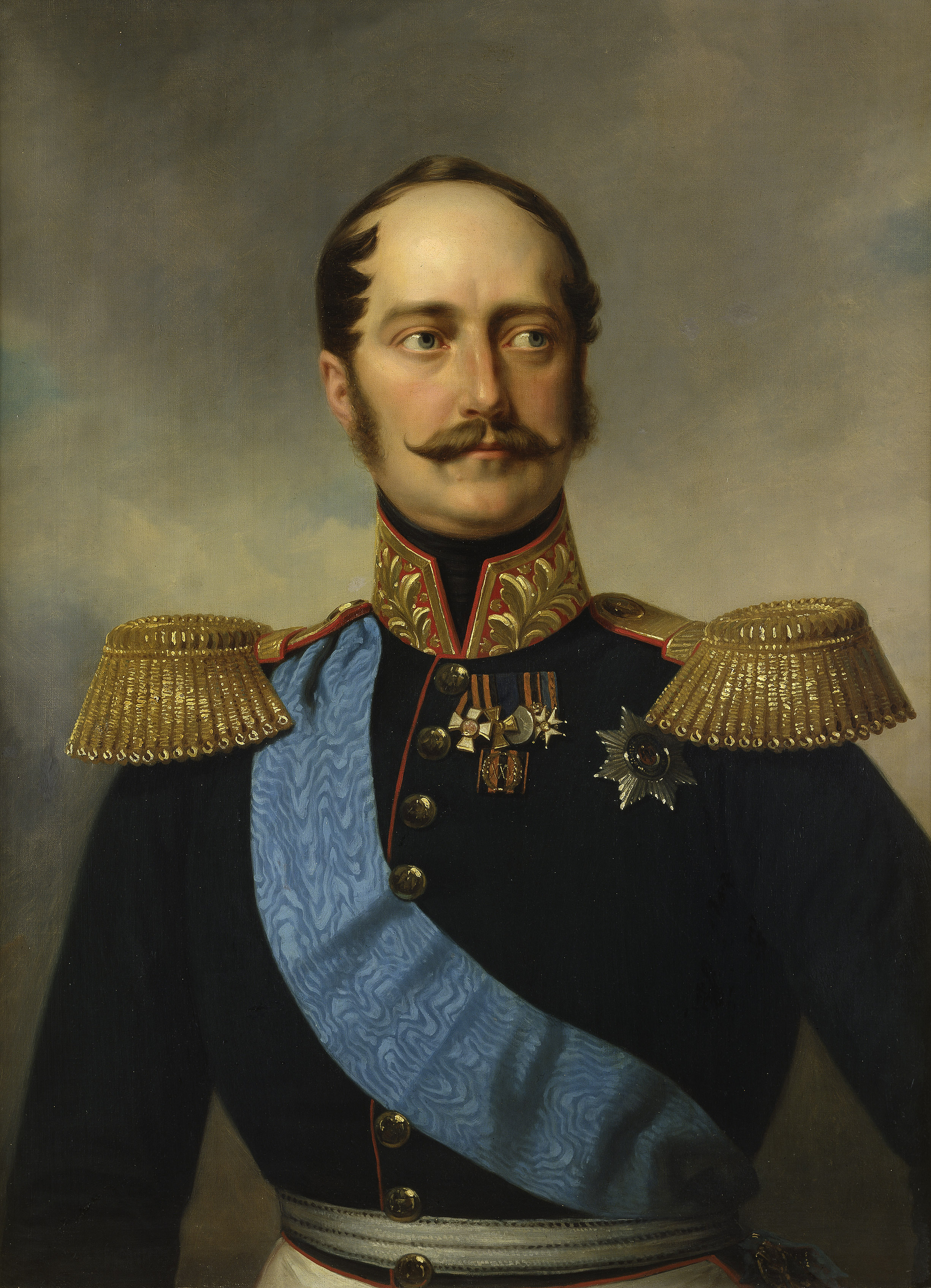
The Visit to Russia
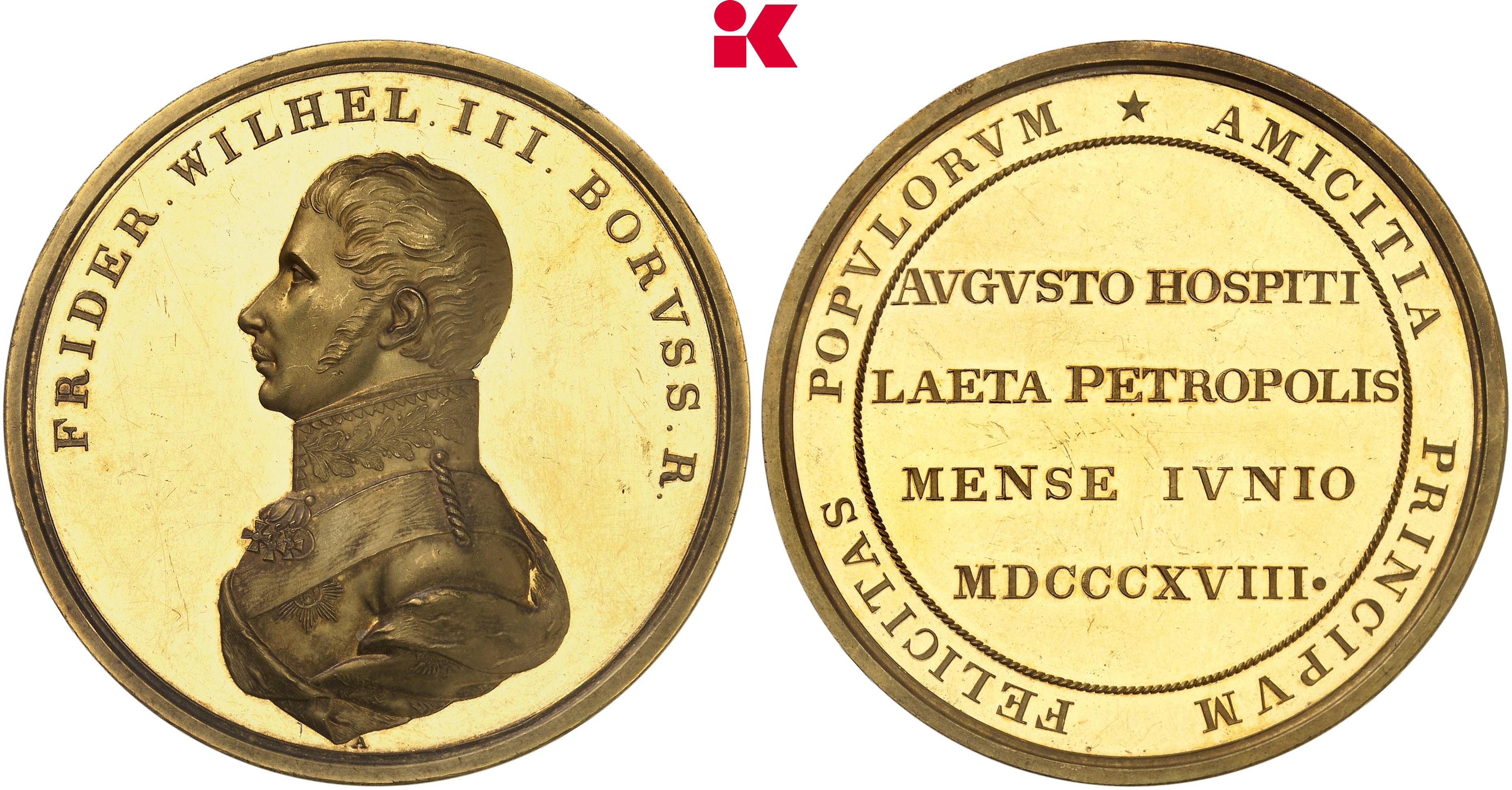
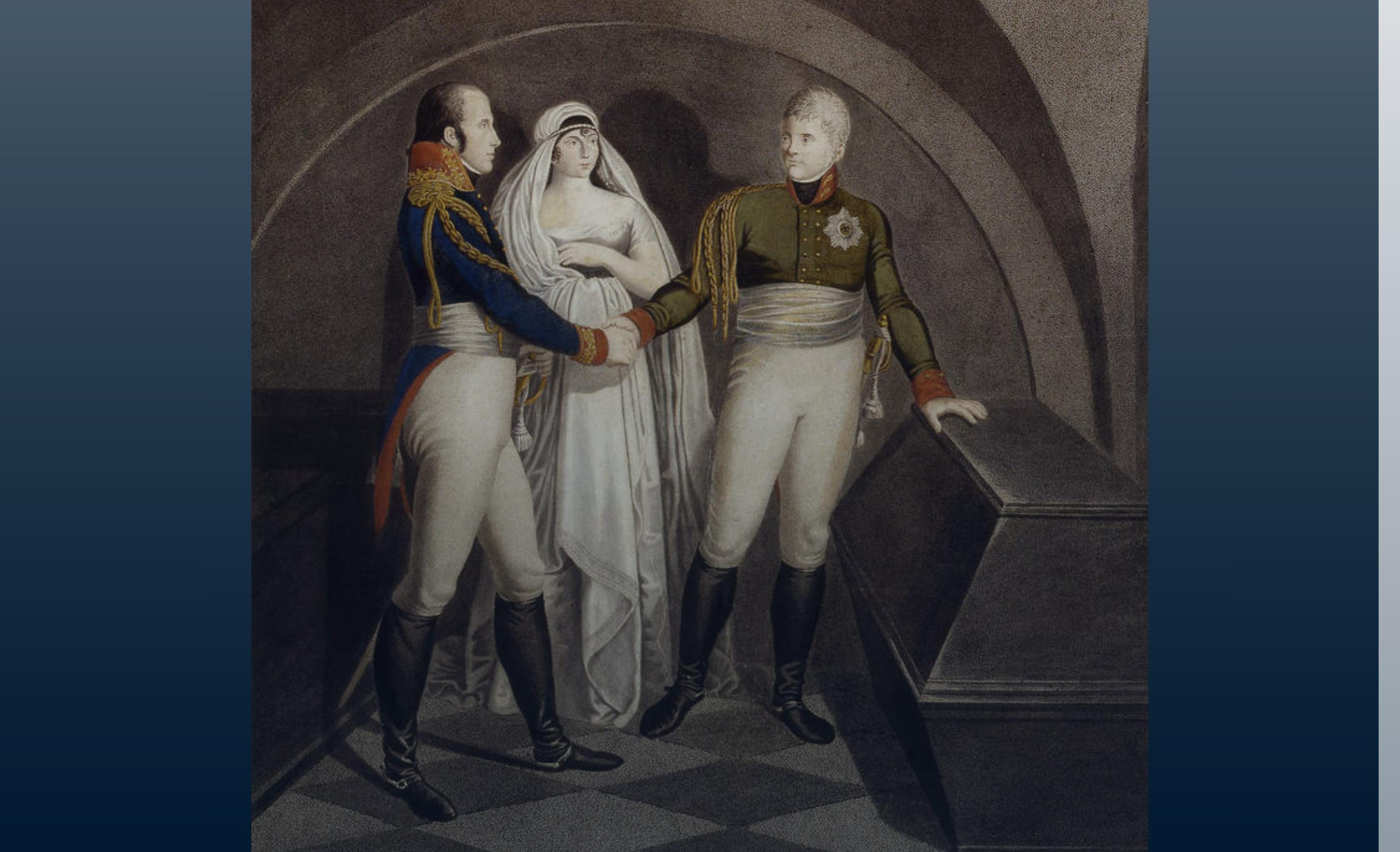
In June 1818, Frederick William III visited his daughter in St. Petersburg, an occasion commemorated by a medal (Lot 105). Charlotte had given birth to her first son on April 17, 1818. He would ascend to the Russian throne in 1855 as Alexander II.
This visit had architectural consequences back in Prussia: Frederick William III toured the Russian village that was being built at Pavlovsk at the time. The ruler requested the plans and, following the death of Alexander I, used them to found — "as an enduring monument to the bonds of friendship between myself and His late Majesty Emperor Alexander of Russia — a colony near Potsdam, which I intend to settle with the Russian singers placed at my disposal by His Majesty and to name Alexandrowka." This Russian village still exists today. Together with the Church of Alexander Nevsky, it is one of Potsdam's most celebrated attractions.