

Alliance Politics
The anti-Napoleonic coalition, which initially comprised Russia, Prussia, and Sweden, was joined in June 1813 by Great Britain and Austria through the Conventions of Reichenbach. The coalition fielded the largest military force assembled during the Wars of Liberation up to that point and formed three armies: the Army of the North, the Army of Silesia, and the Army of Bohemia. The plan was drawn up by the Austrian Chief of the General Staff, Field Marshal Radetzky, and the Swedish Crown Prince Charles Bernadotte — a former Marshal of France and thus an intimate connoisseur of the Napoleonic army.
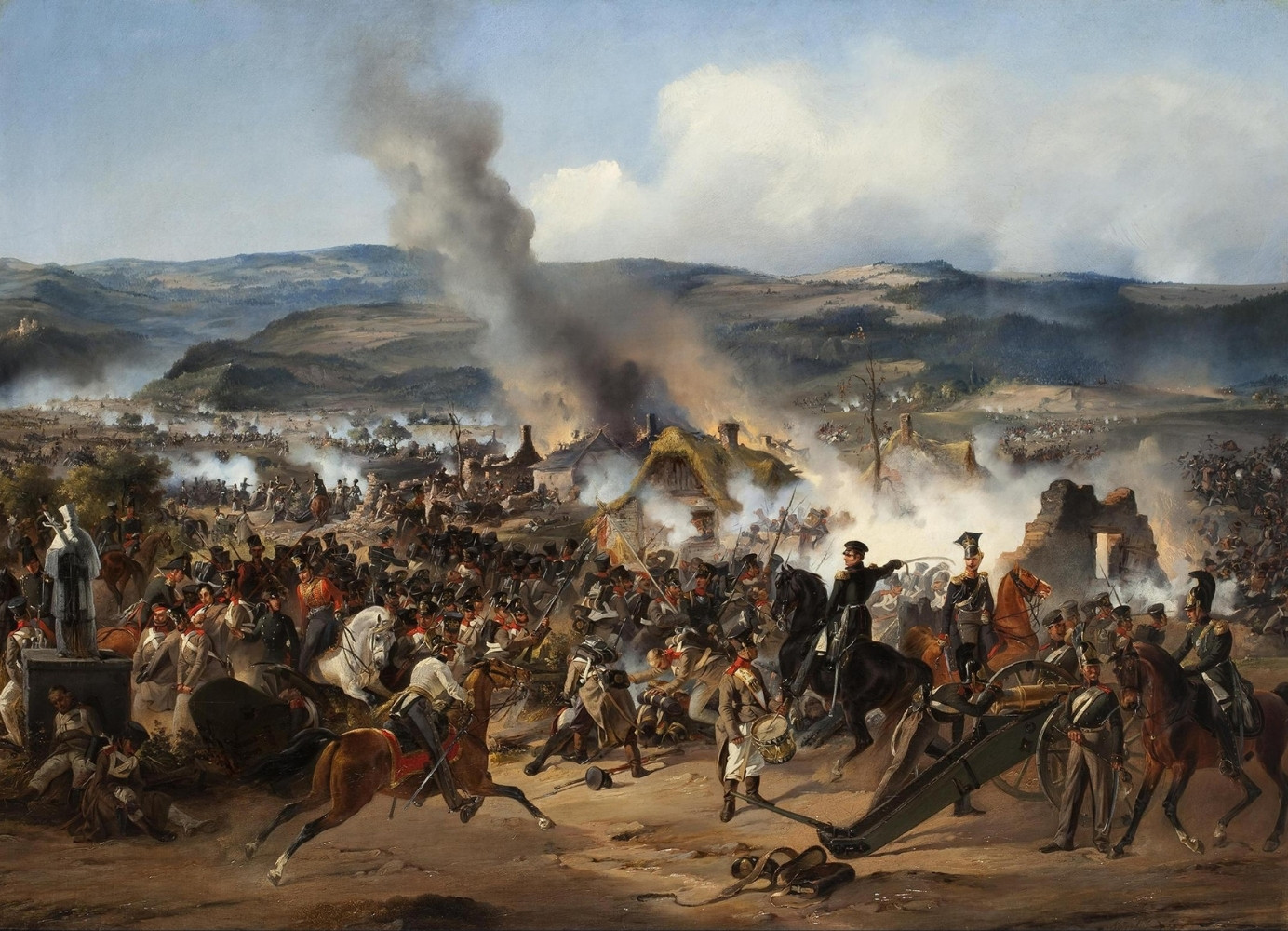
Image caption: Alexander von Kotzebue: Battle of Kulm on 17 August 1813, painting 1843.
Battle for Dresden
On 24 August 1813, the Army of Bohemia under Prince Schwarzenberg attacked French-occupied Dresden. However, he waited too long before launching the main assault, allowing Napoleon to bring reinforcements into the city. The battle went unfavourably for the Allies, who were compelled to withdraw. The French gave pursuit and crossed the Elbe under General Dominique Joseph Vandamme. The Russians in the area of Königstein were soon overtaken by the French, but were held up for one day by a Russian infantry corps under the command of General Prince Eugene of Württemberg, allowing the Russian main army to complete its withdrawal over the Nollendorf Pass into Bohemia.
The Battle of Kulm
As the French drew closer, the Russians formed a defensive position on the mountain slopes along the Kulm-Teplitz road. Initially, on the first day of fighting — 29 August 1813 — the Russians held the French at bay with heavy losses. Towards evening, reinforcements arrived from the Army of Bohemia (Austria). On the second day of fighting, the Allies' situation was therefore entirely different, although the advantage initially lay with the French. General Vandamme was already confident of victory and expecting his own reinforcements when, at ten o'clock in the morning, he received word that the rear of his position was being threatened by the Prussian II Army Corps under General von Kleist. The Russians now attacked in the centre, while the Austrian cavalry outflanked the left wing. When the Allied cavalry was able to capture the village of Priesten before Kulm, a large part of the French infantry found itself cut off from the rest of the force. After a hopeless struggle, it was finally compelled to surrender. 12,000 Frenchmen — including General Vandamme — were taken prisoner, and the entire artillery with 80 guns fell into the hands of the Allies. The two monarchs present — Emperor Alexander I and King Frederick William III — had observed the battle from Schloss Berg near Teplitz and appeared on the battlefield following the arrival of the Prussians.
Monuments
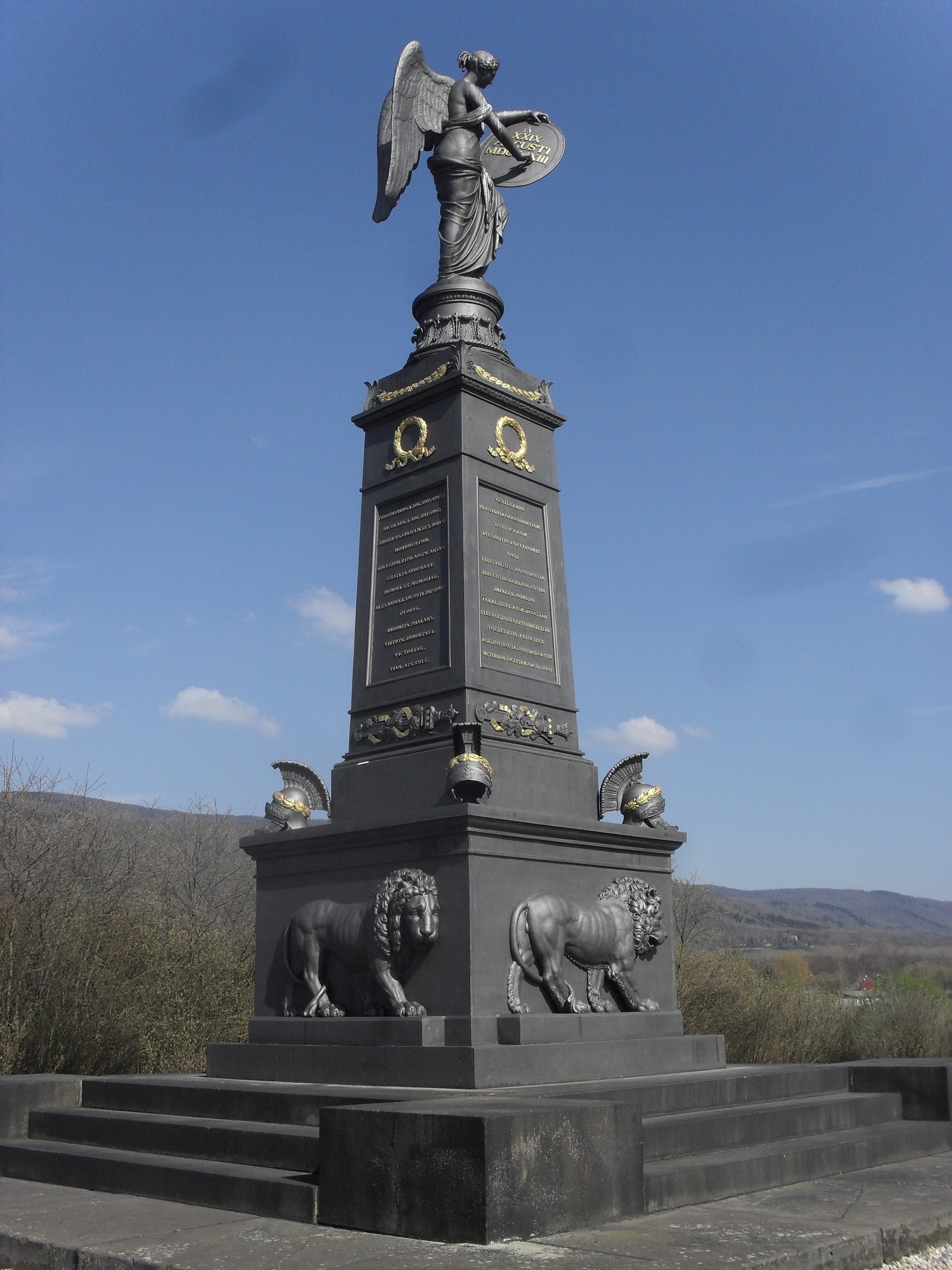
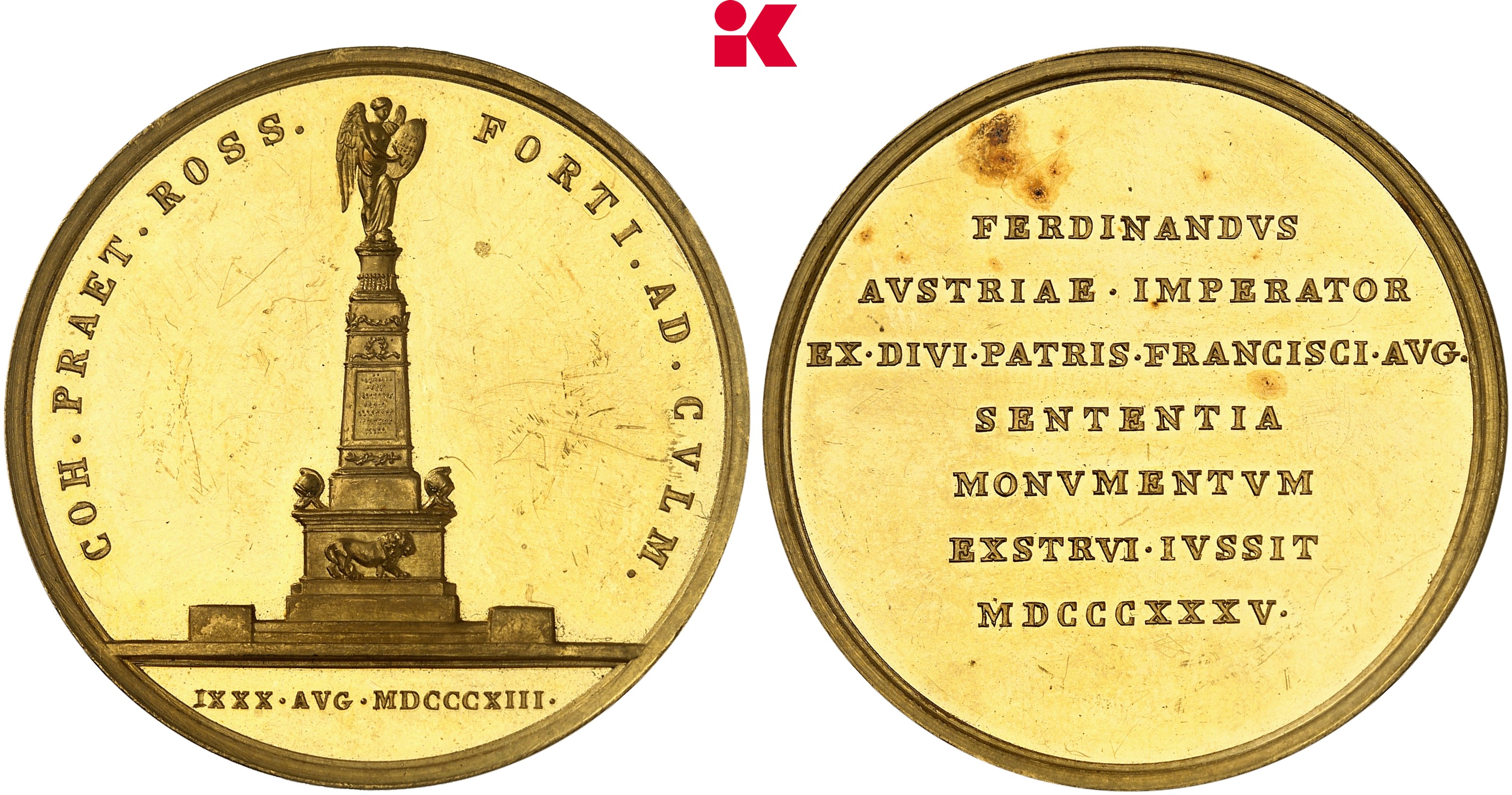
All nations involved in the war subsequently erected monuments: first the Prussians in 1817, then the Austrians in 1825, the Russians in 1835, and in 1913 — on the centenary — the French as well. The image on the medal depicts the Russian obelisk with its statue of Victory with faithful accuracy. The foundation stone was laid by the Austrian Emperor Ferdinand II, as stated on the reverse of the medal.