

From the Electoral Coin Cabinet
to the Royal Museum
Very little information has survived regarding the older collections of the Electoral House of Brandenburg. While it is known that a coin collection existed during the reign of Elector George William, father of the Great Elector, it is now almost impossible to determine how the collection was organized.
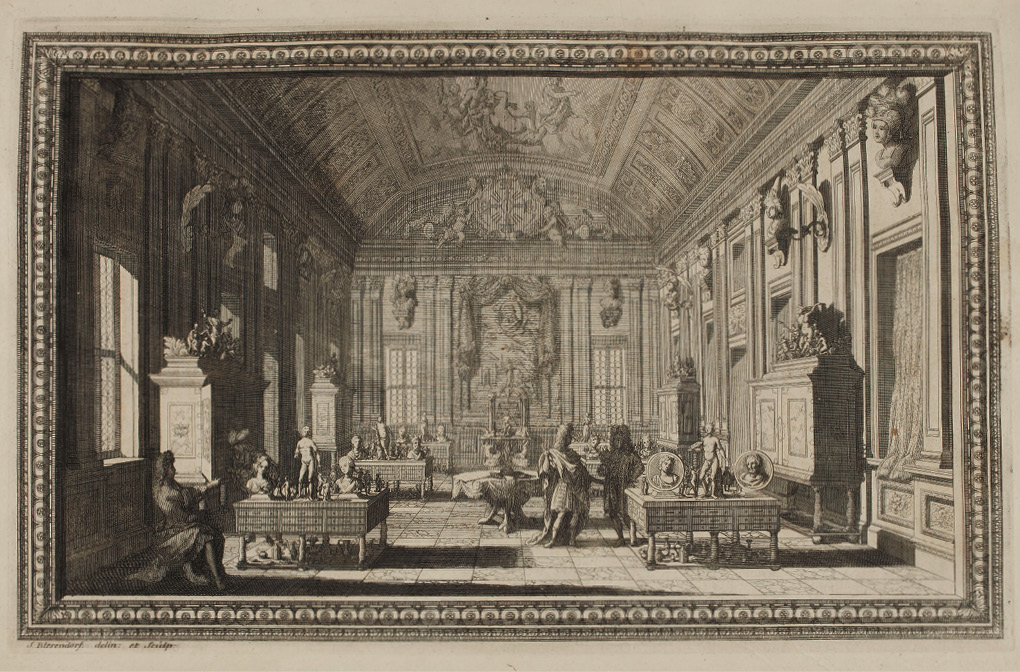
The devastating effects of the Thirty Years’ War on Electoral Brandenburg resulted in the total loss of these holdings. For this reason, Elector Frederick William of Brandenburg must be regarded as the true founder of the medal collection of the Brandenburg-Prussian “Kunstkammer” (Chamber of Art and Curiosities).1 By the end of his life, he had amassed a collection of almost 20,000 items comprising gems, brooches, coins and medals. These were housed in rooms adjoining the pharmacy wing of the Berlin Palace.
Caption: Lorenz Beger: The Cabinet of Curiosities in the Pharmacy Wing of the Berlin Palace, engraving from 1696.
Although Elector Frederick III – who became King Frederick I in Prussia in 1701 – continued to expand the collections through acquisitions and dotations, his primary focus was on presenting the inherited collection in a new way. The extensive conversion of Berlin Palace into a magnificent Baroque residence included the creation of a cabinet of curiosities. This was located on the third floor of the palace.2
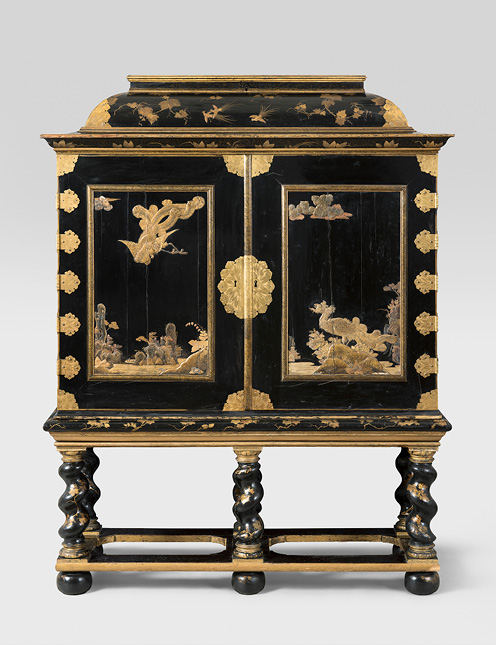
Given that the collection focused on ancient pieces, it made sense to display the contemporary objects in the three rooms of the Antiquities and Medals Cabinet, too.3 This is the context of the four exceptionally significant pieces of cabinet furniture created by cabinetmaker and lacquer artist Gérard Dagly, dating from 1695. The reign of Frederick William I also brought change to this area. To plug the gaps in the state budget, the king decided to have around 300 gold medals melted down.4
The Soldier King’s successor, Frederick II, initially showed no interest in numismatic collecting either.
Despite his interest in Roman and Greek antiquities, he initially paid no attention to the collection.5 During the Seven Years’ War, the cabinet was relocated to Magdeburg, the Empire’s most important fortress.
Caption: Gerard Dagly: Cabinet from the “Kunstkammer” of the Berlin Palace, wood, lacquer, 1695.
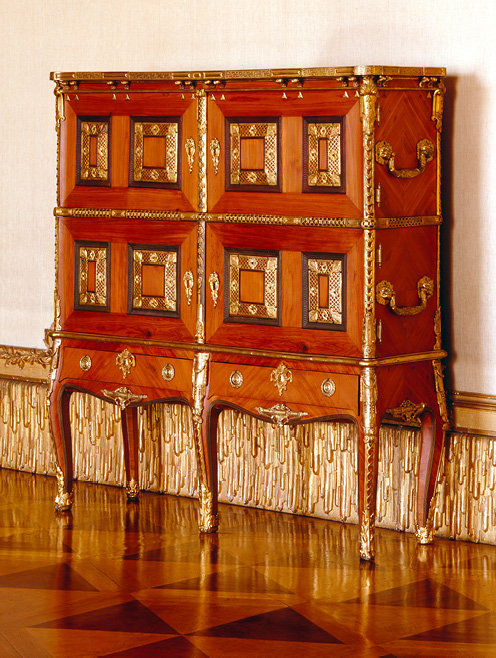
In 1768 and 1769, he commissioned the construction of a so-called Antique Temple in the Sanssouci Park, based on designs by Carl von Gonthard. The king used this building to house the sculptures, busts and reliefs he had purchased from the Polignac Collection. In a side cabinet, he displayed the ancient coins from his ancestors’ collection and the items he had acquired from Baron Stosch (gemstones) and Baron Pfau (ancient coins) in elaborate cedarwood cabinets. The more recent holdings remained in Berlin. Frederick William II inherited the collections of the Margraves of Brandenburg-Ansbach-Bayreuth, which were transferred to Berlin in 1791.
As early as 1798, the new king, Frederick William III, transferred his great-uncle’s collection back to Berlin.
In 1805, the preacher Jean Henry became the curator and librarian of the chamber of art and curiosities. He submitted a plan not only for the reorganization of the royal collections, but also for the construction of a large museum building.6
Caption: Unknown artist: King Frederick II’s coin cabinet from the Temple of Antiquity in Sanssouci Park, cedar, brass, 1769.
Due to the war against France and Vivant Denon’s removal of a large part of the royal collections to Paris, this plan could realistically only be set in motion after the Treaty of Paris and the Congress of Vienna. The museum in Lustgarten was not opened to the public until 1830. On this occasion, the numismatic collection was moved from its traditional location in the Berlin Palace to the museum, where it was housed in the basement. The four old coin cabinets from Frederick II’s Antique Temple initially found a new home there too, but were later replaced by mahogany cabinets designed by Karl Friedrich Schinkel.7
This means that the royal collections were held on loan under the administration of the state.
However, this significant turning point did not mark the end of royal collecting activities. Frederick William III surrounded himself with various objects in his residences, including medals, coins and plaques, which served as mementos or formed part of his living environment. Many of these objects could be found in his apartment in the New Wing of Charlottenburg Palace. The library, the Yellow Room and the Blue Room contained numismatic items relating to the early death of his wife, Queen Louise, the German campaign of 1813, and the restoration of the Bourbon monarchy in France.9 Numerous items of this kind could also be found in the king’s apartment at Potsdam Palace, on tables, in chests of drawers, and in cupboards.10 Given their private and commemorative nature, they were not separated from the everyday objects in the king’s living quarters, nor were they kept in a separate place. Frederick William’s apartment in Charlottenburg was cleared in 1888 and the apartment at Potsdam Palace between 1895 and 1898. All the medals and coins were added to the collections of the Hohenzollern Museum, which was founded in 1877.
The Medal Collections of Frederick William IV and William I
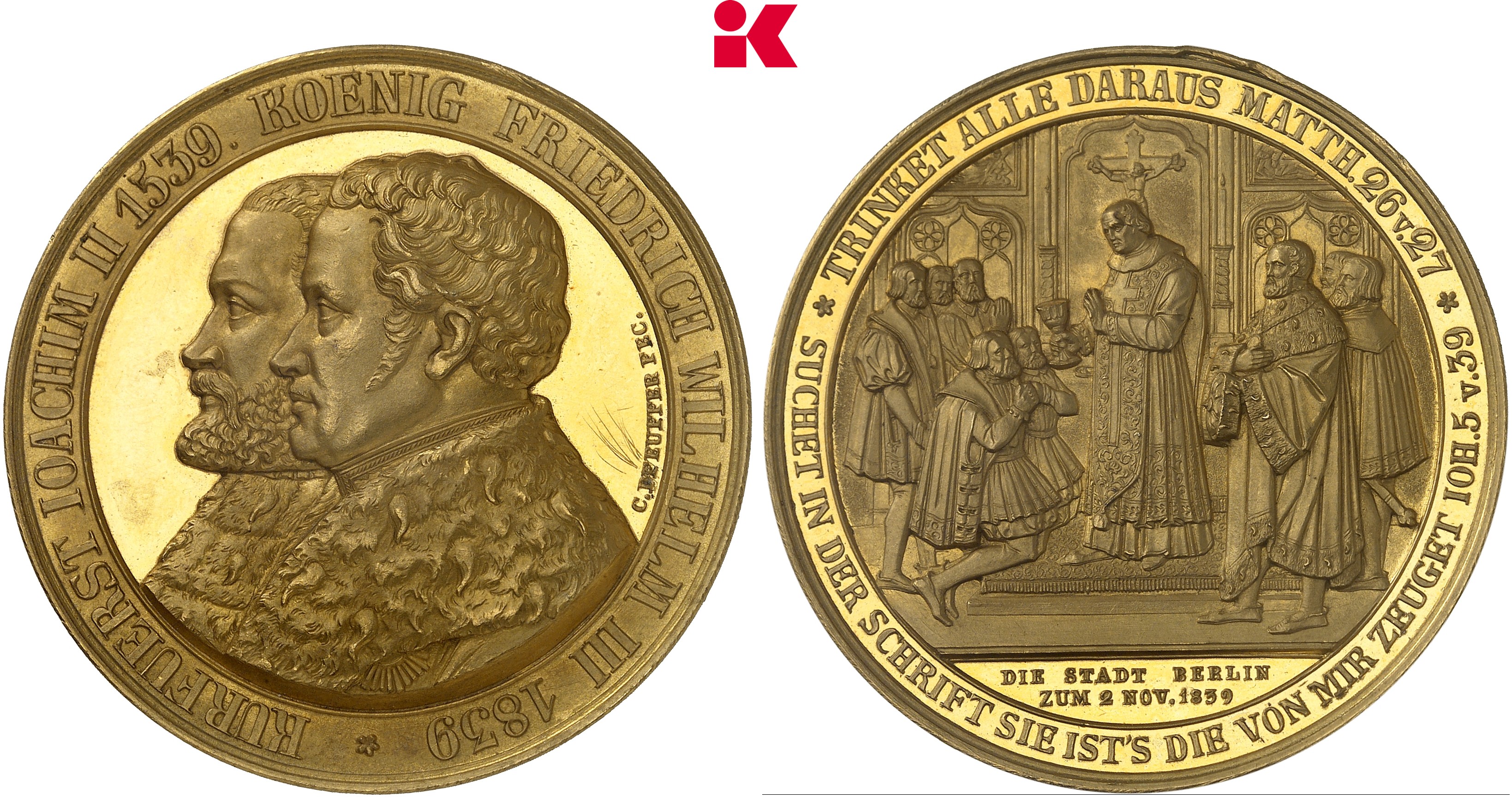
An interest in numismatics is evident from an early age in the two eldest sons of Frederick William III, who succeeded him as regents.11 Several specimens of the medal commemorating Frederick William IV’s tenth birthday exist, suggesting that it was intended to be distributed to members of the court, family and friends. Crown Prince Frederick William was distinctly artistic and therefore influenced the design of “his” coins and medals. Following Henri François Brandt’s death, he appointed Christoph Carl Pfeuffer as the Berlin Mint’s chief engraver. Over a period of 20 years, Pfeuffer created significant numismatic works of art. His most notable creations include the Reformation Medals of 1839 (lot No. 131) and numerous works depicting the portrait of Frederick William IV, which were highly praised by art critics and historians for their individuality.12
The king’s collection included ancient, circulated coins, as well as items commemorating events from his life. Above all, however, it comprised Russian medals and coins. The king’s artistic commitment is most evident in the medal designed by Utkin to commemorate the construction of Alexander Column in Palace Square, Saint Petersburg. Created between 1830 and 1834, it was based on Frederick William’s ideas and was created in honor of Emperor Alexander I, who died in 1825 (lot No. 290).13
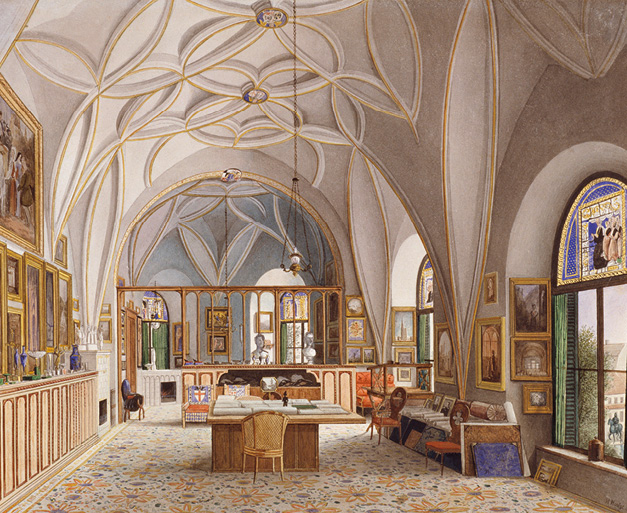
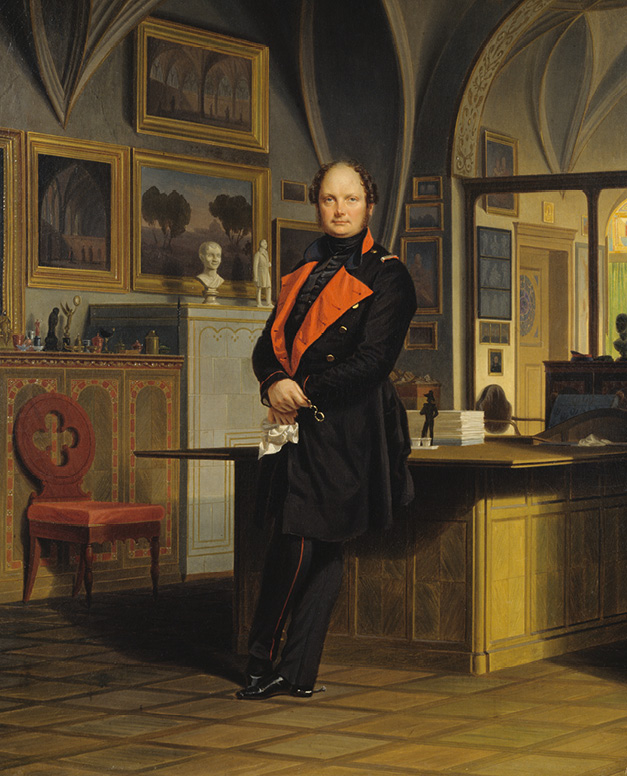
From 1823 onwards, after marrying Princess Elisabeth Ludovika of Bavaria, he took up residence in King Frederick II’s apartment on the first floor of the Berlin Palace.14 The centerpiece of this apartment, which was designed and remodeled by Karl Friedrich Schinkel between 1824/25 and 1840, was the Erasmus Chapel, which dates from the late Gothic period. Between 1824 and 1825, an entrance hall and a living/study room were incorporated into the space, featuring an elaborate ribbed vault (Fig. 4). The king stored a large part of his collection here, including prints, watercolors, plans and maps. As space soon became insufficient, neighboring rooms were incorporated. Schinkel designed large cabinets and table-height display cases in which archaeological artefacts, gemstones, small works of art, miscellaneous items and cast-iron objects, as well as the king’s collection of coins and medals, were kept. The highly educated and well-read monarch used the room as a stage, commissioning Franz Krüger to paint him in this medieval-style setting (Fig. 5). This does not only reveal the artistic interests of the monarch, but also his mindset.
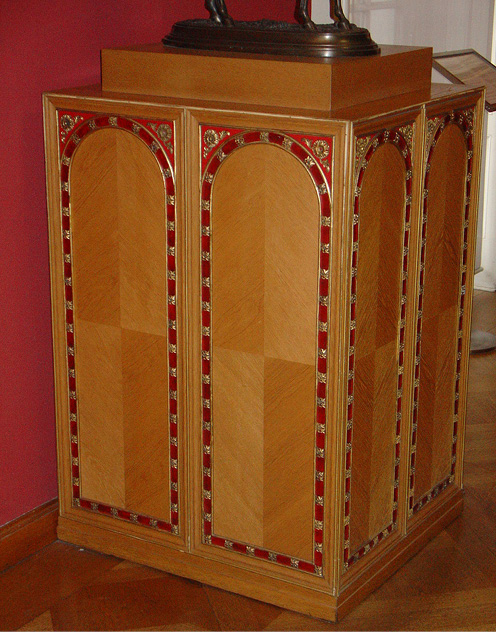
A portfolio cabinet designed by Schinkel that is still preserved today suggests what furniture intended for storing medals might have looked like (Fig. 6).
Following his death in 1861, and the death of Queen Elisabeth twelve years later, the collections were initially left in situ but were subsequently transferred to the newly founded Hohenzollern Museum at Monbijou Palace after 1877.
Following his death in 1861, and the death of Queen Elisabeth twelve years later, the collections were initially left in situ but were subsequently transferred to the newly founded Hohenzollern Museum at Monbijou Palace after 1877.
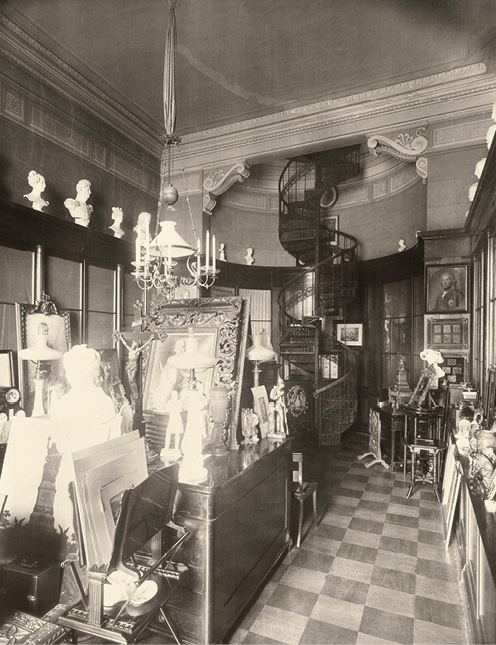
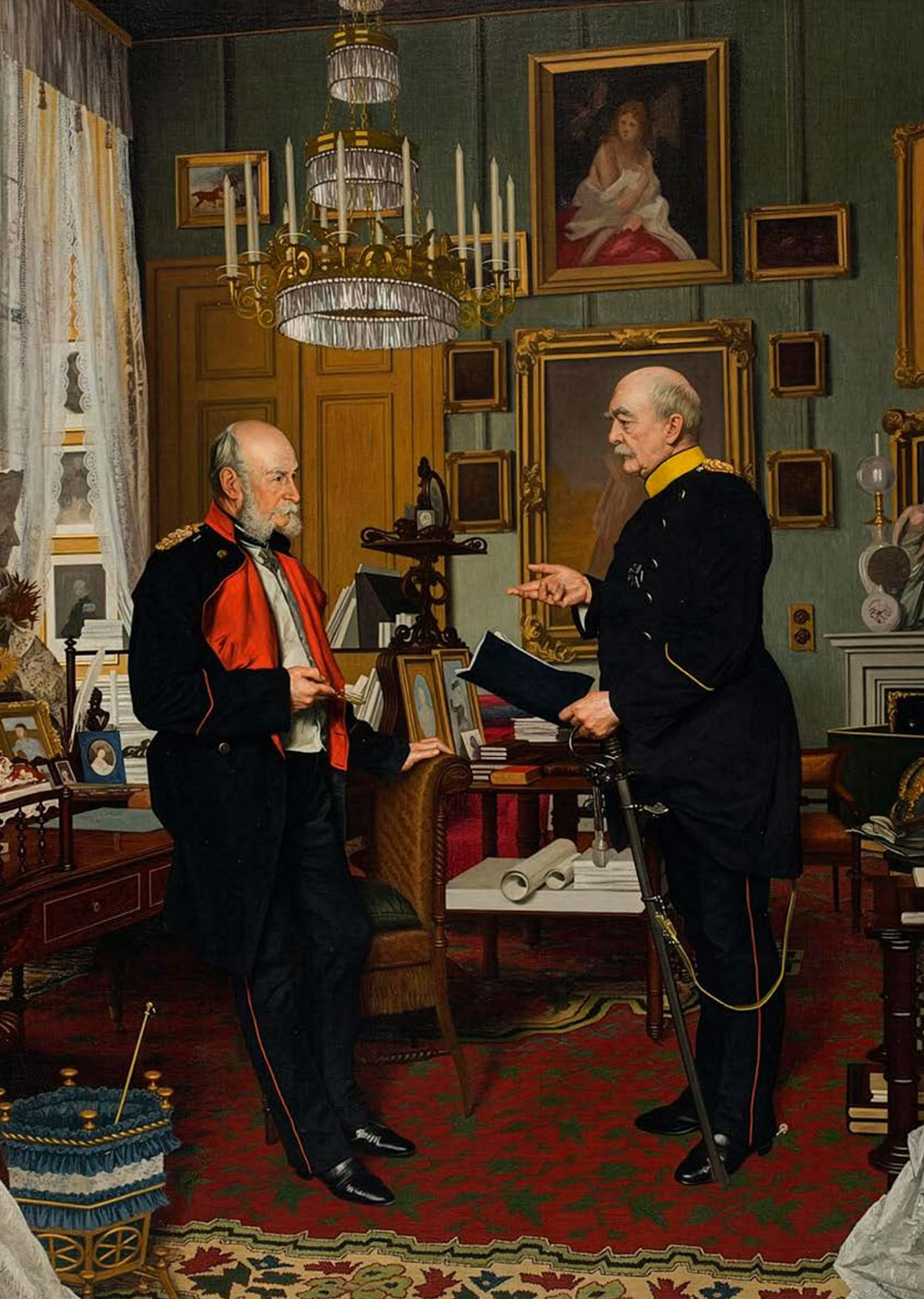
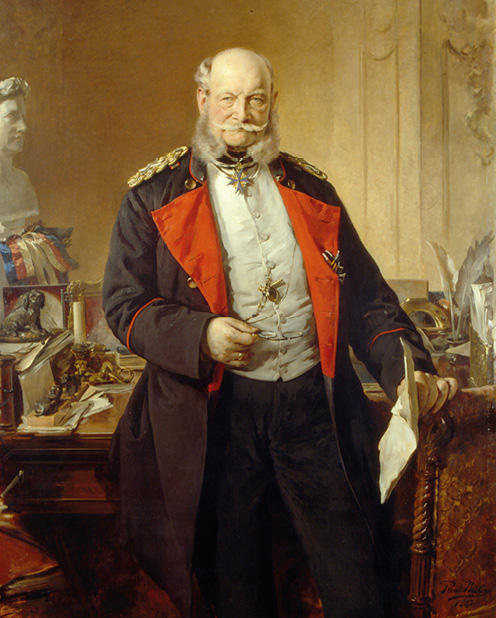
After the coin and medal collection was transferred from the Berlin chamber of art and curiosities to the Royal Museum, Emperor Wilhelm I’s private collection became the most significant amassed by a member of the House of Hohenzollern during the 19th century. Events from his own life undoubtedly formed the focus of the collection. Among these, two “Generalitätsmedaillen” (Generals’ Medals) from 186615 and 187116, created by Friedrich Wilhelm Kullrich, stand out as centerpieces featuring high-quality portraits of the elderly sovereign (lot No. 191). The famous Cosmos Medal also belongs to this group of significant pieces (lot No. 154). The emperor’s true collecting interests are evident in a group of Brandenburg gold talers, a “Fridericiana” series, Russian coins and medals, as well as Bavarian and Palatinate gold talers. The collection was concentrated at two of Wilhelm I’s residences: Koblenz Castle and his Berlin residence, the so-called Old or Imperial Palace on Unter den Linden. Shortly before the end of the First World War, around 200 objects from Koblenz were transferred to the Berlin Hohenzollern Museum. In the Old Palace, the approximately 1,500 items were housed in the library, a room with a single window facing Opernplatz (Fig. 7).
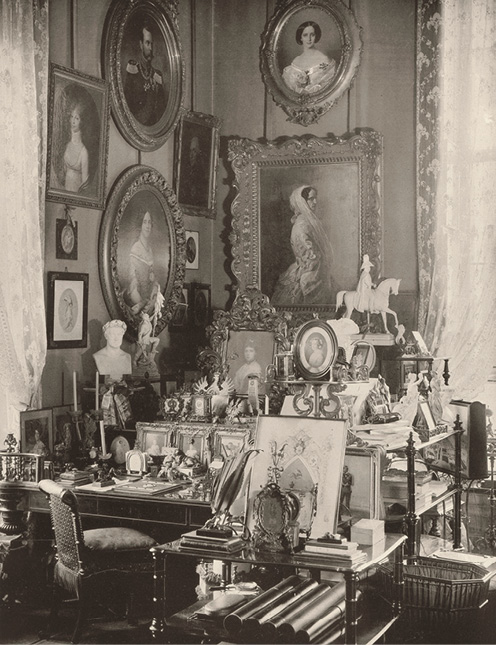
In addition to the books, this library housed an extensive collection of prints and maps. In the adjoining study of William I, where he received Otto von Bismarck several times a week (Fig. 8), more than a further one hundred medals and coins were lying openly on tables, in display cabinets, and on chests of drawers (Fig. 9).17 The depictions evidently held great sentimental value for the monarch as they were all portraits of relatives, friends and significant events in his life, such as the death of his revered mother and the military campaigns in which he had participated during his long career as an officer. Thanks to a gold medal (lot No. 186), he was constantly reminded of his coronation in Königsberg in 1861, ensuring he was always aware of the past (Fig. 10).18
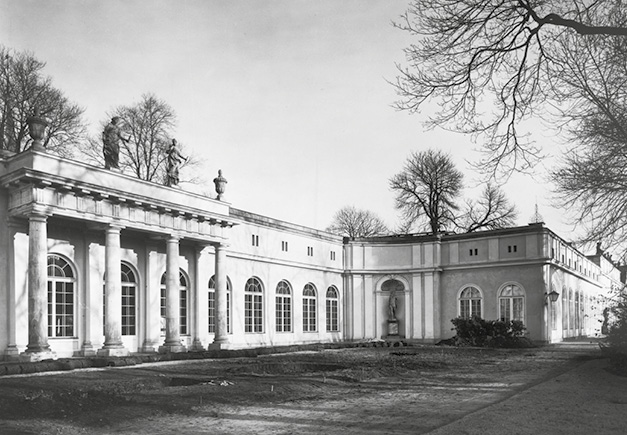
At the instigation of his son, the Crown Prince, a dynastic museum in honor of the House of Hohenzollern was established in 1877 at Monbijou Palace – a summer palace built in the early 18th century that was later inhabited by Frederick II’s mother, among others (Fig. 11). In terms of its concept, the museum followed the royal, chronological collections at Rosenborg Castle (Copenhagen). One or more rooms were dedicated to each ruler, and sometimes to their wives as well. This presentation of the history of the Brandenburg-Prussian court and culture complemented the concept of the ever-expanding royal museums on Museum Island, located in the heart of the new imperial capital.
Even during his lifetime, the emperor bequeathed a series of commemorative medals to the museum.
Following his death, the collection was initially moved from the Old Palace to the vault at the Berlin Palace, but was later transferred to the Hohenzollern Museum. Along with the collections of his late brother and father, it formed the numismatic focus of the museum. The management occasionally added to the collection through purchases and donations, but the number of items remained modest until 1918.
The Collections of Emperor Frederick III and Emperor William II
In 1871, Crown Prince Frederick (III) William was appointed Protector of the Royal Museums by his father, Emperor William I. He and his wife, Queen Victoria, maintained close contact with the museums’ directors and subsequently established links with leading private art collectors, including Ferdinand Robert-Tornow, whose collection the Crown Princess inherited in 1875. The numerous objects from the field of applied arts also included medals from the 16th to 18th centuries. The Crown Prince and Princess’s interest in medal art is evident in their influence on the commemorative medal designed by Gustav Eberlein to celebrate their 25th wedding anniversary in 1883.19 This process culminated in the large-scale medals commemorating the emperor and his wife that were designed by Walter Uhlmann in 1888, who had taken on the role of artistic director.20
Very little is known about the numismatic collection of Frederick III, who would later become known as the “99-day emperor”. The targeted donations made by “His Imperial Highness, the Crown Prince” to the Hohenzollern Museum do not, at first glance, suggest any specific interests regarding specific topics. However, the ledgers of the Hohenzollern Museum mention several transfers from the emperor’s “medal collection”, suggesting a broader context.
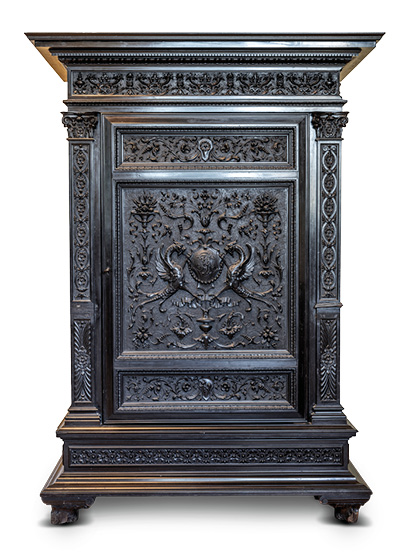
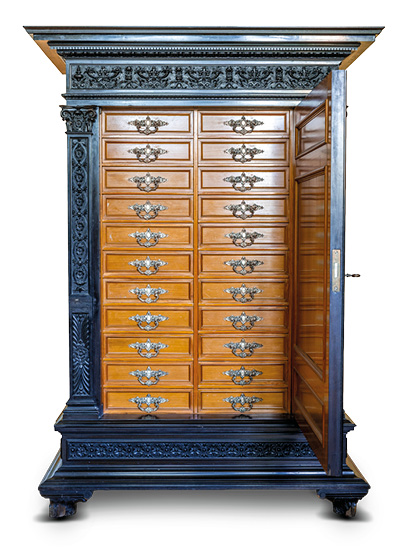
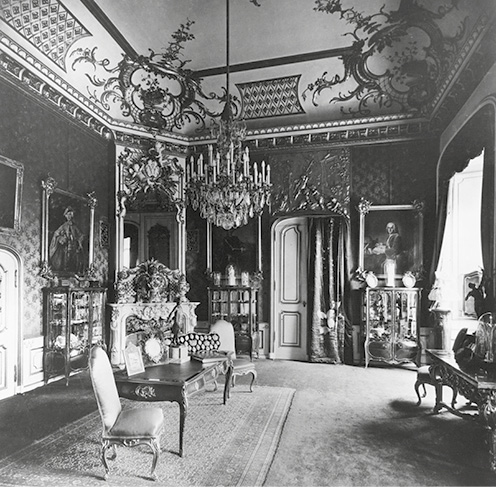
Among the collections of the former royal household at Hohenzollern Castle, a coin and medal cabinet from inventory of the Berlin Crown Prince’s Palace, the main residence of Frederick III as Crown Prince, has been preserved (Figs. 12 and 13). This cabinet is from Room 255,21 a “small antechamber in the richest and most beautiful Renaissance style”, situated immediately outside the crown prince’s study in the eastern side wing of the building (Fig. 14). The cabinet, which is made of carved ebony, is stylistically attributed to the Renaissance period. Inside, there are 22 fold-out compartments, each containing a drawer for medals and coins. The intertwined “FR” on the central cartouche, which is held by griffins, stands for “Fridericus Rex” and refers to the kings Frederick I or Frederick the Great. Given this evidence, it could be argued that a corresponding cabinet was dedicated to each ruler of the dynasty from the Great Elector onwards up to William I. This suggests that there may have been at least eight pieces of furniture of this type. It is not currently possible to ascertain whether the emperor’s collection passed into the possession of his wife, Empress Victoria.22
Emperor William II had a completely different relationship with coins and medals. During his reign, a modern and functional yet magnificent museum building was constructed according to the plans of Ernst Eberhard von Ihnes between 1897 and 1904 that was named after the imperial father. The ground floor features a sixty-meter-long vault, whose design is more reminiscent of the upper decks of the great luxury liners of the time than of display cabinets for one of the world’s largest coin and medal collections. Acquisitions made during the emperor’s reign secured several significant collections and established the reputation of Berlin’s numismatic collection. Additionally, one specimen each of all the commemorative medals created during William’s reign were donated by the emperor to Berlin’s numismatic collection and to the Hohenzollern Museum.23
Especially after the Silver Jubilee in 1906 and the 25th anniversary of his reign in 1913, as well as during the First World War, the collections of both museums were expanded with significant individual pieces and extensive series from the emperor.
At Monbijou Palace, the new acquisitions were primarily exhibited in Rooms 1-3, which were dedicated to William II and his wife, Augusta Viktoria.
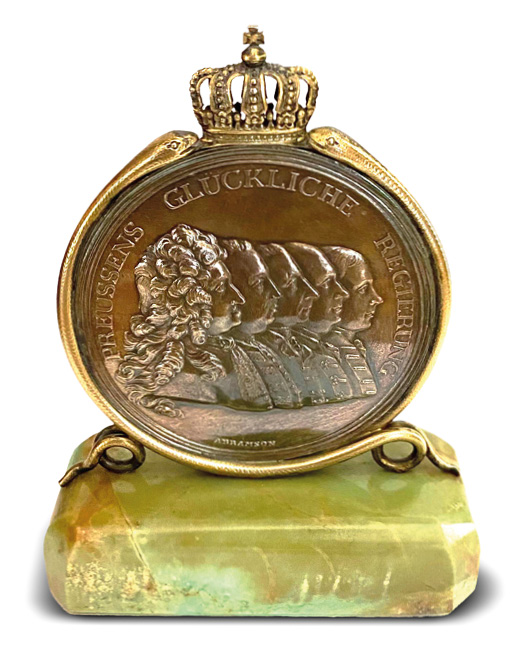
The emperor also possessed a small private collection of medals, not particularly extensive in number, which mainly depicted events from his family’s history. These found their way into William’s collection mainly as Christmas gifts from family members and friends, and were displayed in display cabinets and on tables crafted by the cabinetmaker Julius Zwiener in the reception room of the imperial apartments at Berlin Palace (Fig. 15).24 The manner in which the medals were presented was certainly a distinctive feature. They were often fitted with mounts consisting of a frame and plinth, transforming them into display pieces. In this way, the medals and coins set into the bases of cups, bowls and cases were also put to new use (Fig. 16).
Despite the curatorial patronage of the Berlin numismatic collection and the presence of artistically significant and outstanding pieces of medal art created during the emperor’s reign, there is no evidence that William II had a particular passion for numismatics. Support for the museum at Monbijou Palace, overseen by the Office of the Grand Marshal of the Court, was to be expected. Its director, Paul Seidel, published and catalogued part of the collection in the Hohenzollern Yearbooks.25
Nevertheless, even while in exile in Doorn, the emperor regularly asked for information about the development and condition of his collections at the Hohenzollern Museum.26
The medal collection was displayed alongside the order collection and parts of the Prussian Crown Jewels in Room 7, located on the Spree side of the palace.
Monbijou Palace Between 1918 and 1945
From 1926 onwards, the collections were placed under state administration and served the purpose of preserving the “unique character” of the Monbijou Palace Museum, leaving the collection, which had grown until 1918, in the private ownership of the former royal family.27 Although this agreement limited the House of Hohenzollern’s ownership rights over the objects, the museum was unable to act independently. For example, it could not plan exhibitions or make sales on its own. In such cases, the former emperor could exercise his right of veto.
After 1933, the Nazi regime attempted to transfer the museum’s collections entirely into state custody and rebuild the palace on a different site, as it obstructed Hitler’s plans for a new museum quarter.28 Following the heavy bombing raids that hit Berlin particularly hard from mid-1943 onwards, the salvage operations that had been in preparation since 1940 were intensified. The medals were packed into boxes and transferred to the bombproof cellars of the Berlin Palace. They remained there until the end of the war in 1945. The heavy air raids at the end of 1943 also reduced the Monbijou Palace to rubble and ashes. This sealed the fate of the museum.
Footnotes
- See exhibition catalog: Die Brandenburgisch-Preußische Kunstkammer, p. 19 ff., Berlin 1981; Elke Bannicke and Christian Stoess: Die Anfänge im kurfürstlichen Schloss, 16. Jahrhundert bis 1830, p. 15 ff., in: Bernd Weisser (ed.): Münzkabinett. Menschen, Münzen, Medaillen, Berlin 2020 und Eva Dolezel: Der Traum vom Museum. Die Kunstkammer im Berliner Schloss um 1800 – eine museumsgeschichtliche Verortung, p. 69 ff., Berlin 2019
- Ibid.
- Rooms 985-987 (located on the third floor of the Berlin Palace, between the Knights’ Hall and the Chapel)
- Bannicke/Stoess 2020, p. 20 ff.
- Exhibition catalog: Friedrich II. und die Kunst. Ausstellung zum 200. Todestag, p. 74 ff., Potsdam 1986
- Ibid, p. 26
- Ibid, p. 30
- As part of the estate settlement, items on loan from the former royal house to the Berlin museums were transferred to the state in the form of a so-called “Hohenzollern Foundation”, in exchange for compensation.
- SPSG, Historische Inventare, No. 266: Inventarium des Königlichen Schlosses zu Charlottenburg und der dazu gehörenden Gebäude. Neuer Flügel, Erstes Stockwerk, M3. 309-345, vol. IV, 1835, pp. 28-64
- SPSG, Historische Inventare, No. 486: Inventarium des Königlichen Stadt=Schlosses zu Potsdam, Vol. III, welches das 3te Stockwerk incl. des Belvederes auf dem Brauhausberge enthält. No. 230 to 317, pp. 87-120; the relevant inventory of the Royal Palace only mentions numismatic items in a few instances.
- Several numismatic works were mentioned in the handwritten catalogs of Frederick William IV’s youth library, primarily relating to antiquity, but also to the Renaissance (Berlin State Library, “Libri Pictorati”).
- See on this topic the online article by Dietmar Kreutzer: Preußens Romantiker. Die Münzen Friedrich Wilhelms IV., 2020
- HM 664 (MKB 186)
- For further details, see Jörg Meiner: Wohnen mit Geschichte. Die Appartements Friedrich Wilhelms IV. von Preußen in historischen Residenzen der Hohenzollern, pp. 57-72, Berlin 2009
- HM 229 (MKB 1495)
- HM 230 (MKB 1496)
- GStA PK, BPH rep. 113, No. 2441, p. 139c-h and 140 (inventory of the Old or Imperial Palace)
- HM 1113 (MKB 1529)
- Julius Menadier: Schaumünzen der Hohenzollernherrscher, p. 159, in: Hohenzollern-Jahrbuch No. 5, Berlin 1901
- Ibid; the two specimens from the Hohenzollern Museum (HM 9296 (MKB 1963) and HM 9297 (MKB 1962)) are housed in the treasury of Hohenzollern Castle.
- The cabinet returned to Hohenzollern Castle in 1974 from the estate of the Grand Mistress of the Court to Crown Princess Cecilie, Freifrau Rose von Tiele-Winckler. Numerous pieces of furniture dating from the construction period, the time of Crown Prince Frederick William (III) and Crown Princess Victoria remained part of the palace’s inventory even after 1905 when Crown Prince William and his wife, Duchess Cecilie of Mecklenburg, moved into the palace. The palace’s inventory was handed over in its entirety to the former Crown Prince and Princess after 1918.
- The palace’s contents were passed down to the older, later-born children of the imperial couple by inheritance, including Prince Henry, Princess Victoria of Schaumburg-Lippe, and Crown Princess Sophie of Greece.
- Cf. Wolfgang Steguweit and Bernd Kluge: Suum Quique. Medaillenkunst und Münzprägung in Brandenburg-Preußen, p. 208, in: Das Kabinett, Schriftenreihe des Münzkabinetts, volume 10, Berlin 2008
- Room 668 (first floor, at Schlossplatz). The collection is now housed at the emperor’s exile residence in Doorn in the Netherlands as well as at Hohenzollern Castle, in the possession of the House of Hohenzollern.
- See, among others, Julius Menadier: Schaumünzen der Hohenzollern-Herrscher in Brandenburg-Preußen, p. 143 ff., in: Paul Seidel (ed.): Hohenzollern-Jahrbuch volume 5, Berlin 1901
- Letter from the plenipotentiary Wilhelm von Dommes, dated 28 December 1934, addressed to William II regarding the number of items in the medal collection held at the Hohenzollern Museum: HABHZ A.I. No. 67 Acta regarding the Hohenzollern Museum at Monbijou Castle, p. 163v. (1920-1941)
- VAV of 1926 § 5. The so-called settlement agreement between the state and the Crown regulated the ownership rights of both parties.
- Thomas Kemper: Schloss Monbijou. Von der Königlichen Residenz zum Hohenzollern-Museum, p. 138ff. Berlin 2005