

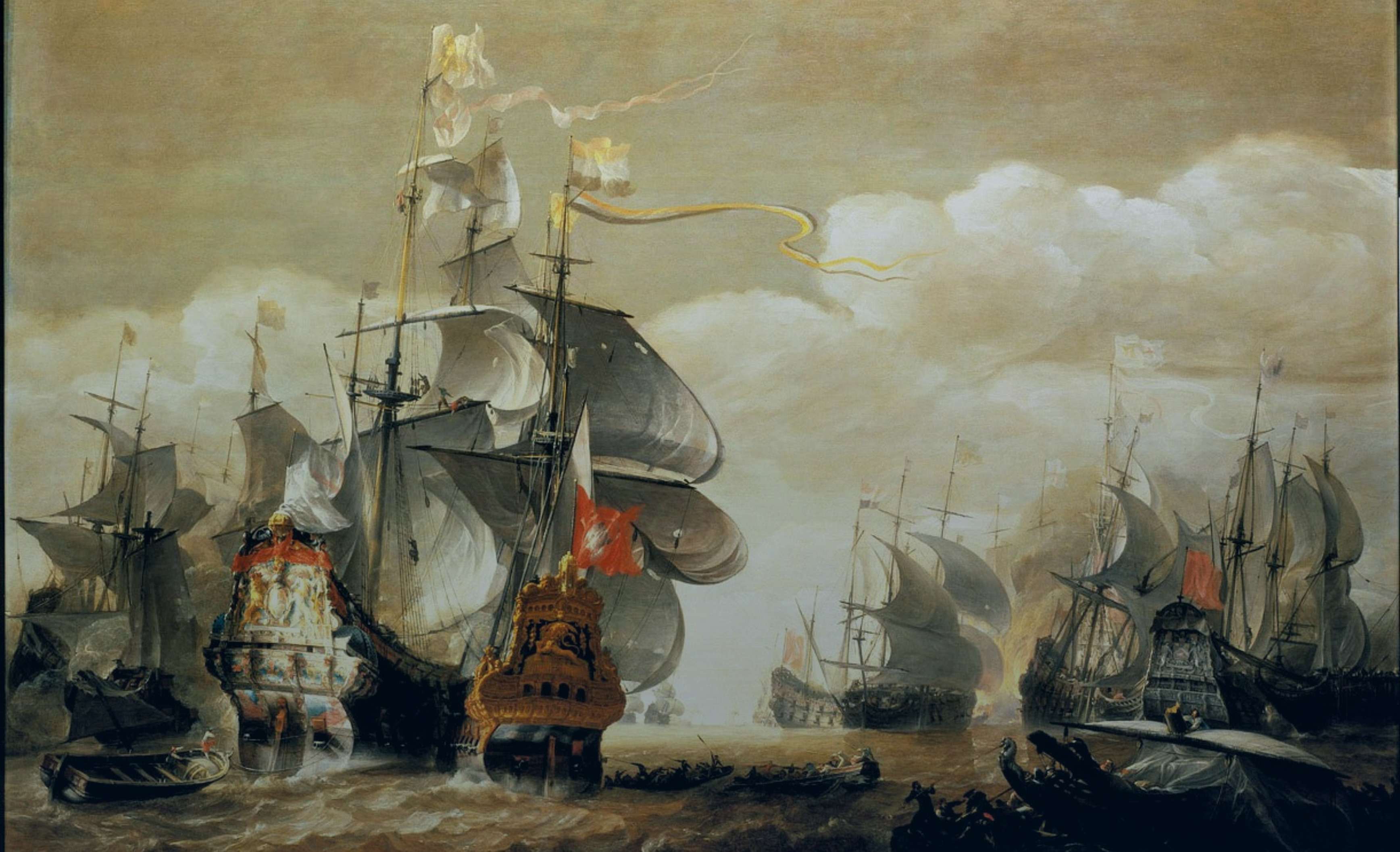
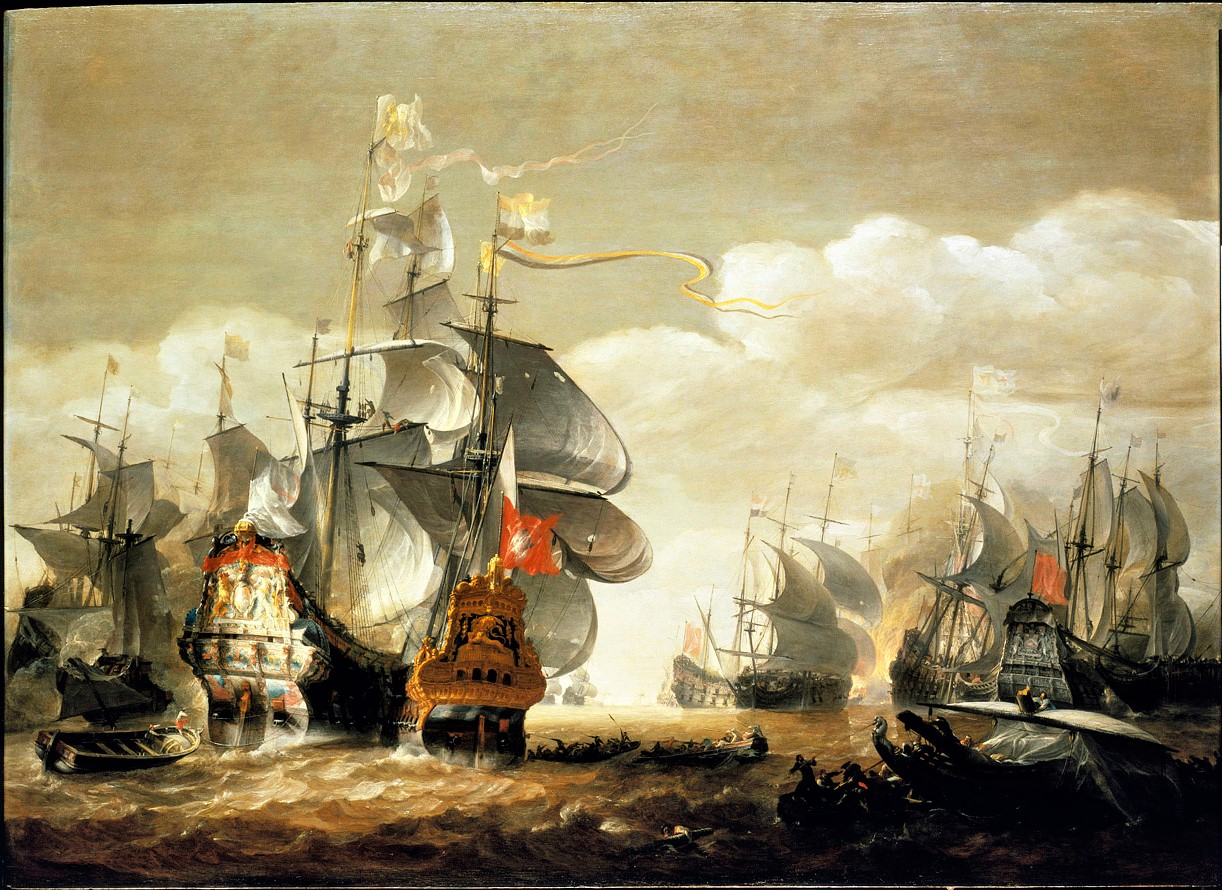
During the 17th century, the United Provinces of the Netherlands and Great Britain fought several naval wars over supremacy on the world’s oceans. In the First Anglo-Dutch War (1652–1654), England emerged victorious and was therefore able to dictate the terms of peace. In addition, privateering expeditions more than doubled state revenues. For the new English king Charles II (1660–1685) in particular, this prize money was of immense importance, since the additional income enabled him to pursue policies independent of Parliament. A renewed naval conflict therefore appeared attractive. Beginning in 1663, privateering expeditions were sent against Dutch colonies, and by the end of 1664, Dutch ships in the English Channel were also being seized. It was during this period that Nieuw Amsterdam became New York. The Dutch dispatched a fleet in an attempt to recapture their colonies, as overseas trade had suffered enormously.
The Second Anglo-Dutch War
On March 4, 1665, England officially declared war on the States General of the Netherlands. Initially, the English attempted to blockade the Dutch coast, but this could not be maintained for long because of supply difficulties. The most important naval battle of the war took place on June 13, 1665 near Lowestoft off the English coast, where the Dutch were forced to withdraw after suffering heavy losses. The English then attempted to capture a Dutch treasure fleet in the Bay of Bergen but were repelled on August 12, 1665. Thereafter, diplomacy intensified rapidly: England sought allies on the continent in order to force the Dutch into a land war.
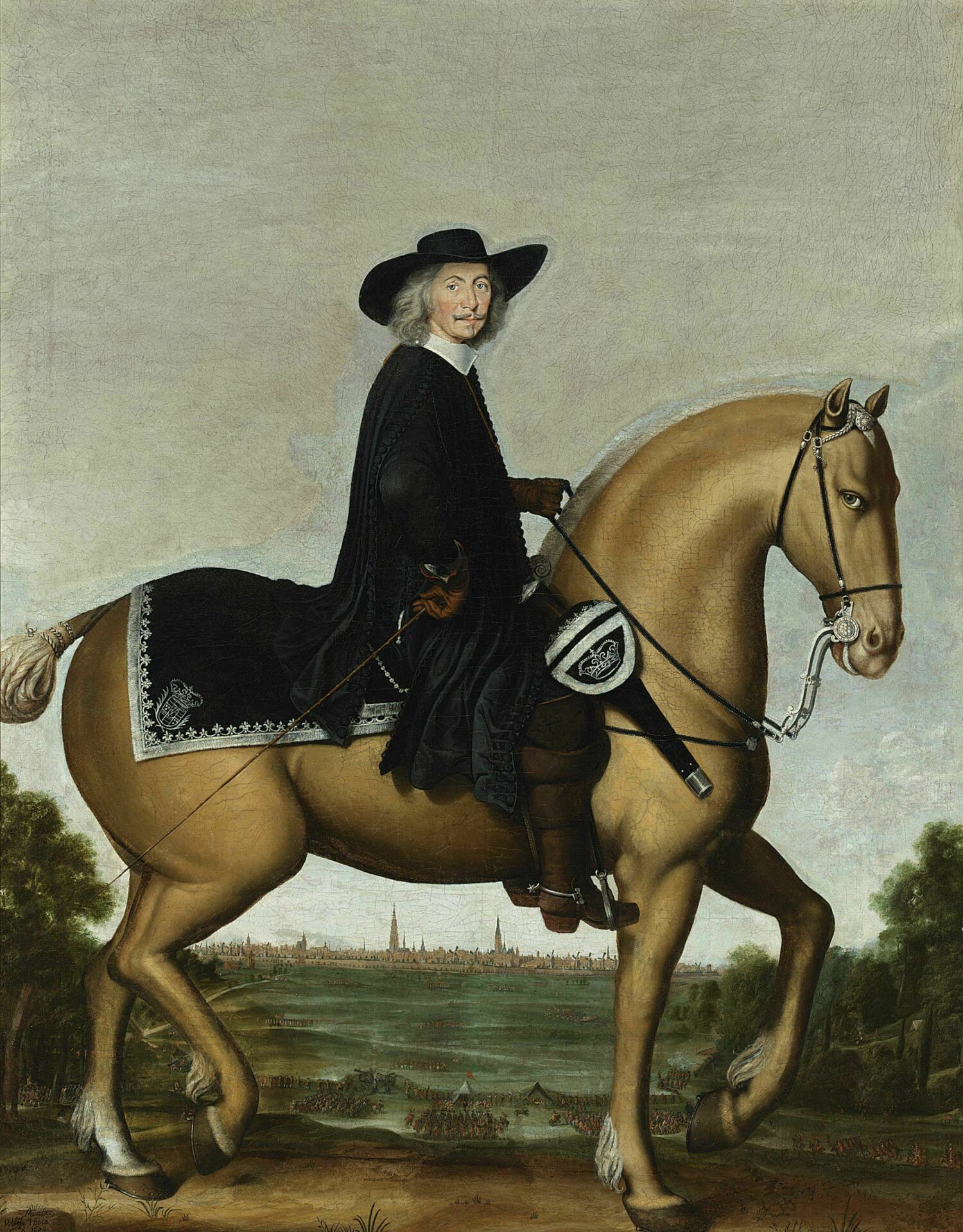
Christoph Bernhard von Galen
The Prince-Bishop of Münster, Christoph Bernhard von Galen (1650–1678), became an ally because the expansionist Dutch had long sought to gain influence over his territory. To defend the bishopric, he had several citadels constructed, including those at Coesfeld, Münster, and Vechta. From among the imperial troops of the Thirty Years’ War, von Galen maintained a force of 1,500 soldiers, doubling their number in 1654. His fondness for mortar bombardments earned him the nickname “Bommen Berend” (“Bombing Bernard”). In 1663, he marched with his troops into East Frisia in order to collect compensation payments. He accepted the alliance offer from Charles II in September 1665 in exchange for subsidy payments and immediately set about conquering the lordship of Borkeloh, which he claimed for himself. As commander-in-chief, he appointed Landgrave George Christian of Hesse-Homburg. Initial successes soon followed: Twente, Achterhoek, and Westerwolde were held against the weak Dutch land forces.
Diplomatic Intervention by the Dutch
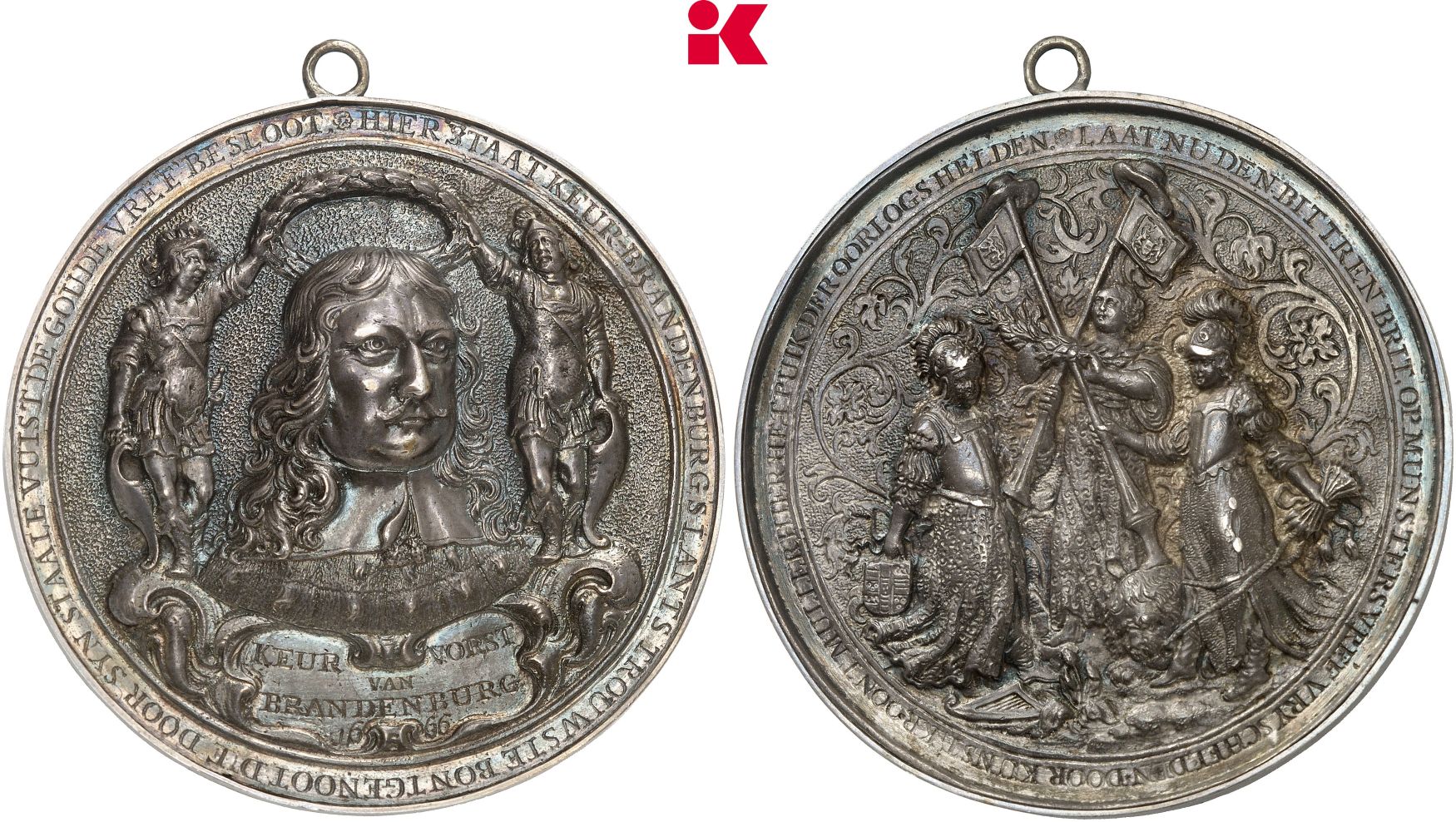
During the winter months of 1665/66, the Dutch dispatched diplomats across Europe. Their ally France declared war on Great Britain on January 22, 1666, followed by Denmark in February. The campaign plan for 1666 envisioned that the French would attack the Bishop of Münster. Elector Frederick William of Brandenburg (1620–1688), who maintained excellent relations with the Netherlands, offered to attack Münster from his territories along the Rhine.
The Peace of Cleves
Christoph Bernhard von Galen waited in vain for the promised English subsidy payments and therefore sought to enter negotiations as quickly as possible before enemy forces entered the territory of the prince-bishopric. On April 18, 1666, the Peace of Cleves, mediated by Elector Frederick William of Brandenburg, was concluded. The Prince-Bishop was forced to withdraw his troops and renounce his claim to Borkeloh. Charles II was now left without an ally. The advantage now lay entirely with the Dutch, who were grateful to Brandenburg.