When we wish to reconstruct history, the central problem is that we already know how it ends. We therefore focus above all on the forces to which each era assigned the leading role. This frequently leads to an overestimation or misinterpretation of the significance of personalities or social developments from the perspective of later generations. An important example of this is provided by the radical democrats of 1848.
The Actors
The radicals were the most extreme in their conduct. Their answer to industrial change and social problems was to eliminate all injustice through a redistribution of property and privileges. This position was shared by only a tiny fraction of the population. Many demanded instead a say in the laws of a state that they financed through their taxes. We would describe this large group as "Liberals." Their number was surpassed only by the silent mass of conservatives, who mourned the passing of old values and believed that a return to former times could undo Napoleon and the ideas of the French Revolution.
Representatives of all three groups wanted what was best for their country, even if they were not agreed on what that was.
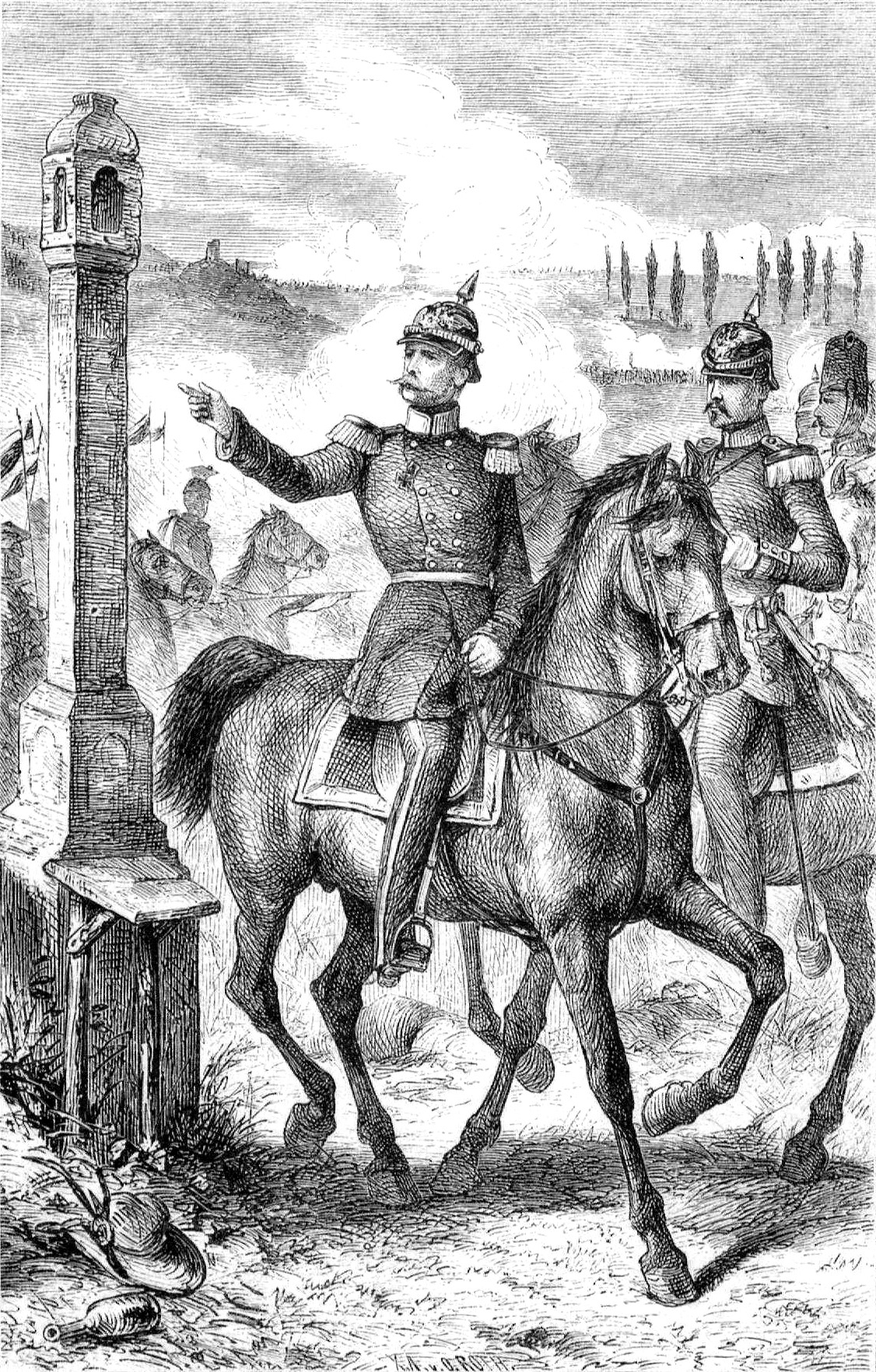
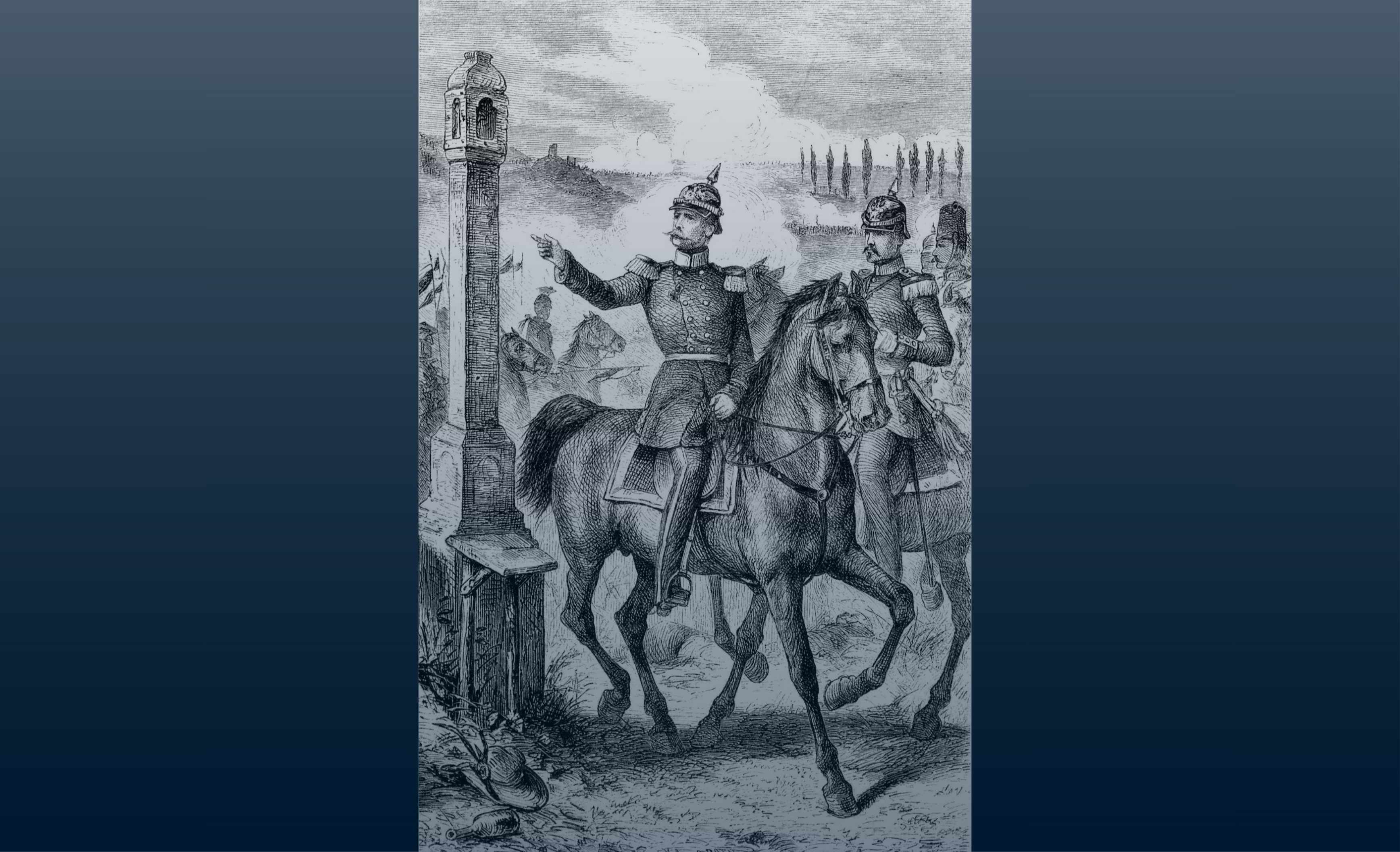
Symbol of Identification for the Conservatives
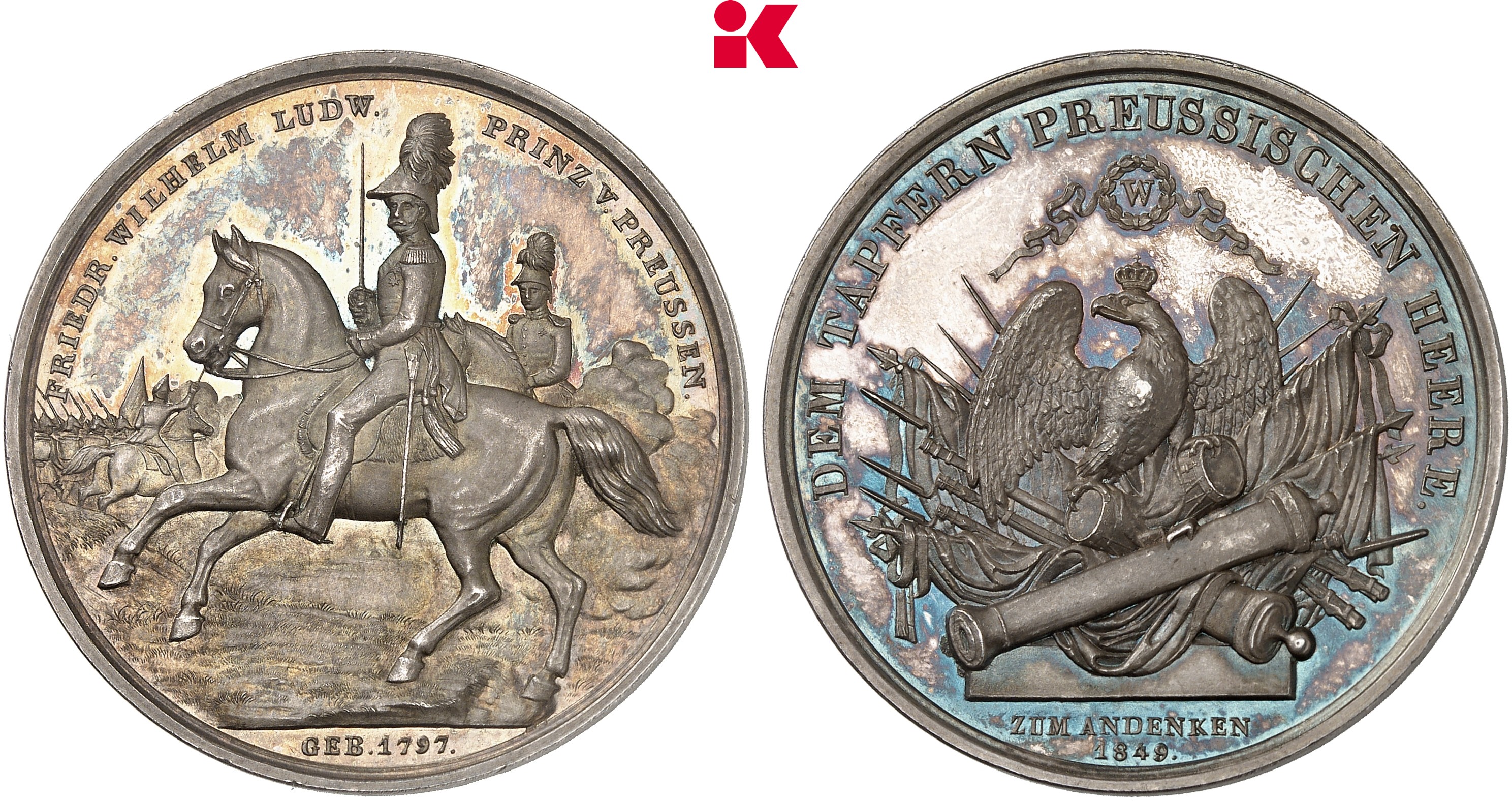
Prince William of Prussia had felt a close bond with the military ever since entering the army at the age of ten. His comrades offered him an intellectual home. William repaid them with unwavering loyalty and the adoption of their ideals: no social group was more conservative than the nobility-dominated army. William's staunchly conservative stance met with broad approval in Prussia and among its allies.
In March 1848 he had ordered troops to fire on demonstrators and consequently drew the wrath of the public upon himself as the "Grapeshot Prince." William, who had been hiding on the Pfaueninsel in the Havel, was forced into exile in Great Britain at the height of the revolution. Frederick William IV had asked Queen Victoria to receive his brother in England until the situation had calmed.
Scapegoat of the Radicals
When William advanced to heir apparent upon the accession of his childless brother Frederick William IV, he moved into the public spotlight. His at times highly undiplomatic remarks caused outrage among radicals and liberals alike. William became a figure of hatred for the revolutionaries, above all when his brother appointed him military governor of the Rhine and Westphalia.
To prevent things from taking a turn for the worse, his royal brother sent him to Great Britain at the height of the revolution.
Standard-Bearer of the Nationalists
William remained there only a few weeks. He returned to Berlin on 21 June 1848, made possible by his election to the Prussian National Assembly as representative of the district of Wirsitz/Posen. This election is characteristic of the way William dealt with unwelcome changes: he turned them to his advantage. In this way he also found a pragmatic approach to the question of what a future Germany should look like — Greater German (with Austria) or Lesser German (without Austria). While Frederick William insisted on loyalty to Austria, William rallied national forces behind him by playing the national card.
A Coalition Against the Radical Forces
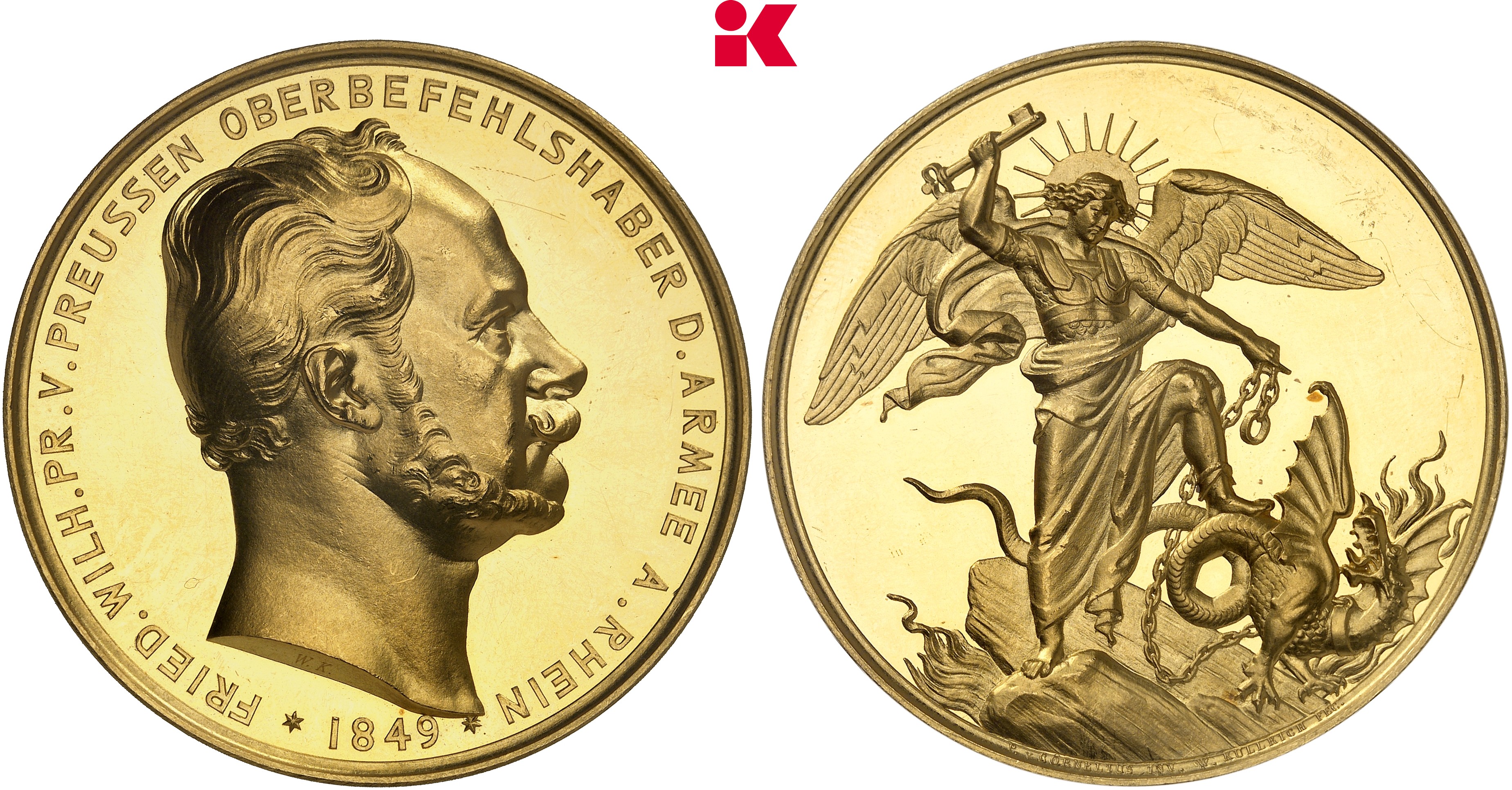
On this basis, liberal and conservative forces were able to come to terms with William. For the silent majority of bourgeois Germany had had enough of revolutions. They demanded an ordered state of affairs. Only in this light does the decidedly provocative reverse of the medal commemorating these events (Lot 158) become comprehensible. It places the suppression of the revolution in the Palatinate and in Baden in 1849 within a framework of divine salvation. William had been appointed commander-in-chief of the operations army by Frederick William IV. The design associates him with the Archangel Michael, who holds the key to Paradise and chains a fiercely struggling dragon — the revolution — as a symbol of the Devil.
No image illustrates more clearly how divided German society was in 1849. William experienced this repeatedly in his own person: five assassination attempts were made against him between 1849 and 1871.