_-_Royal_Collection.jpg)
"That a marriage is 'not merely a family matter, but a matter of state, should, I think, be clear to you,'" wrote Frederick William III in 1822 to his daughter Charlotte. In doing so he reminded her that a member of the Prussian royal house was obliged to keep the interests of the kingdom in mind when entering into matrimony. Finding personal happiness in marriage was not an option in the circles of the high nobility. Even if the domestic life of rulers was staged in a bourgeois manner — particularly after the Revolution of 1848 — marriage remained a union of convenience for the benefit of the dynasty and the state.
A Mother-in-Law with Ambitions
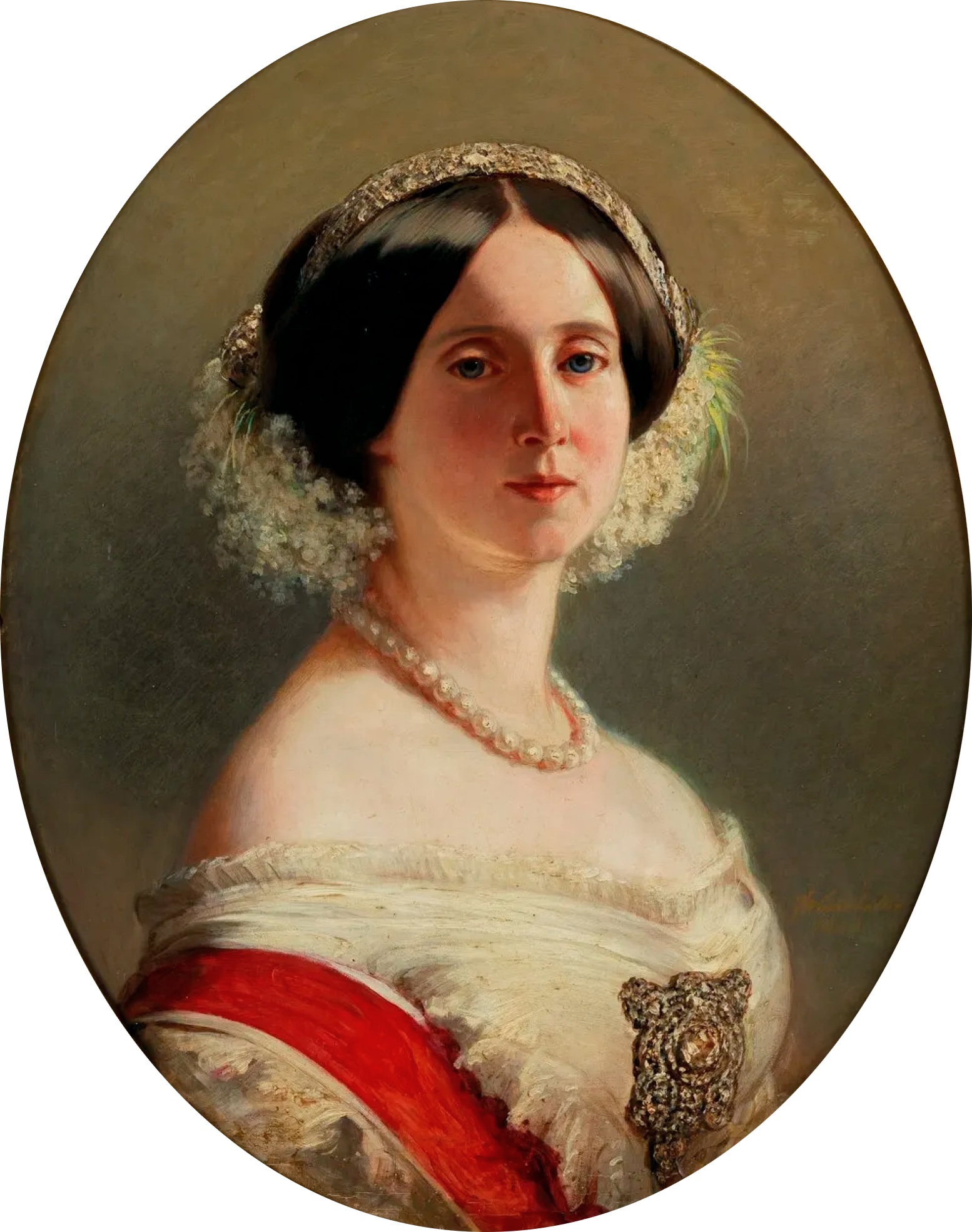
It was therefore certainly not love that led Prince William (I) to marry Princess Augusta of Saxe-Weimar-Eisenach. His younger brother Carl had fallen in love with her elder sister. But the prospective mother-in-law — a sister of Emperor Alexander I and his younger brother Grand Duke Nicholas (I) — had other ambitions: she agreed to the marriage only on condition that William would marry her younger daughter. After all, it was already becoming apparent at that time that the marriage of the Prussian Crown Prince Frederick William (IV) would remain childless, and that William would consequently one day advance to heir apparent. He saw through the intrigue. He wrote that certain members of the Berlin court were determined to "strap A[ugusta] onto me come what may."
In the end, however, William did exactly what was expected of him: in October 1828 he asked for Augusta's hand. It was a union that — as he himself wrote — "was dictated more by reason than by the heart."
An Intelligent, Liberal Woman
That the marriage nonetheless became a dynastic and political success bears witness to the high social intelligence of the couple. William accepted Augusta as a partner whose counsel he always welcomed.
Yet he rarely acted on what she recommended, for the couple's fundamental political outlooks were too different. While William held extremely conservative views, Augusta was deeply liberal.
It can scarcely have been an easy matter for Augusta to come to terms with her husband's well-known affairs. The two came to an arrangement and largely went their separate ways. Their Silver Wedding fell during the so-called Koblenz years, when William served from 1850 to 1858 as Governor General of the Rhine Province and Westphalia. The couple's shared residence was in Koblenz, where the husband left his wife alone for months at a time while he himself resided in Berlin.
Nevertheless, Augusta repeatedly exercised influence on day-to-day politics. She composed thoughtful memoranda in which she set down what she had learned. William encouraged her to do so — much to the irritation of Bismarck, who repeatedly attempted to curtail her influence. William wrote: "...hear as many opinions as you wish, continue to share them with me, for that is your duty, but do not believe that those opinions are always the only correct ones merely because they are not mine and not those of the government."
Augusta did as she was bidden. She wrote. A total of 5,800 letters from the couple's correspondence have survived.
Silver Wedding
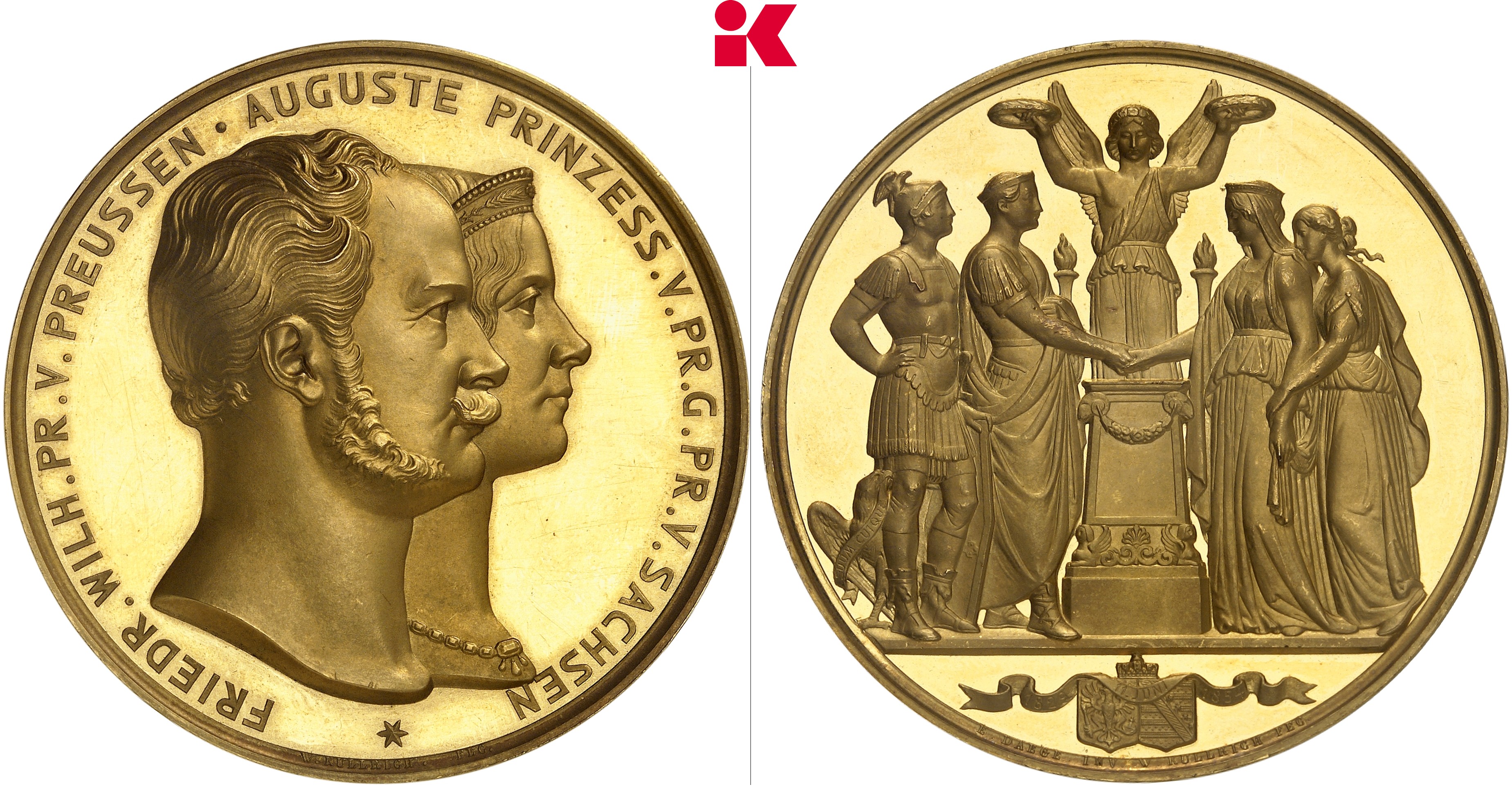

When William and Augusta celebrated their Silver Wedding on 11 June 1854, it was a public, not a private celebration. It offered subjects the opportunity to demonstrate their loyalty to the future royal couple. With concerts, church services, public festivities, and balls, the day was celebrated throughout the Prussian kingdom. The medal too is to be understood as a token of loyalty. Whoever wished to prove their devotion to the royal house through their coin collection purchased one. So that everyone could afford a medal, they were offered not only in gold but also in silver, bronze, and tin.