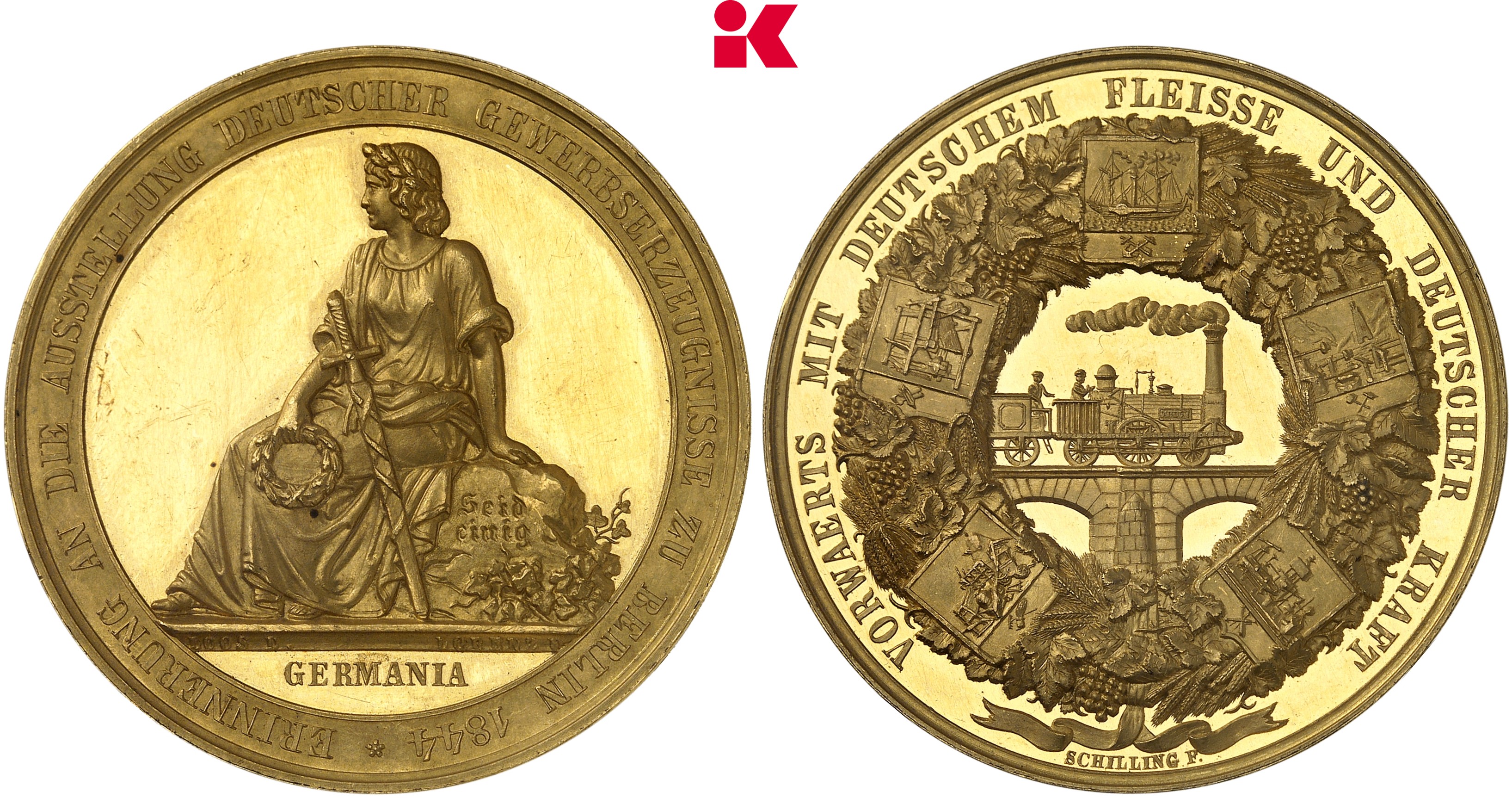
The lives of Germans changed radically in the first half of the nineteenth century. This transformation produced both winners and losers. Medals such as Lot 150 are to be understood from the perspective of the winners.
The Industrial Revolution
For entrepreneurially minded individuals, industrialisation offered opportunities never seen before. Skilled engineers and capable entrepreneurs could amass fortunes that catapulted them to the top of society. Moral reservations were unknown to them. The theories of Adam Smith, which had been spreading throughout Germany since 1800, provided them with the theoretical foundation to justify the exploitation of workers.
Showcases of Progress
Trade and industrial exhibitions developed into showcases of progress — first on a regional, then on an international scale. Nearly a decade before the Great Exhibition in London, the "First German Industrial Exhibition" was held in 1842 in the Hessian city of Mainz, attracting 75,000 visitors.
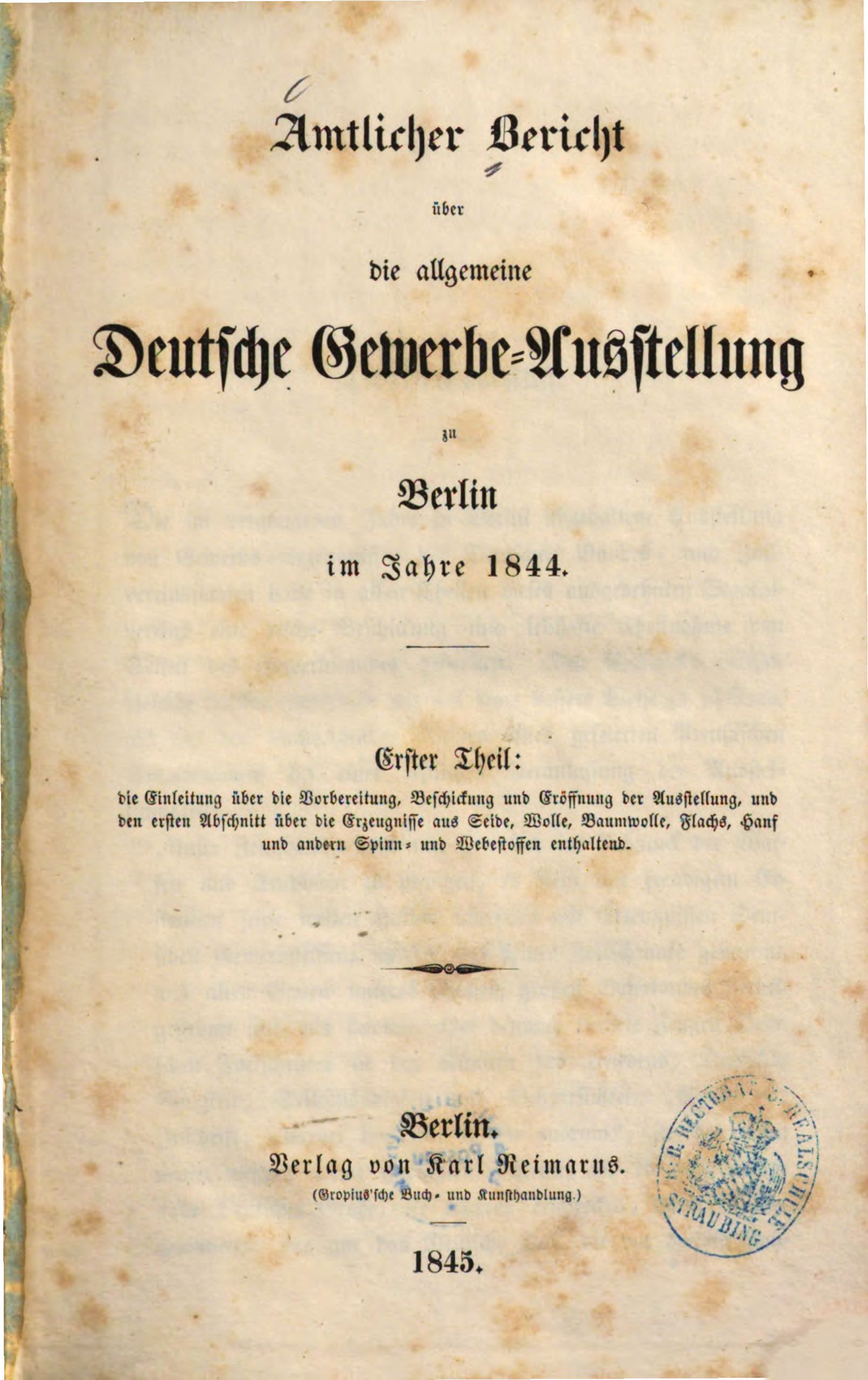
This inspired the Prussian government in 1844 to stage the "General German Trade Exhibition," which drew more than 3,040 exhibitors and 260,000 visitors from home and abroad to the Berlin Arsenal. For comparison: in 1843, the population of Berlin stood at 349,808.
The event offered spectators magnificent attractions, such as an Alpine panorama and an Arctic panorama — featuring live polar bears and "Eskimos," as the indigenous inhabitants of Greenland were called at the time — as well as rides on an ultramodern aerial carousel.
More significant, however, was another aspect: entrepreneurs used the exhibition to learn about the latest machinery being developed across Germany. Expert commissions from trade associations throughout the country travelled to attend. Those who could not come purchased the four-volume "Official Report on the General German Trade Exhibition in Berlin in 1844." Its structure mirrors the exhibition itself, which is also reflected in our medal:
• The textile industry, with an automatic loom
• Shipping, with the paddle steamer Alexandria from the Seehandlungs-Maschinenbauanstalt und Gießerei in Moabit
• Mining, with hammer works and a smelting furnace
• Chemistry and technical apparatus
• Agriculture, with agricultural equipment
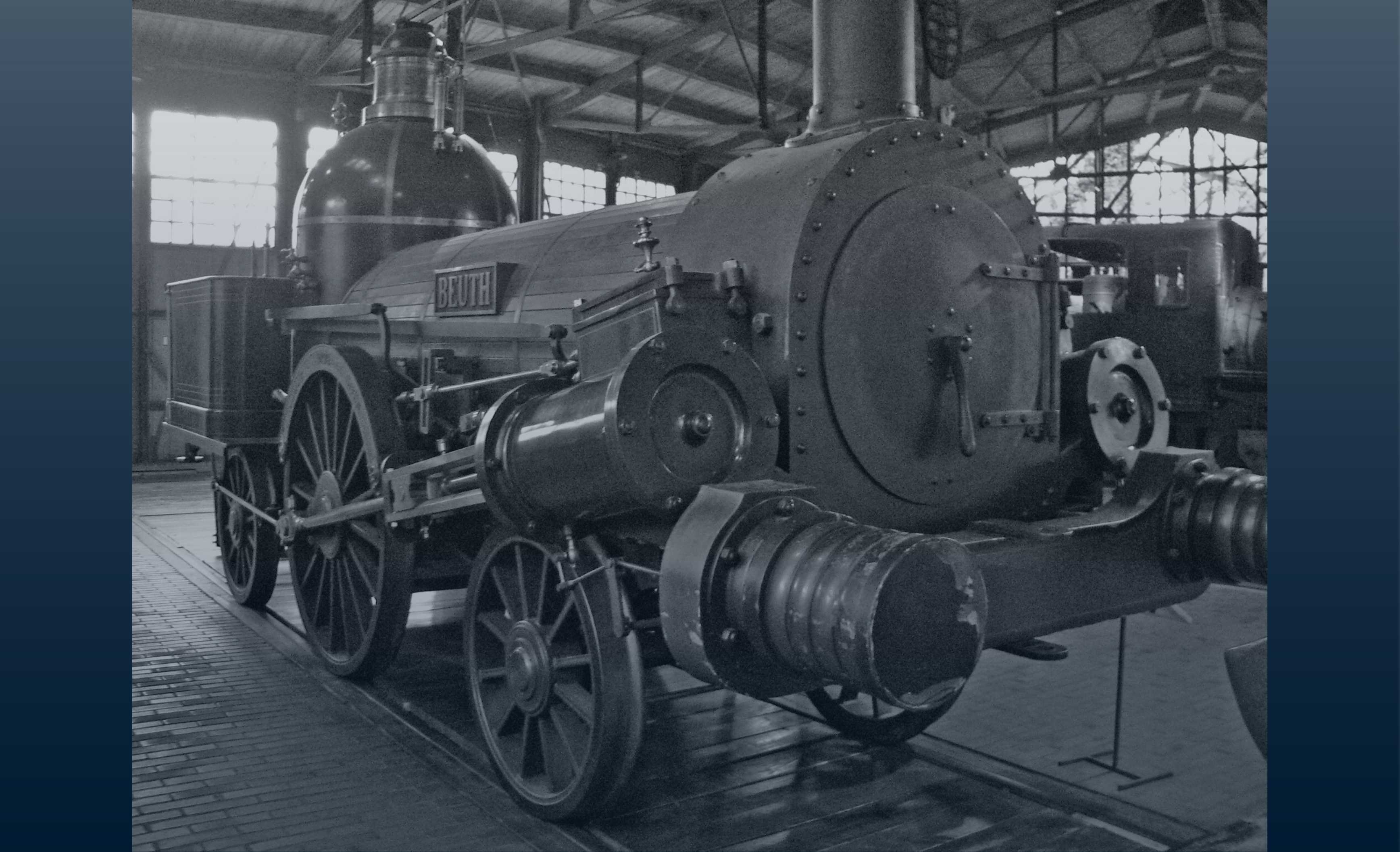
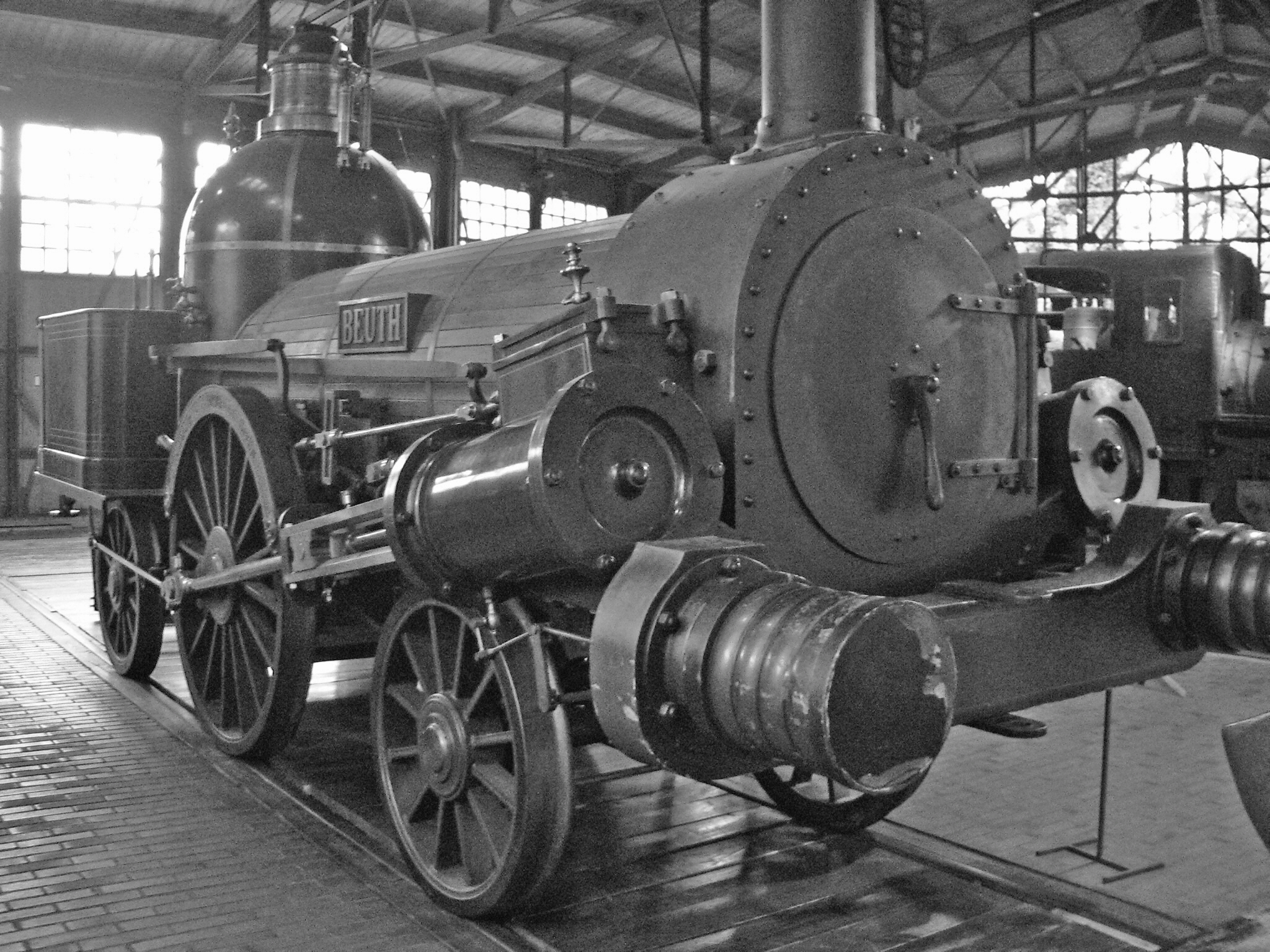
At the centre of the design is the main attraction: the Beuth — a locomotive by Borsig which, to the pride of all Germans, had won a race against a model developed by George Stephenson by a margin of ten minutes.
.jpg)
A Private Medal
The medal (Lot 150) is not a prize medal but a private souvenir medal, issued by the "Berliner Medaillen-Prägeanstalt Loos" on the occasion of the exhibition. It operated according to market principles, meaning its imagery was guided by the tastes of potential buyers.
New Borders, New Laws, National Sentiment
All the more remarkable, then, is the fact that the obverse depicts not a personification of Prussia, but of Germany. This was less a political statement than a commercial argument, for many people were unable to identify with Prussia.
Through the Reichsdeputationshauptschluss of 1803, nearly five million inhabitants — well over 15 percent of the total German population — had changed their national allegiance. The Congress of Vienna redrew the borders once again. This time, more than four million people found themselves under new rulers and were compelled to adapt to new laws, new taxes, new officials, and new administrative structures.
Prussia was particularly affected: every second citizen had only been Prussian since 1815. Germania was therefore a safer choice — a figure with whom all visitors to the exhibition could identify, regardless of their origins.
No Royal Involvement?
The exhibition was opened by the Prussian Minister of Finance. There appears to have been no royal participation. Nevertheless, the palace observed closely what was on offer. We know, for instance, that on November 5, 1849, Frederick William IV purchased the paddle steamer Alexandria — first seen at the trade exhibition and depicted in the uppermost field of this medal.
Something is Missing
The consequences of industrialisation play no role on the medal. The misery that the redistribution of labour brought to so many had no place in the industrial and trade exhibitions of the nineteenth century.