



The eLive Premium format is a type of auction developed by our company to combine the benefits of a traditional on-site auction with those of an online sale. These auctions are accompanied by a printed catalog presenting the collection. However, eLive Premium auctions are not held in the auction room, but exclusively online. This makes them particularly well-suited to interesting special collections comprising a large number of lots with an average estimate in the three-digit range.
An excellent example of such an eLive Premium Auction was our eLive Premium Auction 426 presenting a wealth of coins and medals, most of which from the German States and the Habsburgs. The auction also presented an interesting special collection of sede vacante issues. The results of the 900 lots added up to around twice the estimate, meaning the collection fetched the impressive sum of half a million euros. We present some particularly remarkable results. They all demonstrate that you do not need an on-site auction anymore to fetch high prices.
The Top Five from Auction 426
Let's start with the five most expensive coins from Auction 426.
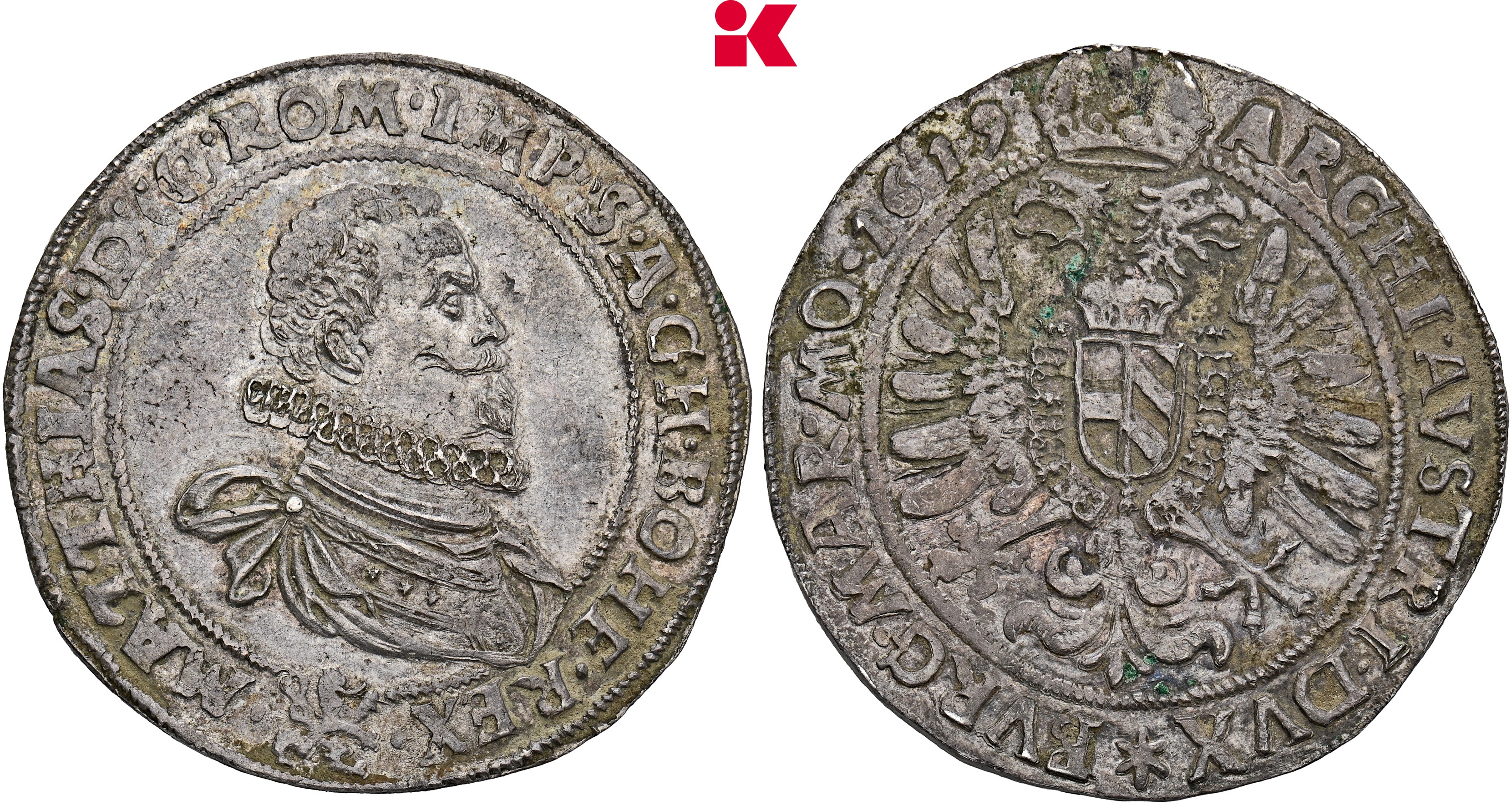
The most expensive piece of the auction sale was an extremely fine half reichstaler by Emperor Matthias, minted in Kutná Hora in 1619. Thanks to its perfect quality, the piece soared from a modest estimate of 1,000 euros to more than 10 times that amount, namely 10,500 euros.
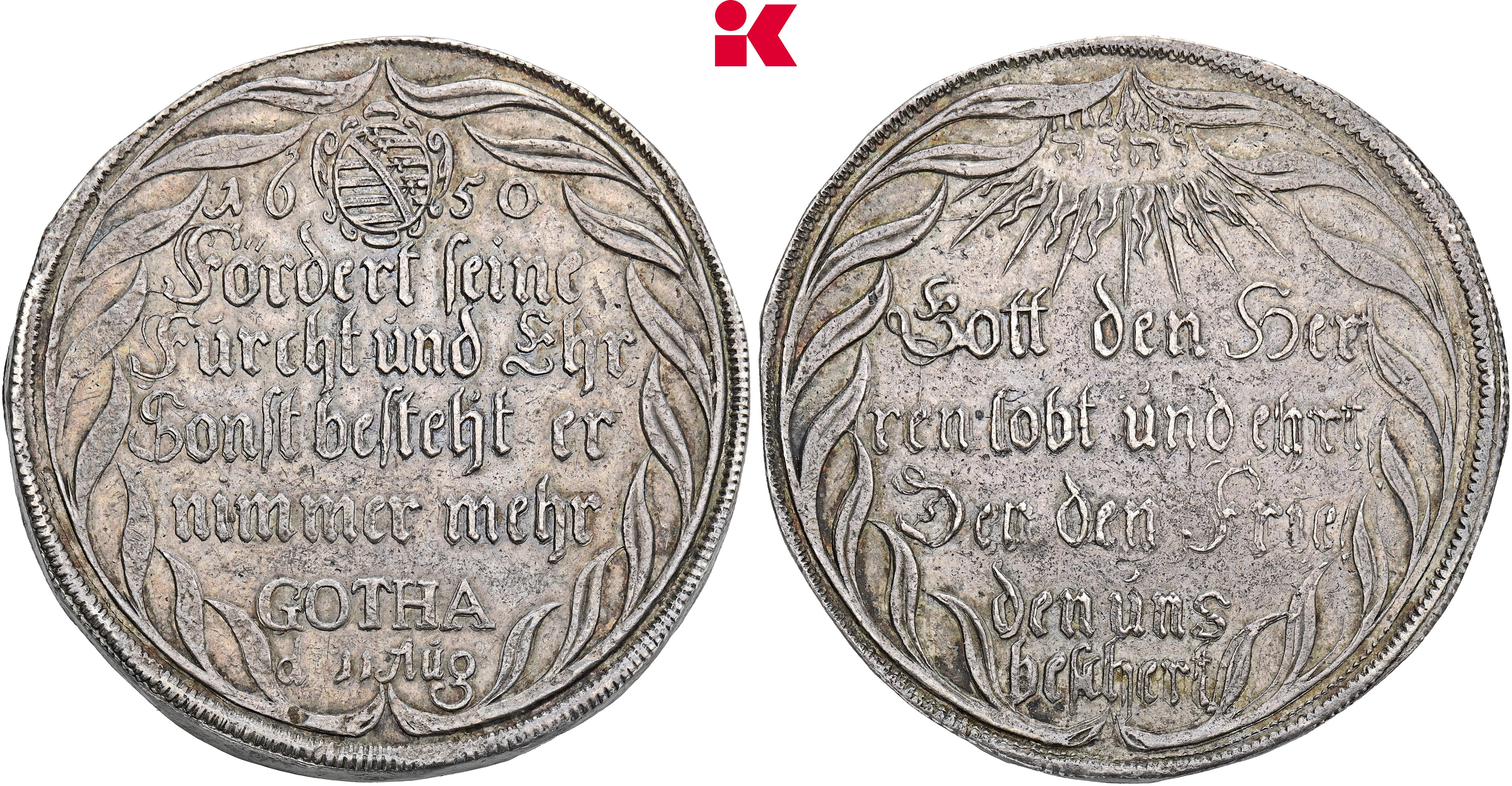
A double reichstaler by Ernest the Pious, issued in Gotha in 1650, fetched 6,250 euros – more than twice its estimate. The coin was part of a religous celebration held by the Saxon duke in Gotha on 11 and 12 August 1650 for the first time. With a solemn service, Ernest wanted to give thanks for the fact that the Piece of Westphalia had finally brought the long-lasting war to an end. As was customary at the time, coins were distributed as souvenirs. According to an 18th-century historian, schoolchildren took part in the magnificent procession starting the festivities, and every pupil received a coin to commemorate their participation. These coins are now known as friedensgroschen (peace groschen). Coins featuring the same motive of much higher denominations were presented to the town council and leading citizens, as well as to all high-ranking guests. The double reichstaler offered at Künker in extremely fine condition certainly was one of these pieces.
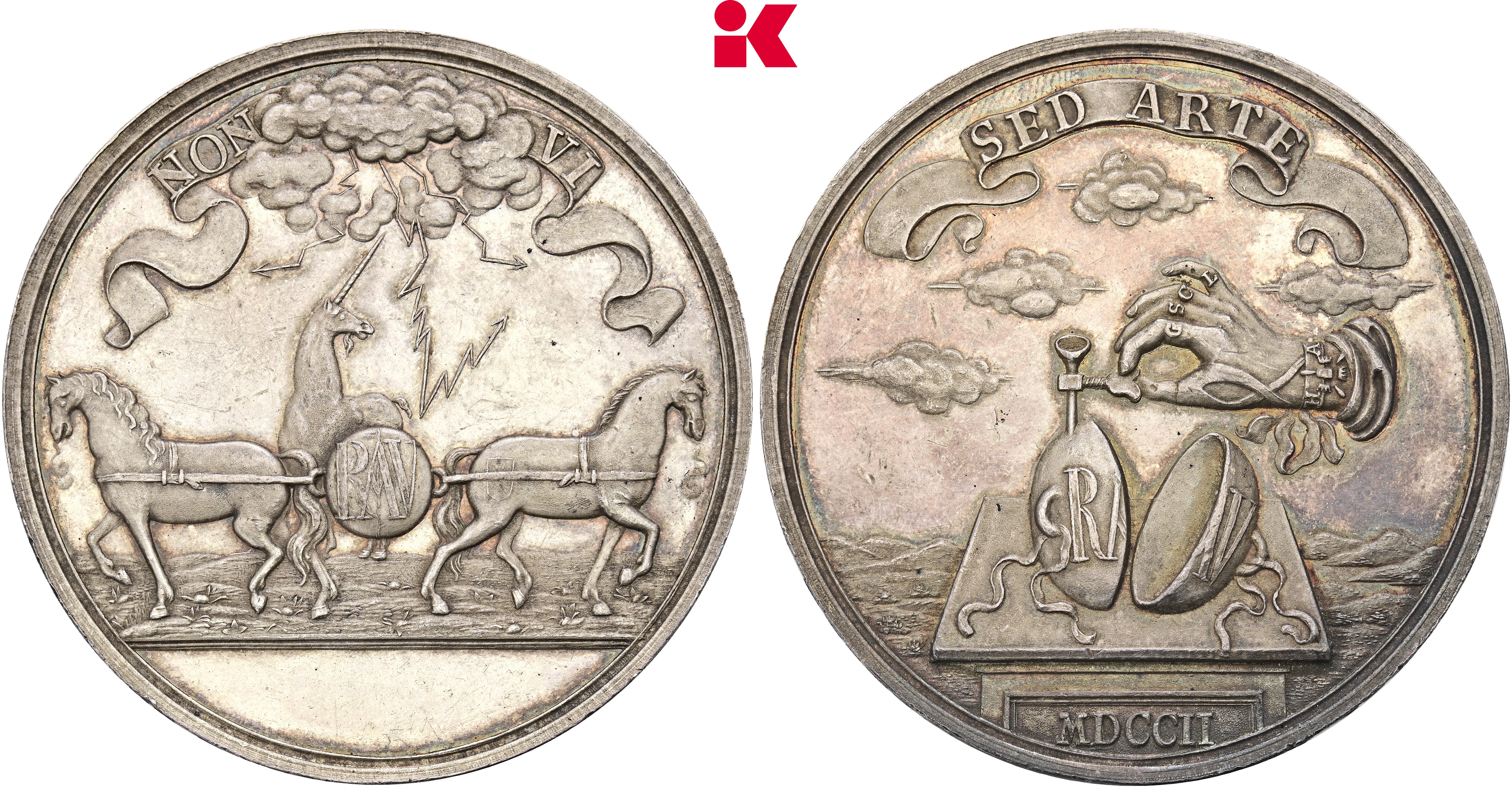
The so-called luftpumpentaler (air pump taler) or zwietrachtstaler (discord taler), a medal with the weight of a taler, was minted in Goslar or Zellerfeld in 1702. It is a testament to the significant scientific interest that prevailed at princely courts during the Enlightenment. The piece depicts Otto von Guericke’s famous metal hemispheres, which could not be pulled apart by horses as long as a vacuum held them together. The physical experiment symbolized the unity between the brothers Rudolf August and Anton Ulrich, the Dukes of Brunswick-Wolfenbüttel. Their harmony is disrupted by a hand opening the valve and eliminating the vacuum, a motif that is still interpreted in different ways today. We will probably never know for sure who minted the piece and what its purpose was. Nevertheless, its story is so captivating that the extremely fine medal jumped from an estimate of 1,500 euros to a hammer price of 5,750 euros.
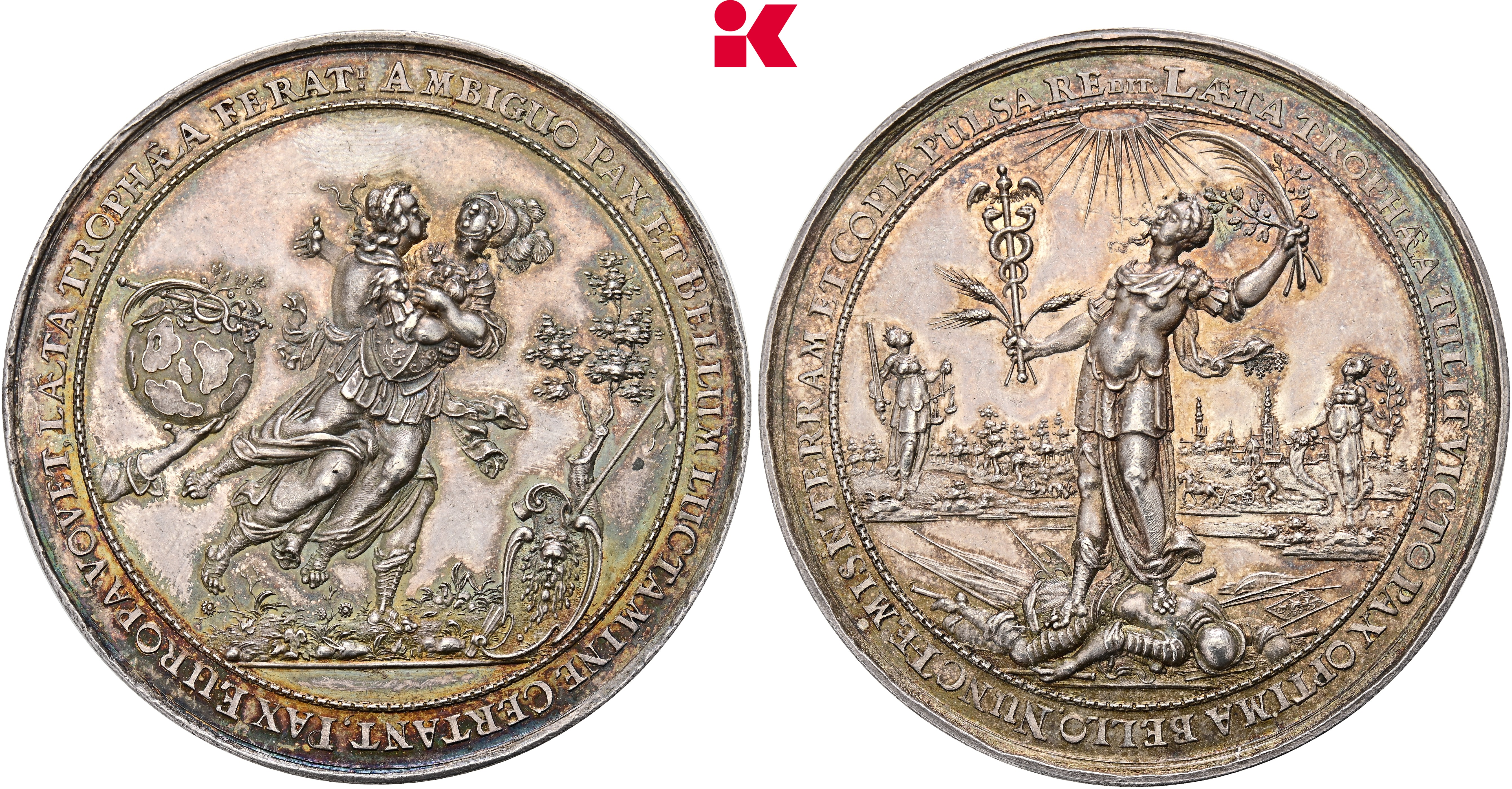
Let us conclude our review of the most expensive lots in this auction by taking a look at two attractive show pieces that were created at about the same time and both sold for the same hammer price of 5,500 euros. First, we have a medal from the city of Gdańsk dedicated to the hope for the Peace of Westphalia, estimated at 1,000 euros. It is not surprising that the lot fetched a significantly higher price. After all, engraver Sebastian Dadler created a small masterpiece whose artistic significance can fully be appreciated thanks to the medal’s outstanding condition. You can literally lose yourself in all the details and allusions that were incorporated into the design.
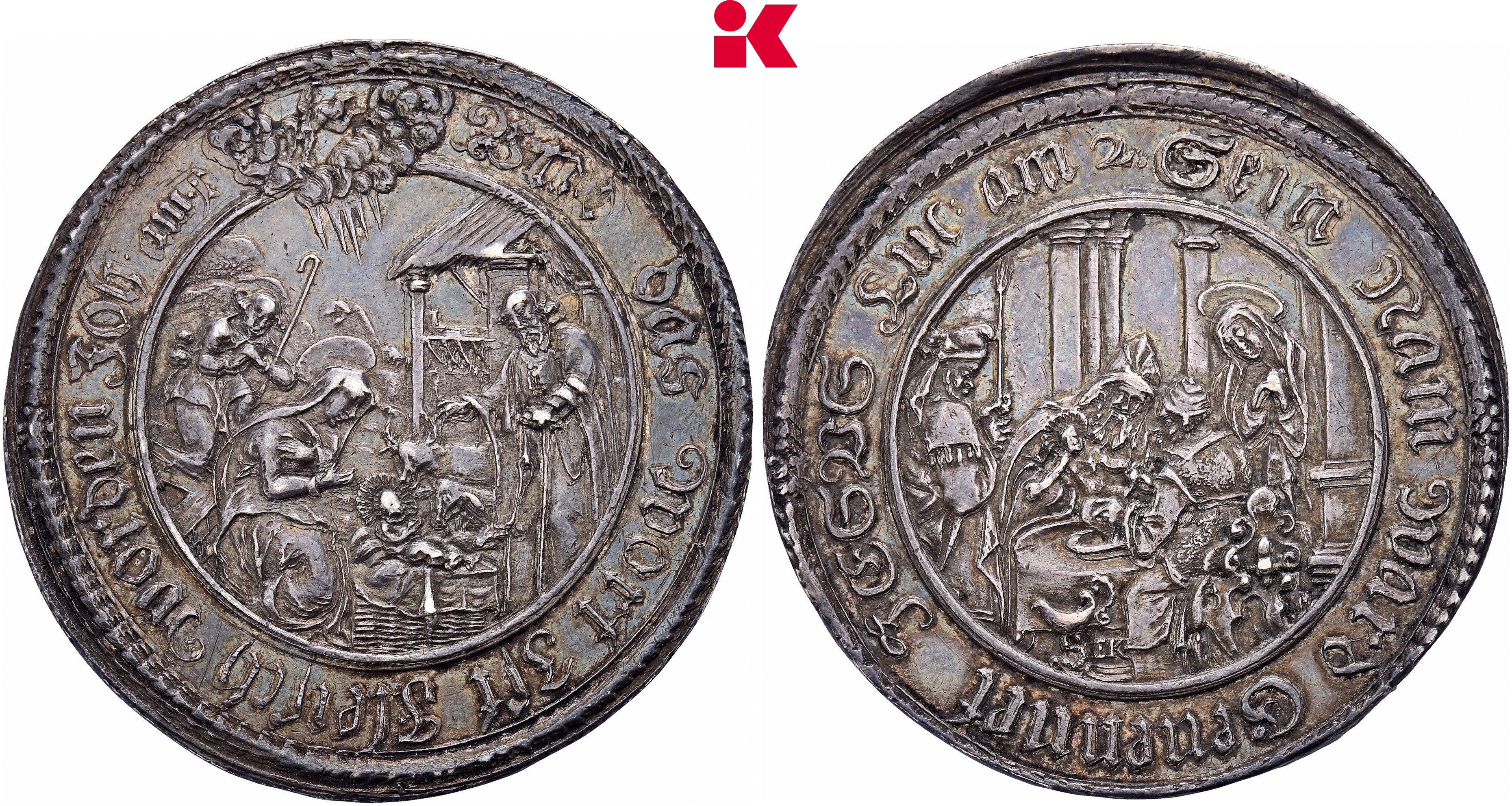
The second taler sold for 5,500 euros originates from Münster and was minted to be used as a gift by Archbishop Ferdinand of Bavaria. He distributed the pieces among his employees, allies and relatives during the ritual exchange of gifts on New Year’s Day. This is indicated by its depiction of the Circumcision of Christ, a celebration that falls on 1 January, the very date that used to be the traditional day for gift-giving in the Early Modern Period.
Among the coins from the German States was a comprehensive collection of sede vacante issues. The ensemble contained several spectacular pieces featuring magnificent depictions. The term ‘sede vacante’ does not only refer to the period between the death of a pope and the accession of a new one. Sede vacante basically refers to any period during which a church office is vacant. German bishoprics also had precise regulations governing who was responsible for administering the diocese, its income as well as the right of minting coins during such periods. And this right was often used to create coins or medals.
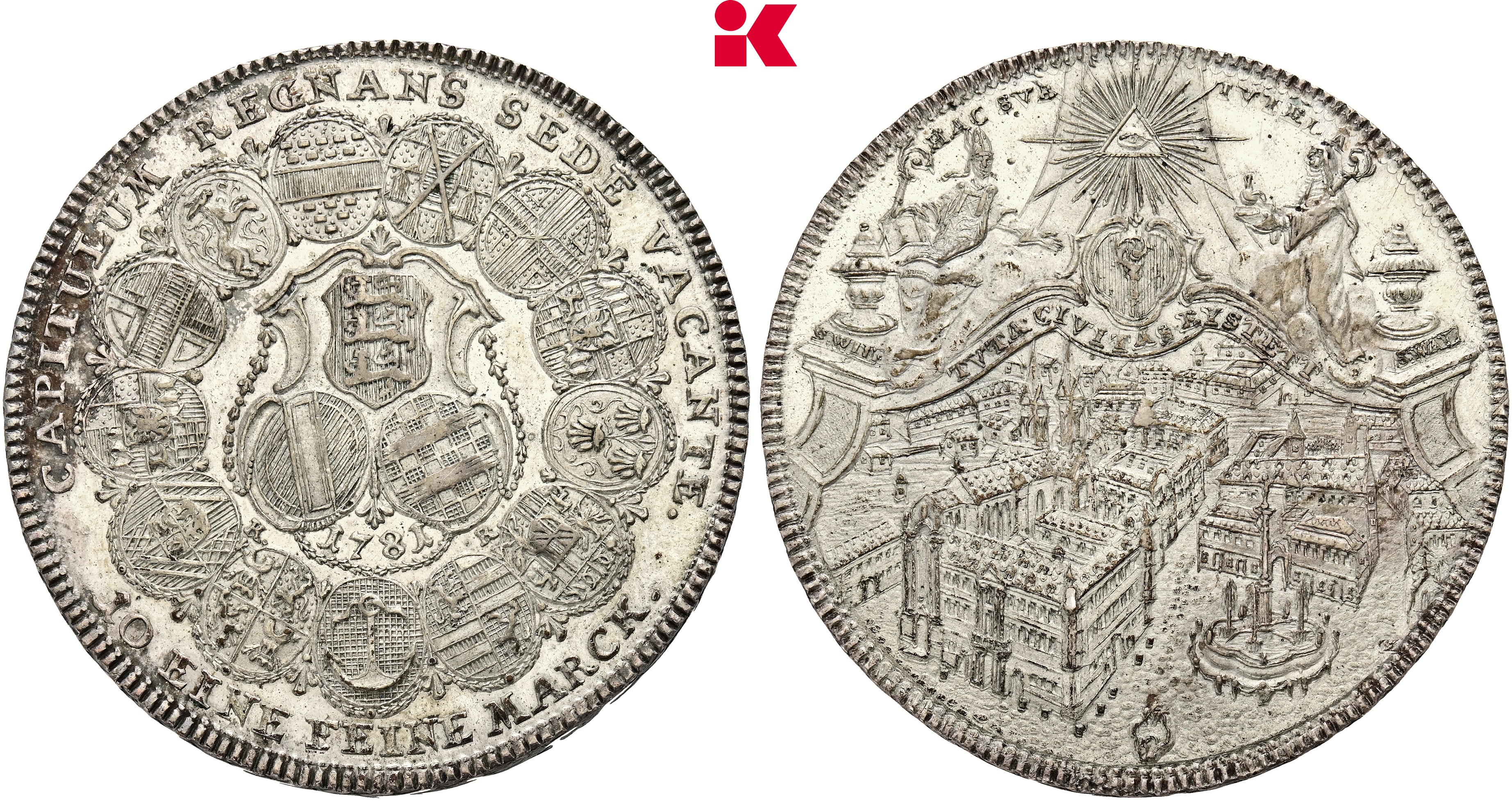
The highest hammer price among the sede vacante issues was achieved by a 1781 konventionstaler from the Bishopric of Eichstätt. Minted in Nuremberg, the piece depicts the entire cathedral district. Not only can we see Eichstätt Cathedral, but also the large fountain with the Marian column, the cloister and the canon courtyards. This is where those with the right to elect the new Bishop of Eichstätt lived. This magnificent taler fetched 3,600 euros – as much as nine times its estimate.
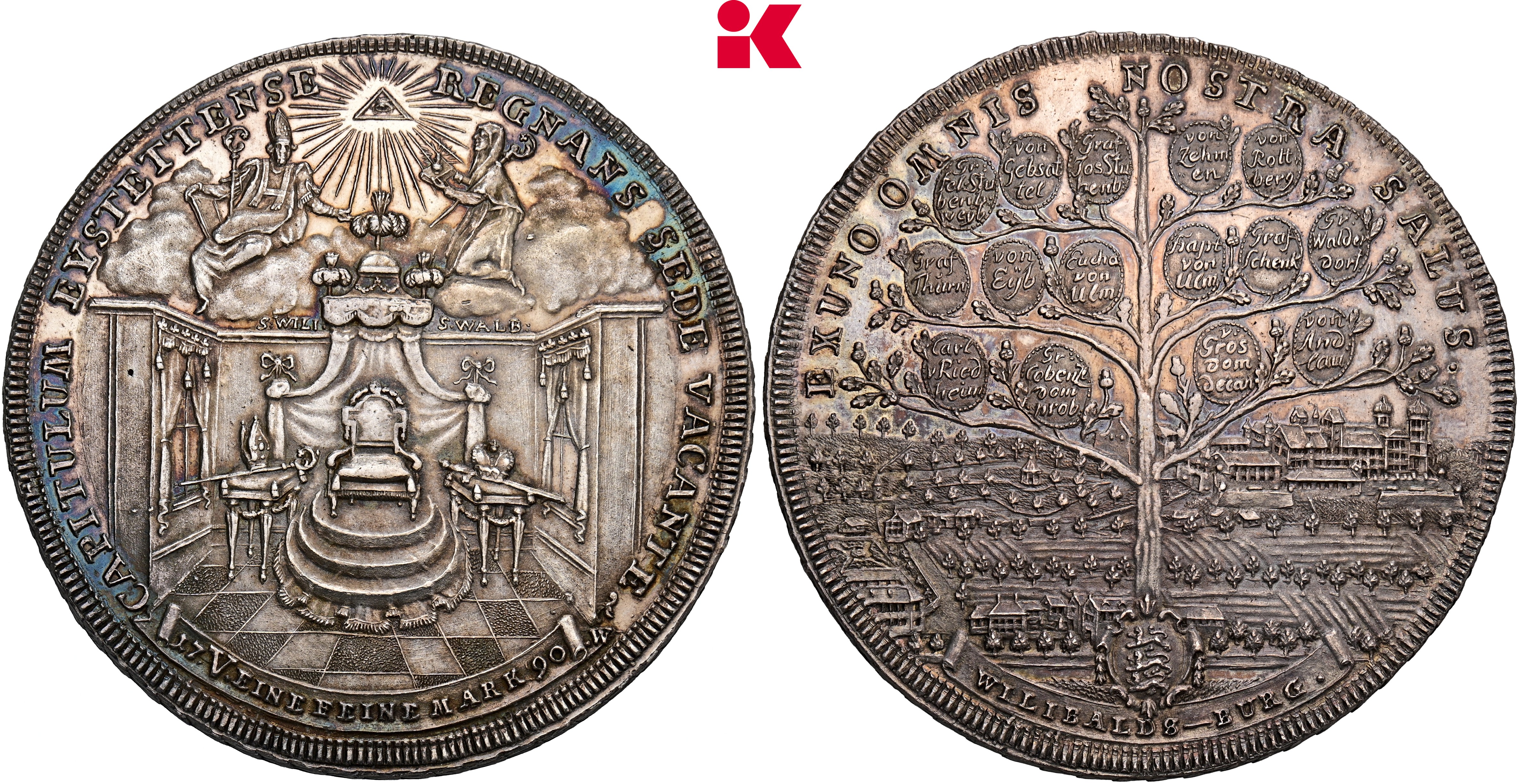
A Eichstätt double konventionstaler from 1790 with a magnificent patina sold for just a little less, namely for 3,100 euros. The obverse of the coin features an empty chair, symbolizing the meaning of the Latin term ‘sede vacante’. The insignia of spiritual power are depicted to the right, and those of secular power to the left. On the reverse, an oak tree in the style of a family tree is depicted, with the names of all the members of the cathedral chapter hanging from its branches.
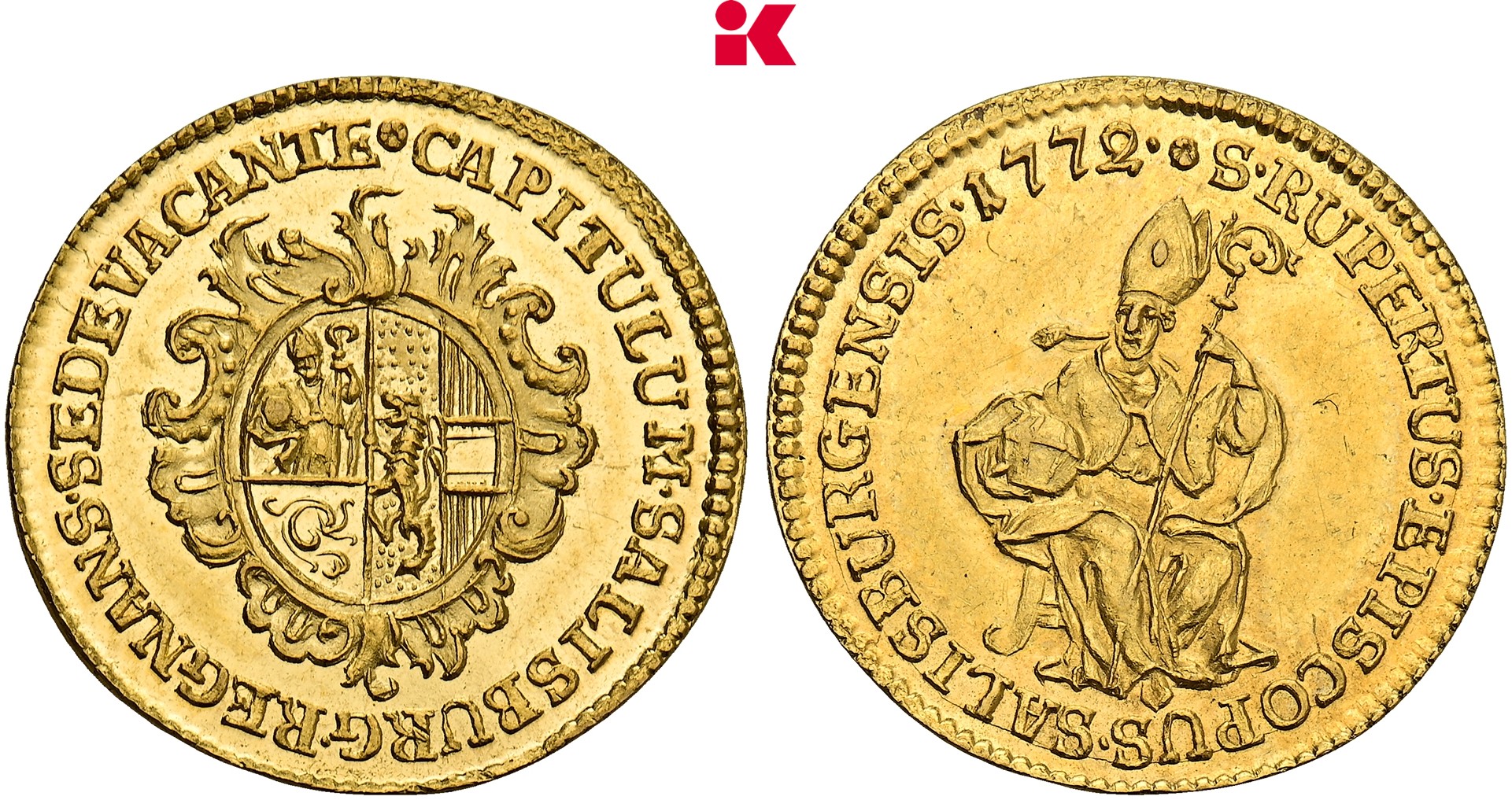
Coins issued during a sede vacante period were rarely made of gold. One such exception was auctioned as lot No. 3297. The 1772 Salzburg ducat jumped from an estimate of 1,500 euros to a hammer price of 2,300 euros. One side shows the patron saint of the bishopric, St Rupert with his salt cellar; the other side depicts the coat of arms of the Salzburg cathedral chapter with a matching circumscription.