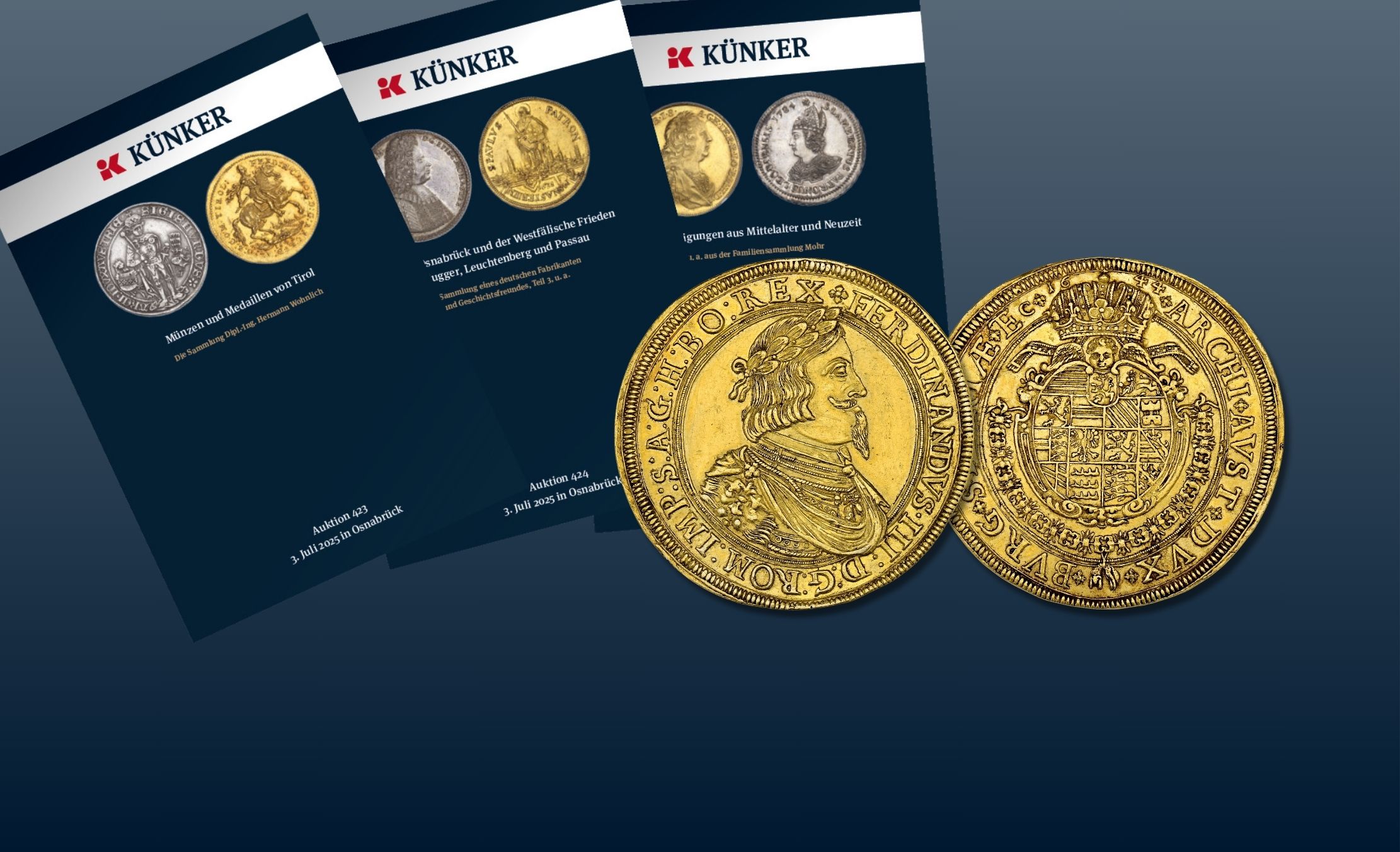


We presented in our Summer Auction Sales 423 to 425 some spectacular special collections, for example the Hermann Wohnlich Collection of Tyrolean coins and medals in catalog 423, which fetched twice its estimate. Next was catalog 424 with the third part of the collection of a German manufacturer and history enthusiast, presenting first-class issues from Münster, Osnabrück and Passau, as well as some pieces of the Fugger family and the Landgraviate of Leuchtenberg. The result exceeded the estimate by 75%. Auction 425, comprising the general part, included the Mohr Family Collection of historical gold coins. In total, the three auctions realized 7.8 million euros, exceeding the estimate by about 50%.
Let us start with auction 423, which featured an extremely impressive Tyrol collection, including many early representative guldiners of the Renaissance and gold multiples. Many years had passed since a comparable ensemble had appeared on the market. The icons of early taler coinage – or, to use the numismatically correct term, guldiner coinage – are rarely seen in such an abundance of high-quality specimens. However, it was not the silver coins that fetched the highest prices at the auction, but the gold coins.
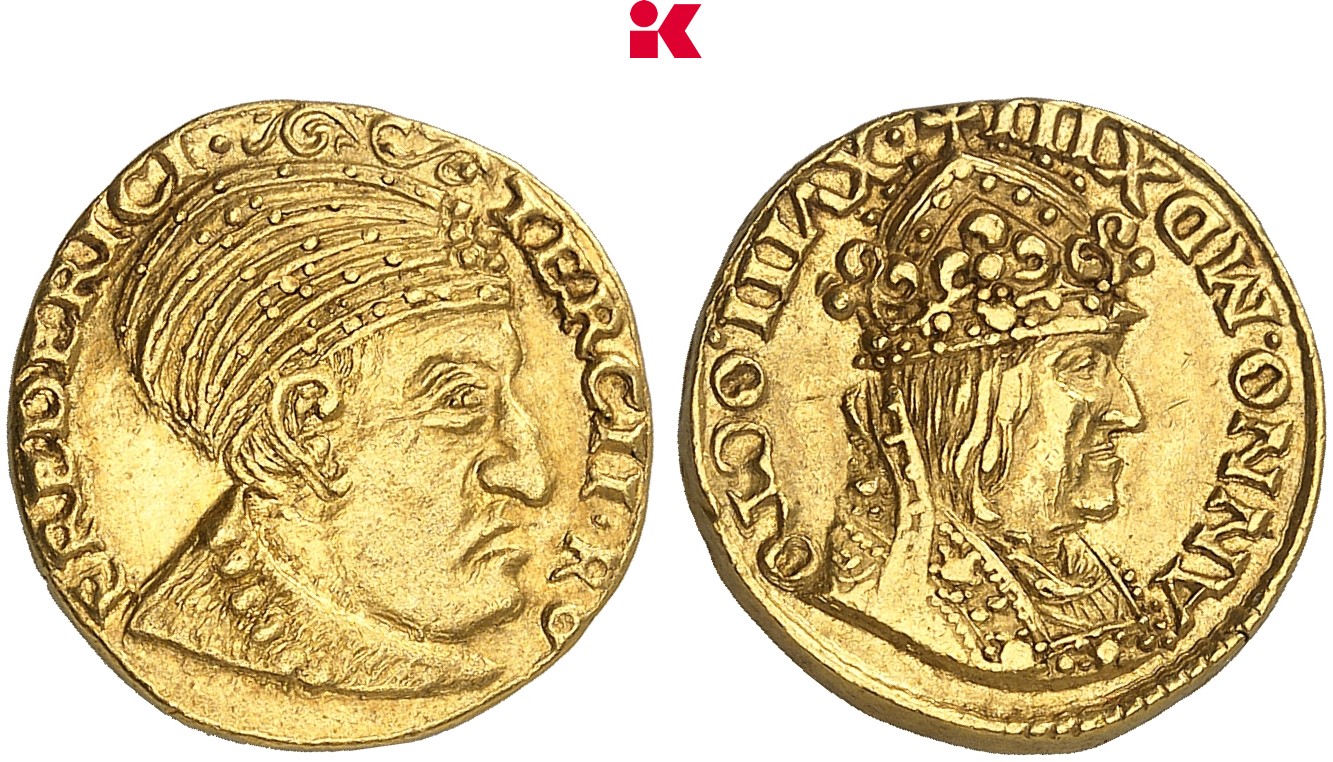
A probably unique gold representative coin of 2 ducats is a good example of this. Showing a portrait of Frederick III on both the obverse and the reverse, it fetched a hammer price of 55,000 euros, making it the most expensive coin of auction 423.
This coin is a very early example of the numismatic gifts that later rulers regularly distributed at elaborate funeral ceremonies held in in honor of their predecessors. Emperor Maximilian used this medium early on to celebrate the glory of his dynasty.
However, connoisseurs of Habsburg numismatics may wonder how the precise date given on the coin relates to the funeral of Frederick III. After all, the latter did not die in 1513, but as early as on 19 August 1493. We know that he was provisionally buried on 28 August 1493, and his official burial in St. Stephen’s Cathedral was part of a funeral ceremony lasting several days that started on 5 December of the same year. Maximilian had the efforts that went into this recorded in two early prints of 1493 in Latin and German – among other things, 583 candles were lit, an incredible number at the time.
The fact that another funeral was necessary on 12 November 1513 was due to the fact that the tomb Frederick had commissioned himself was not completed until that year. Today it is considered the largest imperial tomb north of the Alps. It received media attention in 2013 when an interdisciplinary team of researchers examined it and revealed previously unknown details of the imperial burial ritual. This makes the 1513 double ducat sold for 55,000 euros a rare and extremely important testament to Maximilian I’s self-portrayal.
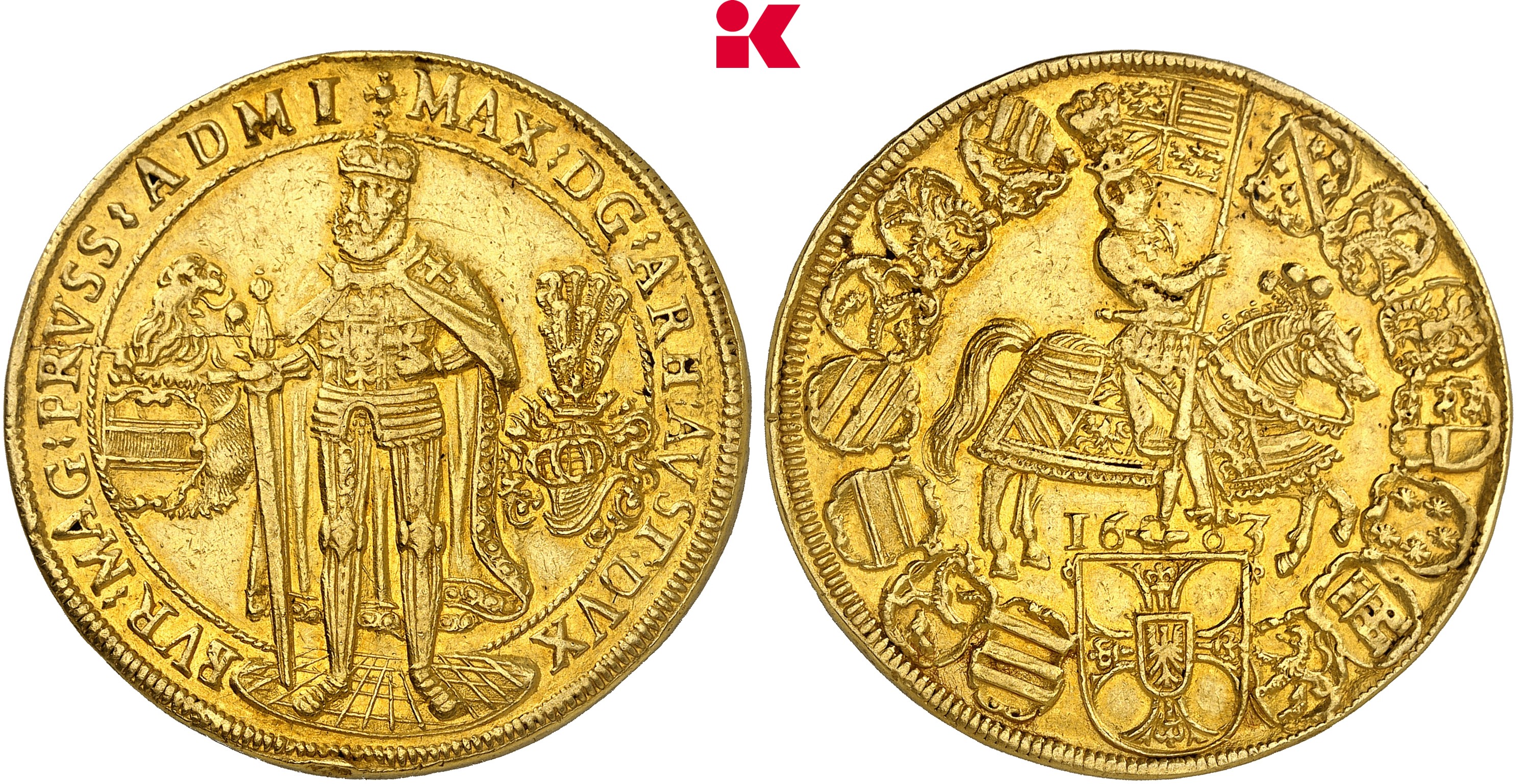
The impressive 10-fold ducat by Archduke Maximilian from 1603, minted with the dies of the taler, had an estimate of 15,000 euros, but the hammer did not fall until 44,000 euros. The depiction serves as a reminder that Maximilian was not only Governor of Tyrol and the Vorlande – Further Austria and Vorarlberg – but also Grand Master of the Teutonic Order and Administrator of Poland. Take a closer look at Maximilian’s headgear and you may remember that the archducal hat, now kept in Klosterneuburg, had been commissioned by him.
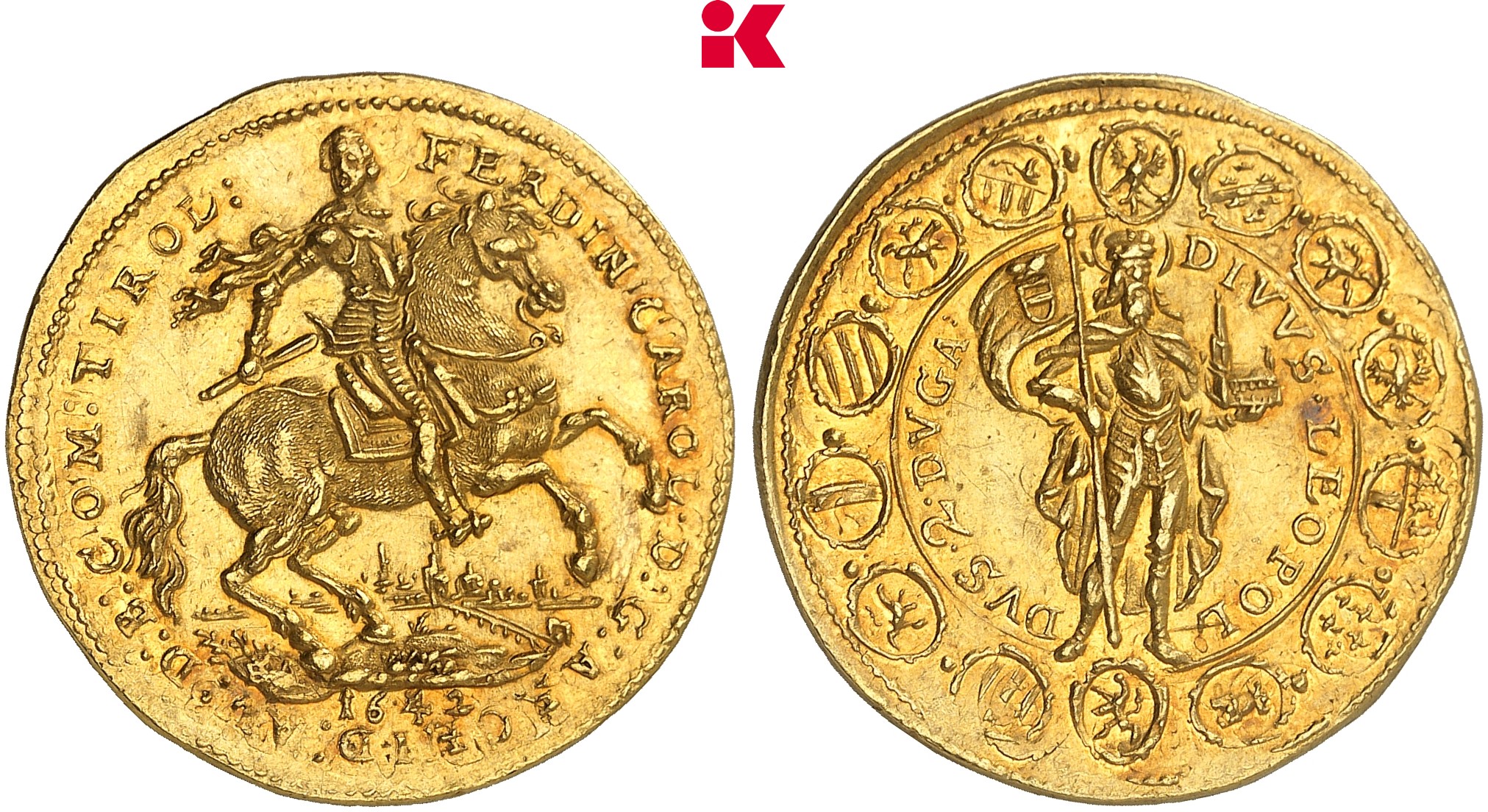
Ferdinand Charles’ triple ducat of 1642 changed hands for 42,000 euros, almost matching the price of the previous piece. It is probably the only specimen of this type weighing three ducats and depicts the archduke on horseback, who was known for his lavish lifestyle. A very small view of Innsbruck can be seen in the background. St. Leopold, the patron saint of Austria to this day, appears on the reverse.
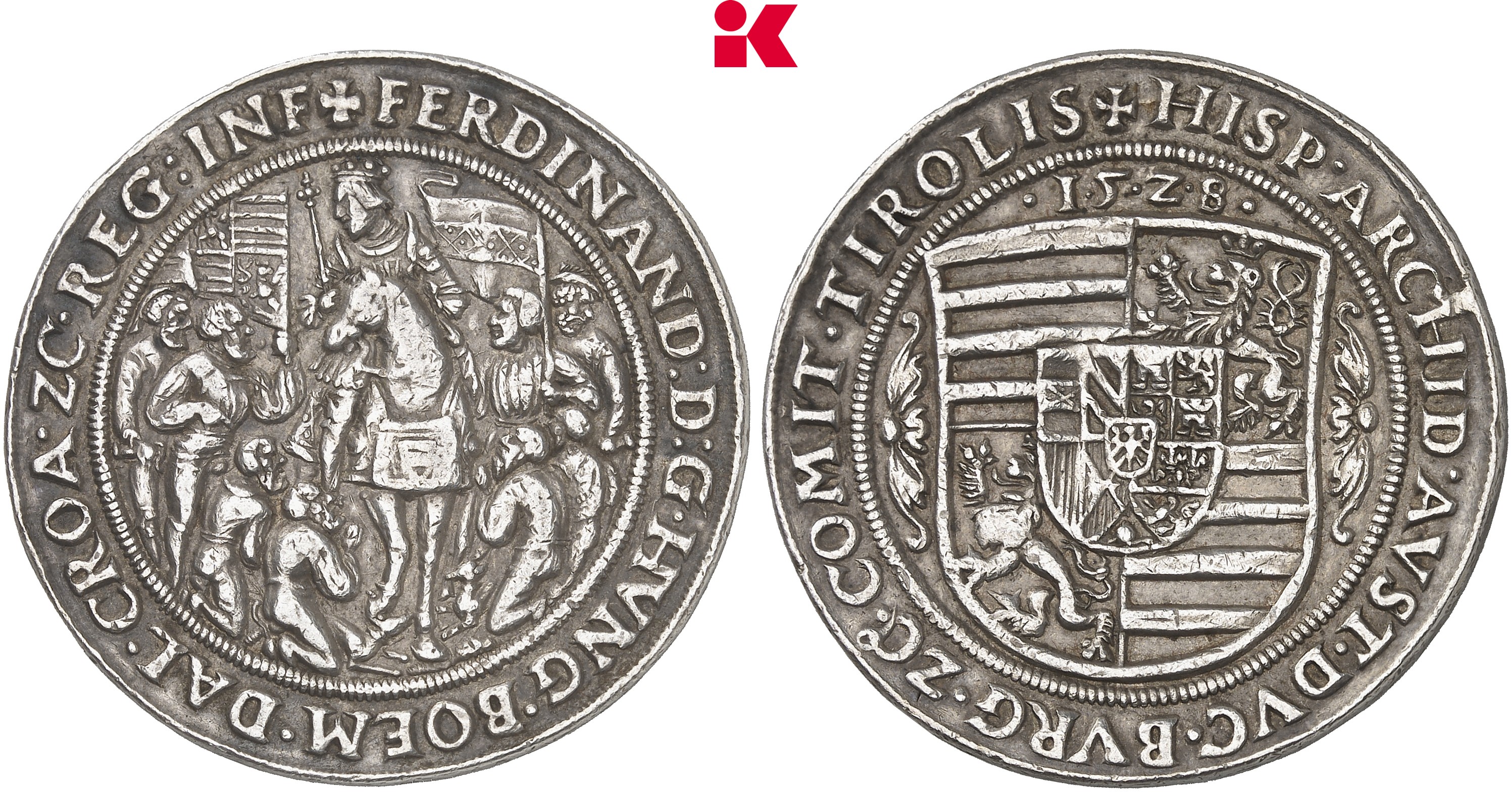
Even the rarest and most expensive coin in auction 423 did not come close to the price of the gold coins. The winning bid for Ferdinand I’s representative taler from 1528 was 36,000 euros. Created to mark the hereditary homage by the Tyrolean diet, this coin is of the highest cultural and historical interest. For once, the ruler is not depicted alone in his glory or surrounded by his family. Instead, subjects surround the ruler on horseback. Among them are representatives of the third estate pledging allegiance to him. Thus, this piece depicts a scene that rarely ever appears on coins as the people would not play a role on coins for many centuries to come. It is therefore an exceptional specimen, justifying an exceptional price.
On the same day, the third part of the collection of a German manufacturer and history enthusiast was offered at our auction 424. The catalog comprised several sections of the collection, most notably the impressive chapters on Münster and Passau, which were complemented by pieces from the Fugger family and the Landgraviate of Leuchtenberg.
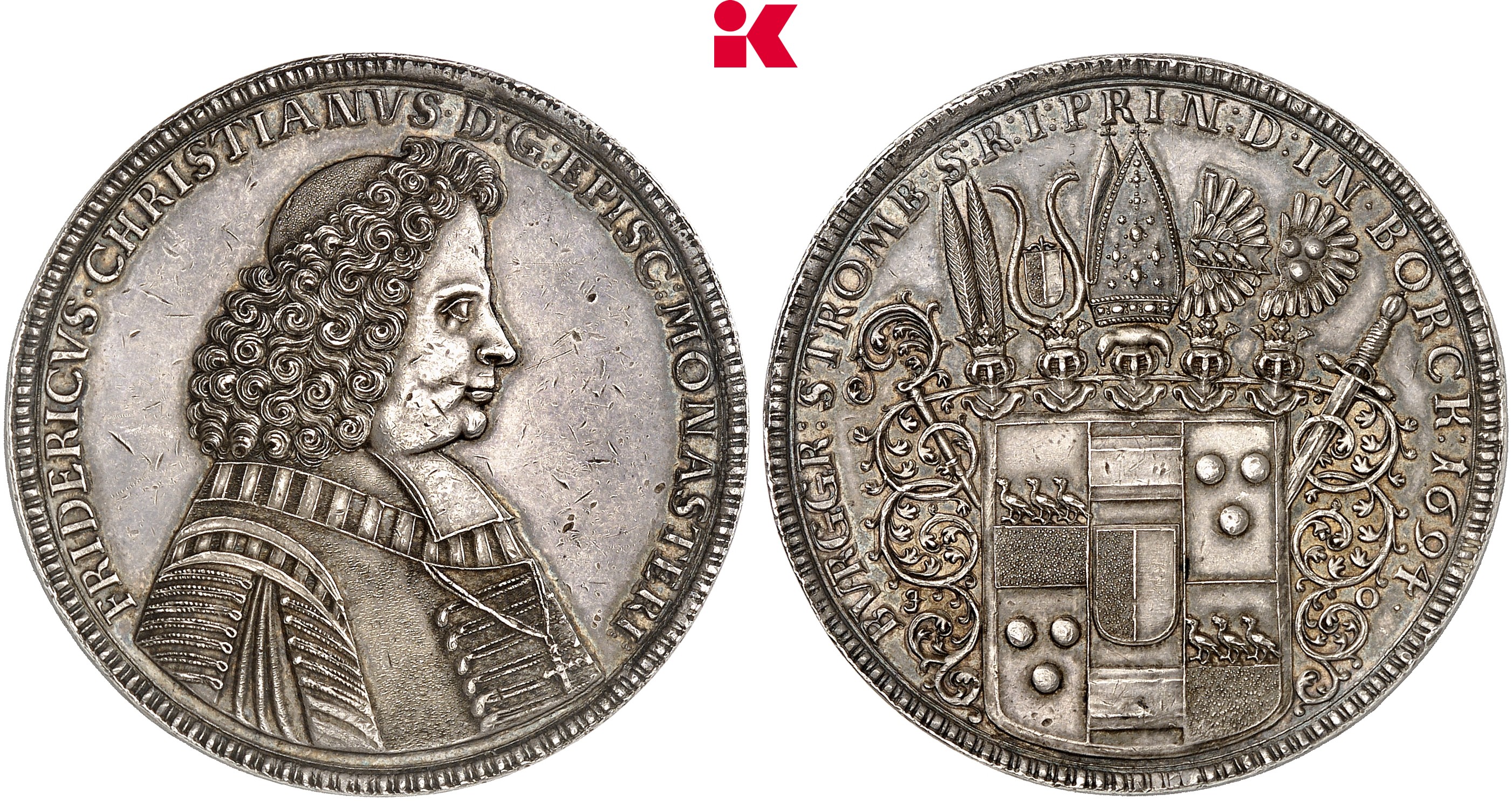
Surprisingly, none of the numerous gold multiples became the most expensive item in the Münster section or the entire auction; rather, a triple taler took this title. It was minted under Friedrich Christian von Plettenberg in 1694. During his period, the Bishopric of Münster was at the height of its power. Friedrich Christian maintained an impressive army, giving him enough leeway for his independent policies. He consolidated the power of the bishopric of Münster, both internally and externally. Friedrich Christian von Plettenberg was not only responsible for a number of palace buildings, but also for establishing regular street cleaning. His triple taler is extremely rare and fetched an impressive 60,000 euros.
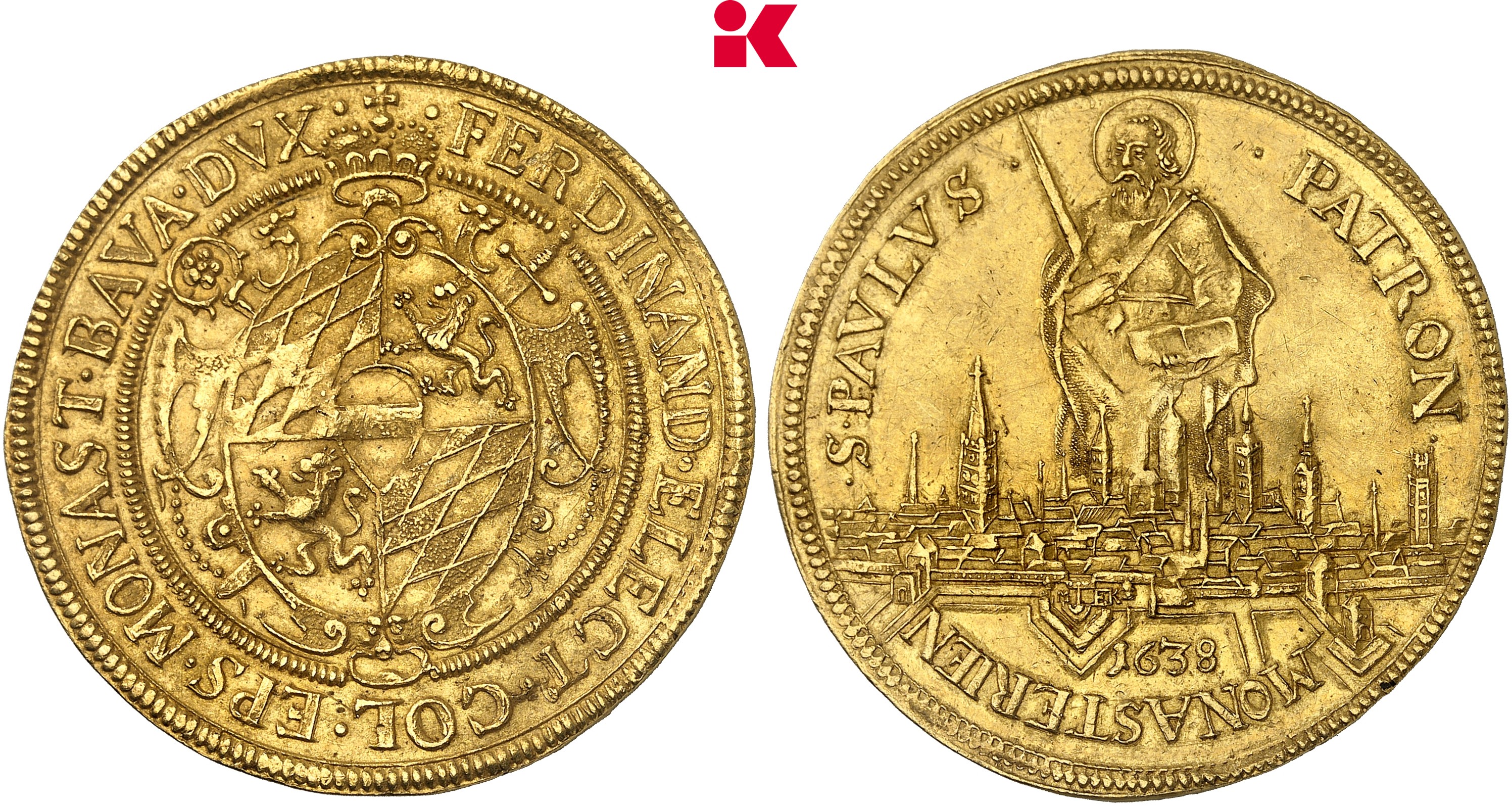
The bidding war for a 5-fold ducat minted in 1538 by the Wittelsbach Ferdinand of Bavaria as Bishop of Münster ended with a hammer price of 46,000 euros. The reverse features a city view of Münster, with St. Paul above it, the patron saint of the Münster Cathedral. Ferdinand of Bavaria was the type of bishop that the reformers of the Catholic Church actually wanted to abolish. Acting like a secular ruler, he combined the imperial office of Elector and Archbishop of Cologne with the episcopal sees of Hildesheim, Liège, Münster and Paderborn. This enabled him to support his elder brother, Maximilian I of Bavaria, in his fight against the Reformation. Of course, this was not only a religious issue but also a question of power: through the Thirty Years’ War, the Wittelsbach dynasty secured not only the rank of electors. They also firmly established the claim of their male descendants to the most senior ecclesiastical offices in the empire.
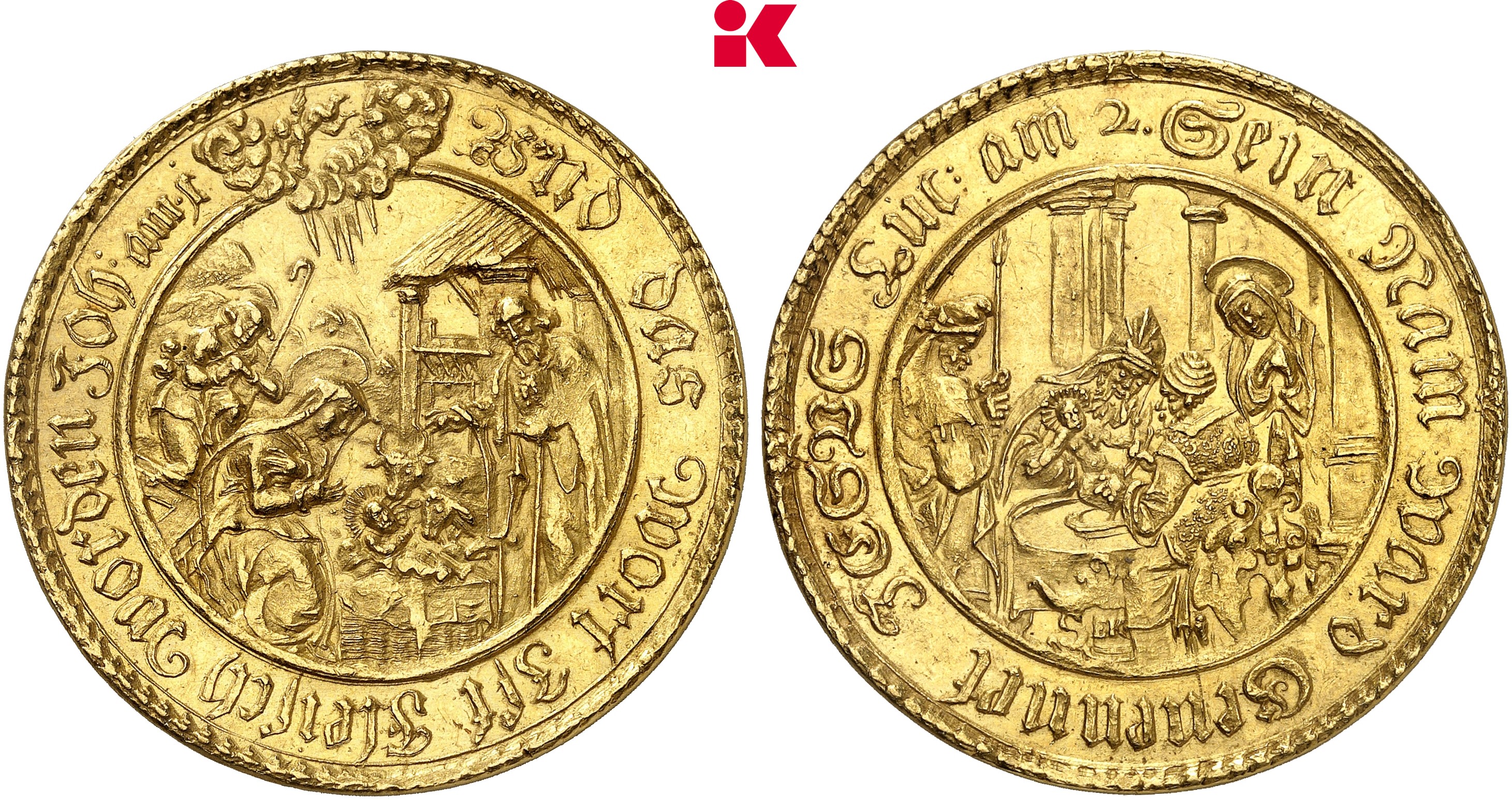
Auction 424 presented two more coins by Ferdinand weighing 5 ducats. One of these, whose reverse was minted with the same die as the previous piece, shows the birth of Christ on the obverse. It also sold for 46,000 euros.
Another 5-ducat piece featuring the same detailed depiction of the birth of Christ on the obverse and the circumcision of Christ on the reverse, indicates why these coins were minted. This feast was traditionally celebrated in the Catholic Church on 1 January, i.e. the day on which the annual exchange of gifts took place. Christmas presents were not yet a tradition at that time. Instead, people sent gifts to those whom they felt officially connected. The value of these gifts was determined by the status of the recipient. Bishop Ferdinand of Bavaria may have produced these valuable 5-ducat coins regularly each year as gifts for his councilors, his most important supporters and allies. The 5-ducat piece depicting the circumcision of Christ realized a hammer price of 44,000 euros.
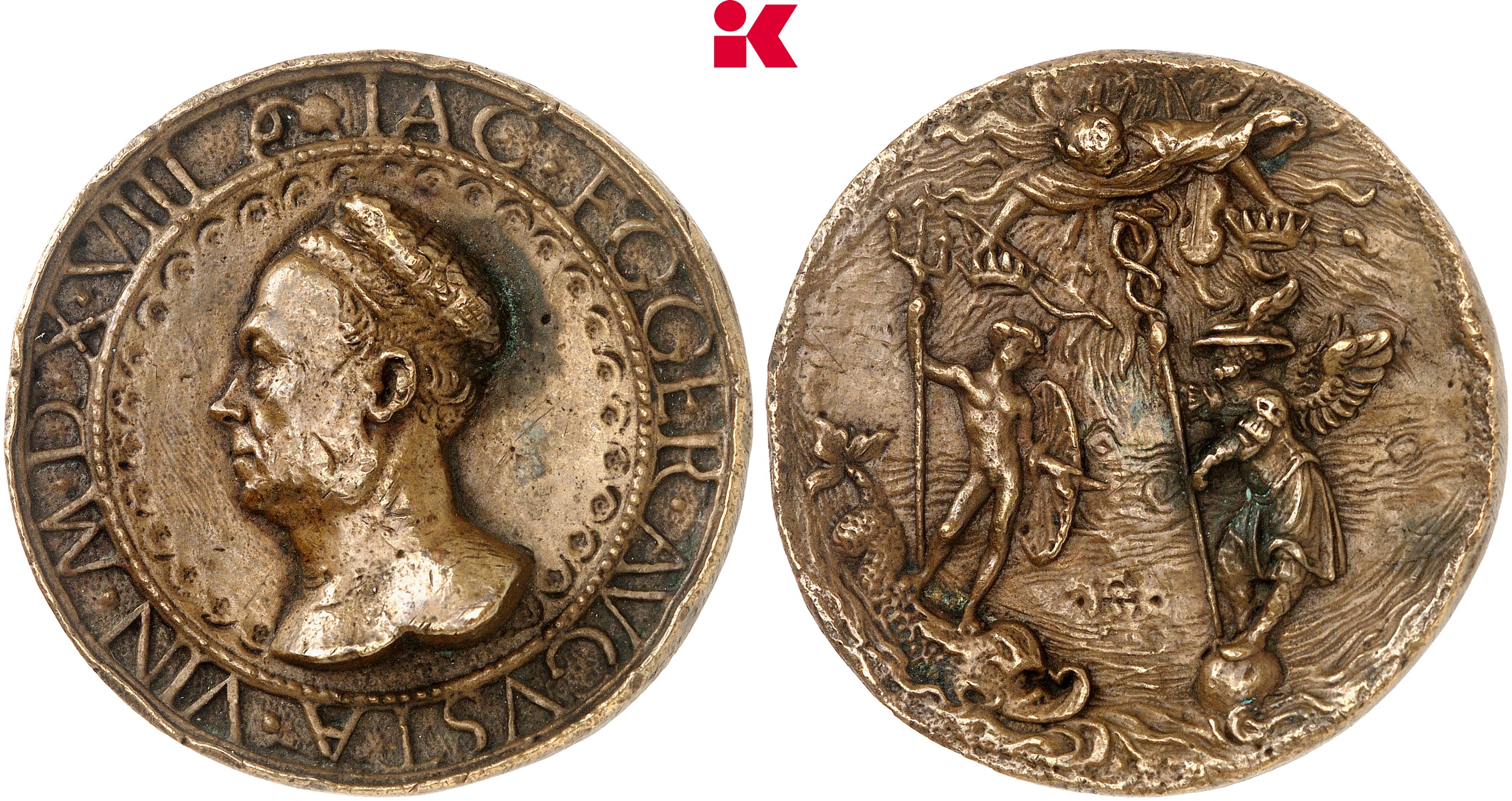
An icon of German Renaissance art was offered in the same auction: the contemporary medal of Jakob Fugger II, whose dies were created by the important Renaissance artist Hans Schwarz. It sold for 26,000 euros – an impressive price for a bronze medal. But this did not come as a surprise. After all, the medal is of the highest historical significance: Jakob Fugger was the most powerful entrepreneur in Europe at his time, with trade interests spanning the continent and reaching as far as the New World. Historians have even suggested that his financial resources were so substantial that he could make emperors. Referring to “too big to fail”, historical research offers a different perspective on Charles V’s election as emperor. Researchers claim that the incredible amount of 545,585 guldens that Jakob Fugger provided to finance Charles’ election donations were necessary to prevent the Habsburgs, who were notoriously indebted, from going bankrupt and thus losing all the capital that had been borrowed to them.
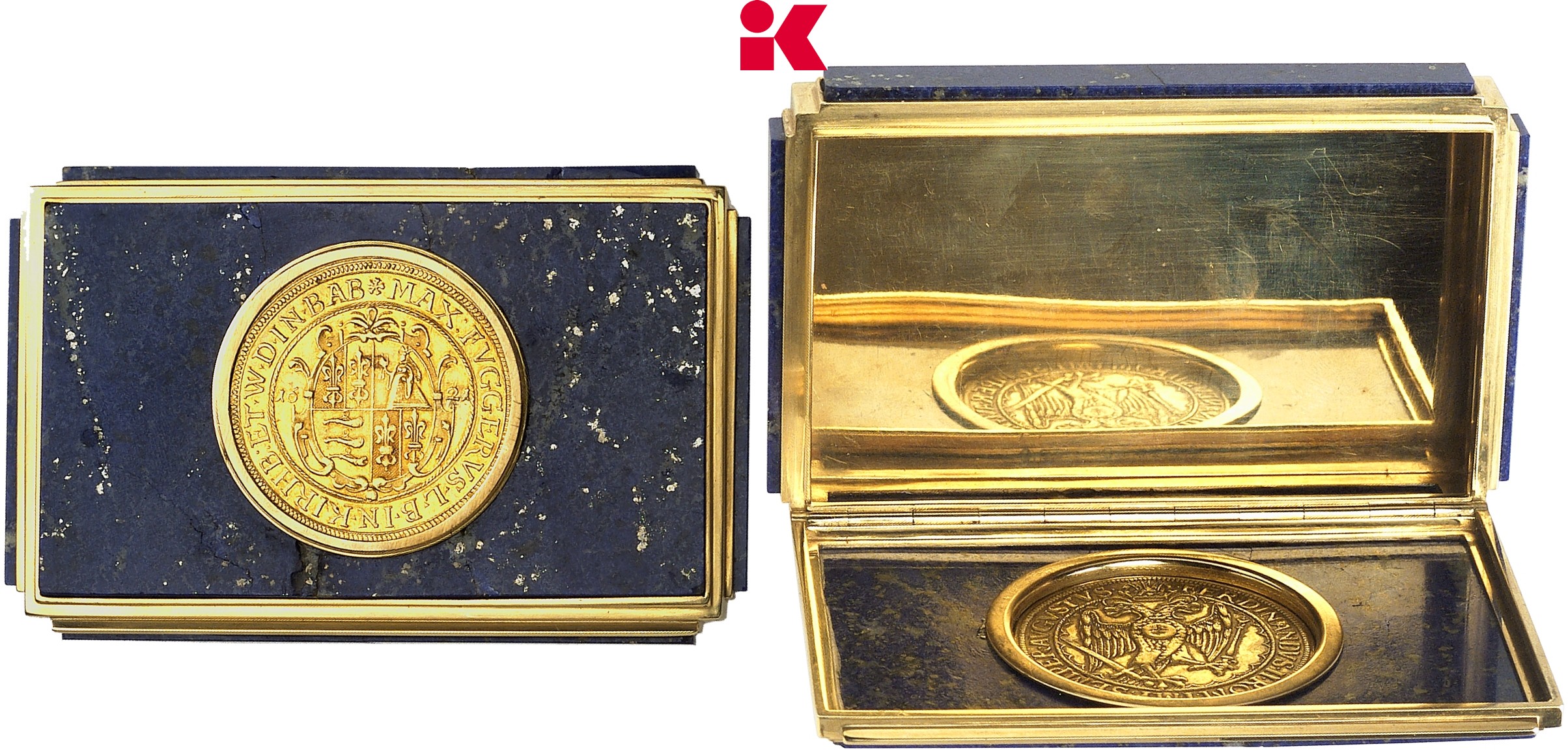
Almost twice this result – namely 48,000 euros – was realized by an unusual object: an ornate box made of lapis lazuli and gold, probably dating from the late 19th or early 20th century. It is decorated with an extremely rare 10-fold ducat by Maximilian II, Count of Fugger-Babenhausen-Wellenburg. It is a real cabinet piece of the kind you would expect to find in a museum.
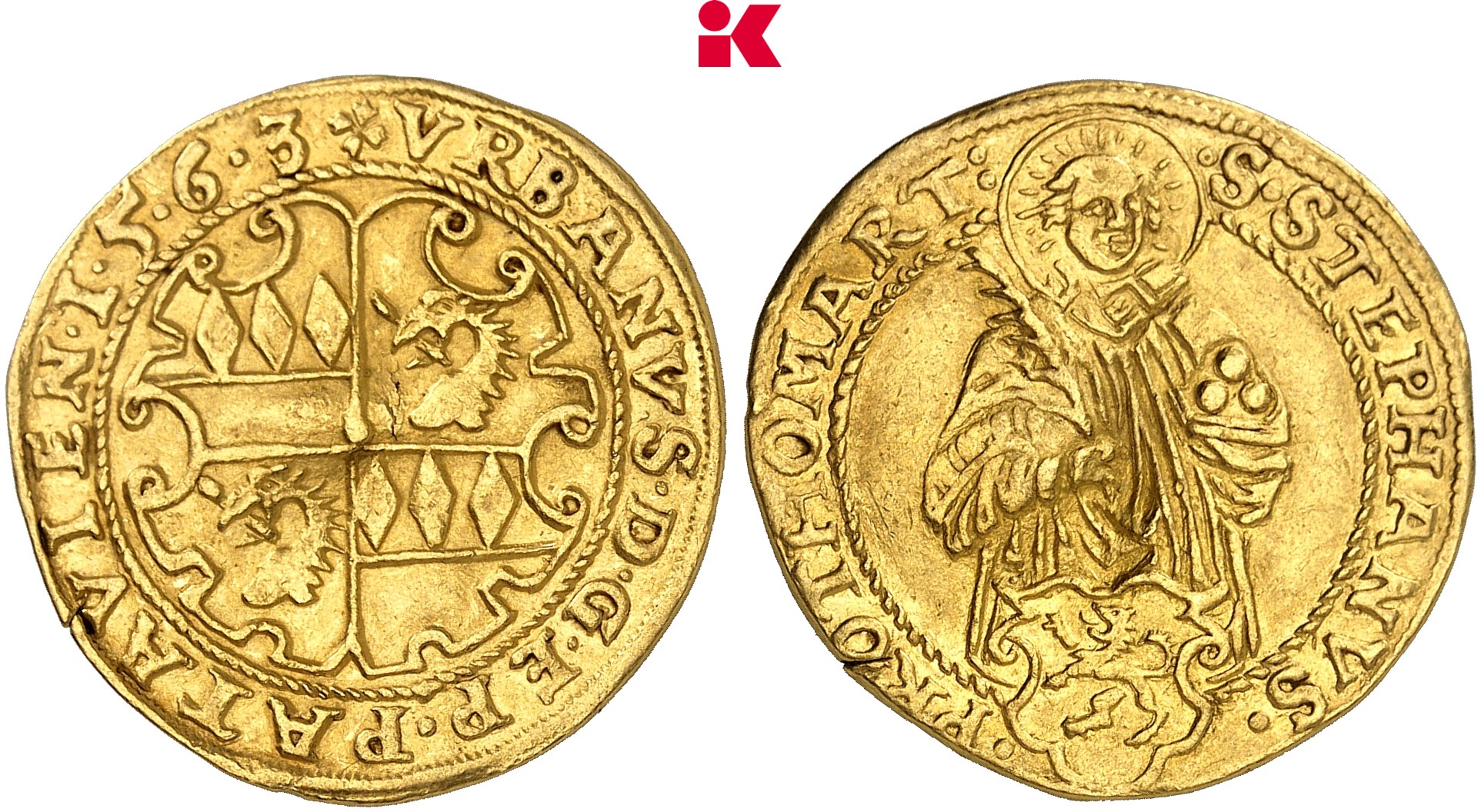
Let us take a final look at a coin from the Passau collection. This double ducat by Urban von Trennbach, minted in 1563, fetched an impressive 26,000 euros.
Let us conclude with a few more remarkable results from auction 425.