


Dr Druckrey was inspired to delve into ancient numismatics by his
father, who over the years gave or bequeathed his son a wide range of
coins. These gifts presented a challenge for the boy, who would first
identify the coins more precisely, and then try to understand their
historical background as thoroughly and comprehensively as possible. We
know from great British universal historian Arnold J. Toynbee that a
challenge is the best way to provoke someone’s creative response. In
this respect, it would be wonderful if more parents gave these kinds of
gifts to their children at an early age, to encourage them to engage
with the history and geography of our world. Coins are among the most
fascinating objects that enable us to do this.
Later, Dr Druckrey began to steer the collection in his own
direction, developing his own collecting style with specific objectives.
He wanted to collect coins that appealed to him aesthetically. As a
result, his collection consisted primarily of Greek coins from the
Archaic and Classical periods that were perfectly struck and boast
outstanding condition. He was not interested in quantity, but in beauty.

Aesthetics formed the basis of Dr Druckrey’s collection (fig. 1). However, his search for beauty did not end there. As an admirer of Greek art, he wanted to understand the coin motifs and, with them, the ancient Greek world of thought to which they owe their existence. Dr Druckrey read the literature to learn about the thoughts and feelings of the ancient Greeks, which he then linked to the iconography of the coins he collected. Using the coin motifs as a jumping-off point, he also intensively studied the Greek myths that were told in the Greek cities around the Mediterranean, which gave even the smallest cities their own identity and therefore deserved to appear on the coins of the poleis.
And that is not all: Dr Druckrey has also traveled to almost all areas
of the Mediterranean where these coins were minted or widely circulated.
It is essential to familiarize oneself with the geography and the
“genius loci” of a region in order to understand why a particular coin
motif was chosen there, and the local sensibilities that it reflects –
namely, the sense of pride that the residents of a particular location
felt for their homeland. I had the pleasure of welcoming Dr Druckrey and
his wife – who has always encouraged him in his collection and
acquisition of new coins – on several excursions with my Munich lecture
group (fig. 2).
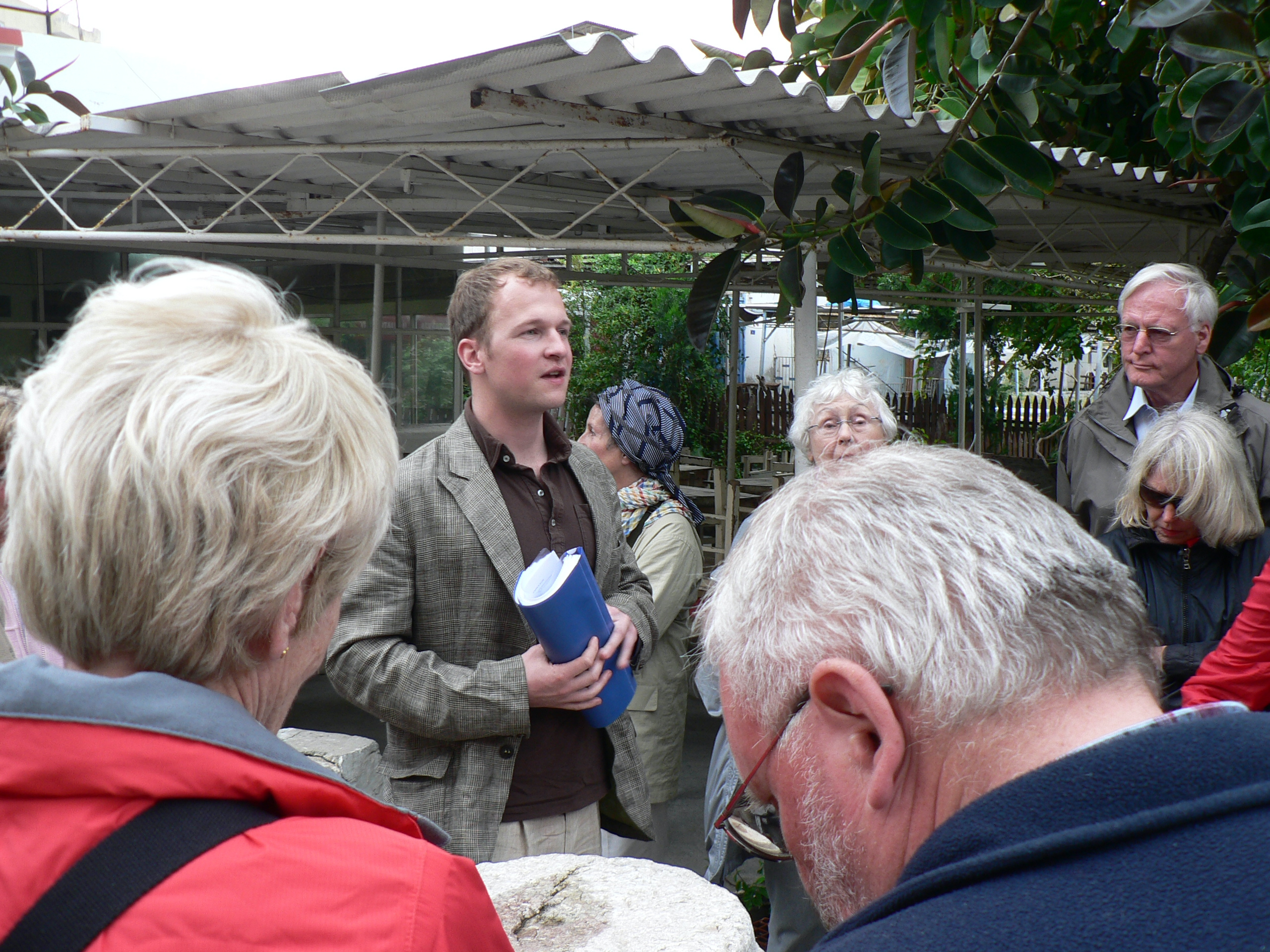
During these trips, Dr Druckrey often drew the attention of his fellow travelers to the works of coin art that ad been created in the respective places. He succeeded in getting many of his fellow travelers interested in numismatics, or at least in highlighting to them the importance of ancient money when it comes to understanding history and geography.
Dr Druckrey’s dedication to and detailed knowledge of his collection is clearly reflected in his book “Griechische Münzen. Faszination und Geschichte. Aufzeichnungen eines Sammlers”, which was published by our in-house publisher in 2005. This almost 700-page book, complete with very beautiful illustrations, also features an introduction written by our company’s founder Fritz Rudolf Künker, emphasizing how much the “House of Minted History” (Haus für geprägte Geschichte) welcomes the way in which passionate and knowledgeable collectors present the structure, objectives, and most exciting pieces of their collections, and make their numismatic work more accessible for other collectors and coin enthusiasts.
We are therefore all the more pleased that almost 20 years later, Dr Druckrey, having remembered these friendly ties with Künker, has decided to sell his collection through our auction house. This gives our customers the opportunity to acquire the excellent pieces from the Dr Druckrey Collection and integrate them into new contexts. After all, we believe collectors should have the chance to experience the delight of acquiring an aesthetic gem, often from a famous collection, and giving it a home in their own. Coin collecting will only endure as a pursuit if magnificent pieces such as those in the Dr Druckrey Collection are allowed to circulate and be placed in ever new contexts.
With our catalog, we wish to honor and immortalize Dr Druckrey’s collecting achievements. Presented as such, the collection will be preserved as a document that will always be accessible for numismatic research.
Professor Dr Johannes Nollé
Scientific Consultant
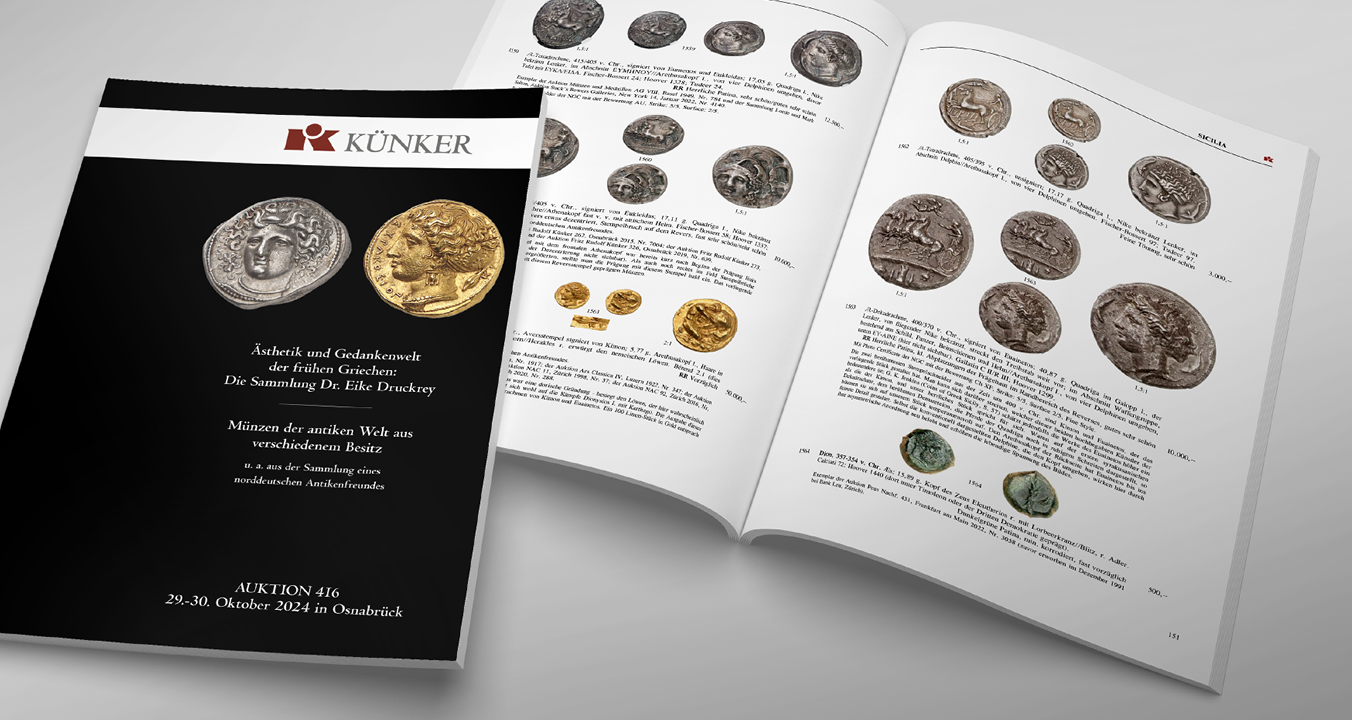
Auction 416
Collection of Dr. Eike Druckrey – the Aesthetics of the early Greek coins | Ancient coins from various collections
Auction Catalog