

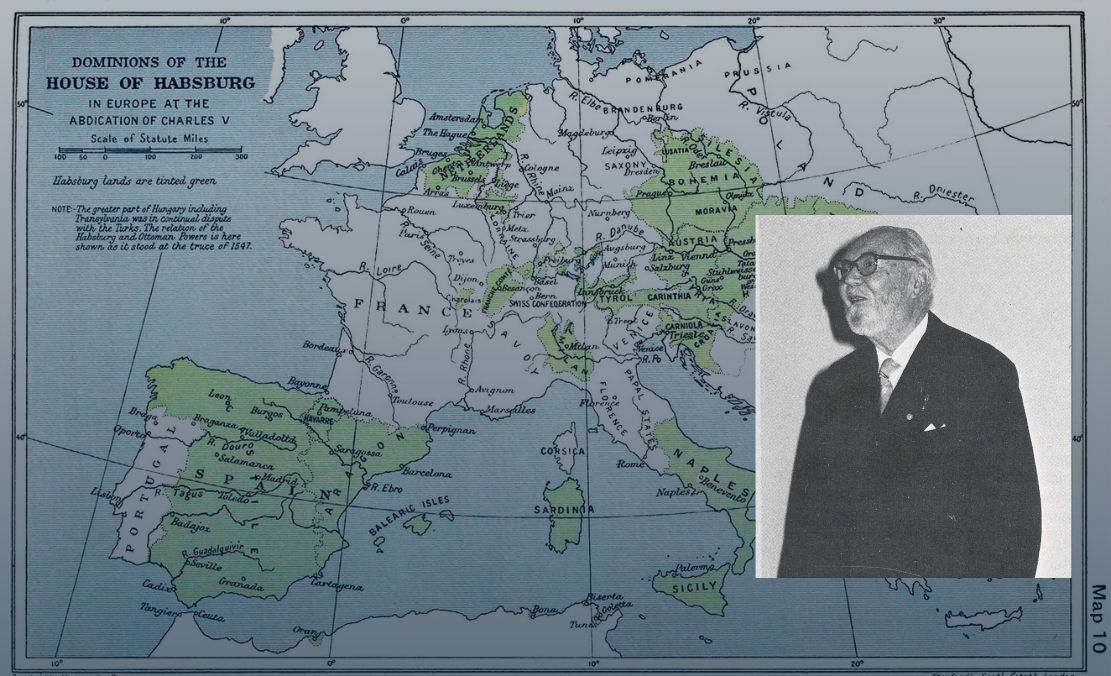
Herbert Wenzel was born on 28 September 1904 in Linz, the son of engineer Viktor Wenzel, who was a Machine Commissioner of the Imperial and Royal State Railway Directorate in Linz, and his wife Eugenie, née Hlauzal. In 1907, the family moved to Vienna, where Herbert’s father had been transferred to the Imperial and Royal Railway Ministry. After graduating from high school in 1923, he studied law at the University of Vienna, obtaining his doctorate in 1928. After several years as a Postal Commissioner, Dr Herbert Wenzel was appointed to the Ministry of Trade in 1934, and in the same year he married Helene Wornitzer. His precise and successful work at the ministry was recognised in 1937 with the Austrian Gold Medal of Merit. Due to the political situation in Austria and the National Socialists’ seizure of power, Dr Wenzel was dismissed from his post in 1938. After military service in the Second World War and captivity as a prisoner of war, he was reinstated as a civil servant in 1945 and appointed to the Federal Ministry of Transport. In 1949, he was appointed Ministerialrat (senior civil servant).
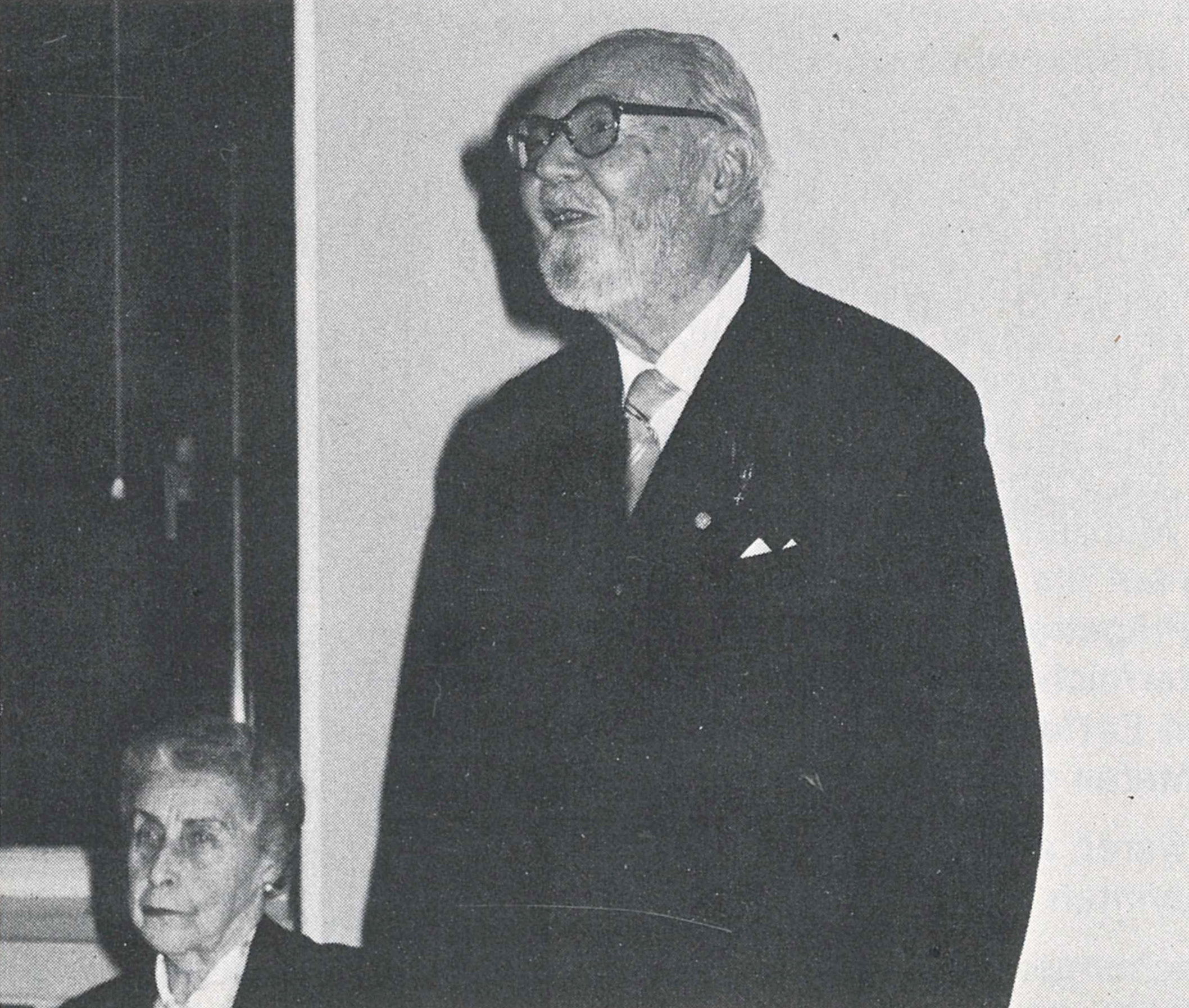
The highlight of his career was his position as head of Radio-Austria AG, the Austrian state telecommunications company, where Dr Wenzel served as General Director from 1951 until his retirement in 1970. In the early 1980s, Dr Wenzel chronicled his difficult beginnings in that role: “You can imagine that the postwar period was not easy. I often lay awake at night because I didn’t know how I was going to pay the salaries. Technically, things weren’t any better. The antennas were smashed and the equipment was ancient, both at the receiving station on Laaerberg and at the transmitting station in Deutsch-Altenburg.”
General Director Dr Wenzel succeeded in both restructuring the company and repurchasing company shares from English ownership, so that by 1955 the entire share capital was owned by the Republic of Austria. For his services to Radio-Austria AG and his contribution to the reconstruction of Austria, Dr Herbert Wenzel was awarded the Grand Silver Medal of Honour of the Republic of Austria in 1963.
Dr Wenzel began collecting coins and medals in the early 1920s and, over a period of around sixty years, built up one of the most important coin collections in Austria. In 1937, he became a member of the Austrian Numismatics Society, of which he was President for more than a quarter of a century, from 1959 until his death on 20 July 1985. Dr Wenzel enjoyed sharing his profound knowledge and the insights he had gained through his extensive collecting activities, publishing around fifty articles on numismatics and monetary history, particularly in relation to his native Austria. In recognition of this, the Austrian Numismatics Society honoured its President with the Eckhel Medal of Honour in 1970 and dedicated the 89th volume of the Numismatics Journal to him in 1974.
After his retirement, Dr Herbert Wenzel was able to devote even more time to his numismatic interests. The lawyer, who was passionate about history, also completed another degree in theology with a special focus on Oriental rites and languages, graduating with honours. After spending extended periods on Mount Athos, he was ordained in 1974 and served for many years as a deacon of the Greek Orthodox Church in Vienna.
We thank the family for their trust in making the extraordinary collection of Habsburg coins of one of Austria’s most distinguished numismatists available to other numismatics enthusiasts through several Künker auctions. We wish you, dear customers, much enjoyment in studying the catalogue and much success in bidding.
Osnabrück, November 2025
Dr Andreas Kaiser

Berlin Auction Sale 437
- Brandenburg-Prussia
- Selected coins and medals from the German states and the Habsburg Empire
- Numismatic rarities from around the world
- A selection of rare orders and decorations
Summer Auction Sale 443
- Gold Coins from around the world, a. o. the collection of Commercial Councilor Dr. Herbert Wenzel (Habsburg)
- German Coins after 1871
Image source: Territory of the Habsburg Monarchy in Europe at the time of Charles V's abdication in 1555. A. W. Ward et al. (eds.), The Cambridge Modern History Atlas, London 1912, public domain.