

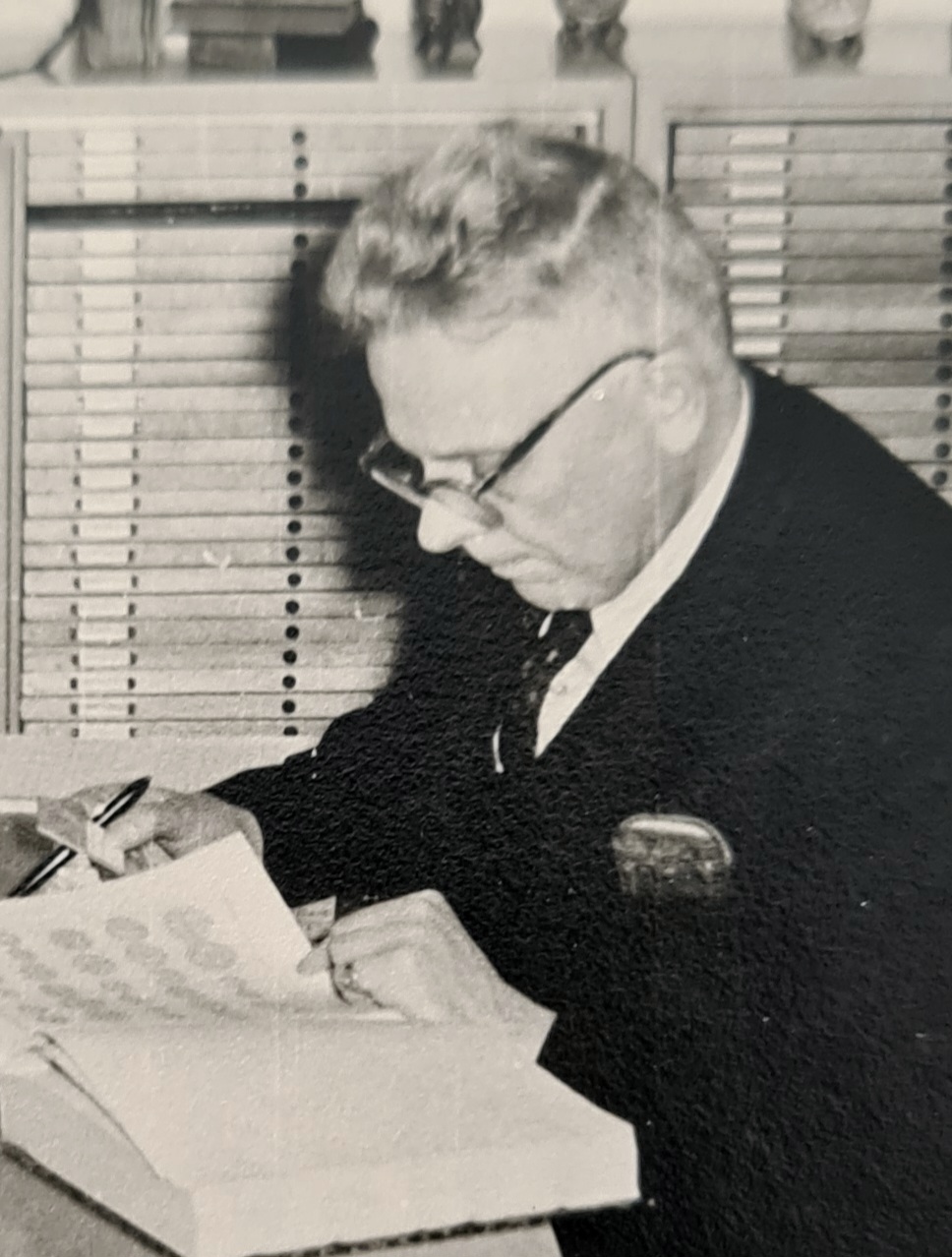
In 1950,
Lodewijk Beuth visited our office at Keizersgracht 448 for the first time. He
was looking for “escape gold”. The Second World War was still omnipresent, and
the fact that it had been necessary for him to flee and go into hiding had
given him this idea. My father told him that he did in fact have the desired
gold ten-count pieces in stock, but wondered why Beuth did not buy rarer pieces
instead. These would have the advantage of counterbalancing inflation, and
collecting could give a lot of pleasure. Lodewijk seemed to be receptive to
this. He already collected stamps, small sugar cones, and cigar bands for
acquaintances -- the passion for collecting was not new to him.
This was the beginning of what was to grow into a firm bond between Lodewijk Beuth and the Schulman family. We spent many an hour together at “Keizersgracht 448”, talking about rarities and their quality. Lodewijk’s awareness grew, but so did his desire to create the largest and most beautiful coin collection in the Netherlands. Whether he succeeded in doing so should become clear from this catalogue.
But it did not stop with collecting. Lodewijk Beuth immersed himself in numismatics and began to publish his findings. At first he did this in the Jaarboek voor Munt- en Penningkunde; later, he also published in economic journals such as the Economisch Statistische Berichte (ESB), and in newspapers.
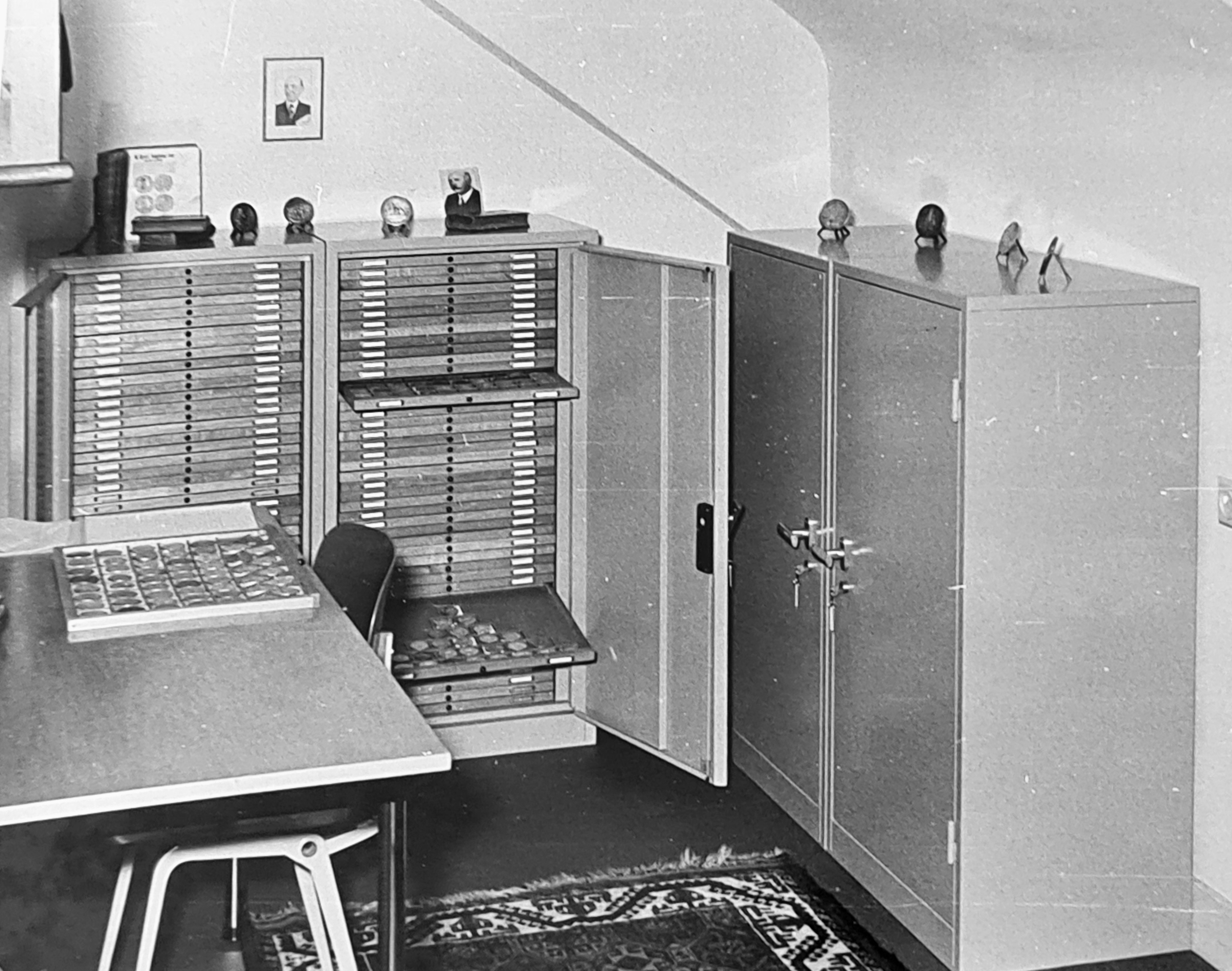
His numismatic knowledge and interest in our national economy gave him the idea of reforming the Dutch coinage system – just at the time when the rising price of silver was approaching the silver value of the guilder and reichtaler of the time. For Greshham’s Law states: “Bad money displaces good money”. Thus, there was a chance that the silver coins would disappear from circulation to be remelted. Beuth proposed replacing silver coins with nickel ones in time to prevent this. In 1967, the time had come. Beuth also advocated the introduction of commemorative coins, and the first one was minted to commemorate the Second World War. At that time, it was a coin with a value of 10 guilders. Afterwards, 50-guilder pieces were also issued and the tradition was preserved accordingly.
Harderwijk, July 2023
Selected articles by Lodewijk S. Beuth:
Yearbook No. 42, 1955: The history of the Zealand silver ducat from 16-1798 and its secret inscriptions.
Yearbook No. 43, 1956: A curious coin find: An unknown specimen coinage of the reichstaler from 1898.
Yearbook No. 44, 1957: Golden reiters from the 18th century
Yearbook No. 45, 1958: The half-, quarter- and one-eighth Zealand silver ducat
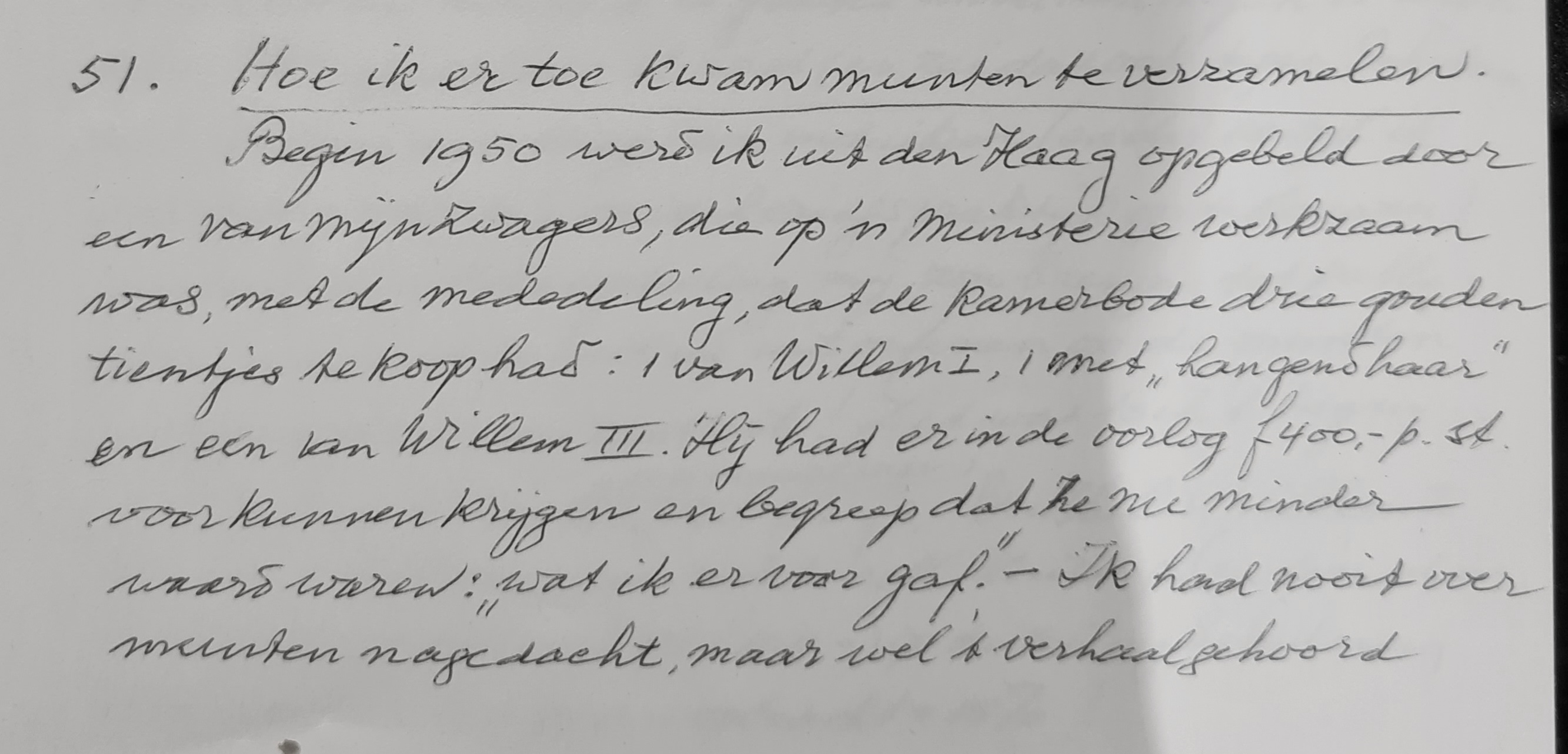
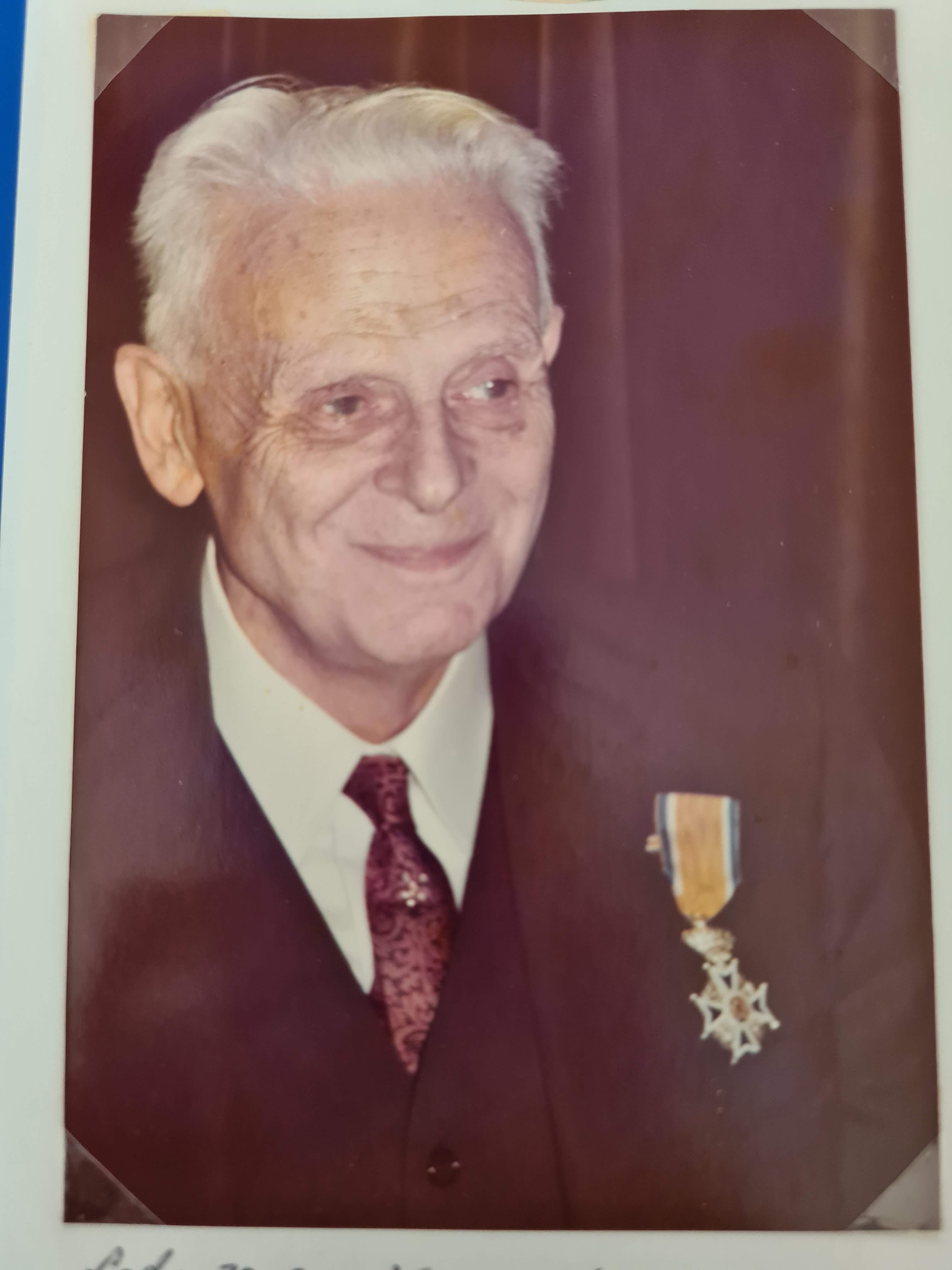
Copy of the memories of Lodewijk S. Beuth at the beginning of his numismatic passion.
How I began collecting coins
At the beginning of 1950 I received a call from The Hague, from a brother-in-law who worked in a ministry. He told me that the house courier was offering three gold “tens” for sale: one of Willem I, one with “hanging hair”, and one of Willem III. He had been able to get 400 gulden each for them during the war, and he had realized that they were now worth less: namely “what I paid for them”.
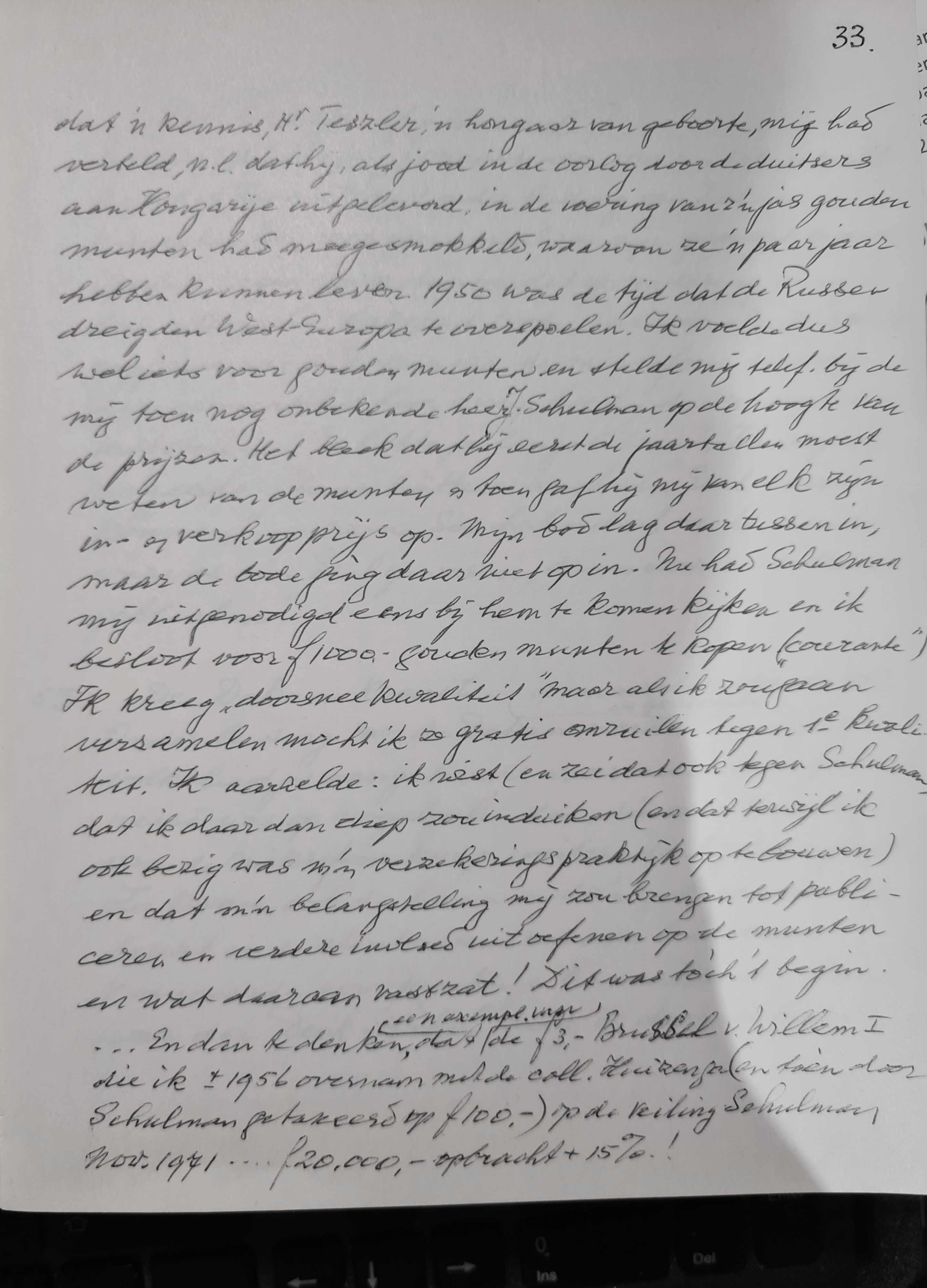
I had never thought about coins, but I had heard a story involving them. An acquaintance, a man named Teszler – a native of Hungary – had told me the following: He had been extradited as a Jew to Hungary by the Germans during the war, and had smuggled golden coins in the lining of his jacket, which he was able to live on for a few years.
1950 was the time when the Russians were threatening to overrun Western Europe. I did in fact have some gold coins, and I phoned Mr J. Schulman, who was unknown to me at the time, to find out what they were worth. It turned out that he first had to know the dates of the coins, but then he told me the purchase price and the selling price of each coin. My offer was in between, but the courier did not take me up on this offer. Schulman invited me to come visit him; I did so, and decided to buy the gold coins at a price of 1,000 (‘current’). I received items of ‘average quality’, but if I collected them I would supposedly be able to exchange them for the best quality free of charge.
I hesitated: I was aware – and I expressed this to Mr Schulman – that I would have to look into this intensively while I was also busy setting up my insurance agency, and that my interest led me to a publication, which would had a further influence on the coins and all that was connected with them. This was the beginning of my numismatic career. Then it must be remembered that an FDC specimen at three gulden Brussels of Willem I, which I had taken over with the Huizinga collection around the year 1951 (which at that time had been valued by Schulman at 100 gulden), fetched ... 20,000 gulden +15% at Schulman’s auction in November 1971!
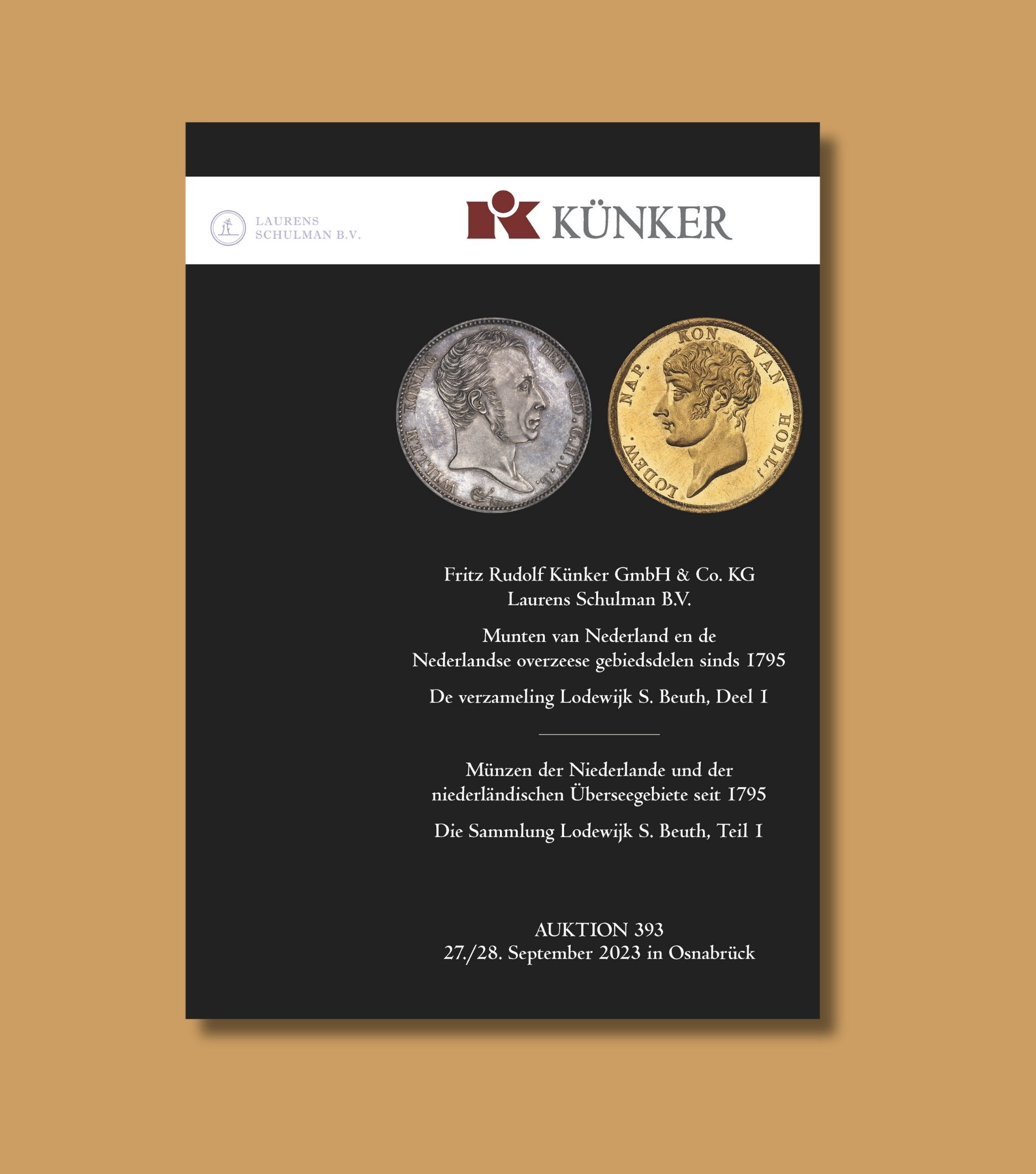
Auction 393
The Lodewijk S. Beuth Collection, Part 1
Coins of the Netherlands and the Dutch oversea territories since 1795
Online catalog
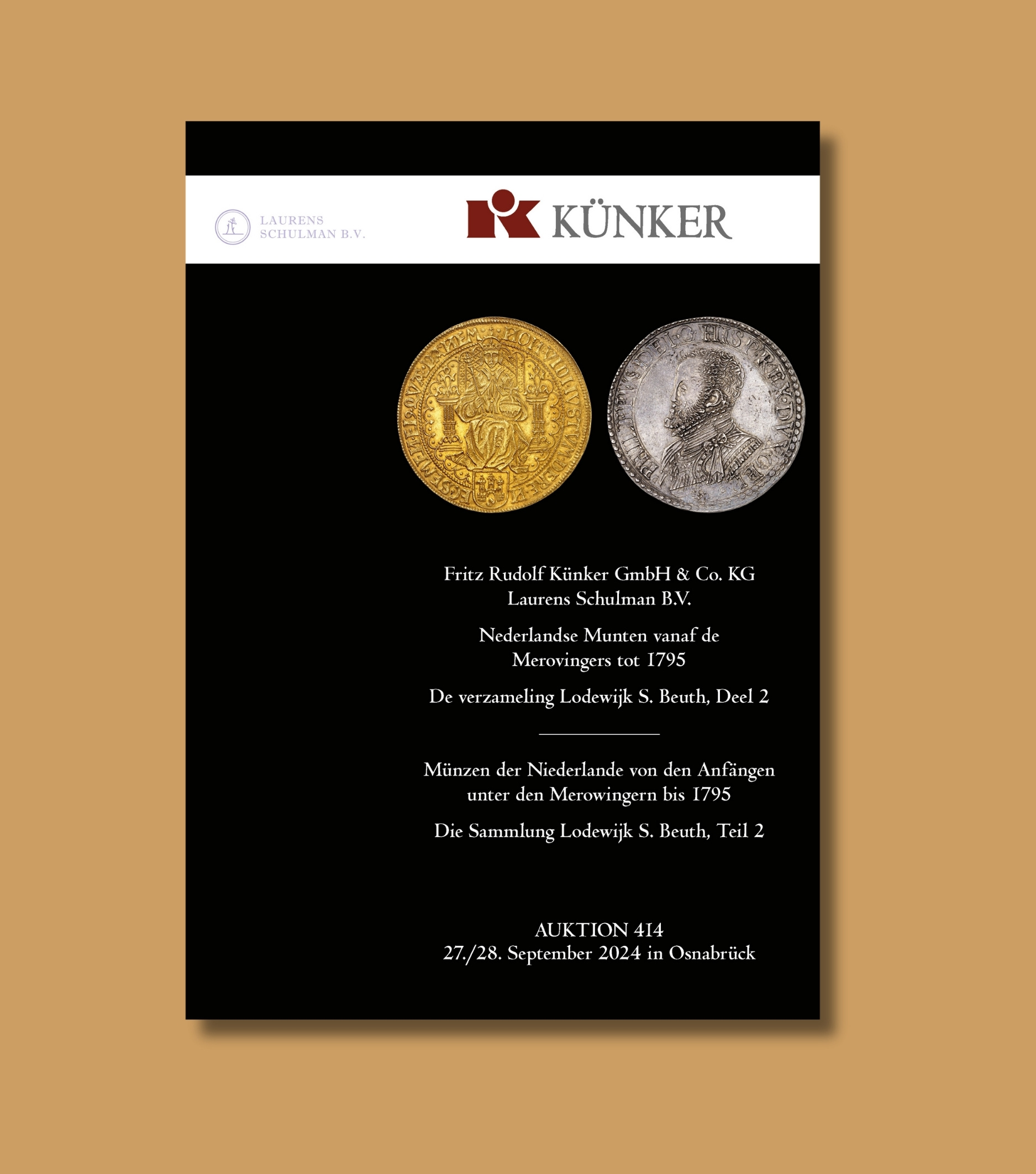
Auction 414
The Lodewijk S. Beuth Collection, Part 2
Coins of the Netherlands from the beginnings under the Merovingians to 1795
Online catalog
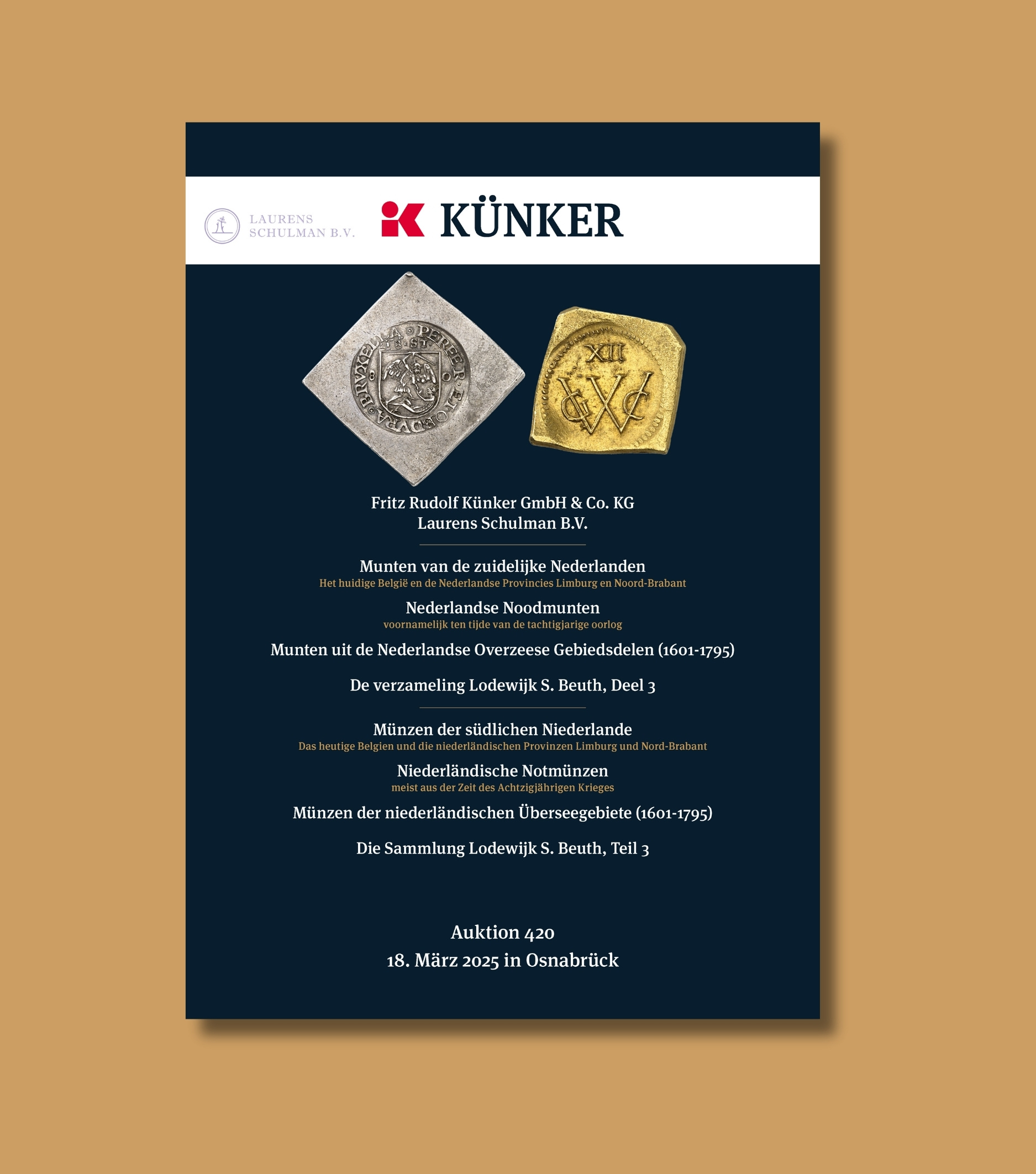
Auction 420
The Lodewijk S. Beuth Collection, Part 3
Coins of the Southern Netherlands - The Present Belgium and the Dutch Provinces of Limburg and North Brabant | Dutch Siege Coins | Coins of the Dutch Overseas Territories (1601-1795)
Online catalogeLive Premium
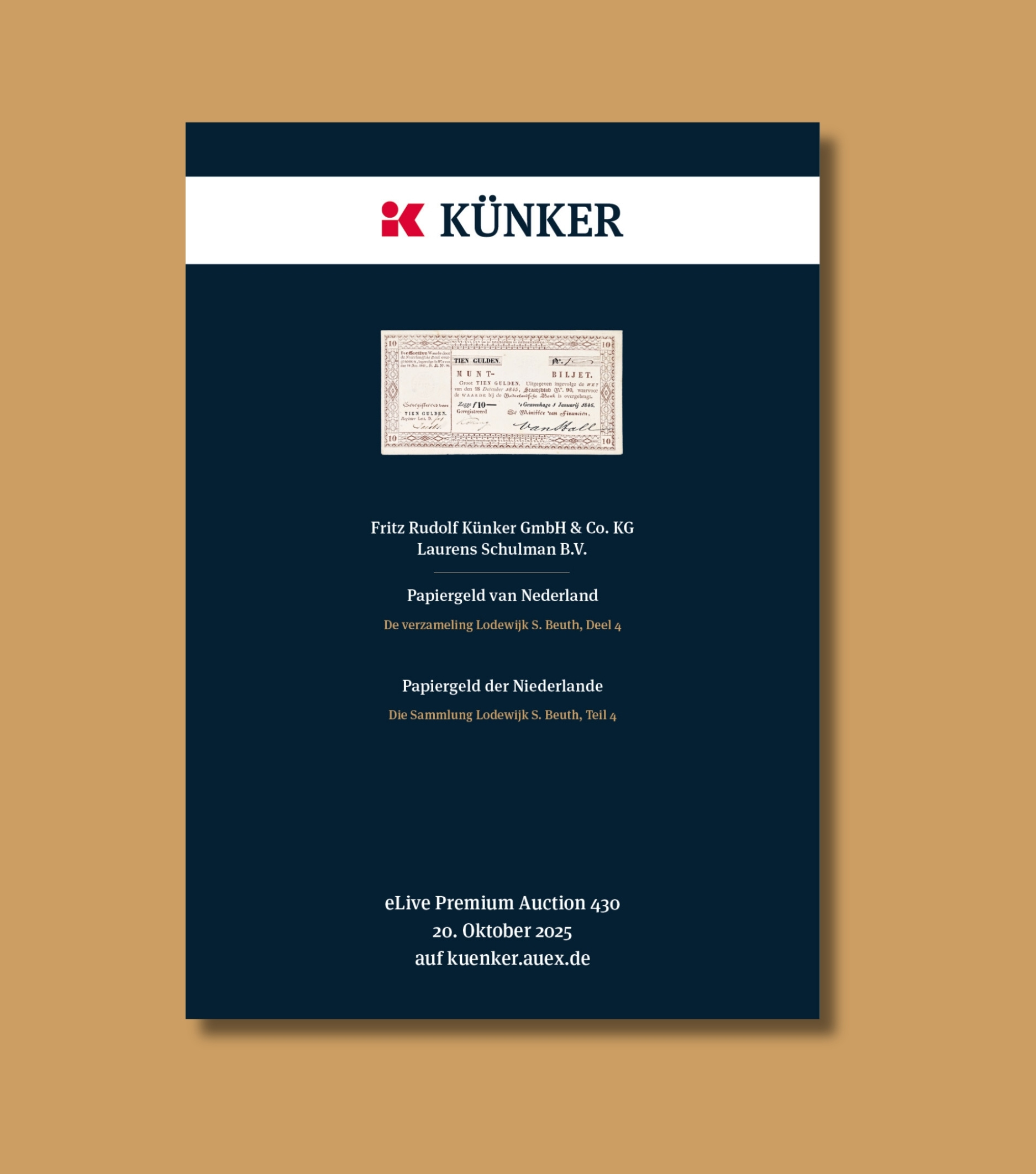
Auction 430
The Lodewijk S. Beuth Collection, Part 4
Paper money of the Netherlands
Papiergeld van Nederland