

Friedrich Wilhelm Nikolaus Karl, Prince of Prussia, was born on 18 October 1831 at the New Palace in Potsdam as the only son of Prince William (1797–1888), the future King and Emperor William I, and his wife Augusta, a Princess of Saxe-Weimar-Eisenach (1811–1890). Since his uncle King Frederick William IV remained childless, from 1840 Frederick William moved to second place in the Prussian line of succession.
Among Frederick's first governesses was Marie Sophie von Clausewitz (1779–1836), widow of the military theorist Carl von Clausewitz (1780–1836). Formal schooling began from 1836. From 1838 to 1844, the Swiss Reformed theologian Frédéric Godet (1812–1900) served as his civilian tutor. He was followed (until 1850) by the historian Professor Ernst Curtius (1814–1896), whose influence produced a broadly liberal and intellectually open formation. In religious matters he received comprehensive instruction in the spirit of the Prussian united church, with a certain Reformed orientation. In addition, he received extensive education in German, French, English, Latin, and Greek, in literature, general and Prussian history, classical studies and philosophy, in constitutional law, administrative theory, and political economy, in mathematics, physics, and geography, in drawing, music, carpentry, printing, and bookbinding.
Image caption
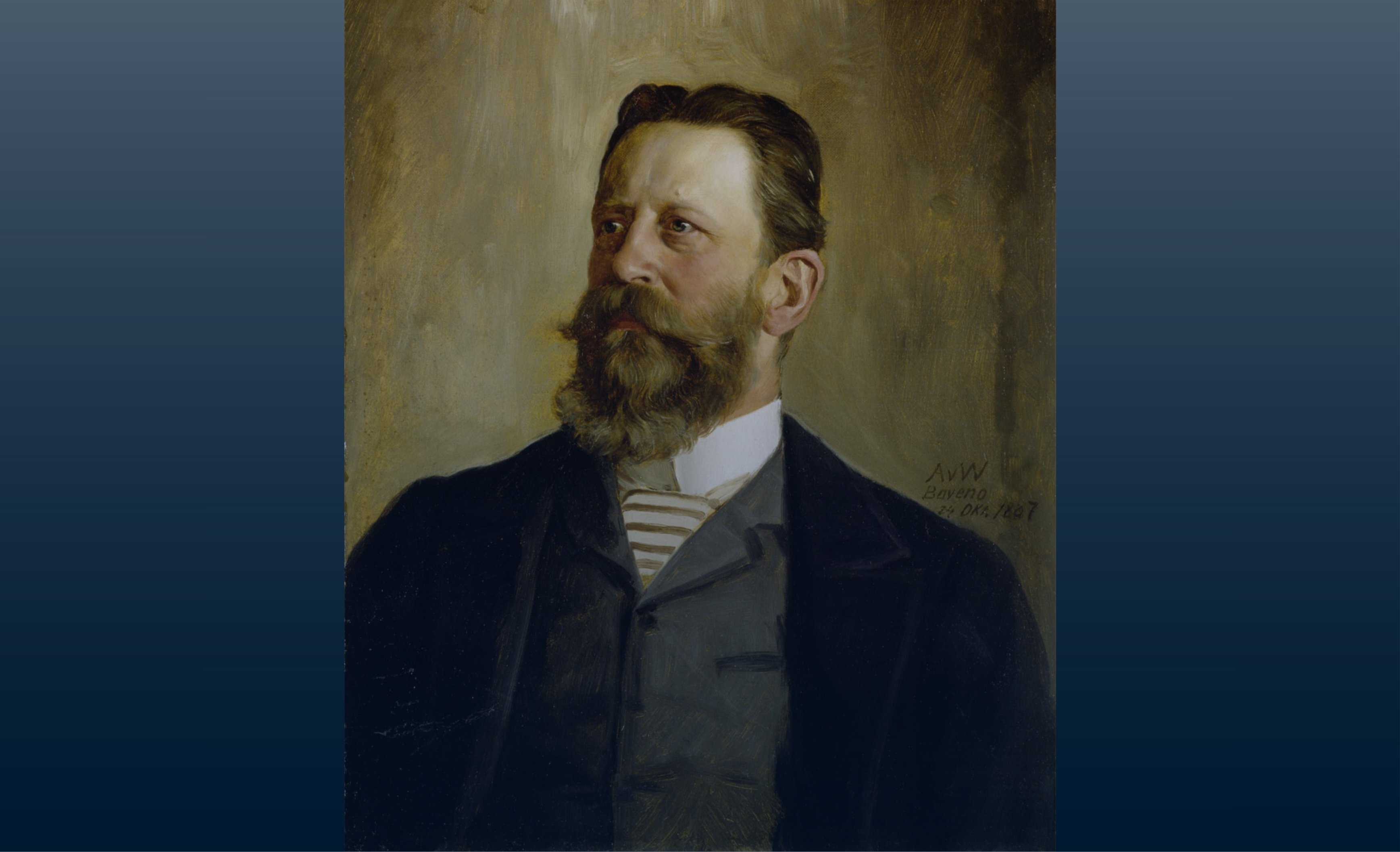
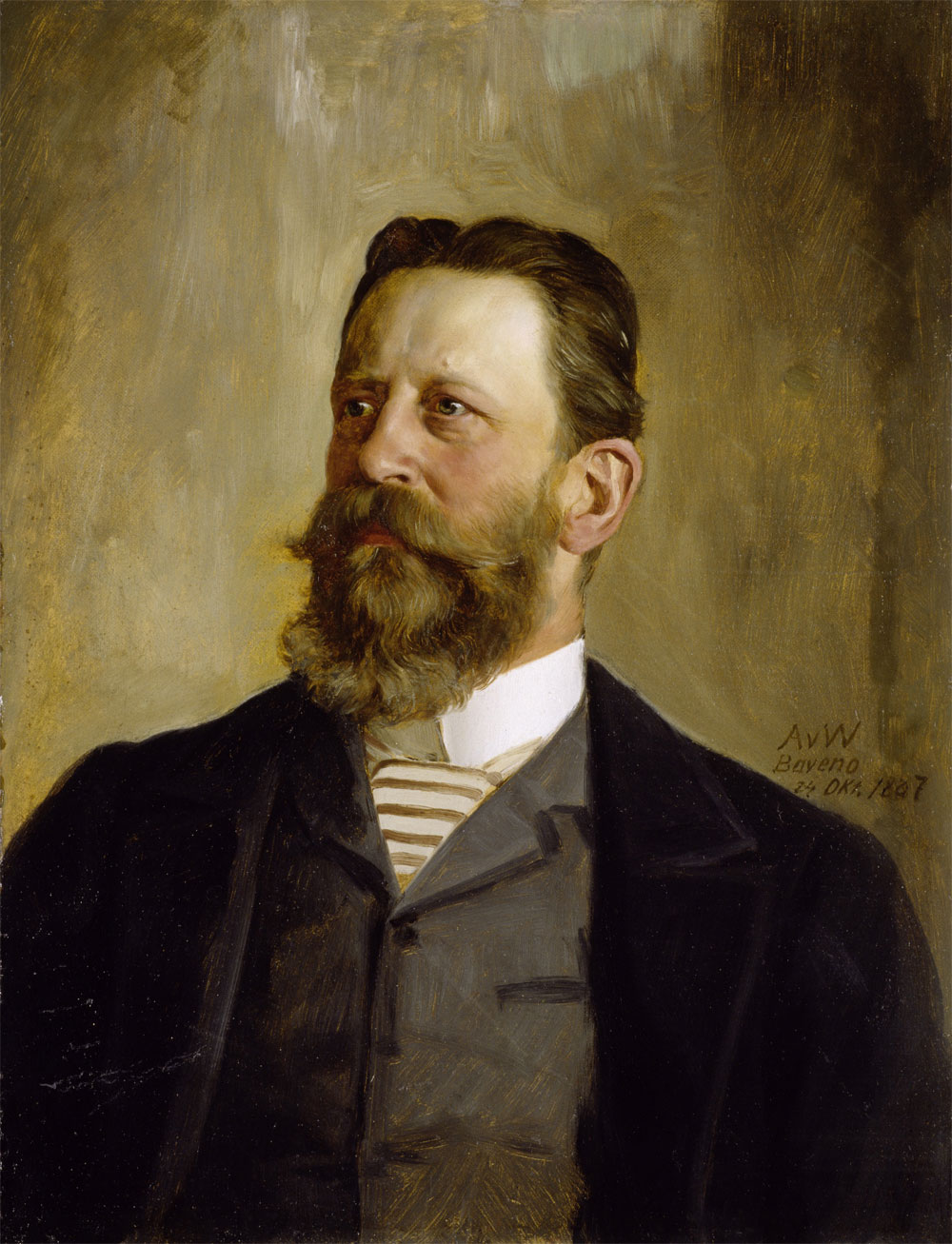
Anton von Werner: Crown Prince Frederick (III) William of Prussia, in Boreno, painting 1887.
In 1843 he was appointed lieutenant in the 1st Foot Guard Regiment. For his military education, Major General Karl von Unruh (1786–1852) served as his military governor from 1838 to 1849, followed by Lieutenant Colonel Friedrich Leopold Fischer (1798–1857). Under their guidance, Frederick received instruction in both theoretical and practical military subjects. Having taken up active military service in his regiment on 3 May 1849, he was promoted to first lieutenant in the same year.
Declared of age on 18 October 1849, he began studying law at the Rhenish Friedrich Wilhelm University in Bonn a year later, also attending lectures in history and politics as well as on the British political system.
Following the completion of his education (1852), Frederick continued his military career. A central role was played by his personal adjutant, Colonel Helmuth, Baron von Moltke (1800–1891), as his military mentor.
In 1851, Frederick encountered the eleven-year-old Victoria, Princess Royal (1840–1901), for the first time at the London World Exhibition. Despite the difference in age, close contact quickly developed, fostered by shared liberal interests and the influence of her father, Prince Albert of Saxe-Coburg and Gotha (1819–1861). The stay in England left a lasting impression on the prince; a regular correspondence followed. In 1856 the engagement of the two was celebrated, welcomed by liberal circles — particularly by her father Albert — but strictly rejected by conservative ones. On 25 January 1858, Frederick and Victoria were married in the Chapel of St James's Palace in London, establishing a politically and personally significant bond between the Prussian and British royal houses. In addition to the heir to the throne William — the future Emperor William II (1859–1941) — the couple had three further sons, the Princes Henry (1862–1929), Sigismund (1864–1866), and Waldemar (1868–1879), as well as four daughters. Following the eldest daughter Princess Charlotte (1860–1919) came Victoria (1866–1929), Sophie (1870–1932), and Margarethe (1872–1954).
With his father's accession to the throne on 2 January 1861, Frederick became Prussian Crown Prince. In 1863, in the so-called Danzig Speech, he publicly distanced himself from the press policy of the Prussian Minister President and future Reich Chancellor Otto von Bismarck (1815–1898), while remaining loyal to his father the king. The speech met with international approval but provoked sharp criticism in Prussia. He subsequently justified his conduct in writing, though committing himself to political restraint in future.
Following the Prussian march into Holstein on 9 June 1866, the conflict between Prussia and Austria escalated into the German War after the Federal Diet voted to mobilise the federal army. William I responded by marching into several German states. Chief of the General Staff Helmuth von Moltke advanced the Prussian army into Bohemia in separate forces. In the Battle of Königgrätz on 3 July 1866, the 2nd Army under Frederick's command played a decisive role against the Austrian troops.
The Peace of Prague on 23 August 1866 sealed the dissolution of the German Confederation and initiated, with the founding of the North German Confederation dated 16 April 1867, the further political unification under Prussian leadership.
In the Franco-Prussian War of 1870/71, Frederick commanded the 3rd Army as Crown Prince. Following early victories, participation at Sedan, and the siege of Paris, he was celebrated in Germany as a war hero, was promoted to Field Marshal on 28 October 1870, and attended the proclamation of the emperor at Versailles on 18 January 1871.
As German Crown Prince, however, his political role in the Empire remained constitutionally unclear and effectively limited. Under the dominance of Bismarck and the long reign of William I, he remained largely marginalised politically. At the same time, he became a contemporary symbol of liberal court circles positioned against Bismarck's policies. In parallel, he publicly spoke out against antisemitism — for instance through visits to Jewish institutions and corresponding public statements. During the 1880s, Frederick undertook several diplomatic journeys through Europe, establishing himself as a representative yet only marginally effective political figure within the Empire.
From early 1887, Frederick — a heavy smoker — developed increasing hoarseness. Following initial local findings in the larynx, there was suspicion of a carcinoma, while the consulting physician Morell Mackenzie (1837–1892) initially played down the diagnosis. The findings remained disputed for months; Rudolf Virchow (1821–1902) also saw no unambiguous evidence of cancer. The patient eventually underwent treatment in England and later in Sanremo, without however achieving lasting improvement. Following an acute deterioration in February 1888, a tracheotomy was performed, which secured his breathing but resulted in complete loss of voice.
Following the death of his father William I on 9 March 1888, he was recalled to Berlin, arriving there on 11 March. As King of Prussia and German Emperor, he adopted the name Frederick III. On account of the advanced state of his laryngeal cancer, he was already unable to speak at this point.
His brief reign was characterised by a relative incapacity for action resulting from his illness, and by severe political constraints. Constitutional reform intentions therefore remained largely unrealised. Foreign policy conflicts led to tensions with Reich Chancellor Otto von Bismarck, who maintained his political position. The most significant decisions of his brief rule concerned matters of personnel and amnesty — including the dismissal of conservative domestic politicians and limited liberalisation measures. After a reign of only 99 days, Frederick III died on 15 June 1888 at 11.00 in the morning at the New Palace in Potsdam. Initially interred in the sacristy of the Friedenskirche in Potsdam, he was later transferred to the vault of the Kaiser Friedrich Mausoleum, consecrated on 18 October 1890, beside the Friedenskirche.
After 1871, Frederick III was interpreted as the liberal hope of the Empire, in particular as a missed opportunity for reform — the so-called Kaiser Frederick Legend. In reality, his capacity for political action was severely constrained by the brevity of his reign and his serious illness. Already as Crown Prince, he had represented a moderately constitutional position without a programmatic reform agenda; his few public liberal statements were situational rather than systematic.
Culturally, he engaged alongside his consort Victoria in the promotion of science and the arts — reflected, for instance, in the later naming of the Kaiser Friedrich Museum (today's Bode Museum).
Bibliography
- Freund, Michael: Das Drama der 99 Tage. Krankheit und Tod Friedrichs III. Cologne and Berlin 1966.
- Herre, Franz: Kaiser Friedrich III. Deutschlands liberale Hoffnung. Eine Biographie. Stuttgart 1987.
- Herre, Franz: Kaiserin Friedrich – Victoria, eine Engländerin in Deutschland. Stuttgart 2006.
- Müller, Frank Lorenz: Der 99-Tage-Kaiser. Friedrich III. von Preußen – Prinz, Monarch, Mythos. Munich 2013.
- Neumann, Hans-Joachim: Friedrich III. – Der 99-Tage-Kaiser. Berlin 2006.
- Richter, Werner: Friedrich III. Leben und Tragik des zweiten Hohenzollern-Kaisers. 2nd edition. Munich 1981.
- Various pages from de.wikipedia, en.wikipedia, and fr.wikipedia.