

Frederick William II was born on 25 September 1744 at the Crown Prince's Palace in Berlin as the eldest son of Prince of Prussia and Prussian heir apparent Augustus William (1722–1758) and his wife Princess Louise Amalie of Brunswick-Bevern (1722–1780).
Augustus William was the younger brother of King Frederick II. In 1747 the king assumed responsibility for the education and upbringing of his three-year-old nephew. At the Berlin Palace, he had him educated in accordance with Enlightenment ideals. The child was treated as a miniature adult; child-appropriate pedagogy by today's standards played virtually no role. A mathematician was appointed as private tutor at an early stage, since logical thinking was regarded as the foundation of reason.
The upbringing was entrusted to the Swiss Nicolas de Béguelin (1714–1789). The daily routine was strictly regulated: language instruction, courtly socialisation, written learning, and supervised play. The prince was integrated into court life from an early age. Frederick II additionally demanded demonstrative self-assurance; discipline was at times enforced through corporal punishment.
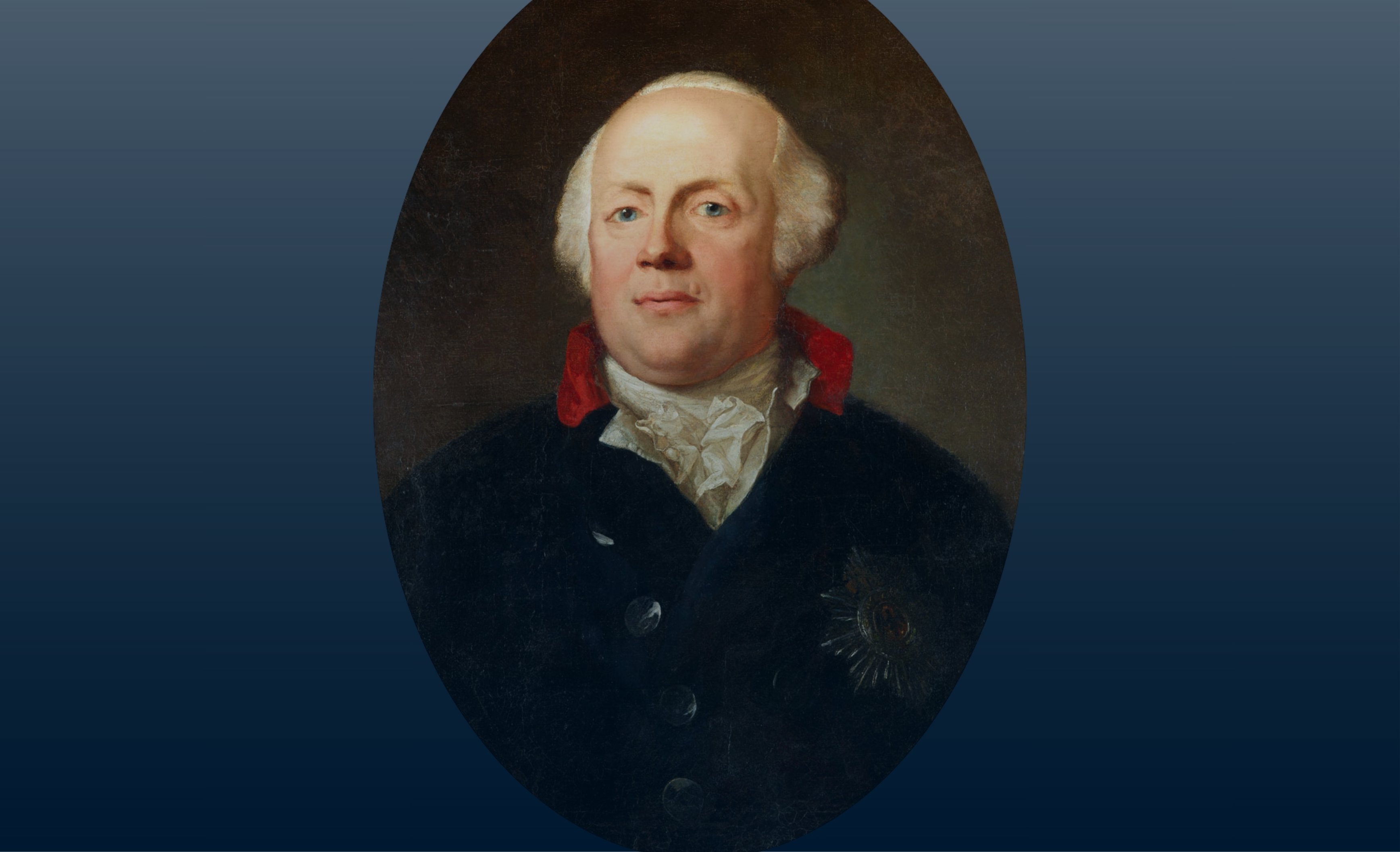
Image
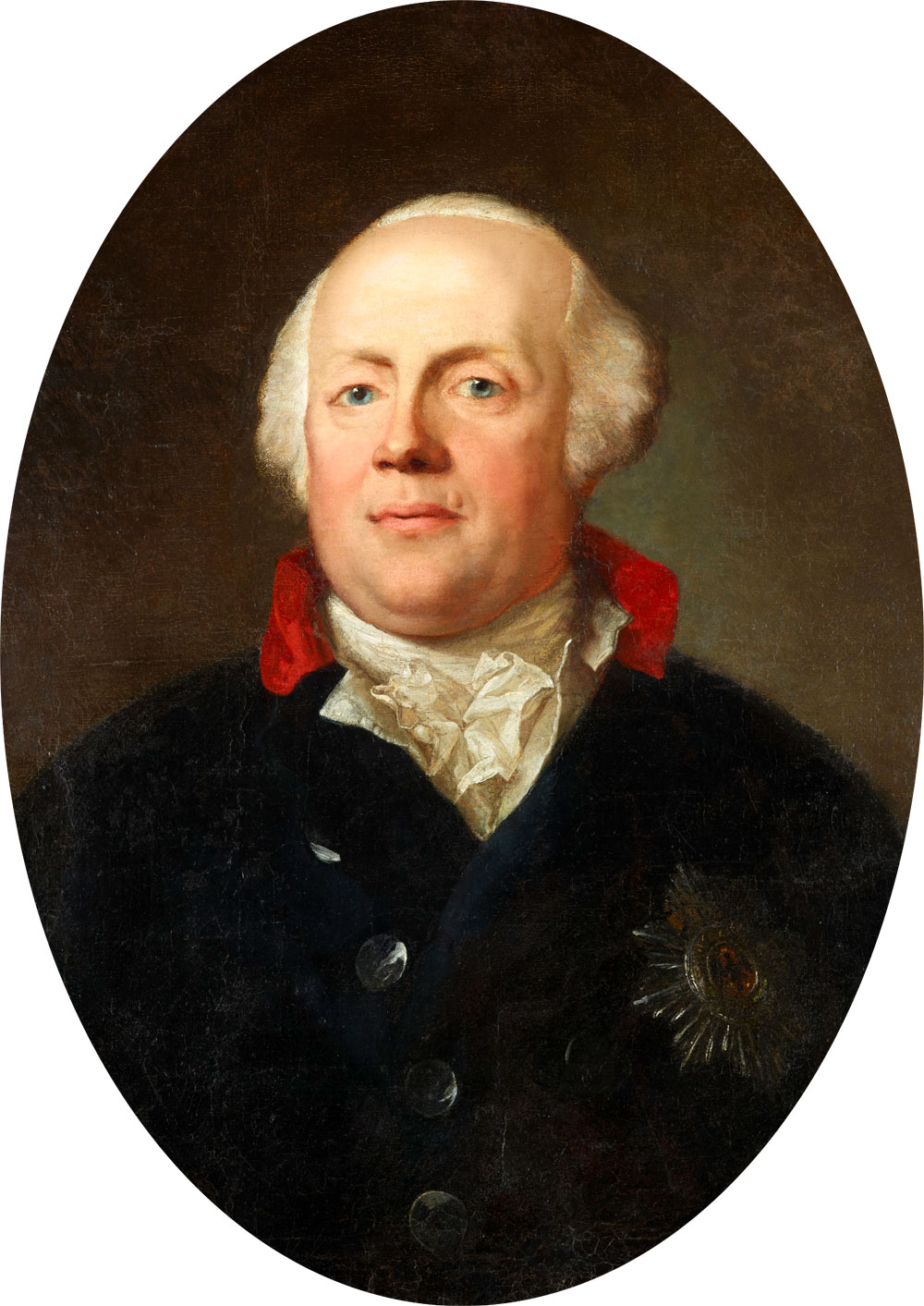
Anton Graff: King Frederick William II, painting 1787. Source: Stiftung Hohenzollernscher Kunstbesitz (SPSG)
The curriculum centred on mathematics, law, philosophy, and history, as well as practical and physical training, though without any clear preparation for his future role as ruler.
In 1751, Major Heinrich Adrian, Count von Borcke (1715–1788) assumed responsibility as chief court marshal for the prince's military education, which was characterised by strict discipline and corporal punishment — measures approved by the king. The aim was to overcome shyness through consistent rigour.
Frederick William's youth fell during the Seven Years' War and was shaped by its crises and uncertainties. His father's relationship with his elder brother, the king, suffered lasting damage through several military misjudgements on the part of the heir apparent. In 1757, Prince Augustus William was dismissed from the army and withdrew to Oranienburg Palace, where he died shortly afterwards. Following his father's death, Frederick William was confirmed as Prussian heir apparent in 1758 at the winter quarters in Torgau and was appointed Prince of Prussia. The court was frequently on the move due to the war, and further instruction was severely curtailed.
In the final phase of the war he participated in military operations and was praised for his bravery, while his relationship with the king already showed the first signs of strain and cooled noticeably. Prussia asserted itself as a great power in the Peace of Hubertusburg, but suffered considerable demographic and economic losses.
On the king's instruction, Frederick William was married on 14 July 1765 to his cousin Princess Elisabeth of Brunswick-Wolfenbüttel (1746–1840), from whom he was divorced as early as April 1769 on account of mutual adultery. Shortly thereafter he married Princess Frederica Louise of Hesse-Darmstadt (1751–1805). On 3 August 1770 their eldest son Frederick William, the future King Frederick William III, was born in Potsdam. Six further children followed. In May 1787 the king contracted his first morganatic marriage with Julie von Voß (1766–1789), whom he elevated to Countess of Ingelheim in November of the same year.
Following her early death from pulmonary tuberculosis, he entered on 11 April 1790 into a second morganatic marriage with Sophie, Countess von Dönhoff (1768–1834). In 1792, however, he separated from the domineering Dönhoff. He also maintained relationships with numerous other women, above all with his lifelong friend and confidante Wilhelmine Enke (1752–1820), whom he made his official mistress in 1769 and whom he elevated on 28 April 1796 to Countess of Lichtenau.
Frederick II repeatedly attempted to publicly discredit his heir apparent, for instance by favouring other relatives. In scholarly research this is partly interpreted as a strategy of self-aggrandisement.
The two men differed markedly: while Frederick II embodied a rationalist, elitist, and Francophile ideal, Frederick William was more strongly oriented towards bourgeois, religious, and representative ways of life. Clear contrasts also emerged in cultural and ideological terms.
The distance was further reflected in the restricted living circumstances of the Crown Prince and his deliberate exclusion from political decision-making. Despite a comprehensive education, he was largely denied practical experience of government; participation in court sessions was the sole concession made. Frederick II, by contrast, saw himself as an autocratic first servant of the state who centralised governmental activity and delegated little.
After Frederick II died on 17 August 1786 at Sanssouci Palace, his nephew ascended the throne under the name Frederick William II. His accession was initially accompanied by high expectations. Politically and culturally he marked a clear break: the royal residence was moved back to Berlin, court life was intensified, and popular measures such as tax relief were introduced, though these were offset by new levies.
Frederick William II continued the cabinet politics of his predecessor. Despite his lack of political preparation time, he was the last Prussian ruler intellectually capable of comprehending and taking responsibility for the decision papers prepared by his ministers and cabinet councillors. At the same time, the outdated administrative and military structure remained largely unchanged, which was to impair the state's capacity for action in the long term. In the eighteenth century, foreign policy was regarded as the central domain of rule; accordingly, Frederick William II was comparatively well prepared in this area. After 1786, however, Prussia found itself isolated in foreign policy, necessitating an active strategy of alliance-building.
Initially the king pursued a cautious policy of mediation, but in 1787, following a diplomatic conflict, he intervened militarily in the Dutch States-General and restored the existing order there. This success remained of limited significance in foreign-policy terms.
Under the influence of his minister of state and cabinet minister Count Ewald Friedrich von Hertzberg (1725–1795), Prussia initially persisted in its rivalry with Austria, but drew closer again from 1790 for reasons of power politics. The French Revolution led to participation in the First Coalition War from 1792, which was brought to an end — following military reverses and financial exhaustion — by the separate Peace of Basel on 5 April 1795.
In parallel, Frederick William II shifted his focus eastwards and participated in the Second and Third Partitions of Poland in 1793 and 1795, whereby Prussia achieved very considerable territorial gains and expanded its position as a great power. The situation of a two-front war between 1793 and 1795 had, however, brought Prussia to the brink of bankruptcy. Whereas Frederick II had bequeathed his successor a state treasury of 51 million thalers, the debts in the year of his nephew's death amounted to 48 million thalers.
With advancing age the king suffered from ascites (abdominal dropsy), dysponesis (chronic muscular tension), and gout. Having turned his back on Berlin court life in early October 1797 and withdrawn to the Marble Palace near Potsdam, he died there on 16 November 1797 at 8:58 in the morning, at the age of 53, in his wood-panelled writing cabinet during a convulsive seizure. The deceased king was interred on 11 December 1797 in the vault of the Berlin Cathedral.
The assessment of Frederick William II is ambivalent. His reign fell in an era of profound upheaval — above all brought about by the Enlightenment and the French Revolution — to which he, as a representative of the Ancien Régime, was only partially equal. Reforms were largely absent; at the same time, he enacted the General Legal Code in 1794 and issued a religious edict that strengthened religious tolerance. In foreign policy, through the Polish Partitions he achieved the most extensive territorial gains in the entire history of Prussia.
The negative image was partly already shaped by his predecessor Frederick II and was reinforced in the nineteenth century, with court life and the keeping of mistresses in particular being exaggerated. Many of these aspects, however, corresponded to the norms of his time. Overall, Frederick William II remained far in the shadow of his predecessor and was judged very critically even during his own lifetime.
Bibliography
- Bissing, Wilhelm Moritz, Baron von: Friedrich Wilhelm II. König von Preußen. Ein Lebensbild. Berlin 1967.
- Bringmann, Wilhelm: Preußen unter Friedrich Wilhelm II. (1786–1797). Frankfurt am Main et al. 2001.
- Hagemann, Alfred: Wilhelmine von Lichtenau (1753–1820). Von der Mätresse zur Mäzenin. Cologne 2007.
- Meier, Brigitte: Friedrich Wilhelm II. König von Preußen. Ein Leben zwischen Rokoko und Revolution. Regensburg 2007.
- Müller, Michael G.: Die Teilungen Polens 1772, 1793, 1795. Munich 1984.
- Various pages from de.wikipedia, en.wikipedia, fr.wikipedia, and pl.wikipedia.