

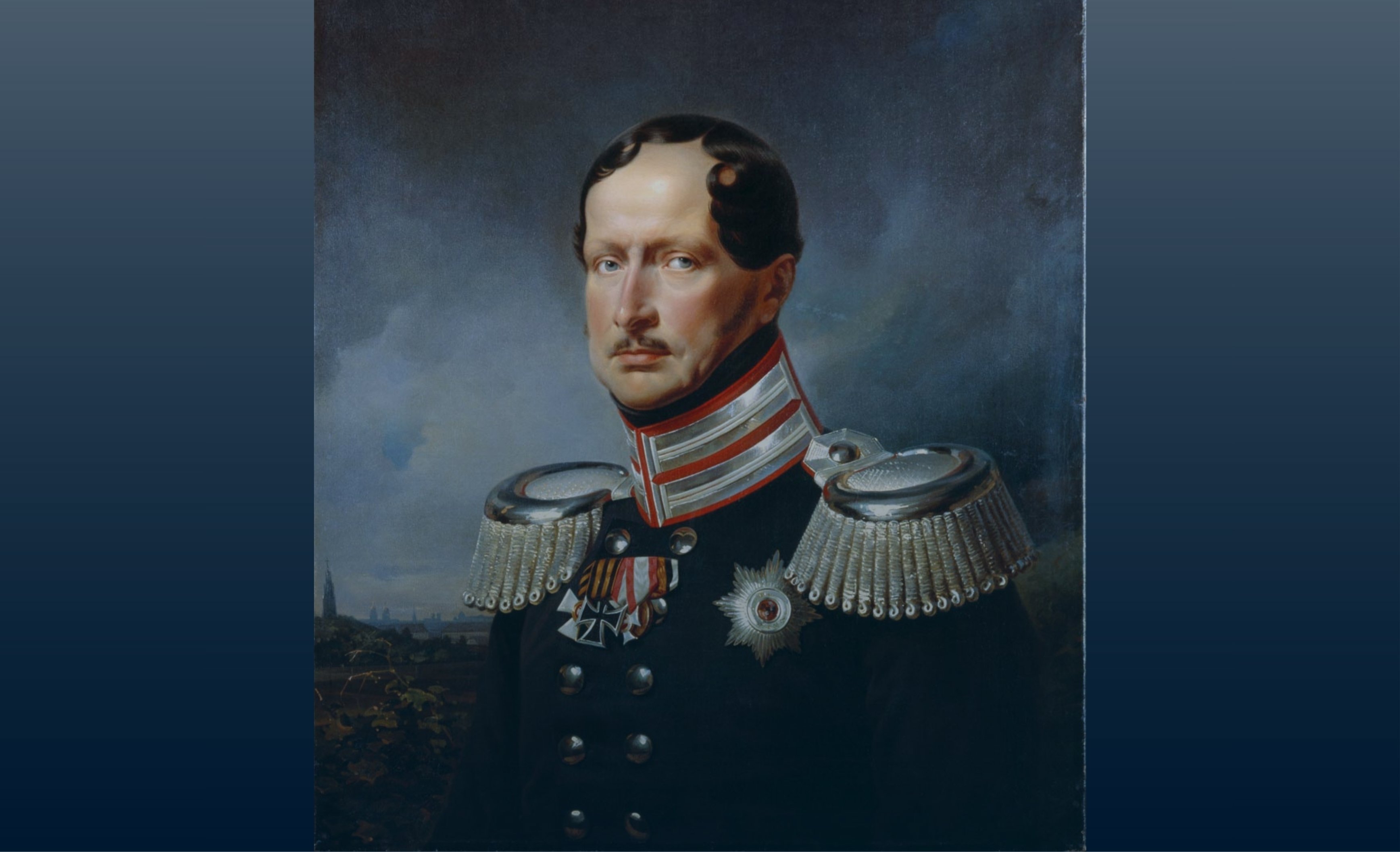
For a biographer, characterising the personality of King Frederick William III is no easy undertaking — at least if one wishes to avoid the many widely circulated stereotyped judgements of his person. To do justice to this historical figure, a different historiographical approach and a broader perspective are required.
Today it seems worthwhile to incorporate psychological and sociological perspectives that take as their starting point the formative experiences of childhood and youth, in order to construct on this basis a more nuanced picture of his personality. Such an approach opens up the possibility of better understanding individual dispositions and patterns of behaviour and of placing them in their historical context. It is precisely this approach that will be attempted in the following.
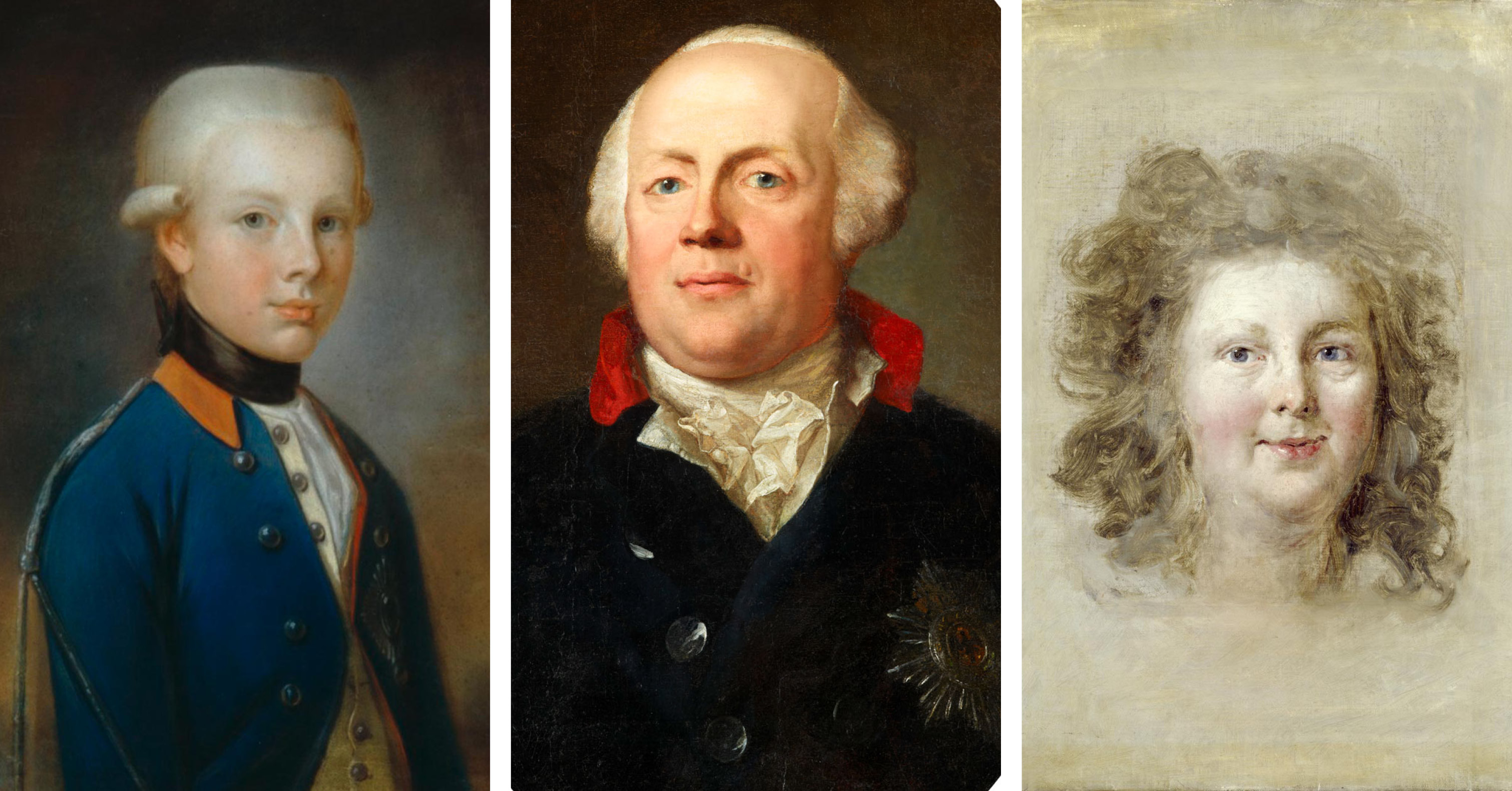
Frederick William III was born on 3 August 1770 in the so-called Cabinet House on the Neuer Markt in Potsdam. The building, used as a kind of Crown Prince's Palace, lay only a few minutes' walk from Potsdam Palace. Since his parents Frederick William (II) and Frederica Louise, as the heir apparent couple, were one day to inherit the throne from his great-uncle King Frederick II, the prince stood third in the line of succession. As a contemporary, the prince knew his great-uncle Frederick personally and maintained, unlike his father or grandfather, a very good personal relationship with him.
Initially he lived in Potsdam, in his parents' household. Unlike his great-uncle, Frederick William developed a distant relationship with his parents, lacking close bonds — attributed not least to their frequent absences from court. In his early years he was therefore cared for primarily by nursemaids and governesses.
Contemporary accounts suggest that the young prince developed a noticeably closer personal relationship with his nursemaids and later with individual private tutors than with his parents. These relationships were frequently characterised by great trust and were accompanied at the same time by a certain reticence towards court life. Such early attachments to educators and carers can partly explain his frequently noted shyness and caution in later life, as well as his pronounced orientation towards moral norms and rules of conduct.
In 1773 his systematically organised education as a prince of the blood and future King of Prussia began. From this point onwards he had his own court household, with which he resided in the Berlin Palace in winter and in Potsdam Palace in summer. Under the direction of court marshal Johann Heinrich Ludwig Behnisch (1730–1790), a Prussian court official who bore overall responsibility for his upbringing — including his scholastic, religious, and military education — he was systematically prepared for his future role as ruler.
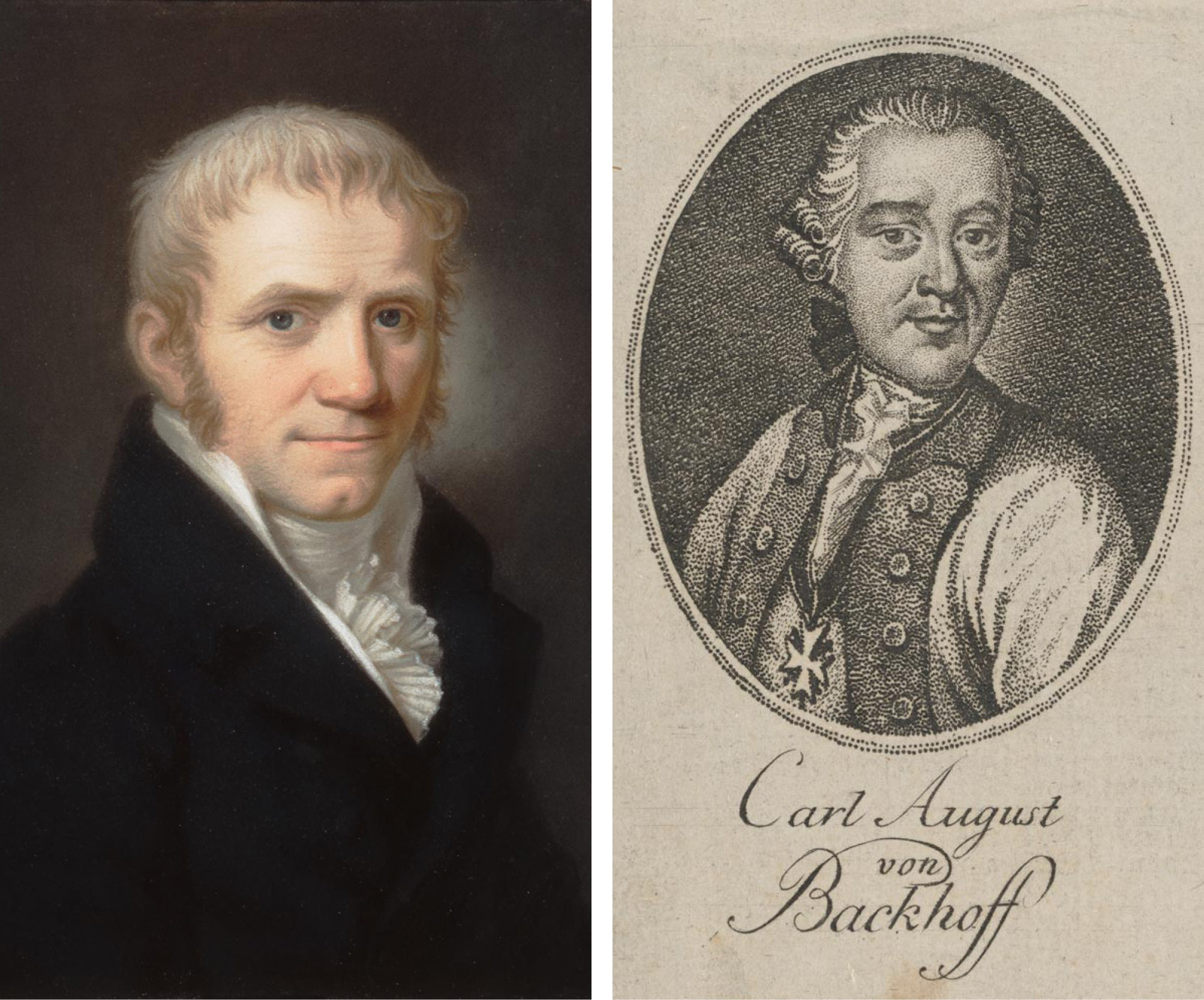
From 1781 he was followed by the theologian and educationalist Friedrich Delbrück (1768–1830). Delbrück was regarded as a committed representative of the Enlightenment educational concept of philanthropism and shaped the further development of the prince's education in this spirit. From around 1778, Colonel Karl August von Backhoff (1720–1807), commander of the Cuirassier Regiment No. 2 (KR 2), had been serving as leading military governor and instructed the prince particularly in strategy and tactics.
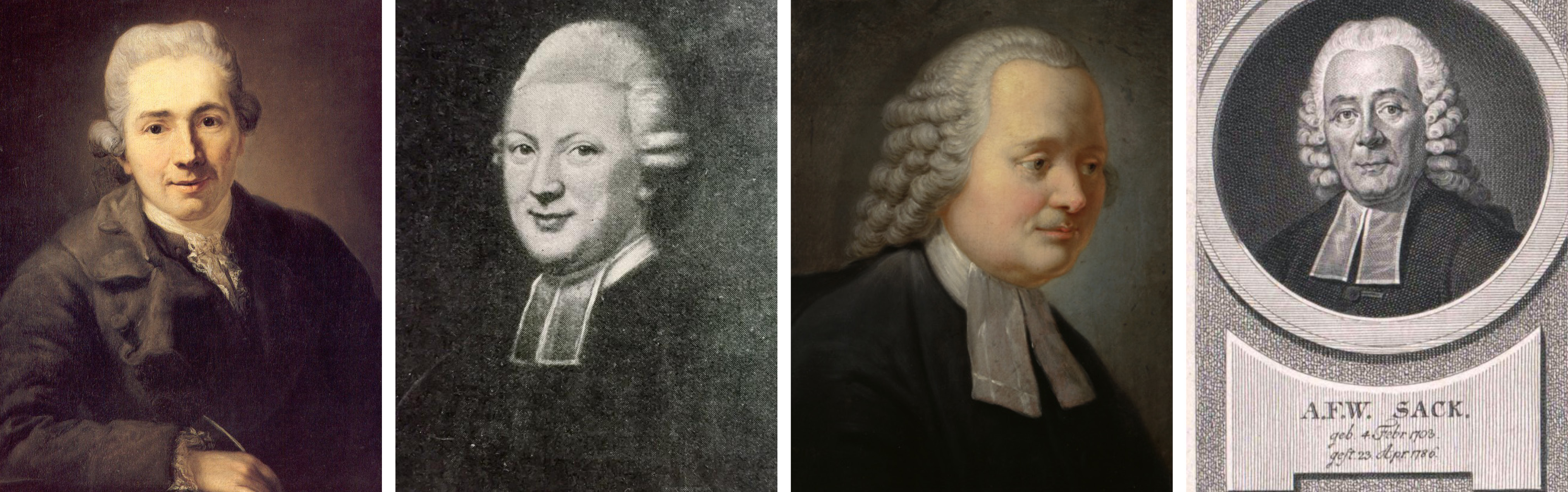
Among the most important private tutors and educators of Frederick William was Johann Jakob Engel (1741–1802), professor at the Berlin Academy, writer, and representative of the Enlightenment. He taught philosophy, moral theory, literature, and political science, thereby making a substantial contribution to the intellectual formation of the prince. Responsibility for religious education — particularly Protestant ethics and the associated concepts of civic responsibility — lay with the Reformed clergyman Johann Friedrich Zöllner (1753–1804). In connection with the Crown Prince's religious instruction, the Reformed theologians Johann Joachim Spalding (1714–1804), consistorial councillor and provost at the Berlin Nikolaikirche, and August Friedrich Wilhelm Sack (1703–1786) are also mentioned. Sack was a well-known pulpit orator, philosopher, and writer who confirmed Frederick William in 1786.
Military training was in the hands of governors drawn from the ranks of the Prussian Guard. In addition, the prince received language instruction from various private tutors in French — from 1779 onwards — the language of the European courts, as well as in German, rhetoric, and Latin. His educational programme also encompassed subjects such as history (from 1778) and political science (from 1783), in which both the history of Prussia and the European dynasties and the fundamentals of state administration and political geography in Europe were taught.
His training programme included general geography, cartography, and mineralogy, as well as mathematics and geometry. Frederick William was taught the principles of fortification and military surveying, as well as knowledge of physics, natural history, and agriculture. This broadly conceived general education, strongly shaped by Enlightenment principles, later contributed to King Frederick William III's policy of toleration in connection with the implementation of the Stein-Hardenberg state and social reforms, which were to include, among other things, the emancipation of the Jews through the Edict concerning the Civil Conditions of the Jews in the Prussian State of 11 March 1812.
Frederick William's entire education was guided by several fundamental principles: a strict moral code and religiosity of a Reformed character, combined with the practice of a modest lifestyle, a pronounced sense of duty towards state, army, and people, an Enlightenment-influenced education, and military discipline in the tradition of the Prussian military. At approximately the age of six, he entered the Prussian army in 1776, was appointed ensign, and was assigned to the First Life Guard Battalion (IR 15). From this point forward he was permitted to wear the regiment's uniform and received the Order of the Black Eagle, of which he was by birth a knight.
His military training was both theoretical and practical in nature. In the theoretical sphere he received a basic grounding as well as introductions to military strategy, tactics, and military history. Practical training included military exercises and was carried out in part by non-commissioned officers of the Guard regiment. Its components included drilling and military drill, riding and horsemanship (from 1780), fencing, and the handling of various weapons.
Following the death of his great-uncle Frederick II in 1786, his father ascended the Prussian throne. From this point onwards Frederick William held the title of Crown Prince and was drawn to a greater degree into court life, state affairs, and court journeys and diplomatic contacts.
After the completion of his basic military training in 1787, his independent military career began. At the age of 18 he was promoted in 1788 to major in the Prussian Cuirassier Regiment Gendarmes (KR 10). This regiment belonged to the heavy cavalry of the Prussian army and was among the most prestigious regiments, with close ties to the court. It was deployed both for ceremonial duties and as heavy shock cavalry. For the Crown Prince, membership of this regiment therefore carried not only military but also political and social significance.
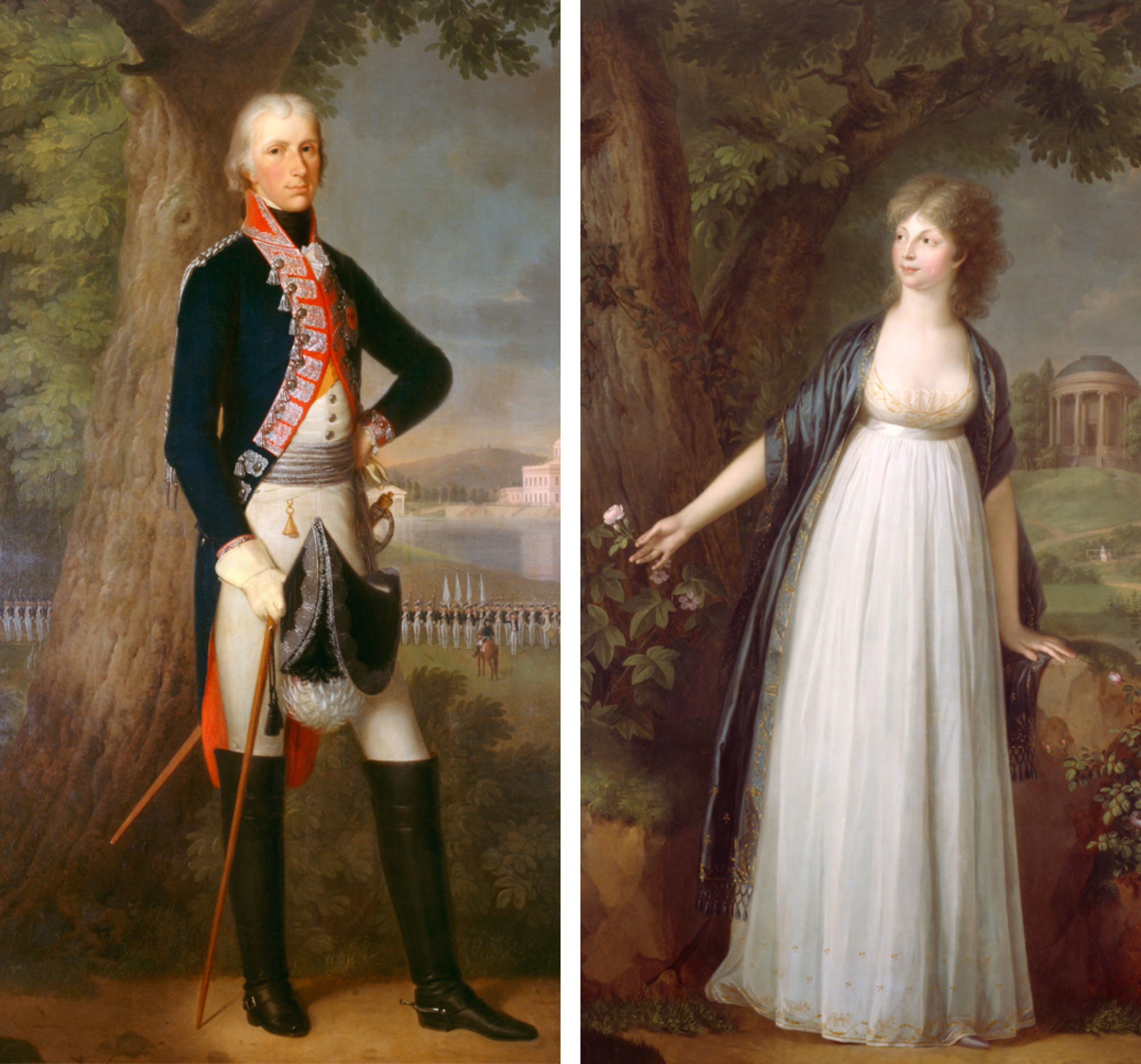
After a defensive alliance was concluded between Austria and Prussia in March 1792, Prussia declared war on revolutionary France shortly thereafter. This marked the beginning of a series of so-called Coalition Wars. Prussian troops took to the field against France under the supreme command of Field Marshal and Duke of Brunswick, Carl Wilhelm Ferdinand (1735–1806). Among them was the Gendarmes Regiment with its major, the Prussian Crown Prince.
In the summer, the coalition army crossed the Rhine and advanced into Lorraine and Champagne. The advance was however halted in September at Valmy, whereupon the troops withdrew again from France. Frederick William experienced the campaign both at headquarters and during military operations, becoming acquainted in this way with the practical fundamentals of warfare.
The theatre of war subsequently shifted primarily to the Rhine and to the Austrian Netherlands. In this context, among other events, came the siege of Mainz in 1793, in which a coalition army recaptured the city from French Revolutionary forces. During these campaigns the Crown Prince continued to serve in the field army, gaining experience in the practical conduct and organisation of military operations.
With Prussia's reorientation of foreign policy towards the east, a separate peace was concluded between France and Prussia in Basel on 5 April 1795. For Frederick William, the campaigns of 1792 to 1794 formed a formative phase of his military education. He participated in operations and gained practical insights into strategy, troop command, and the logistics of field warfare.
These early war experiences influenced his later relationship with the military and shaped his cautious and frequently reserved attitude on military-political questions during his subsequent reign as King of Prussia. In order to understand adequately the influence of his religious formation on his development, a few preliminary theological and dynastic observations are necessary. Since the sixteenth century, Protestantism had comprised two confessions — the Lutheran and the Reformed-Calvinist. From 1613, all Electors and later Prussian kings professed the Reformed faith until 1817.
The princes and princesses of the royal house were baptised, instructed in the catechism, and confirmed in this confession. The court attended exclusively the services of the Reformed Berlin Court Church. Frederick William was raised in this tradition. Bible study formed a fixed component of his religious instruction and focused in particular on the Gospels, the Psalms, and the Old Testament books of Kings. These texts he was required not merely to read but also to engage with intellectually and to comment upon. A further central focus of his religious education was the regular study of the Reformed catechism, with particular emphasis on the Ten Commandments, the Creed, the Lord's Prayer, and the Christian virtues.
The transmission of fundamental religious values was based on the one hand on the central teachings of the Reformed confession, but was on the other hand in part also influenced by the ideas of the Enlightenment — to the extent that one may speak of an enlightened Reformed Protestantism that strove to unite reason and faith.
A central element of this religious instruction was a pronounced personal sense of duty — duty towards God, towards oneself, and towards one's subjects. This principled attitude was grounded in the religious legitimation of state and monarchy, expressed in the traditional union of throne and altar. At the same time it encompassed the practical moral obligations of a Christian ruler, in particular religious self-discipline and a pronounced ethic of duty. In this understanding, sovereignty appeared as a divine right.
His education laid the essential foundations for the personality perceived by those around him in later life. This was characterised on the one hand by a sense of duty, modesty, and a pronounced religiosity, and on the other by a sobriety and rather dry manner, by reserve and reticence, at times even by a certain shyness and indecisiveness. Legendary was his characteristic manner of speaking German — a language he apparently never fully mastered throughout his life — still tinged with the now obsolete dialect of his birthplace, Potsdam. His habit of omitting personal pronouns was later regarded as a model for the terse manner of expression of the Prussian military language, the so-called "barracks tone." Against this stands the extensive surviving correspondence of the king — generally written in French — with family members and friends.
From these letters speaks an educated, broadly interested monarch who appears anything but wooden. The Francophile king, fluent in French conversation, came into his own in personal company and displayed a charm that was particularly appreciated by the participants of the Congress of Vienna.
A further marked influence on the king's development was exerted by his marriage to Duchess Louise of Mecklenburg (1776–1810). From his union with the Princess of Strelitz, ten children were born in total, of whom seven reached adulthood. These included King Frederick William IV; William I, his successor and later German Emperor; Charlotte, the future Russian Empress Alexandra Feodorovna; Prince Carl; Alexandrine, who would one day become Grand Duchess of Mecklenburg-Schwerin; Louise; and Albrecht. The marriage was characterised by unusual personal affection, openness, and mutual trust. Both led a comparatively family-oriented life and spent much time with their children, in particular with Crown Prince Frederick William and his younger brother William.
Queen Louise was of the Lutheran confession. Her personal piety was strongly emotional in character and was rooted both in the Lutheran tradition of Eucharistic devotion and in a living tradition of congregational hymnody. Her letters reveal a pronounced turning towards Christ as a figure of redemption — a classical motif of Lutheran theology. Nevertheless, she adapted to the predominantly Reformed circumstances prevailing at the Prussian court. Evidence of confessional tensions or demonstrative demarcation is not found; however, this was for the king a significant reason for his later church reform, since during his wife's lifetime he had never been able to receive communion together with her.
Through Louise, Frederick William came into direct contact with Lutheran articles of faith that stood in partial and marked contrast to his own Reformed upbringing. Yet it is precisely in this encounter that his religious development can also be discerned. While he essentially maintained his Reformed formation in his personal faith, he increasingly incorporated Lutheran ideas into his religious thinking. This development formed an important precondition for the later union of the Lutheran and Reformed confessions into the Evangelical Church in Prussia, initiated by King Frederick William III's call to union on 27 September 1817, seven years after the death of the queen. In the years that followed, from 1821 the general church order was amended in accordance with the king's personal wishes, encompassing the court church order, the liturgy, and the order of communion.
In this respect, it can indeed be established that an essential key to understanding and interpreting his actions as king is to be sought in the formative experiences and influences of his childhood and youth.
Bibliography
- Bauer, Frank: König Friedrich Wilhelm III. von Preußen. Ein Monarch zwischen Beharren und Verändern. Kleine Reihe Geschichte der Befreiungskriege 1813–1815. Potsdam 2020.
- Gersdorff, Dagmar von: Königin Luise und Friedrich Wilhelm III. Eine Liebe in Preußen. Reinbek 2001.
- Gotthard, Axel: Friedrich Wilhelm III. In: Biographisch-Bibliographisches Kirchenlexikon (BBKL). Vol. 42. Nordhausen 2021. Ohff, Heinz: Preußens Könige. Munich 1999.
- Stamm-Kuhlmann, Thomas: König in Preußens großer Zeit. Friedrich Wilhelm III., der Melancholiker auf dem Thron. Berlin 1992.
- Various pages from de.wikipedia, en.wikipedia, and fr.wikipedia.