

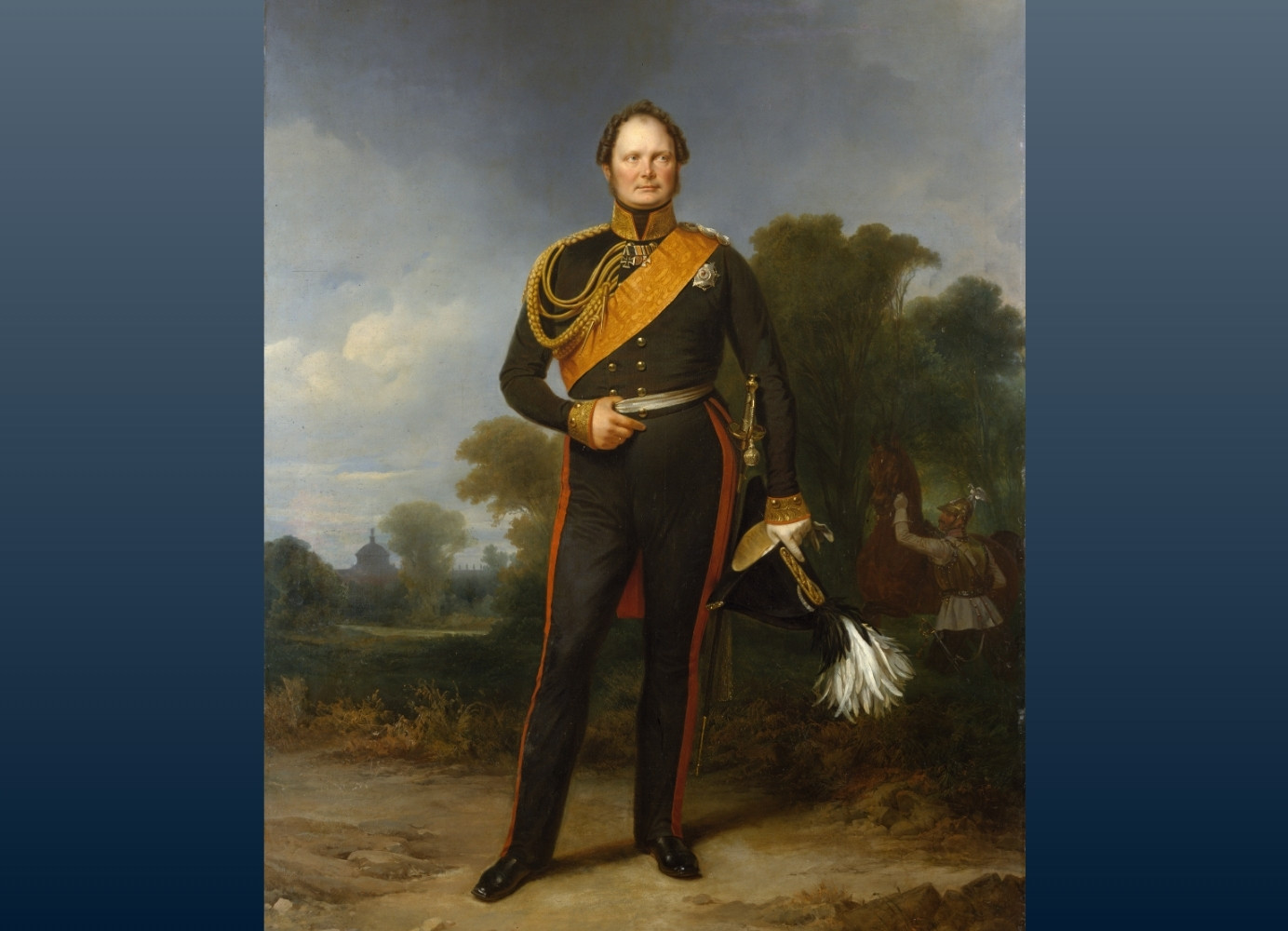
Unlike in the case of his father, a characterisation of the personality of King Frederick William IV from psychological and sociological perspectives appears more straightforward, since the source material — through memoir literature, surviving correspondence, and personal testimony — has been preserved in considerably greater abundance. The dense archival record makes it possible to trace the development of his individual dispositions and patterns of behaviour with greater precision and to place them in their historical context.
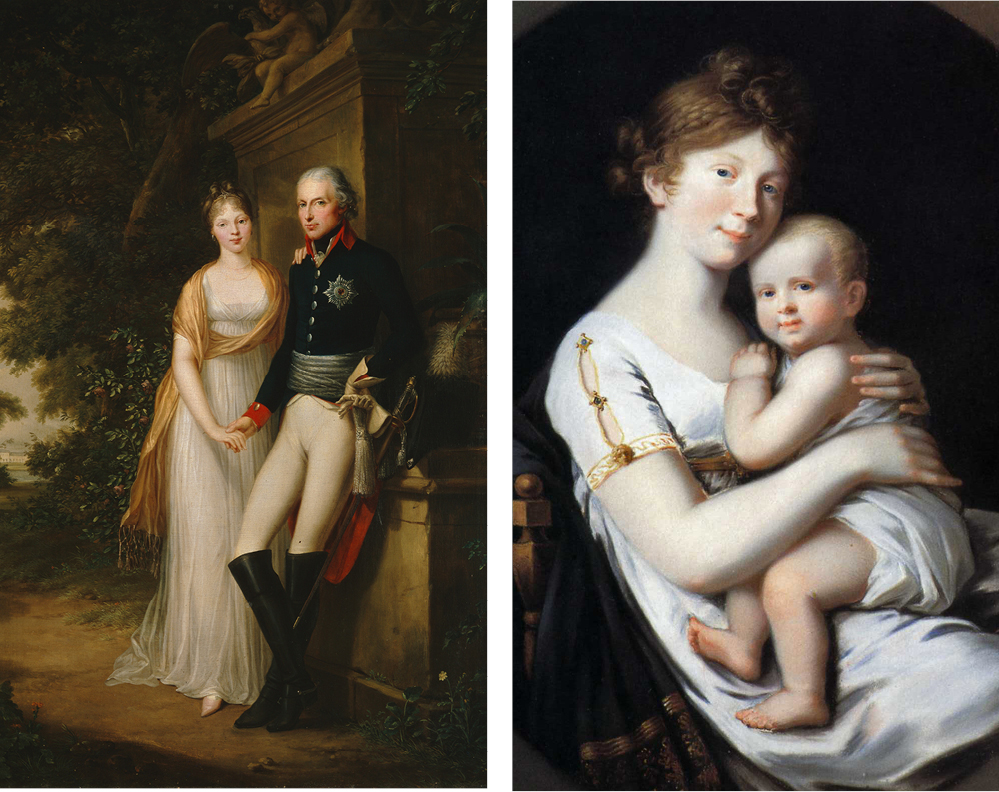
Frederick William was born on 15 October 1795 at the Crown Prince's Palace in Berlin as the eldest son of the future King Frederick William III and his wife Louise. In his early years until 1799, he lived alternately between his parents' palace on Unter den Linden — particularly during the carnival season — Charlottenburg Palace in late summer, and the Potsdam residences and the nearby palace in the city over Easter, and Sanssouci in early summer. The young family cultivated a lifestyle that was unusually informal for the Prussian court — highly privileged, but comparatively little governed by courtly convention. In late summer especially, the family was able to indulge its preferences at rural Paretz, situated in the Havelland outside the gates of Potsdam. Here the royal couple played the role of country squire and lady, while the children were free to romp about in nature, fishing and hunting. Here too were the kitchen gardens that Frederick William and his siblings were required to tend, selling the harvest to the local population.
Early education took place in the immediate environment of the parents, under the care of nursemaids and governesses. During this phase an unusually close bond with his mother also developed — atypical for these circles.
Around 1799, separate court households were established for the Crown Prince and his brother William, two years his junior, though at the queen's express wish they were in practice run as a single household. A distinction must therefore be drawn between the institutional separation of the two households and the practical unity of the educational arrangements. Their direction lay with the theologian and educationalist Friedrich Delbrück, who served as governor and chief court marshal until 1809 and had previously held a comparable role as educator to Frederick William III. Delbrück was a committed representative of the philanthropic educational ideal of the Enlightenment and shaped the further education of the princes decisively in this spirit.
Image caption f.l.t.r.
Friedrich Georg Weitsch: King Frederick William III and Queen Louise of Prussia in the park at Charlottenburg, painting 1799.
Johann Heinrich Schröder: Crown Princess Louise with her eldest son Prince Frederick William, pastel 1796.
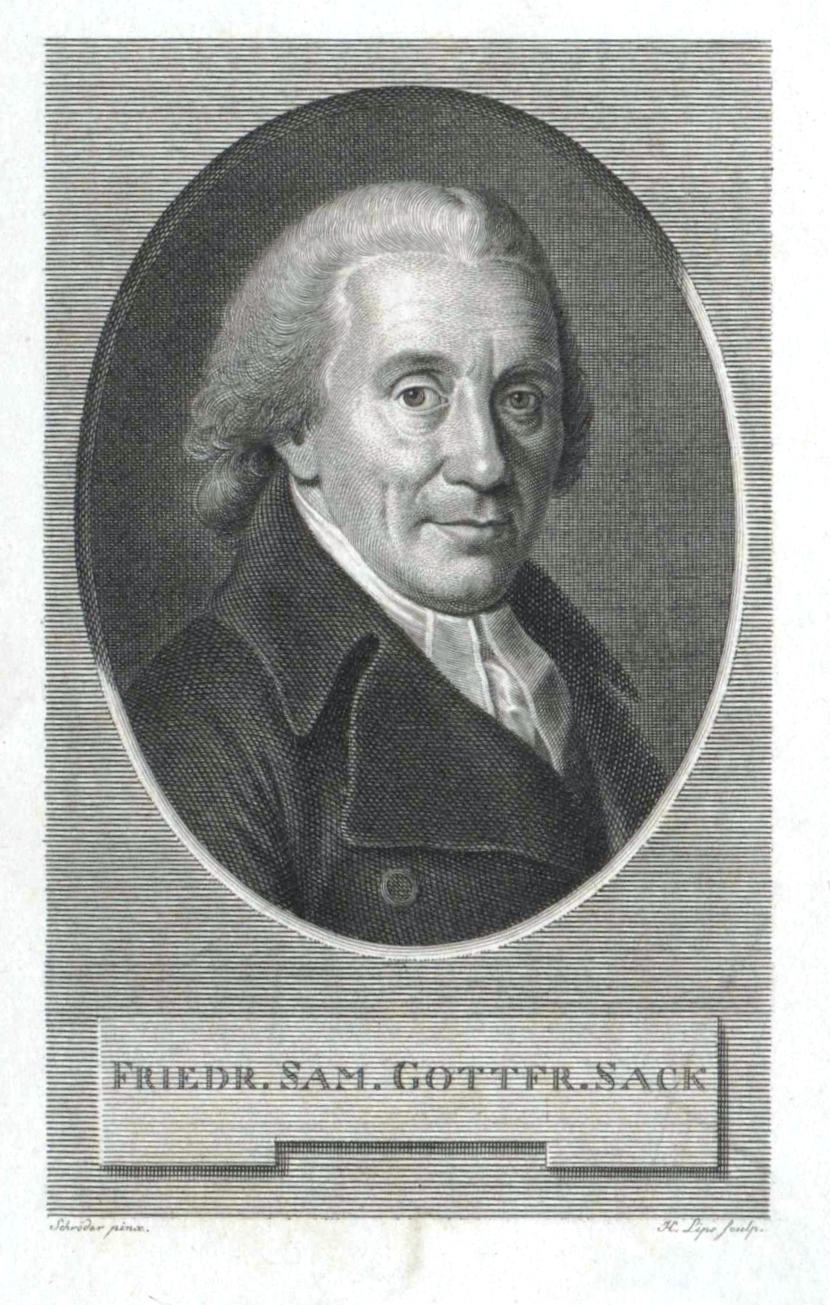
Among the most important teachers was Johann Jakob Engel (1741–1802), who taught philosophy, moral theory, literature, and political science, thereby making a substantial contribution to their intellectual formation. Military education was the responsibility of Major General Karl August von Backhoff (1720–1807), who — like Delbrück — had already been involved in the education of Frederick William's father. The princes received instruction in French, German, rhetoric, and Latin. The curriculum also encompassed history and political science, with a focus on Prussian and European dynastic history, as well as the fundamentals of state administration and political geography. Religious and ethical-civic education was decisively shaped by the Reformed court chaplain Friedrich Samuel Gottfried Sack (1738–1817), who advocated in numerous writings — particularly in an influential publication of 1812 — for a union of the Lutheran and Reformed churches, which was realised shortly after his death through the call to union. Shortly before his death he was appointed bishop by Frederick William III.
Image caption:
Johann Heinrich Lips after Johann Heinrich Schröder: Friedrich Samuel Gottfried Sack, engraving c. 1795.
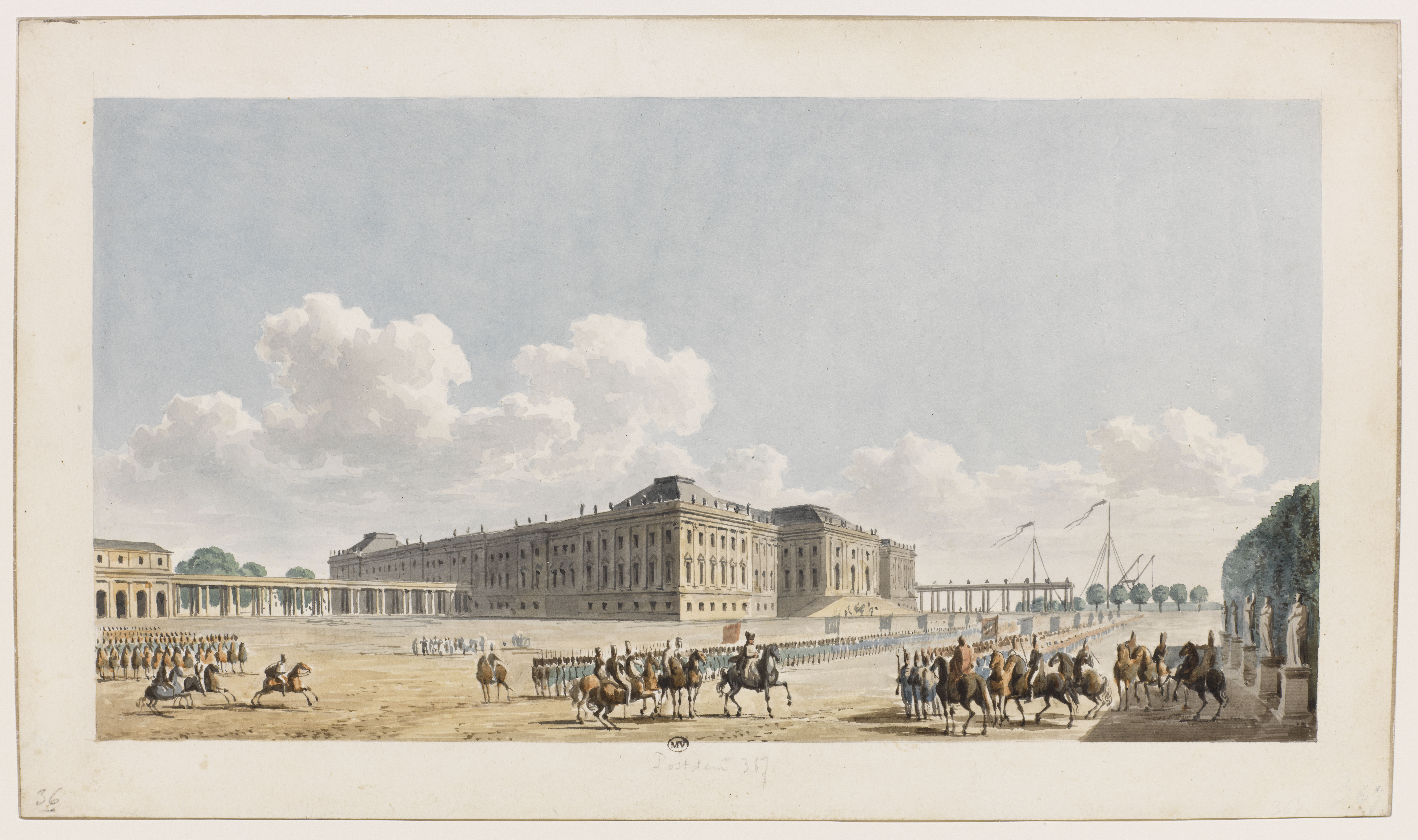
Following Prussia's devastating defeat in the twin battles of Jena and Auerstedt on 14 October 1806, French troops occupied Berlin: on 27 October, Emperor Napoleon entered the city as conqueror. As early as 17 October, Delbrück had fled with the princes to Königsberg, joining the queen in Stettin, while King Frederick William III did not arrive in the Prussian capital until 9 December, continuing their flight together as far as Memel, which was reached on 7 January 1807. These events caused an abrupt interruption of regular court life. Between 1807 and 1808 a provisional court was maintained in Memel. After the court's relocation to Königsberg — where it remained for security reasons until the end of 1809 — the royal couple resided in the Royal Palace during the winter months and occupied the "Haus auf den Huben," the modest summer residence of a Königsberg citizen, during the summer months. Not that the Prussian nobility had offered its country houses as suitable residences for the royal couple; but the king insisted on this demonstrative frugality, wishing to lead by example in meeting the enormous indemnity payments imposed on Prussia by France, and refusing to make an exception for himself.
Image caption:
Unknown artist: The arrival of Napoleon in Potsdam on 24 October 1806, watercolour 1806.
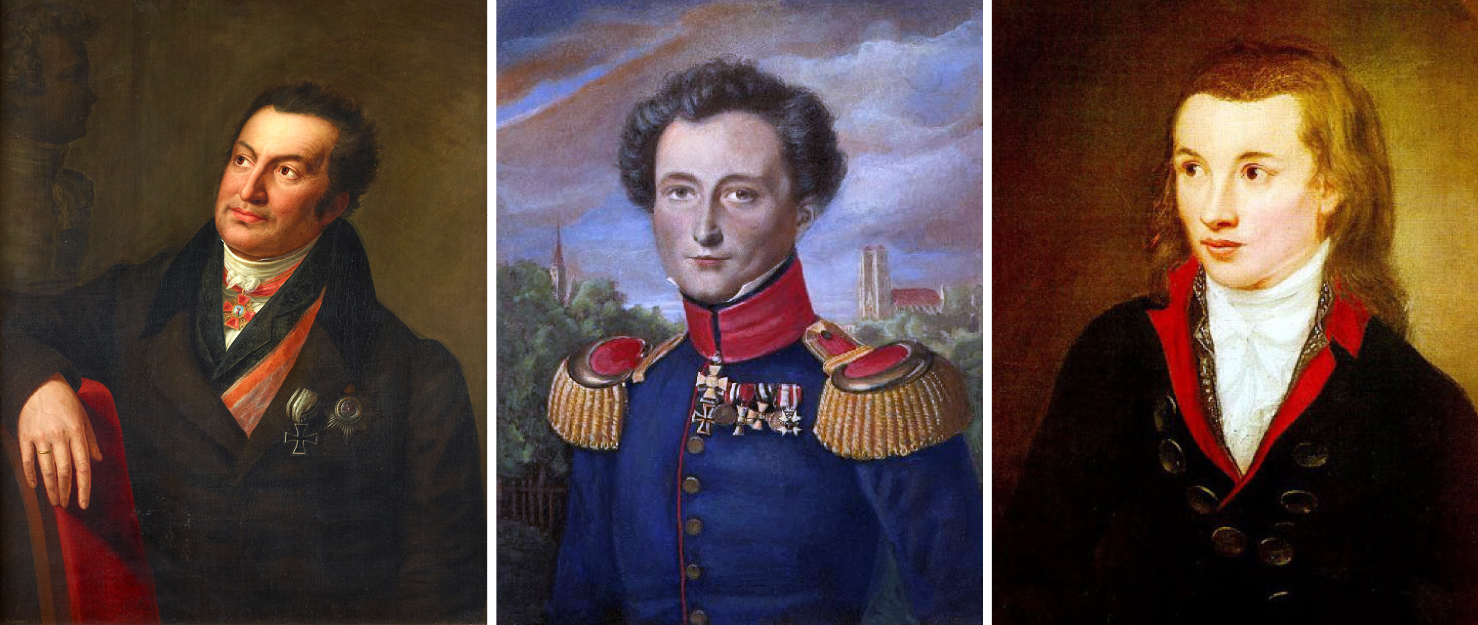
The education of the princes was initially disrupted by these events and could only be continued in irregular form. It was not until the end of 1807 that a more continuous programme of instruction resumed. Following Prussia's collapse, Frederick William's education was increasingly directed towards the requirements of a future assumption of government. In 1809, at the wish of Queen Louise, the Reformed theologian and philosopher Jean Pierre Frédéric Ancillon (1767–1837) — State Councillor, Professor of History at the General War School, court historiographer, and member of the Berlin Academy of Sciences — was appointed governor and chief court marshal of the princes.
This personnel decision was to prove, however, a poor choice. Ancillon stands for an anti-liberal, pietistic education of the adolescent that also explains the king's later conduct towards the Revolution of 1848.
In 1810, Major Carl von Clausewitz was appointed as military instructor. For the Crown Prince he composed in 1812 the instructional text "Principles of War," which served as the basis of instruction. In the same year Clausewitz concluded his teaching duties in order to re-enter Prussian-Russian service and participate in the Wars of Liberation against Napoleon. From approximately 1816 to 1823, Lieutenant General Georg Dubislav Ludwig von Pirch (1763–1838) served as military governor of the Crown Prince.
The death of his mother, Queen Louise, on 19 July 1810 at Hohenzieritz Palace in Mecklenburg at the age of only 34 was a profound personal turning point for the fourteen-year-old Frederick William. He interpreted this event as an act of divine providence.
Those in his close court circle described the prince as artistically talented and bright, yet also disobedient and wilful, qualities that repeatedly caused difficulties for his educators. In later years, Frederick William possessed — in contrast to his taciturn father — pronounced rhetorical abilities. His humour, coloured by the wit typical of Berlin, could make him very engaging in personal conversation. He was one of the most cultivated rulers of his time — imaginative, yet at the same time inconstant, inconsistent, and little inclined towards practical matters. His interest in classical antiquity was awakened through Latin instruction. His artistic talent was recognised, and Johann Heusinger was engaged as his drawing teacher. His thinking was shaped in a particular degree by his reading of the author Novalis (Friedrich von Hardenberg, 1772–1801) and the latter's collection of fragments published in 1798, "Faith and Love, or The King and Queen." Although Delbrück's educational concept was committed to philanthropism and thus to an Enlightenment approach, it gave rise to an intellectual orientation increasingly influenced by post-Enlightenment currents and in particular by emotionally charged Romanticism.
Image caption
Ernst Gebauer: Jean Pierre Frédéric Ancillon, painting 1816.
Wilhelm Wach: General Carl von Clausewitz, painting c. 1818.
Franz Gareis: Friedrich von Hardenberg, known as "Novalis," painting 1799.
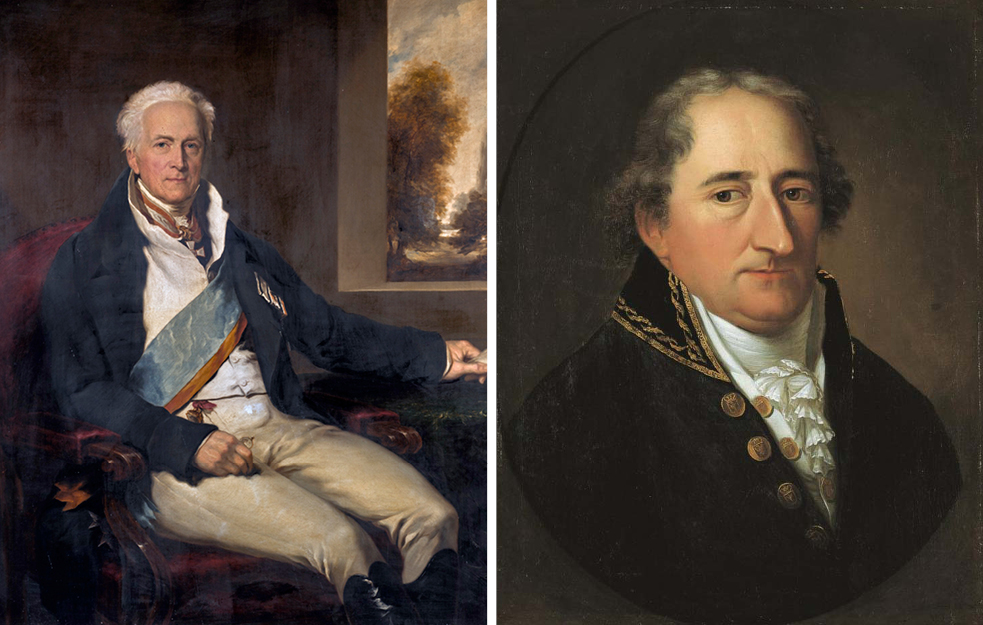
The Crown Prince was on the whole rather opposed to the Prussian reforms aimed at the internal modernisation of the state. Under the influence of Delbrück and above all of Ancillon, he developed a pronounced distance towards revolutionary developments, so that he had no sympathy for the idea of revolution from above as represented by State Chancellor Karl August von Hardenberg (1750–1822). For Frederick William, the bureaucratic absolutism embodied by the State Chancellor represented a departure from the estate-based order he preferred. The reforms appeared to him as an approximation to the social conditions of the French Revolution. By contrast, Hardenberg's predecessor, Baron vom und zum Stein, described the future king's upbringing as having made him soft.
On 18 October 1805, shortly after his tenth birthday, the Crown Prince was appointed ensign in accordance with Prussian tradition and assigned to the 1st Life Guard Battalion (IR 15, I). On 10 August 1807, at the age of twelve, he was promoted to second lieutenant.
As with his father, Frederick William's military education was both theoretical and practical in character and was in the hands of various instructors. The theoretical instruction encompassed a basic general education as well as introductions to military strategy, tactics, and military history. Practical training consisted of military exercises, partly conducted by non-commissioned officers of the Guard regiment, and included in particular drilling, riding and horsemanship, fencing, and the handling of various weapons.
Unlike his younger brother William, and to his father's consternation, the Crown Prince did not develop a marked interest in military matters and showed no sustained inclination for either the theoretical or the practical aspects of the art of war. Accordingly, his standing within the officer corps fell far short of that of his brother, and he was never fully perceived as a committed soldier. Nevertheless, as Prussian Crown Prince — following his promotion to staff captain in the 1st Foot Guard Regiment on 21 March 1813 — he was required to participate in the campaigns of the Wars of Liberation.
Image caption
f.l.t.r.
Thomas Lawrence: State Chancellor Karl August von Hardenberg, painting 1817.
Johann Christoph Rincklake: Baron Karl vom und zum Stein, painting 1804.
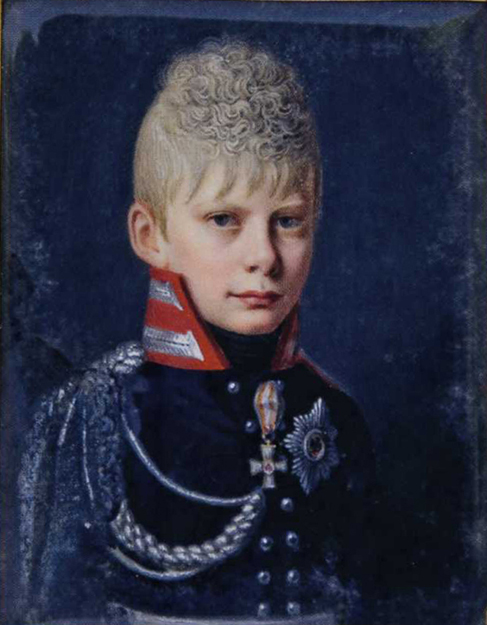
His understanding of war was characterised by a close intertwining of patriotic and religious interpretive frameworks. He interpreted the struggle against Napoleon as a kind of crusade against the Enlightenment ideas and the French Revolution emanating from France. Napoleon and the French appeared to him as an expression of divine punishment that had to be resisted. Numerous contemporary letters contain references to religious experiences and interpretations that connect with the motifs of the Pietist awakening movement — in particular subjective experience of God, the significance of personal prayer, and individual notions of salvation and redemption. A pronounced Francophobia accompanied Frederick William throughout his life. He repeatedly expressed the conviction that the revolutionary spirit was, in a sense, intrinsic to the French national character. The events of the revolutions of 1789, 1830, and 1848 appeared to him in retrospect as confirmation of this view. The rule of Napoleon, with its combination of absolutist, revolutionary, and plebiscitary elements, he likewise interpreted as a characteristic expression of the French national character.
Image caption
Heinrich Anton Dähling: Crown Prince Frederick William (IV) of Prussia, gouache 1810.
His ideological and aesthetic ideas gained increasing significance and became more clearly apparent during his journey in July 1815 into the Rhine Province, which had fallen to Prussia as a result of the Congress of Vienna. The historically layered landscape of castles along the Upper Middle Rhine Valley awakened his pronounced enthusiasm for the Middle Ages. He had already encountered the unfinished Cologne Cathedral in 1814 and now returned to it once more.
From the beginning of the nineteenth century, Frederick William had been preoccupied with the interpretation of Gothic architecture — which actually originated in France — as a German national style. In Prussia, the "native antiquity" had made its breakthrough through the "rediscovery" of the Marienburg by the architect Friedrich Gilly, who had published his measured drawings and romantically evocative interior views in an elaborate publication in 1799. Both the Crown Prince and his father were enthusiastic about the architecture of the Teutonic Order.
Into the Cologne Cathedral Frederick William projected the idealised vision of an imperial concept that, in his view, was sustained by shared Christian and monarchical principles. Against this background he developed the vision of a restoration of the Empire, which had ceased to exist in 1806 — ideally under his own leadership as Holy Roman Emperor. Already as Crown Prince, therefore, he advocated for the completion of the Cologne Cathedral, a project that could only be realised after his accession to the throne.
The divine right of kingship was not merely a central element of Frederick William IV's thinking. He increasingly distanced himself from the Reformed sobriety of his upbringing and later also from the Lutheran religious views exemplified by his mother, turning more and more towards old-church traditions. This spiritual outlook corresponded with the king's professional interest in artistic and architectural questions. The church-building programme he initiated was intended to serve the spiritual renewal of Prussia.
The transformation of his personal faith also influenced his lifestyle, particularly his dietary habits. In childhood, his manner of life and diet had been kept deliberately simple: plain, functional food at regular times and physical exercise were components of this approach. From the age of fifteen, Frederick William participated increasingly in court life and social events, gaining access to an opulent cuisine. A taste for fine food and wine made itself felt for the first time. In adulthood this developed into a pronounced culture of enjoyment as part of his aesthetically shaped lifestyle — a preference for refined cooking and cultivated table culture, with influences of the Italian way of life he encountered on his travels also making themselves felt. Regular wine consumption was part of this, as was a pronounced fondness for French champagne. As king he preferred a rich cuisine. In combination with the increasing burden of official duties, stress, and little physical exercise, this led to a marked increase in weight, so that Frederick William developed a pronounced corpulence already as a young man. With advancing age his state of health deteriorated noticeably. His excess weight and severe short-sightedness repeatedly caused him considerable physical difficulties during military inspections. In the last decade of his life a progressive deterioration in his health set in, manifesting itself in exhaustion, nervous weakness, difficulties with concentration, and cerebral circulatory disturbances. In 1857 he suffered several strokes, which led to speech impairment, symptoms of paralysis, and increasing mental deterioration. In view of the advancing illness, he transferred the conduct of government to his younger brother William in October 1858.
Until his death on 2 January 1861, the physical signs of decline continued to worsen. While his speech centre was impaired, he was initially still able to undertake extended walks. The ailing monarch was even able to make a final journey to Italy, but his strength declined markedly. At the end of 1860 and in the early weeks of 1861, further strokes brought his life to an end.
The foregoing account has made clear the degree to which the religious and military formation of Frederick William's childhood and youth — combined with Enlightenment, post-Enlightenment, and early Romantic elements — shaped his later personality as king.
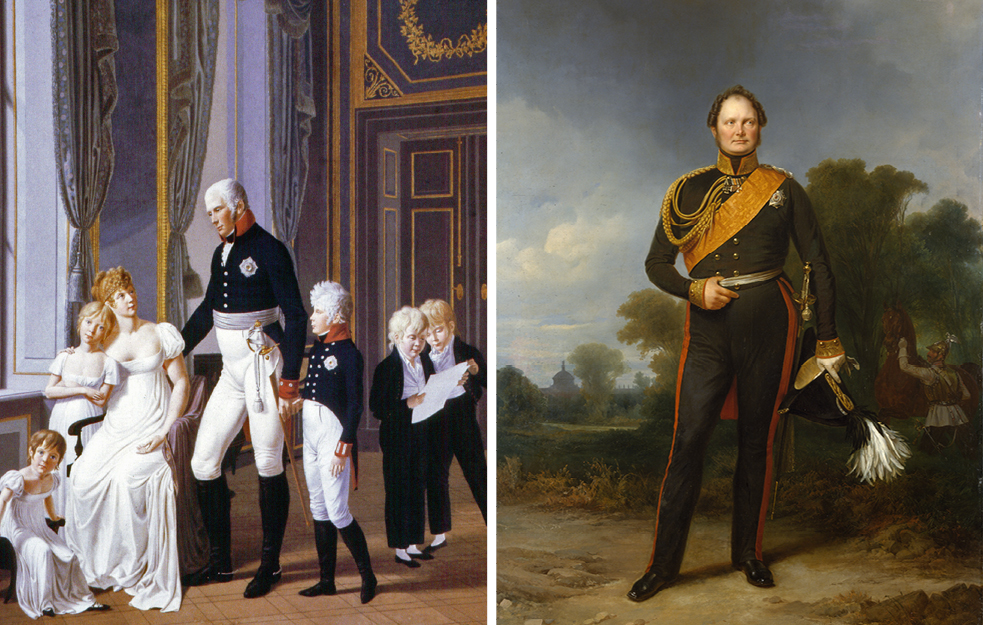
Image caption
Heinrich
Anton Dähling: Frederick William III and his family, gouache 1807.
Franz Krüger: King Frederick William IV in general's uniform, before the New
Palace in Potsdam, painting 1844.
Bibliography
- Barclay, David E.: Anarchie und guter Wille. Friedrich Wilhelm IV. und die deutsche Monarchie. Berlin 1995.
- Blasius, Dirk: Friedrich Wilhelm IV. 1795–1861. Psychopathologie und Geschichte. Göttingen 1992.
- Bußmann, Walter: Zwischen Preußen und Deutschland. Friedrich Wilhelm IV. Berlin 1990.
- Dehio, Ludwig: Friedrich Wilhelm IV. Ein Baukünstler der Romantik. Berlin/Munich 1961.
- Gotthard, Axel: Friedrich Wilhelm IV. In: Biographisch-Bibliographisches Kirchenlexikon (BBKL). Vol. 42. Nordhausen 2021, cols. 439–469.
- Kraus, Hans-Christoph, and Baumgart, Winfried (eds.): Der König und sein Beichtvater. Friedrich Wilhelm IV. und Carl Wilhelm Saegert. Briefwechsel 1848 bis 1856. (Deutsche Geschichtsquellen des 19. und 20. Jahrhunderts, Vol. 72). Berlin 2016.
- Kroll, Frank-Lothar: Friedrich Wilhelm IV. und das Staatsdenken der deutschen Romantik. Berlin 1990.
- Krüger, Peter, and Schoeps, Julius H. (eds.): Der verkannte Monarch. Friedrich Wilhelm IV. in seiner Zeit. Potsdam 1997.
- Minkels, Dorothea: Briefwechsel des Königspaares Friedrich Wilhelm IV. & Elisabeth von Preußen (Baiern). Norderstedt 2020. Vol. 1: (1841–1842). Vol. 2: (1840–1843): Preußens erster moderner König. Vol. 3: (1844–1845): Der Industrie- und Kunstförderer & die Protektorin sozialer Einrichtungen.
- Ohff, Heinz: Preußens Könige. Munich 1999, pp. 225–258. Rothkirch, Malve, Countess: Der "Romantiker" auf dem Preußenthron. Porträt König Friedrich Wilhelms IV. Düsseldorf 1990.
- Senn, Rolf Thomas: In Arkadien. Friedrich Wilhelm IV. von Preußen. Eine biographische Landvermessung. Berlin 2013.
- Werquet, Jan: Historismus und Repräsentation. Die Baupolitik Friedrich Wilhelms IV. in der preußischen Rheinprovinz. (Kunstwissenschaftliche Studien, Vol. 160). Berlin 2010.
- Various pages from de.wikipedia, en.wikipedia, and fr.wikipedia.