


Roman Provincial Coinage: A Topic for Specialists
Do you enjoy imagining what day-to-day life was like for people in the Roman Empire? Is it more fun for you to learn about everyday history than to acquire items in perfect condition? Do you enjoy making discoveries? If so, Roman provincial coinage is the perfect topic for your collection.


The impressive remains of ruins in Turkey attract tens of thousands of tourists today. They stroll through Ephesus, Troy and Aphrodisias without noticing that most of these remains are not of Greek origin. The image conveyed by the ruins of the Mediterranean world is dominated by buildings constructed under Roman rule. This is because it was only after Augustus finally seized power that the provinces experienced a long and stable period of prosperity.
Trade and production brought record revenues to resourceful entrepreneurs. Many of them used their new-found wealth to purchase citizenship for themselves and provide their sons with the best education. They then sent them to Rome, hoping that this would elevate their family to the ranks of the Roman elite. The Roman army in particular enabled many of them to lay the foundations for an impressive career: Trajan’s family was originally from Spain, and the roots of Septimius Severus lay in North Africa.
But despite their rise within the Roman aristocracy, none of them ever forgot their home. Those from Ephesus, to mention just one example, wanted to demonstrate their success not only in Rome, but also in Ephesus. The result of this are countless small and large, elaborate and less elaborate buildings that were financed by an urban elite. The coins of the Roman provincial towns of the Eastern Empire belong in this context. They depict what the local elite were proud of. Hardly any other coinage offers a clearer picture of how the local elite of the Roman Empire saw themselves and what they considered to be the source of their pride and self-confidence.
But there is one problem. While Greek coins appeal to even those who have never heard of ancient Greece due to their beauty, and Roman portraits seem offer direct insight into the character of the depicted individuals, a great deal of knowledge is required to delve into the world of Roman provincial coinage. Those who decide to collect Roman provincial coins should be prepared to do a lot of reading and learning, and to examine the pieces very closely. They should not expect stylistic sophistication or perfect condition. However, this willingness is rewarded by the fact that even inexpensive coins can enable collectors to make historical discoveries in this field. Those who have the time and inclination to engage in this area of interest will be rewarded with a direct insight into the past that few other areas can offer.
When it comes to the administration of the Roman Empire, several levels must be distinguished. Firstly, there was the emperor, around whom the entire empire revolved. Ultimately, the emperor was responsible for everything; in theory, every Roman citizen could appeal to him. One can well imagine the trivial matters with which citizens from the remotest corners of the Empire approached the emperor.
In practice, however, the governor of a province was responsible for its administration. Whether the emperor or the Senate was in charge of appointing someone to fill this position depended on the number of legions stationed in the very province. For instance, the Senate appointed the proconsul to the province of Asia because peace had prevailed in the region for a long time. The provinces of Thrace and Syria, on the other hand, were under the emperor’s control, and he appointed a “legatus Augusti pro praetore”, i.e. an imperial envoy with the rank of praetor, to the post. This ensured that, in the event of conflict, the troops stationed in that province would be led by someone loyal to the emperor.
And how many administrative staff did a proconsul, such as the one in Asia, have at their disposal? We know that he was accompanied by twelve lictors. In addition, there were messengers and secretaries, public and private slaves. Briefly said, scholars today estimate that there were around 100 to 200 officials. 100 to 200 people? In 2024, the Munich authorities had 44,868 civil servants and municipal employees working for them. Although our expectations of a city administration are very different today, this example demonstrates that the governor would not have been able to manage his province in any way unless he could count on the support of local elites.
And they were happy to help. After all, they were very proud of their complete independence within Rome’s local administration framework. At least, that was the case as long as everything worked. However, when armed uprising broke out, Rome intervened immediately. And the ruling elites wanted to prevent this if possible. This is why they made sure that peace was maintained. The result was a kind of social equilibrium that made urban life acceptable for everyone, even for the lower classes.
.jpg)
A few coins provide us with clues about how the provinces were administered. For instance, coins from the Bithynian town of Juliopolis bear the name of the province’s proconsul, Marcus Plancius Varus. We do not know where this man came from, and this is not unusual. Epigraphic evidence exists for only very few of the officials mentioned on coins. And there is even less evidence when we only consider the writings of contemporary authors. The life of this proconsul, however, is relatively well known.
Marcus Plancius Varus’s family is said to have owned extensive estates in the province of Galatia. They used these resources to come up with the money to send the promising Marcus to Rome and have him rise in the emperor’s service. Marcus Plancius Varus became a praetor under Nero. Vespasian then appointed him governor of the province of Bithynia and Pontus. He must have been an important associate of the Flavians, as Tigranes VI allowed him to marry one of his daughters. Marcus Plancius Varus was wealthy enough to act as a benefactor to the provincials. We know that he donated an entire city gate in Nicaea. And we know that coins from several towns in Asia Minor bear his name in a wreath. We will never know whether he commissioned these coins himself or whether they were commissioned by the citizens of these towns to celebrate him for his good deeds.
.jpg)
Local politicians are mentioned on coins much more frequently than Roman officials, as is the case with this coin minted in Maeonia in Lydia. The archon, Flavius Licinnianus, was the town’s highest representative and appears relatively frequently on coins. In this role, Flavius Licinnianus presided over meetings of the city council and the popular assembly. He played a central role in cult ceremonies and spent much of his own money to fulfil municipal duties. Therefore, Flavius Licinnianus must have been very important to Maeonia – however, only to Maeonia and not beyond the town’s borders. Otherwise, we know nothing about him. This is another reason why the coins of the Roman provinces are so important. They show how many local figures must have existed that were actively involved in the politics of their home towns.
.jpg)
It is truly spectacular to see politicians themselves on coins from a Roman province. This is the case on a coin from Alexandria Troas. This Alexandria had originally been a Greek settlement where Augustus settled Roman soldiers. At the same time, Alexandria was granted the status of a Roman colony, which gave its citizens a number of special rights.
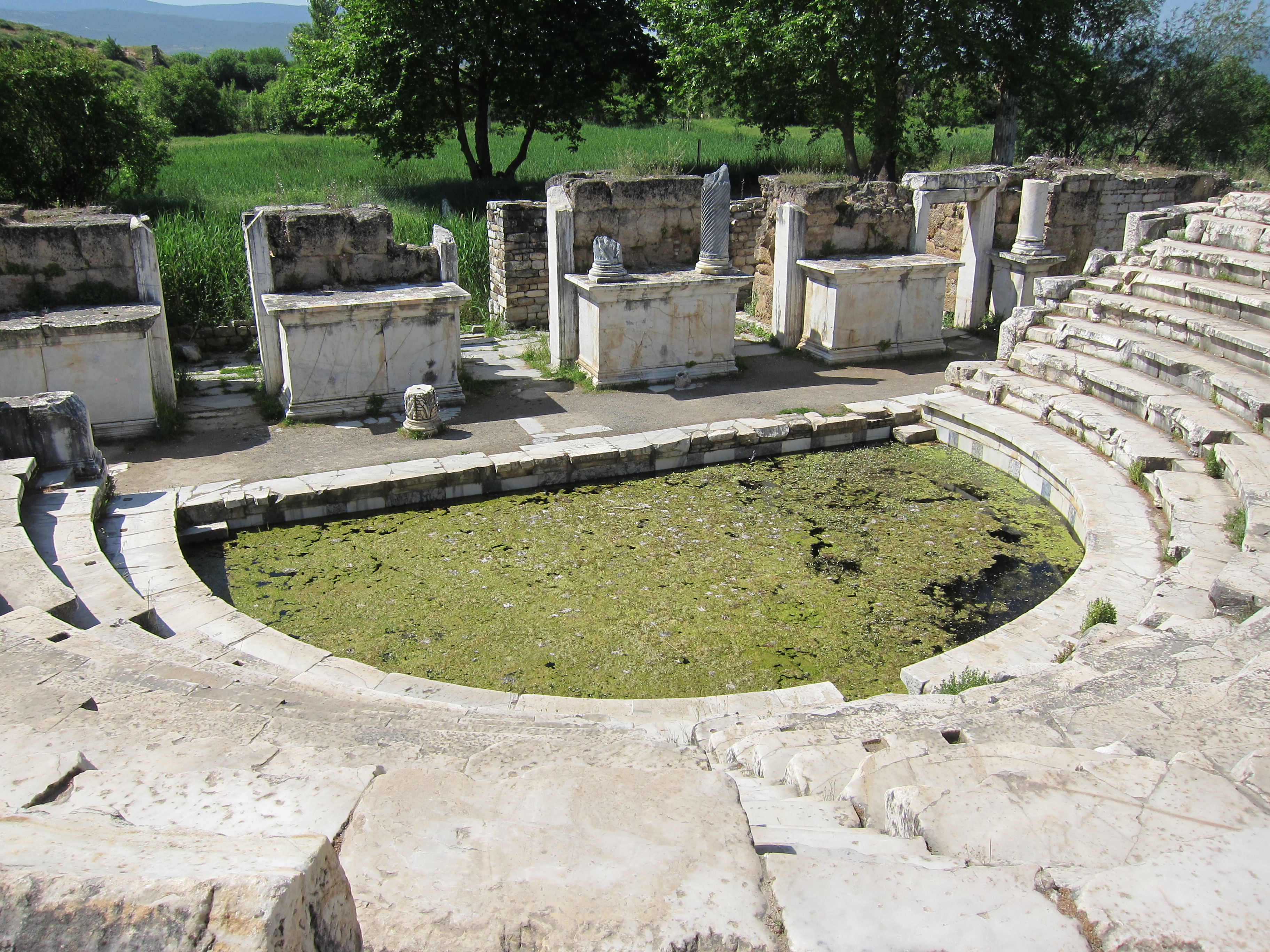
The titles of the city council members also reflect the city’s close connection to Rome. “Decurion” was originally a military title used for civil matters during the imperial period. The council of decurions administered local finances, decided on municipal expenditure and appointed officials. The council is depicted on a coin minted between 251 and 253 AD. The fact that the politicians sit in a semicircle is not only an artistic choice, but reminiscent of the decurions’ meeting place. City councilors normally gathered in small odeia, which are frequently found in archaeological sites. Whenever necessary, not only did the city council sit here, but so did part of the population when a traveling rhetor showed off his eloquence or an artist performed. Theatres also had this dual function: this is where great plays were staged, but also where the popular assembly was convened.
That brings us nicely to the next topic, because there was nothing that made a town’s citizens prouder than the magnificent public buildings that their hometown could boast. Temples, city walls and bridges were the landmarks that also appeared on coins.
.jpg)
However, to appreciate these depictions, it is necessary to detach oneself from Western visual habits. So forget the central perspective we have been accustomed to since the Renaissance! In the case of Roman provincial coinage, engravers were not concerned with producing a photorealistic representation of what they saw. For them, a building’s significance played the central role. They depicted important buildings that were crucial to the city’s identity in a large format, omitting anything insignificant. After all, the coins’ users knew exactly what their town looked like and which buildings were meant.
We lack this knowledge today. We only know the ruins, and many researchers become frustrated when the number of columns they count at an archaeological site does not match the number of columns depicted on the coins. However, no engraver was concerned with accurately conveying the number of columns in a coin design!
Try looking at this coin image through the eyes of a child. You will see a mountain surrounded by a city wall with thick fortress towers. Buildings are scattered within the walled enclosure, some lower down and some higher up. This depiction is actually reminiscent of the impressive Amasea fortress ruins, although the coin is more of an “emotional” than a realistic representation.
.jpg)
This coin also features a city wall. A lion is lying in front of it, large and prominent. And this is where the research begins that makes collecting Roman provincial coinage so exciting. Why is a lion depicted on this coin from Sardis?
We know that Sardis received an additional neokoria under the reign of Emperor Elagabalus. This was a highly coveted honor that the towns of Asia Minor were eager to obtain. This was because the neokoros was permitted to organize a major festival in honor of the imperial cult at regular intervals. This gave local dignitaries the opportunity to present themselves and their importance to the governor and the elite of the entire province. Could the lion refer to this event? After all, the title “neokoros” can clearly be read in the exergue of the coin.
This is supported by the fact that Elagabalus had himself worshipped in connection with the sun god, and the Greek god Apollo was associated with the lion. However, this is not proof of the hypothesis, at least not until more sources on the subject are found. But it is precisely this uncertainty that makes Roman provincial coinage so appealing – there are always questions waiting to be answered.
.jpg)
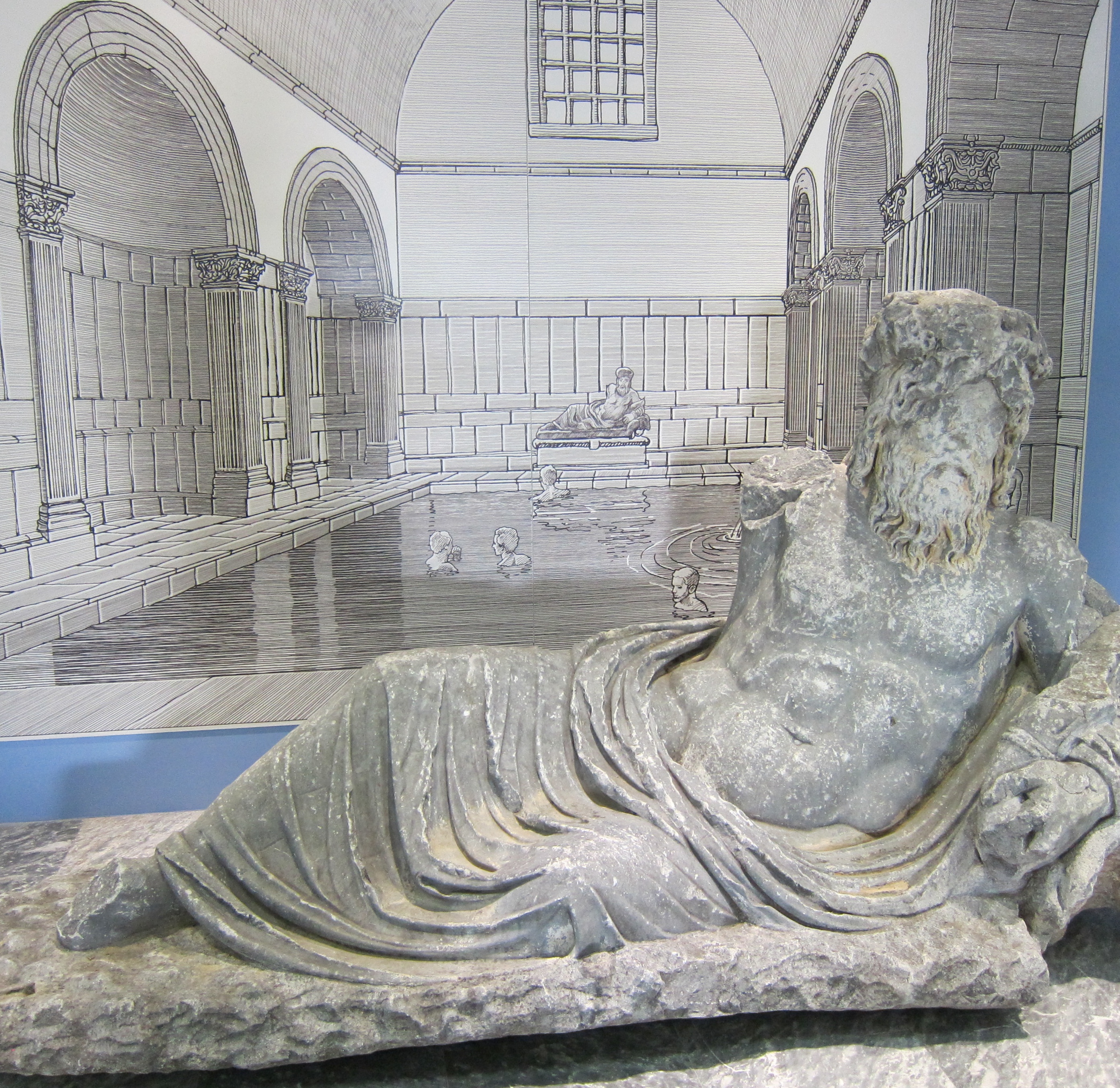
Comparatively many articles were published about the bridge that crossed the Meander near Antioch. Yes, that is right – the river Meander that gave its name to the art pattern. This coin, minted under Emperor Gallienus between 253 and 268, depicts a bridge with a kind of gatehouse on the left of it. On the bridge itself, there is a reclining river god depicted in the typical posture of river gods: he leans on a spring vessel and holds a bundle of reeds and a cornucopia. Was there actually such a statue on the bridge? It is possible. But it does not have to be, because the engraver could also have used this motif to depict the god of the Meander river himself. However, why would the citizens of Antioch depict a bridge that had already existed since early imperial times? Johannes Nollé** suggests that the reason for this was that the bridge gained strategic importance during the Persian Wars, which Emperor Gallienus was forced to wage. This would also explain why the emperor is depicted on the obverse in full armor with helmet, shield and spear.
.jpg)
Let us stay with the topic of imperial politics for a moment, as this subject is occasionally reflected in the coin designs of municipal issues. Johannes Nollé observed that a particularly large number of coins from the second half of the 2nd and 3rd centuries AD feature Hephaestus.
He links this to an increased demand for weapons from the Roman central government. After all, the era of peace had ended by the time of Marcus Aurelius at the latest, and the Romans were fighting on many fronts. So the Romans needed weapons, and Asia Minor was an industrial center with many skilled workers who could easily adapt to the new requirements.
Most Roman coins – both from the provinces and imperial Rome – do not depict imperial propaganda or buildings, but gods and goddesses in all forms. It is quite telling that today we can hardly imagine the enormous role divine favor played in ancient thinking. The fact that we are unable to do so is largely due to the French Enlightenment, which discredited any religious sentiment as superstition that was exploited by the profit-driven church. Philosophers such as Voltaire have distanced us from the idea that it was the hope for this divine help that enabled people in antiquity to cope with their fate without despair. After all, without modern medicine, weather forecasts, aid for world hunger, and insurance, each individual was at the mercy of fate in a way that is almost unimaginable to us today.
It was not only individuals who placed their hope in the gods. Every city had a variety of superhuman powers that it worshipped in its entirety in order to secure the support of its divine fellow citizens. All citizens identified with these gods. They were proud of them. This is why they were depicted on coins more often than anything else.
Let us illustrate this with the example of Asclepius, the god of healing. His cult was repeatedly adopted by cities that had been hit by plague. Rome did so for this very reason in 293 BC. Many other cities did the same when local doctors were unable to control infectious diseases that were beyond the understanding of contemporary medicine. Since the great plague under Marcus Aurelius, the entire Roman Empire had suffered from repeated local epidemics. Asclepius seemed to be the answer.
In addition to urban cults, there were large healing cult centers where individuals could make pilgrimages in search of healing. There, a specialized priesthood would take care of them and help them find their own path to health.
.jpg)
Alongside Epidaurus and Cos, Pergamum was probably the best known sanctuary. It is no surprise, then, that Asclepius is one of the most common motifs on Pergamum coins. This coin was minted between 193 and 211 during the reign of the local politician Flavius Xenokrates, who was the city’s strategos and therefore at the head of the municipal administration.
On the reverse, Asclepius leans on his serpent-entwined rod with his cloak wrapped around him in a way that leaves the left side of his chest uncovered. In front of him are two centaurs, each holding a palm branch in their hand.
And this is where the guessing game begins once more. According to ancient authors, Asclepius learned his craft from the centaur Chiron. Does the depiction allude to this? But why are there two centaurs? Could the depiction refer to two real figures who stood somewhere in the sanctuary of Asclepius? We do not know, and there is no archaeological evidence of such statues. In any case, the artist certainly did not intend to create a photorealistic representation of a geographical situation. His aim was to depict a living god who protects his city. However, since humans need stimulation to fuel their imagination, the engraver may have been inspired by a real situation. Perhaps. But then again, perhaps not.
.jpg)
.jpg)
.jpg)
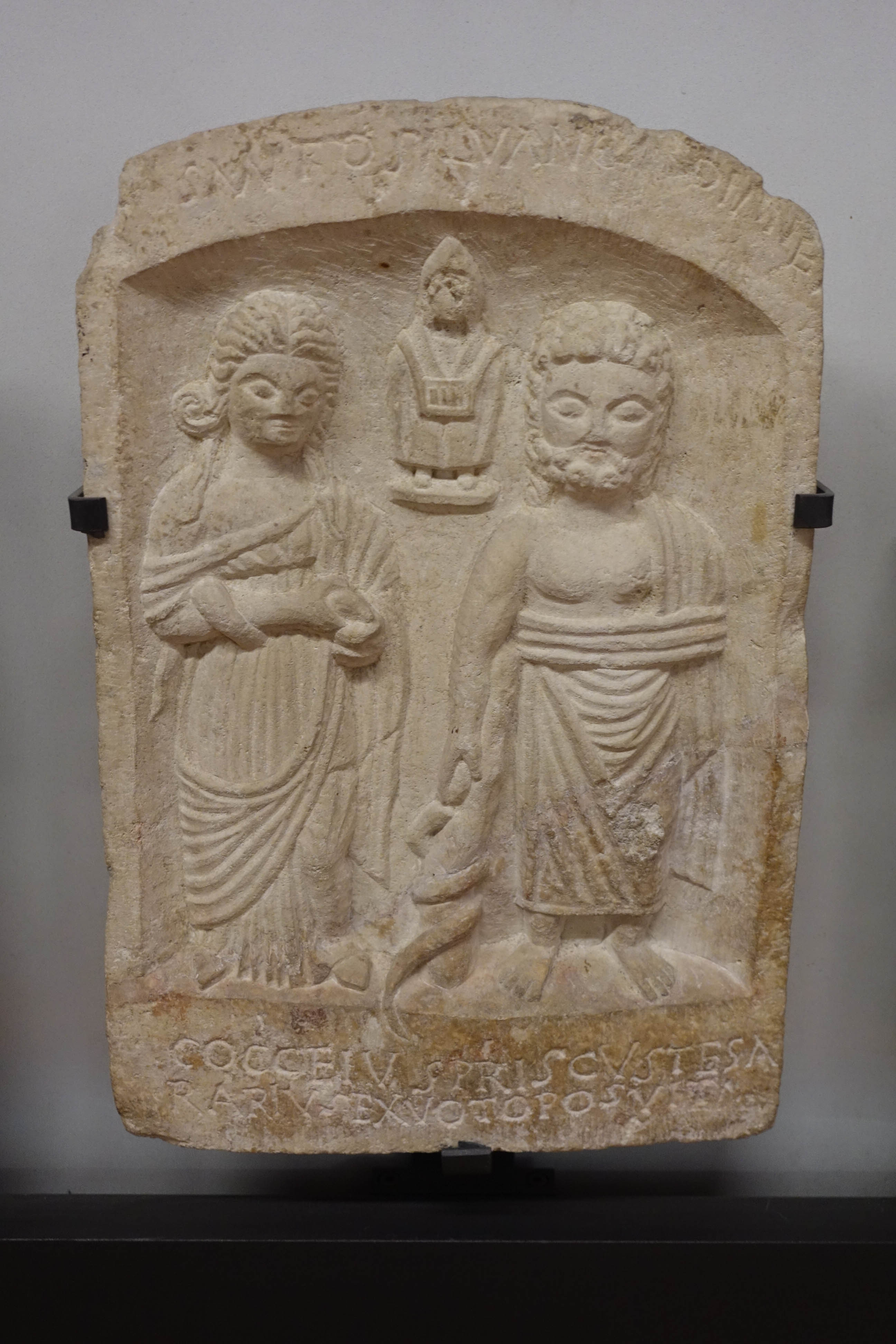
This would explain why the many depictions of Asclepius on coins look so similar. In fact, they are so similar that archaeologists have tried to use them to recreate the exact appearance of cult statues. While this may work in individual cases, it is a dangerous approach. Unlike our modern commemorative coins, Roman provincial coins were not meant to depict a specific object, their design was merely inspired by it.
.jpg)
The best thing that could happen to a provincial town was a personal visit from the emperor. After all, this would give the host city a huge status boost. The urban elite could thus showcase themselves directly to the most powerful man in the empire and present their requests to him in person. The traveling emperor liked to present himself as a benefactor and had the means to solve all urban problems efficiently. His decisions were unassailable, and would therefore put an end to any discussion within the urban upper class.
Cities that were fortunate enough to host the emperor liked to depict this on their coins. But beware! The fact that an emperor can be seen on a coin does not necessarily mean that he visited this town. Often, it merely reflects the town’s hope that he would visit someday. In the case of Pergamum, however, an extended visit did indeed take place in 213/214. Caracalla himself wanted to invoke Asclepius for help. According to Cassius Dio, he suffered from nightmares because of the murder of his brother, Geta. Is this true? We do not know. It could also be propaganda criticizing the emperor.
In any case, Caracalla’s visit to Pergamum is well documented. However, there are no written sources describing exactly how the visit unfolded. We do have an impressive series of medallions depicting the highlights of the visit. Our example shows the moment when the emperor enters the town on horseback, leading his troops, and addresses the people of Pergamum. What about the image of Asclepius on a podium? Perhaps it is a pars pro toto, a part representing the whole. Asclepius might represent the entire city and its population. Or is Asclepius meant to be the host because Caracalla addressed the population in the Asclepieion? We do not know. We lack the personal experience of everyone in Pergamum who used these coins. They had all been there and knew exactly what the image of Asclepius on the coin represented.
.jpg)
Given everything that has been said, it is hardly surprising that temples are the buildings most frequently depicted on Roman provincial coinage. The motifs often clearly identify the deity the temple belongs to by incorporating that deity into the temple’s façade. This does not mean that we should believe that there was actually a statue in this position. It was usually hidden from profane eyes behind the closed doors of the temple.
This specimen comes from Pautalia, which also had an important sanctuary dedicated to Asclepius. Even today, the thermal springs that were already bubbling in ancient times are still used in the bathing facilities of Kyustendil. Several temples can be seen on the coin. The temple of Asclepius is highlighted by its central position. If you look closely, you can even see a small image of the god on the temple façade.
.jpg)

Our second example, dating from 275/6, depicts the temple of Artemis of Perge. Once again, we can see Artemis in the temple façade, but she is not depicted in the way that we are accustomed to from Greek contexts. This Artemis has nothing to do with the youthful huntress. Rather, her appearance is associated with a cult that had existed long before Greek settlers arrived in Perge.
This reminds us that the faith practiced in Greek towns bore no resemblance to Gustav Schwab’s “Legends of Classical Antiquity”. Each town had its own traditions and was proud of its local manifestations of various cults, of its own heroes and river, spring and mountain gods. These were often considered to be more important than the major panhellenic deities.
.jpg)
A good example of this is Leucippus, who was revered in Magnesia on the Meander as the “ktistes”, or founder of the city. Believed to be a descendant of Bellerophon, he was associated with his ancestor Glaucus, who had guided the Argo as a seer. It is a rare exception that we know more about the founding myth of Magnesia thanks to a scholion to Apollonius of Rhodes: A group of emigrants had settled in Crete, but they were dissatisfied with their new home. They asked Delphi for permission to return home, but the oracle forbade them to do so, promising that the gods themselves would intervene to give them better land. Therefore, a delegation of two went to Delphi to ask about the details. They received the following answer: “O noble men of Magnesia, you have asked your question. Now return home. The man standing beside the temple gates will guide you beyond Mount Mycale to the land of Pamphylia. There, on the banks of the winding river, you will find the wealthy house of Mandrolytos and his possessions. There, the Olympians will grant great victory and glory to those who are blameless and do not rule by deceit.” The man who waited for the delegation next to the temple and then led them to their promised land, where they founded Magnesia on the Meander, was Leucippus.
.jpg)
.jpg)
These two coins also allude to a founding myth, though this would only have been recognized by those familiar with the role of the spear-pierced boar in the founding myth of Ephesus. The city’s founder, Androcles, received an oracle from Delphi instructing him where to found the city, namely at the location where wild boars and fish would lead him. When the future Ephesians pulled their ships ashore to spend the night on solid ground during their travels, a fish jumped out of the embers while they were cooking it, setting fire to some dry bushes with coal stuck to it. This scared away a boar, which was then killed by Androcles. This boar was featured repeatedly on coins minted by the city of Ephesus. Incidentally, Pausanias reports that, even in his time, the tomb bearing Androcles’ image could still be visited in Ephesus, providing further information about his (mythical) existence in this context. Pausanias said that Androcles was the son of the Attic king Codrus, and he led the Ephesians in various battles until he was killed fighting the Carians. Modern archaeologists are confident that they can locate the remains of this tomb.
To conclude our brief introduction to Roman provincial coinage, let us take a look at the many coins depicting the prizes that could be won in games. These games were a source of entertainment for all ages, but they were not an end in themselves. They were held as part of festivals dedicated to the gods. Originally, they were held to identify those favored by the gods. By the 2nd and 3rd centuries, however, the intention behind the events had been reduced to the thrill of any good sporting competition.
.jpg)
.jpg)
.jpg)
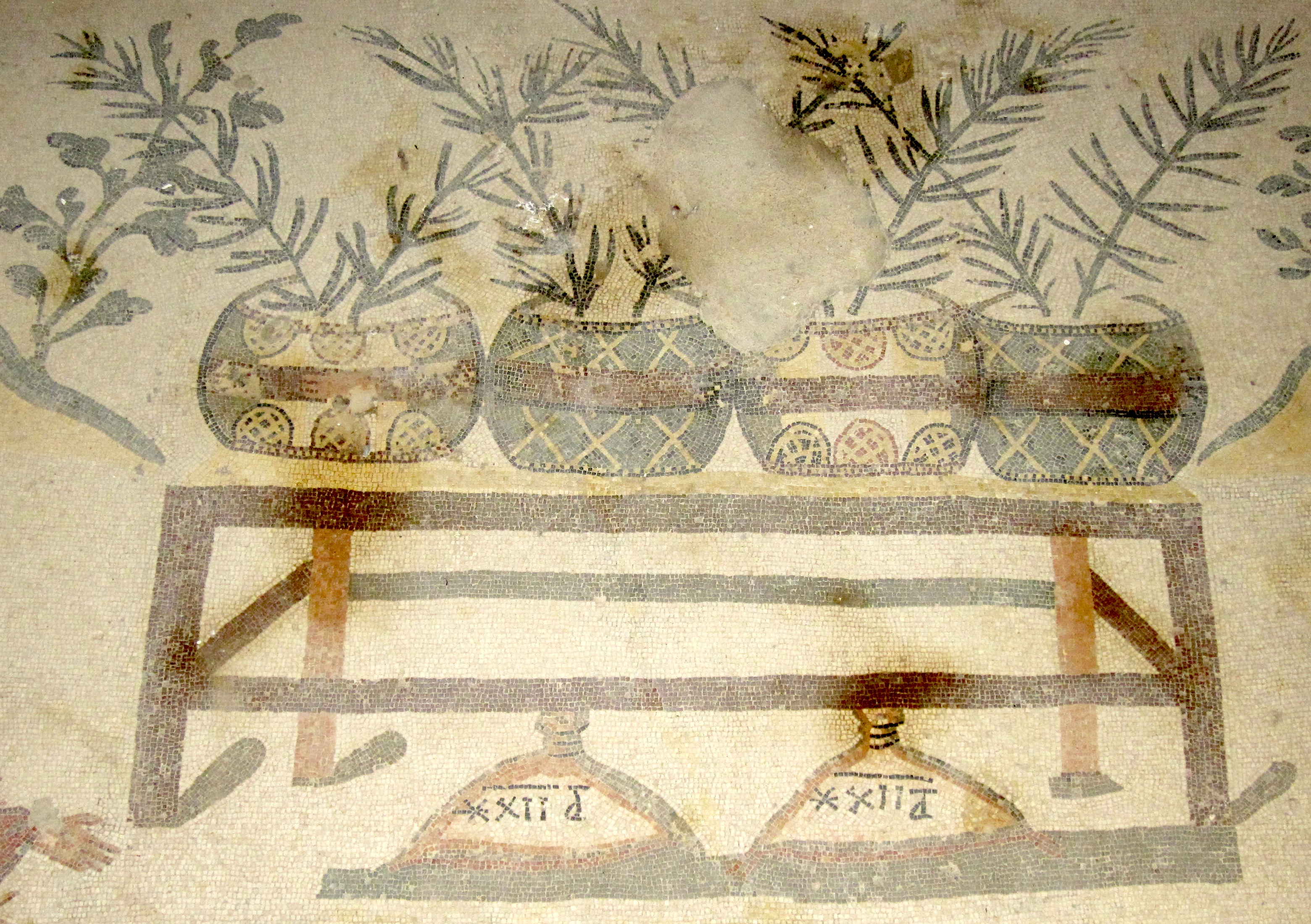
To attract the best athletes, wealthy towns offered lavish prize money and also depicted it on coins. We can still see the tall prize crowns placed on the winners’ heads and the kantharoi filled with olive oil. Alongside these, however, we can see the bags of coins that turned successful professional athletes into wealthy men. There are no written records telling us how high these prizes were. But the gold medallions of Abukir give us an idea of the amounts involved. These probably served as prizes in Thracian Beroia during the local games held under Elagabalus or Severus Alexander.
As you can see, although the coins of the Roman provinces often lack the artistic mastery of the engravers, they reveal a great deal to us – not about the central government in Rome, but about the citizens themselves who led their everyday lives under the rule of this central government.
More information about the Auctions Sales from which the images for this article were taken can be found on our website. Two important collections of Roman provincial coins will be sold during our Winter Auction Sales. On November 10, 2025, the Schleer Collection will be auctioned. The Dr. W. R. Collection will follow in an eLive Premium Auction on November 19, 2025. This collection also includes Roman Imperial coins, but also boasts a high proportion of interesting and exceptionally well-preserved Roman provincial coins.
Literature
In 2024, Andrew Burnett’s excellent introduction to this topic was published under the title “The Roman Provinces, 300 BCE–300 CE” by Cambridge University Press.
