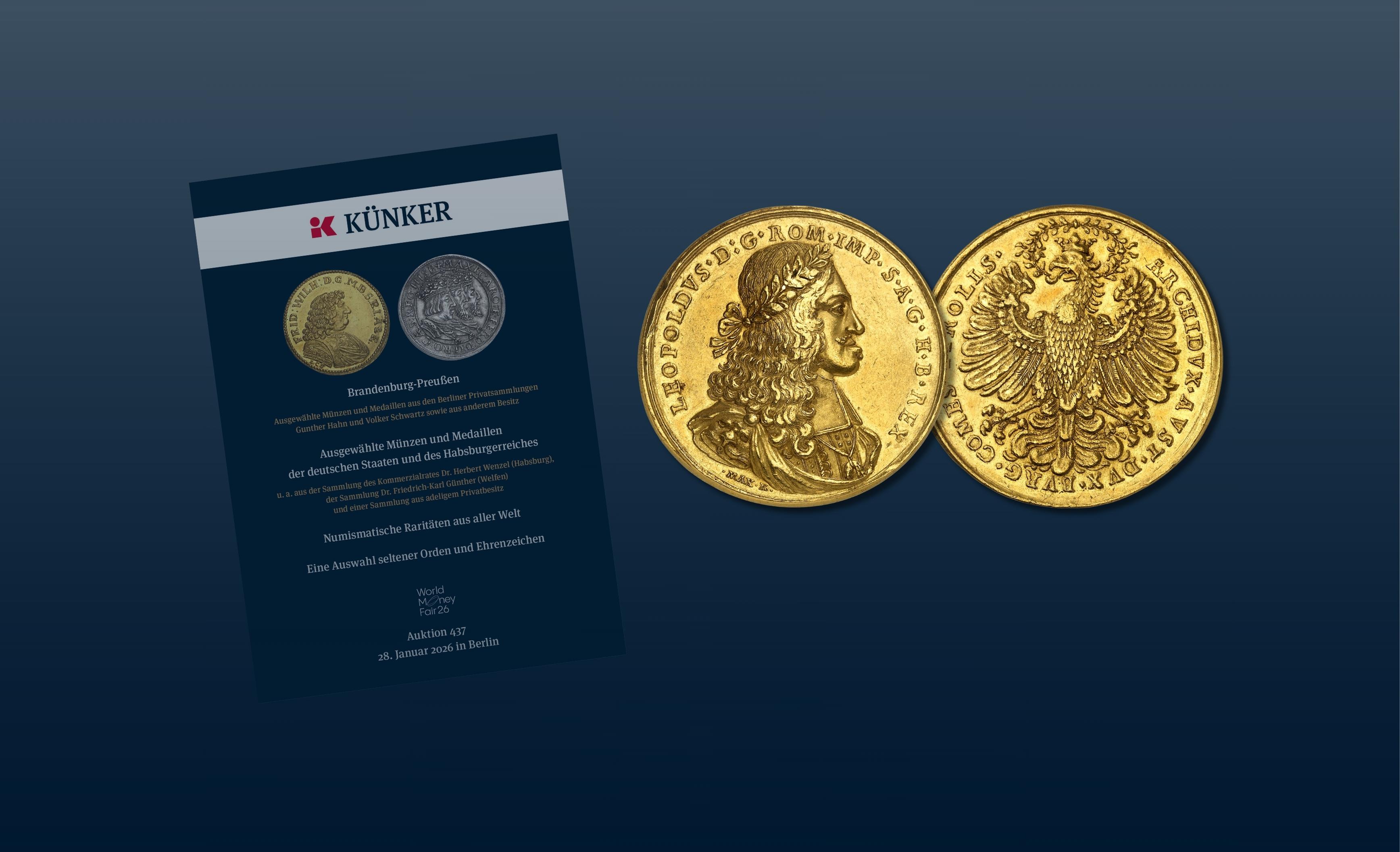


No matter what field of modern numismatics you are interested in: If you are looking for a great rarity in perfect condition with an impressive provenance, our Berlin Auction Sale on 28 January 2026 is the ideal opportunity for you. The catalog is filled with exceptional pieces, and this auction preview will present the most interesting ones. Although it is probably enough to note that the 694 lots have a total estimate of 6 million euros. Connoisseurs will recognize that this figure indicates numismatic treasures of the highest caliber.
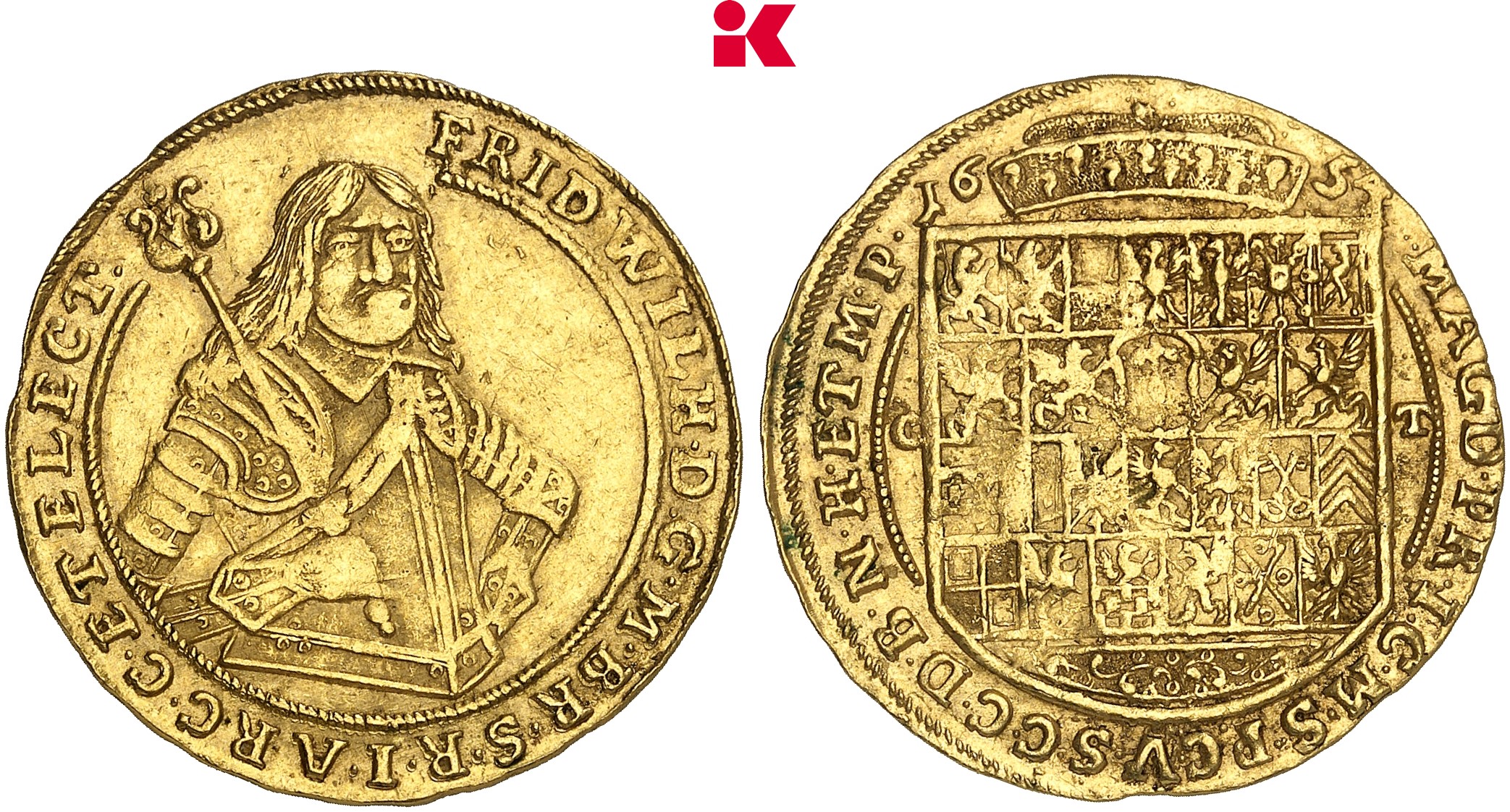
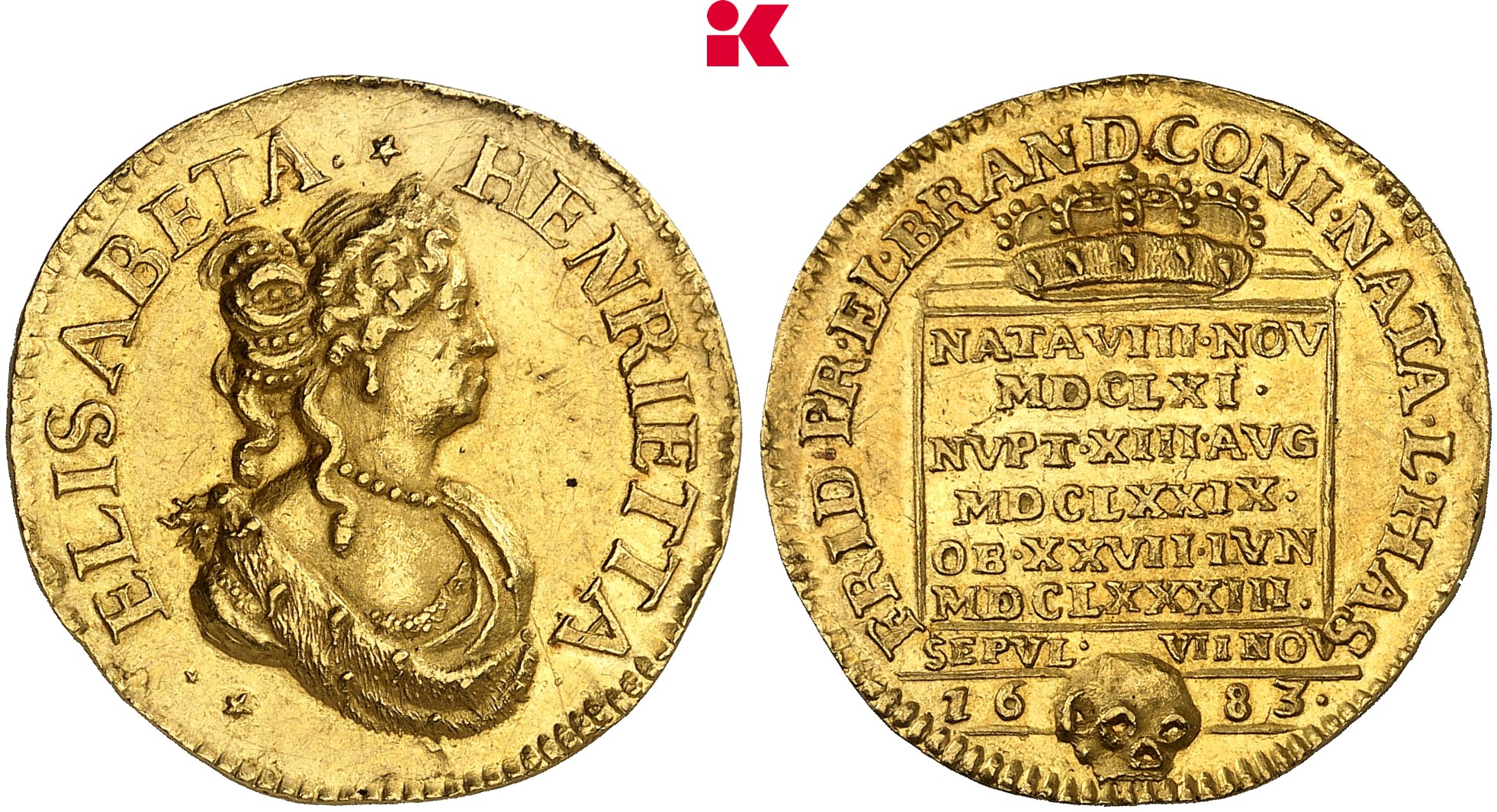
The auction opens with a selection of coins and medals from Brandenburg-Prussia – a fitting start given that the sale is taking place in Berlin. A large part of the pieces come from the collections of two renowned Berlin collectors.
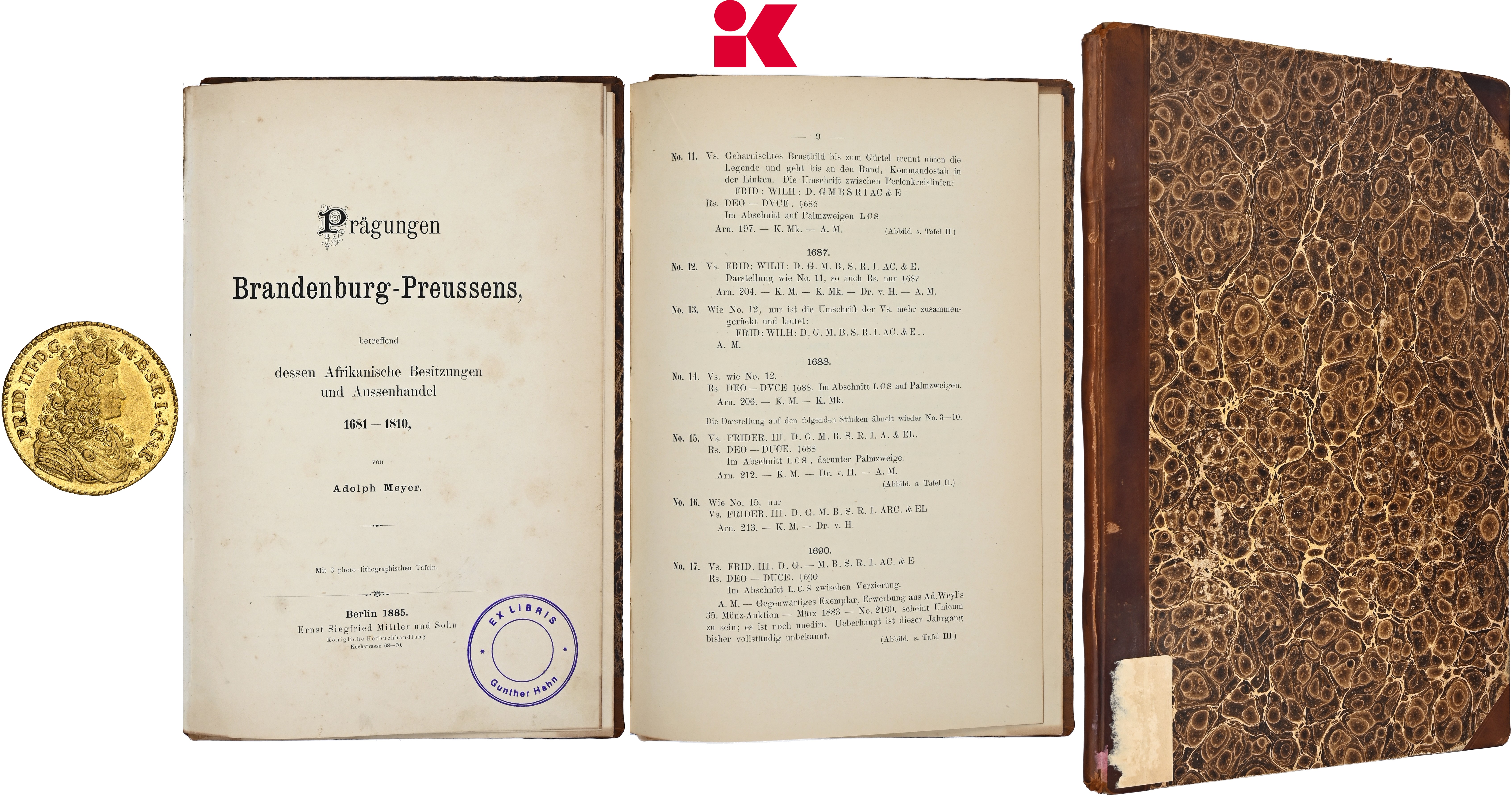
Gunther Hahn is a familiar name to our long-standing customers. His collection was auctioned off in Berlin as part of our 300th auction. At the time, Mr. Hahn was not ready to part with all of his pieces. Now he will return those he kept to the cycle of collecting.
Volker Schwartz is well known to all those who are interested in the Hohenzollern family. Since 1990, he has edited the prestigious journal “Beiträge zur Brandenburgisch/Preußischen Numismatik” (Contributions to Brandenburg-Prussian Numismatics), which is brought to life by scholars AND collectors. At auction 437, the first part of his extensive collection will come under the hammer. The second part will be offered at eLive Auction 91 in March 2026.
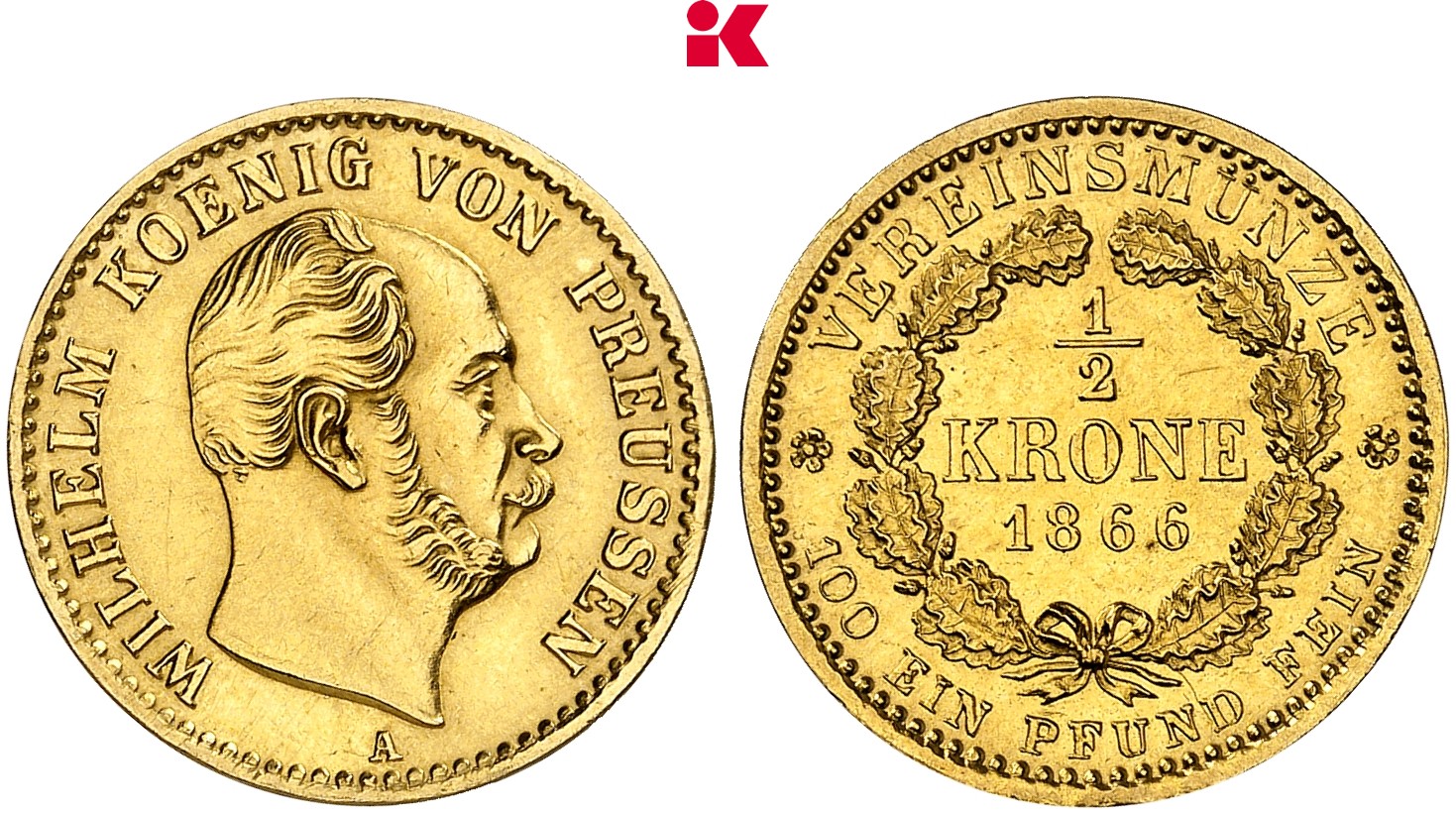
The selection comprises 81 lots. It contains coins and medals with a time frame spanning the period from a 1543 taler of Elector Joachim II Hector to the vereinsmünze pieces (German monetary union coins) of William I from 1866. Without exception, the pieces are either of spectacular quality or extremely rare. Most of them are both.
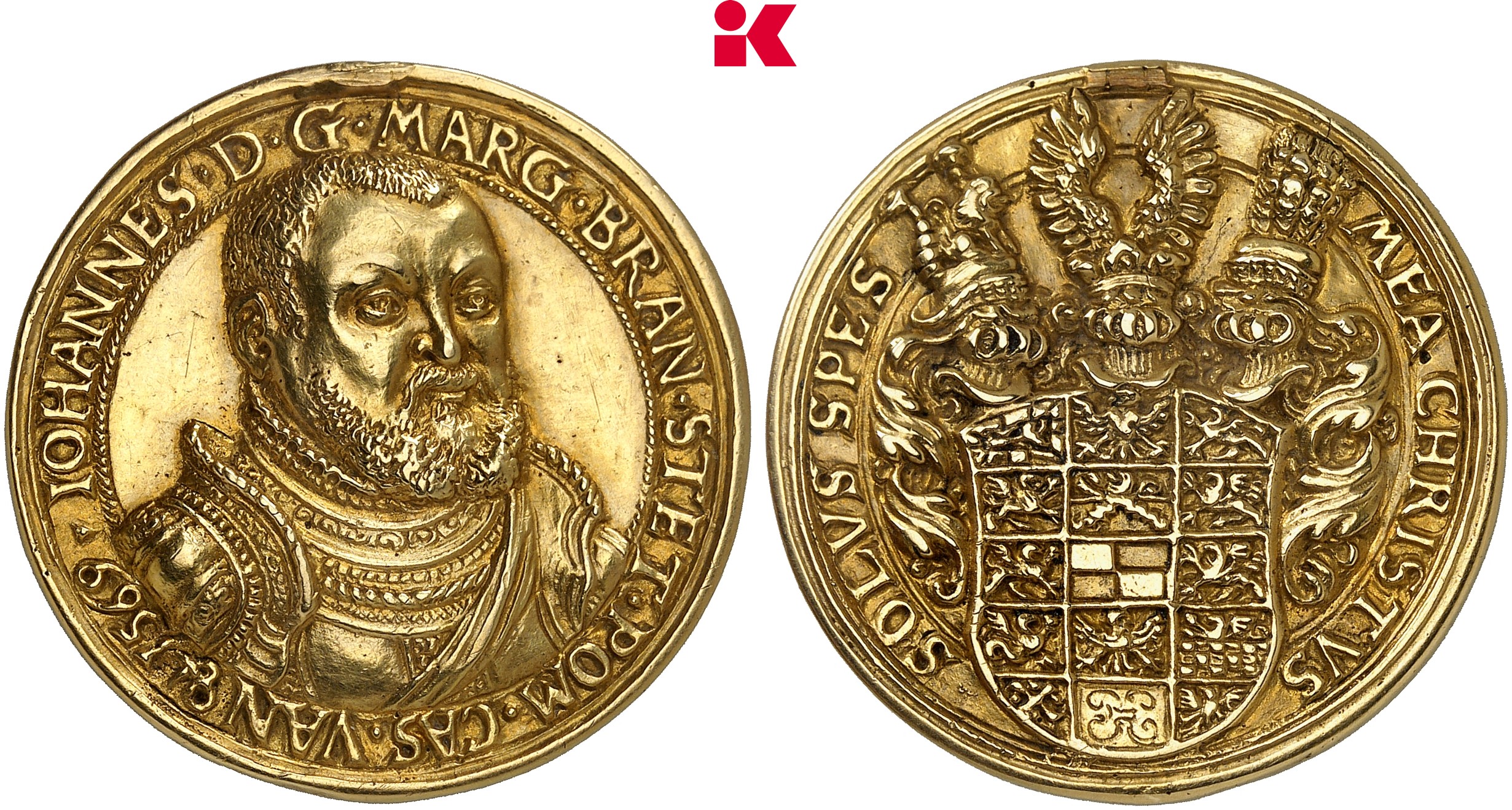
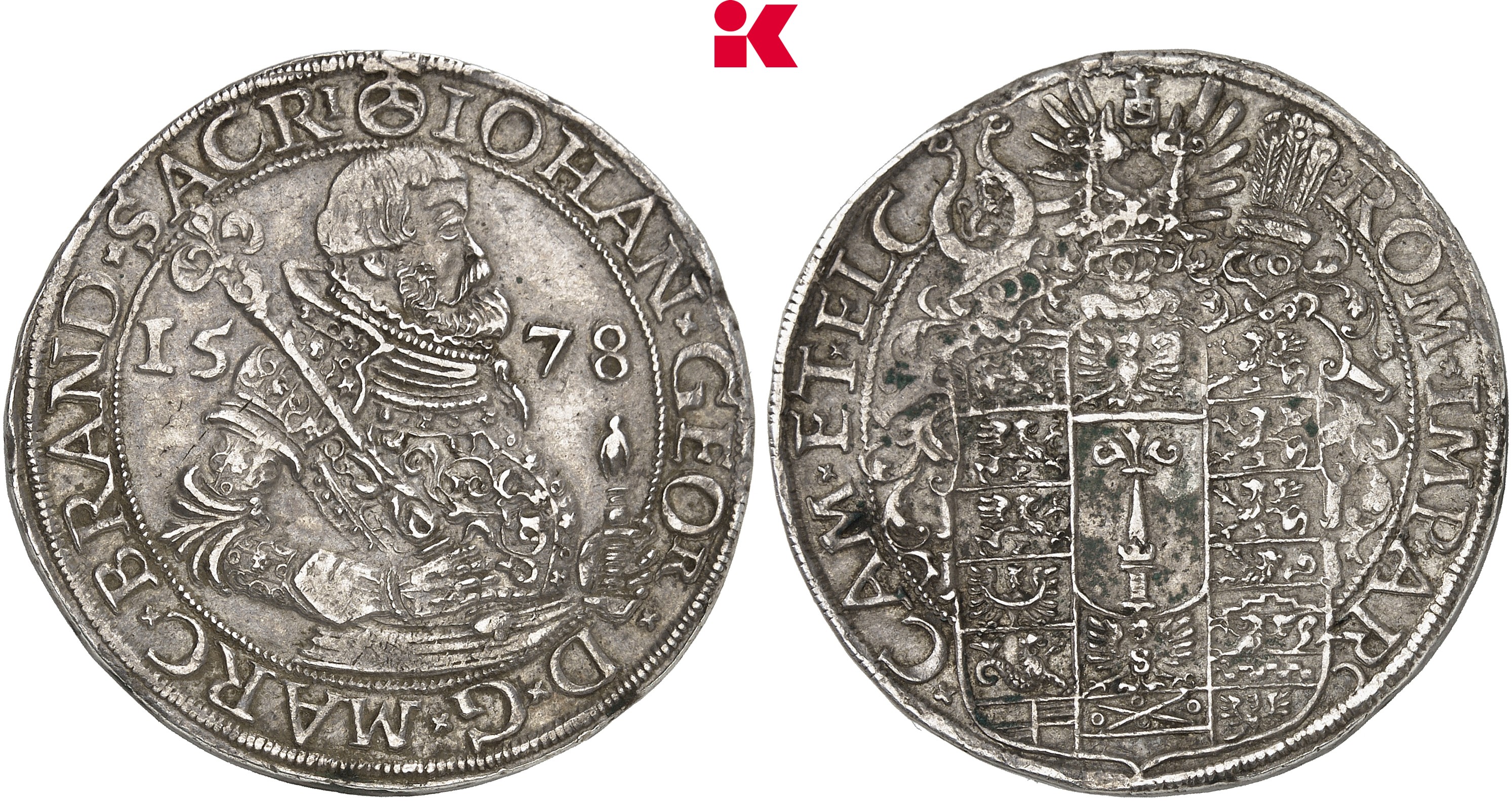
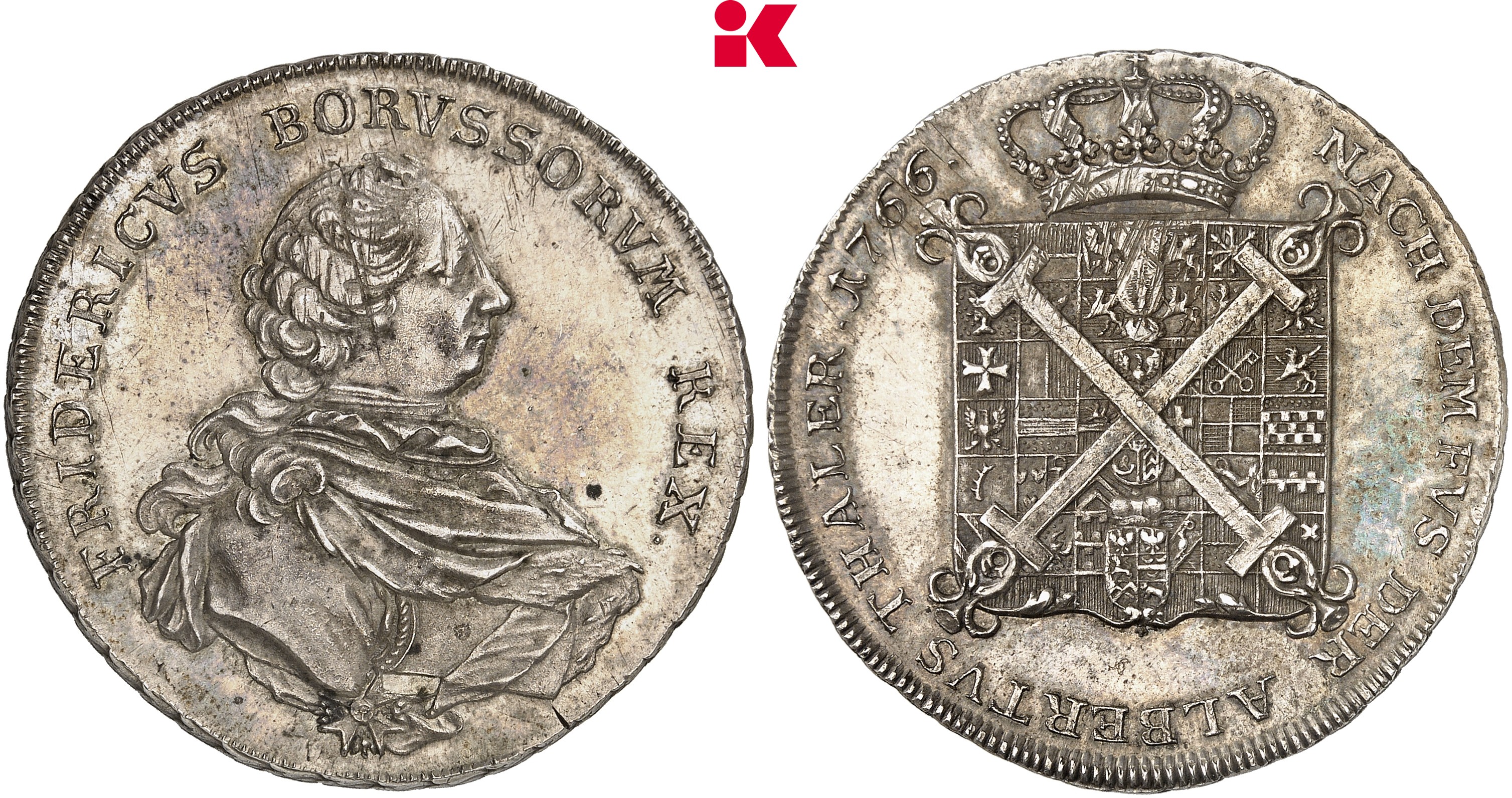
Lovers of Renaissance art will be delighted by the portrait that Margrave John of Küstrin had immortalized on a 21-gram gold medal. Those interested in economic history are sure to be amazed by the 1686 and 1690 Guinea ducats of fabulous quality. Fans of Frederick the Great will find a wonderful selection of single and double Friedrich d’ors. Particularly noteworthy are the talers that Frederick II specifically had made for trade as they illustrate the enormous ambitions of the Prussian king. The piaster was produced for China, the Albertus taler for trade in the Baltic Sea, and the Levant taler for the Levant.
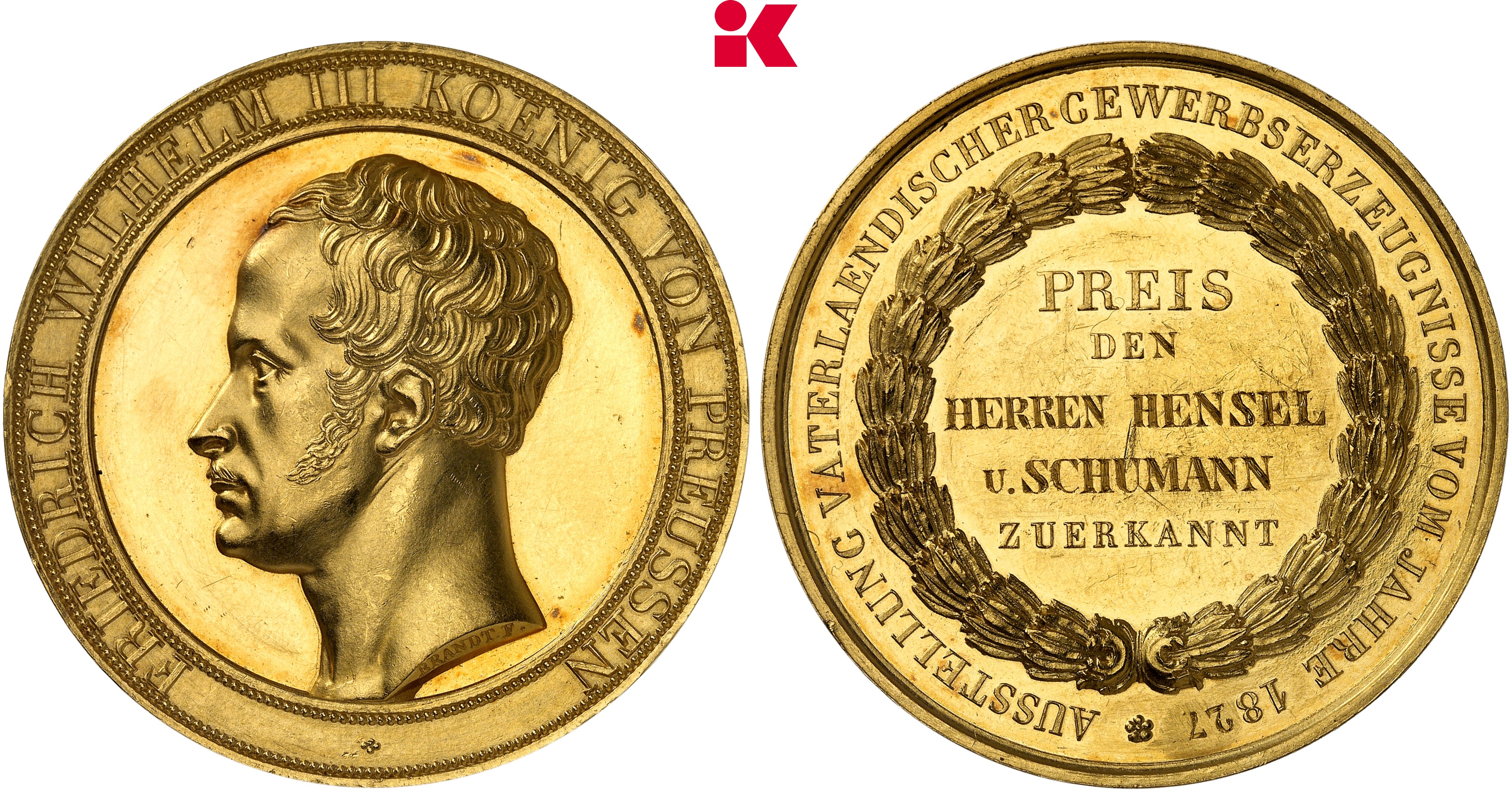
All the heavy gold medals that were used as awards and prizes in the 19th century are also quite remarkable. A good example of this is a gold medal of 30 ducats. It was awarded to the Prussian court supplier Hensel und Schumann. This is fitting, as Hensel und Schumann was a gold and silver manufacturer that was one of the most technologically advanced companies in the world at the time. The Brandenburg Royal Academy used only chemically pure gold and silver from Hensel und Schumann for scientific analysis. The best-selling product was Lyon gold and silver. This fabric surrounded by metal wires was an indispensable part of any impressive uniform in the 19th century. By the way, there is a second gold medal of 25 ducats from the Hahn Collection, which was also awarded to this company. It is also extremely rare. Only 69 specimens were produced.
Will the historic rivalry between Prussia and the Habsburgs resurface during the auction? Will collectors from Vienna and Berlin compete to see whether an Austrian or a Prussian coin will realize the highest result? It will be exciting to see, especially because the 99 lots with Habsburg issues – including Austrian bishoprics and princes – are quite spectacular.
Most of the rarities originate from the renowned collection of Kommerzialrat Dr. Herbert Wenzel, which took around 60 years to compile and is regarded as one of the most important coin collections in Austria. Dr. Wenzel was one of the figures who helped to revive the Austrian economy after the war. From 1951 until his retirement, he was Director General of the Radio-Austria A.G., a communication service specializing in the transmission of telegrams and telexes. Dr. Wenzel successfully restructured the company and transferred the majority of shares from English to Austrian state ownership. He received several awards for this, including the Austrian honorary title of Kommerzialrat. Since his childhood, Dr. Wenzel had devoted much time to building up a coin collection. He successfully acquired numerous extremely rare pieces, some of which have been part of his collection for more than half a century.
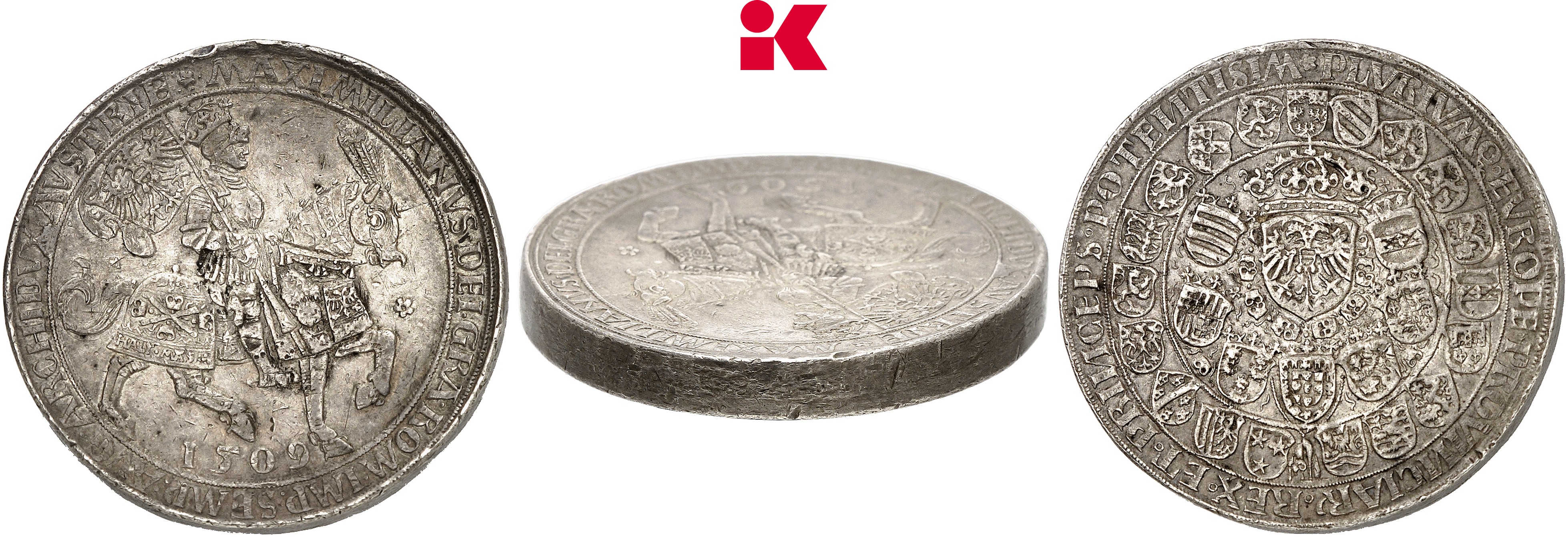
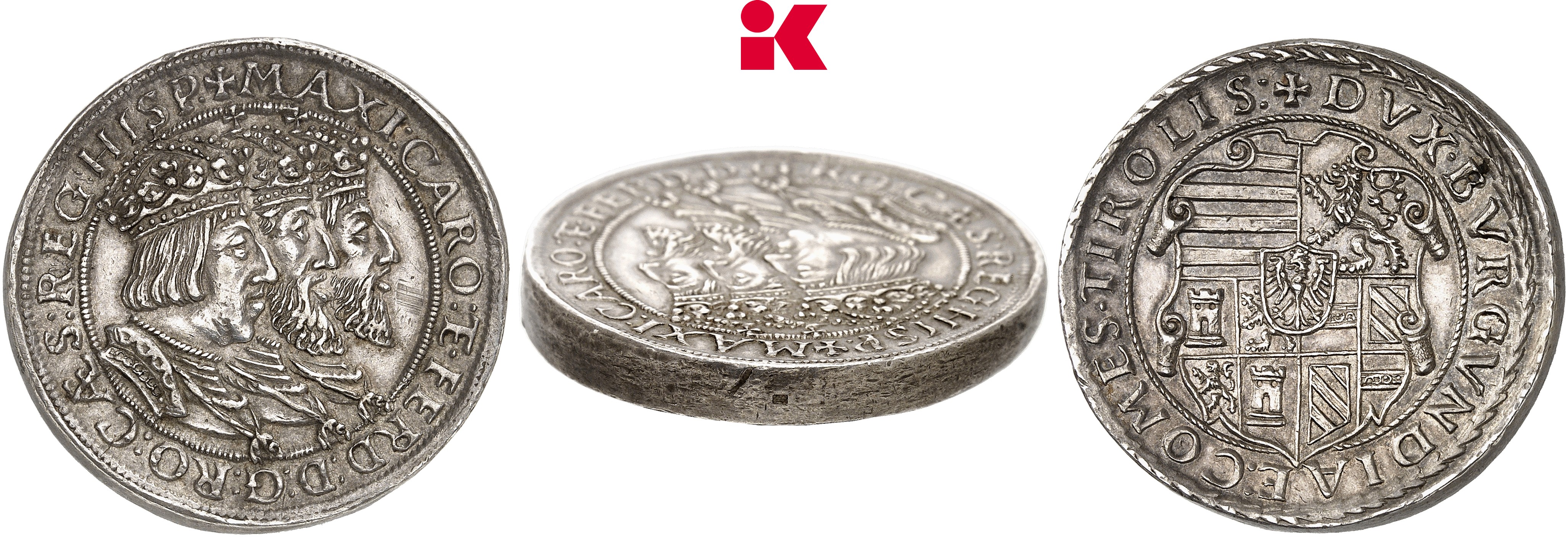
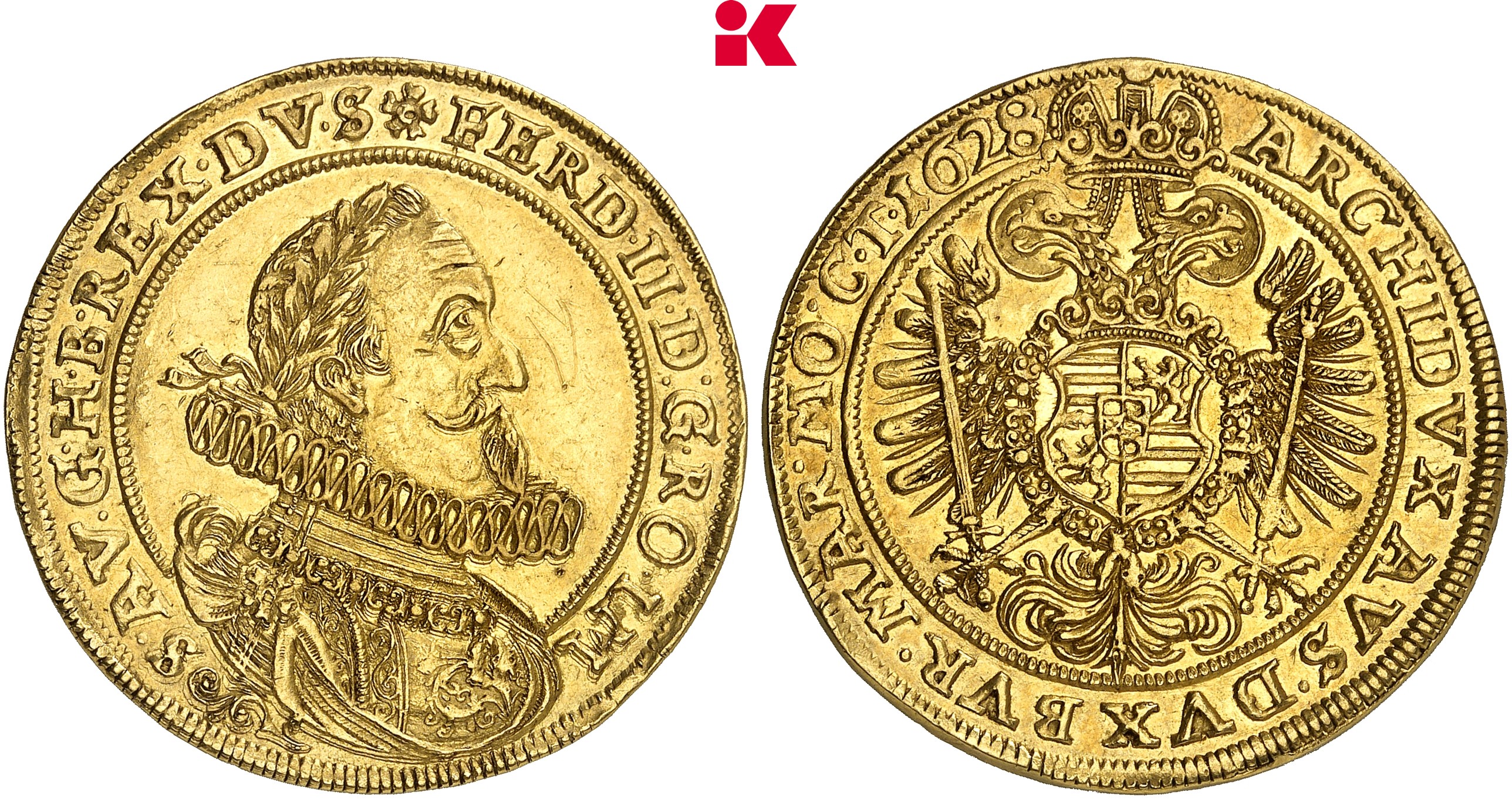
A good example of this is a spectacular representative issue of Maximilian I with the year of 1509 and a weight of five gulden. Another impressive specimen is the broad 1.5-fold reichstaler of the “Three Emperor Issue” type, which was probably created under Ferdinand II, Archduke of Tyrol, between 1564 and 1580.
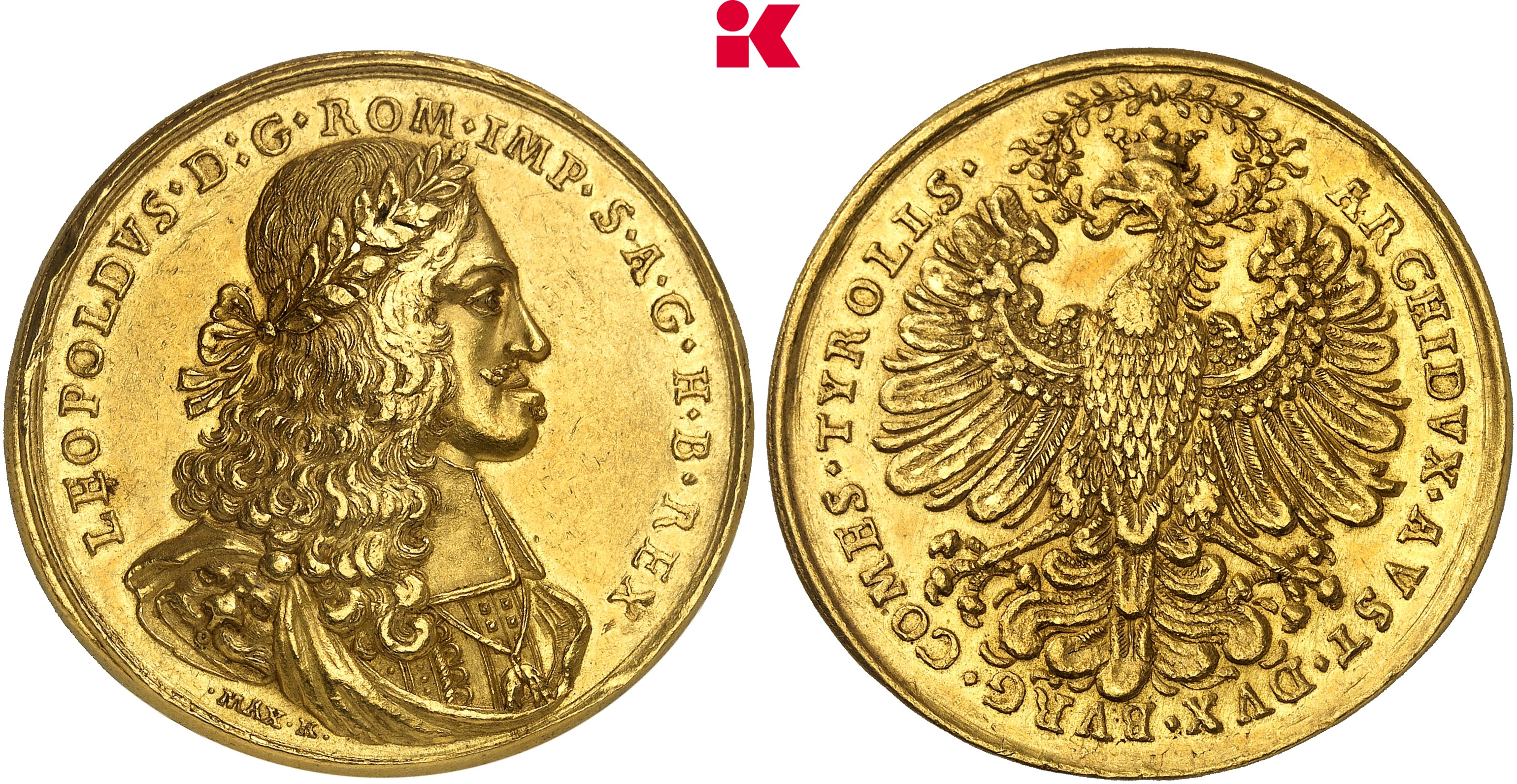
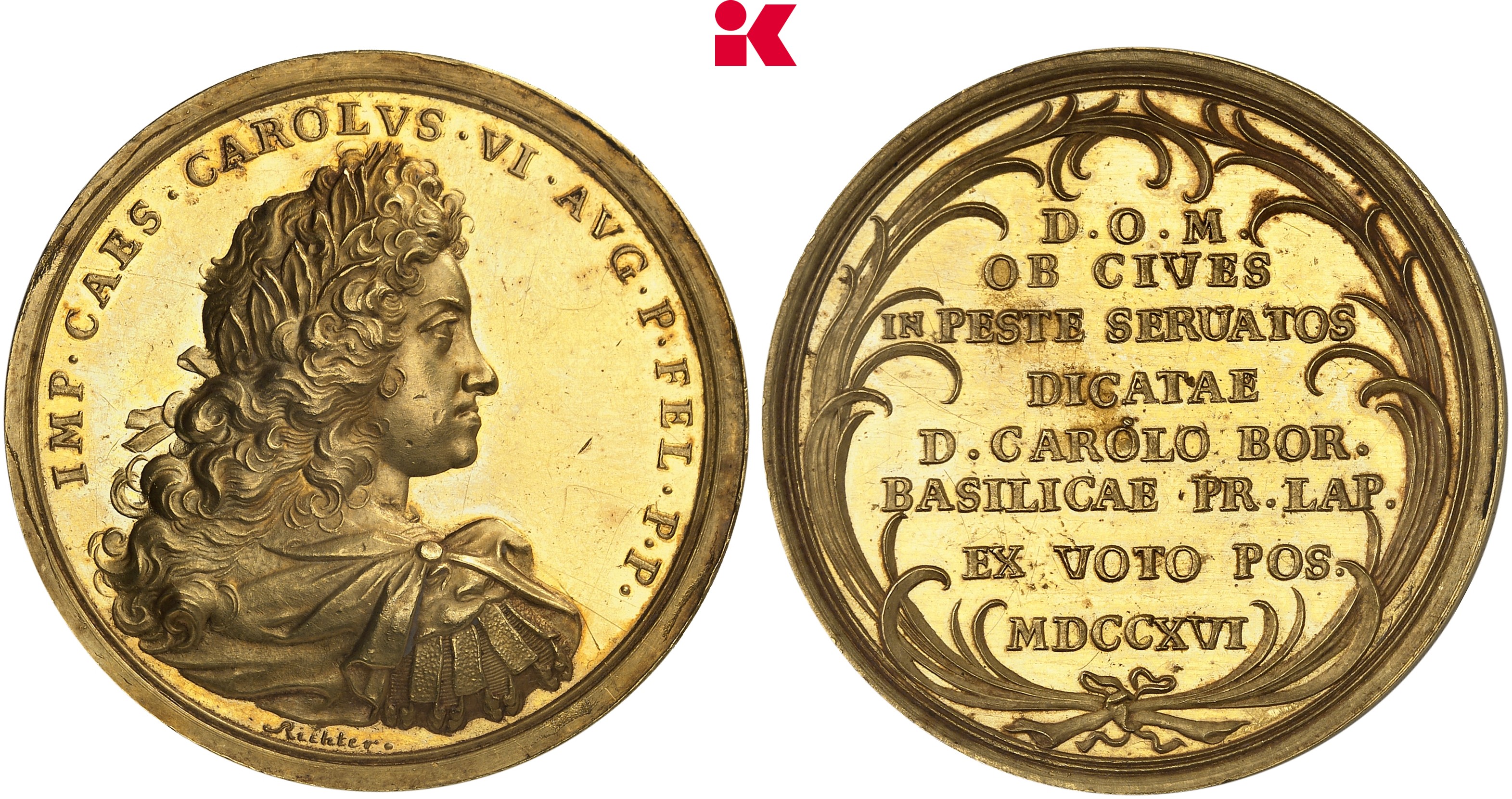
The coin with the highest estimate in auction 437 – an impressive 200,000 euros – was minted under Leopold I. It is a diplomatic gift (ehrenpfennig) of 20 ducats from Hall, commemorating the final annexation of Tyrol to the Habsburg hereditary lands in 1666. In 1716, Dr. Wenzel acquired another rarity: a gold medal created under Charles VI to commemorate the laying of the foundation stone of St. Charles’ Church in Vienna in 1716. The unique piece is of extremely fine quality.
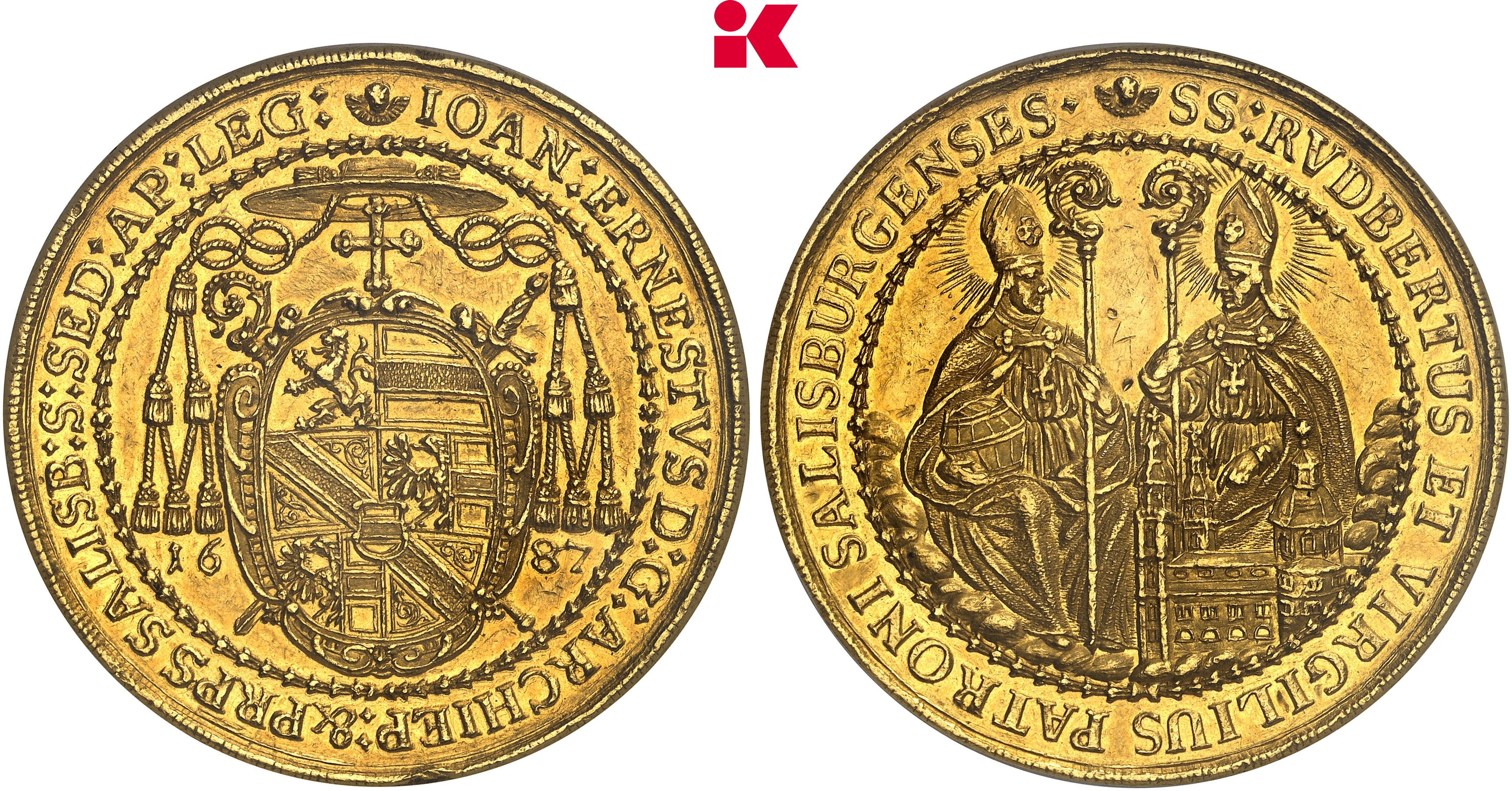
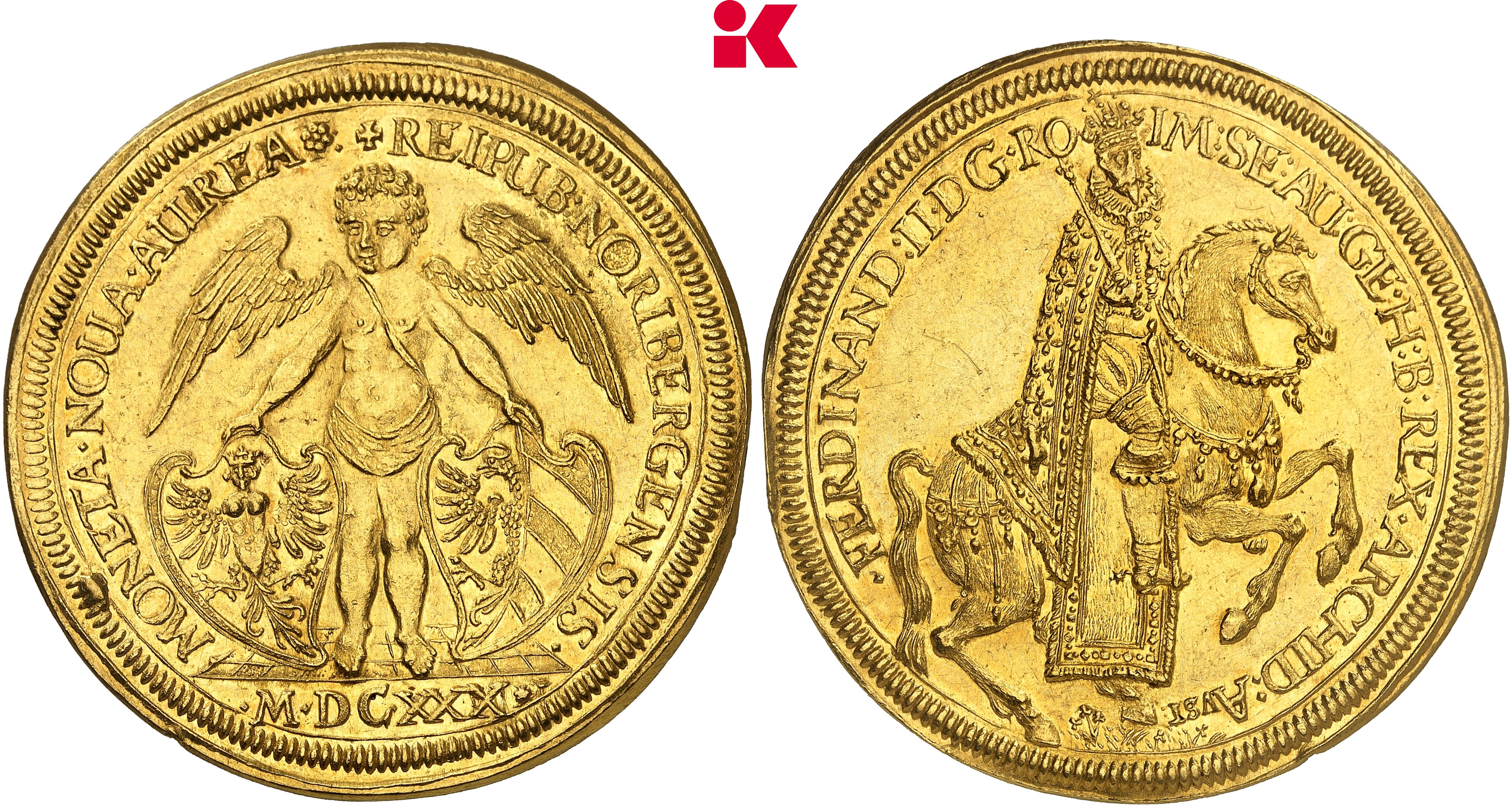
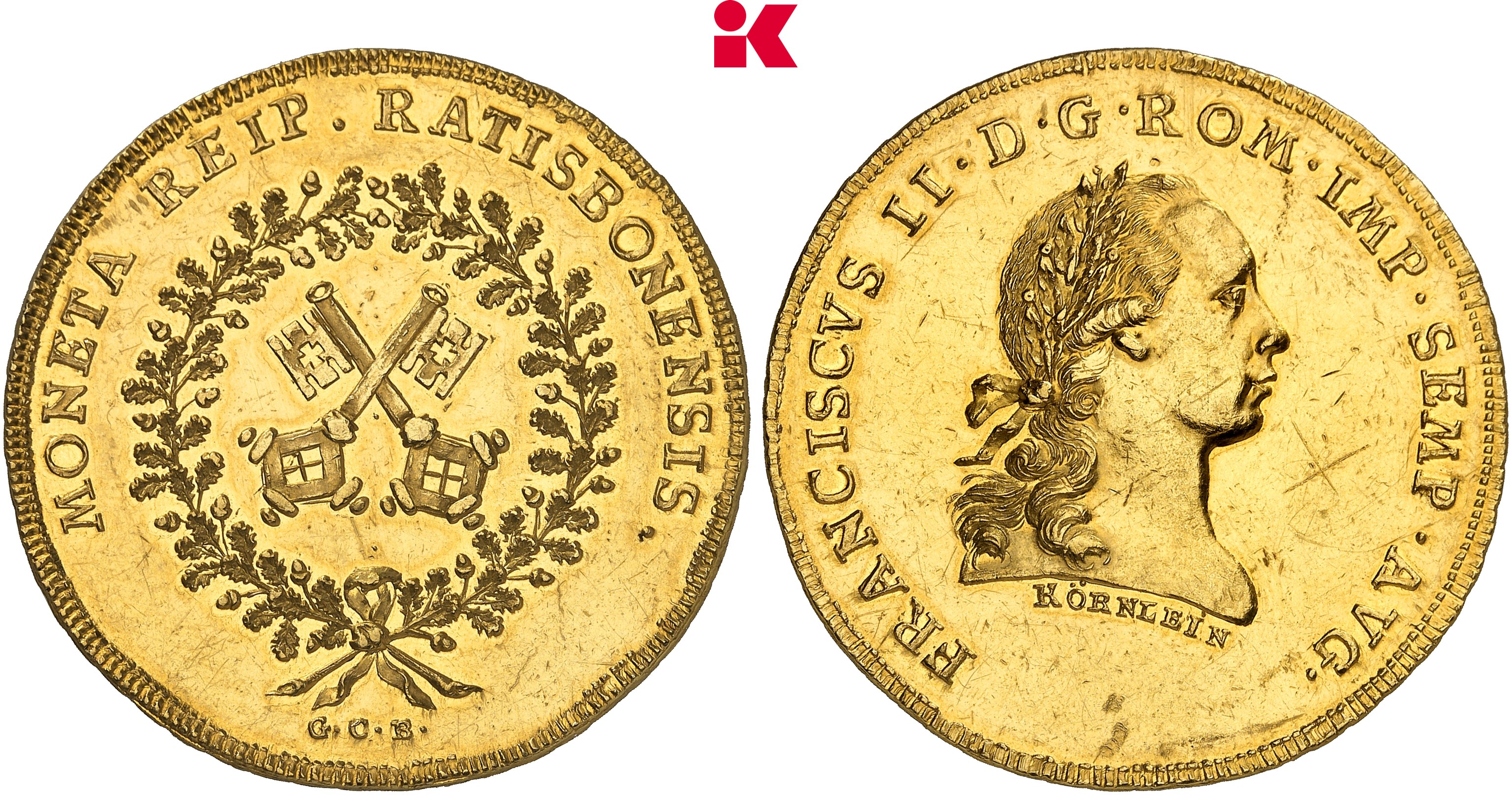
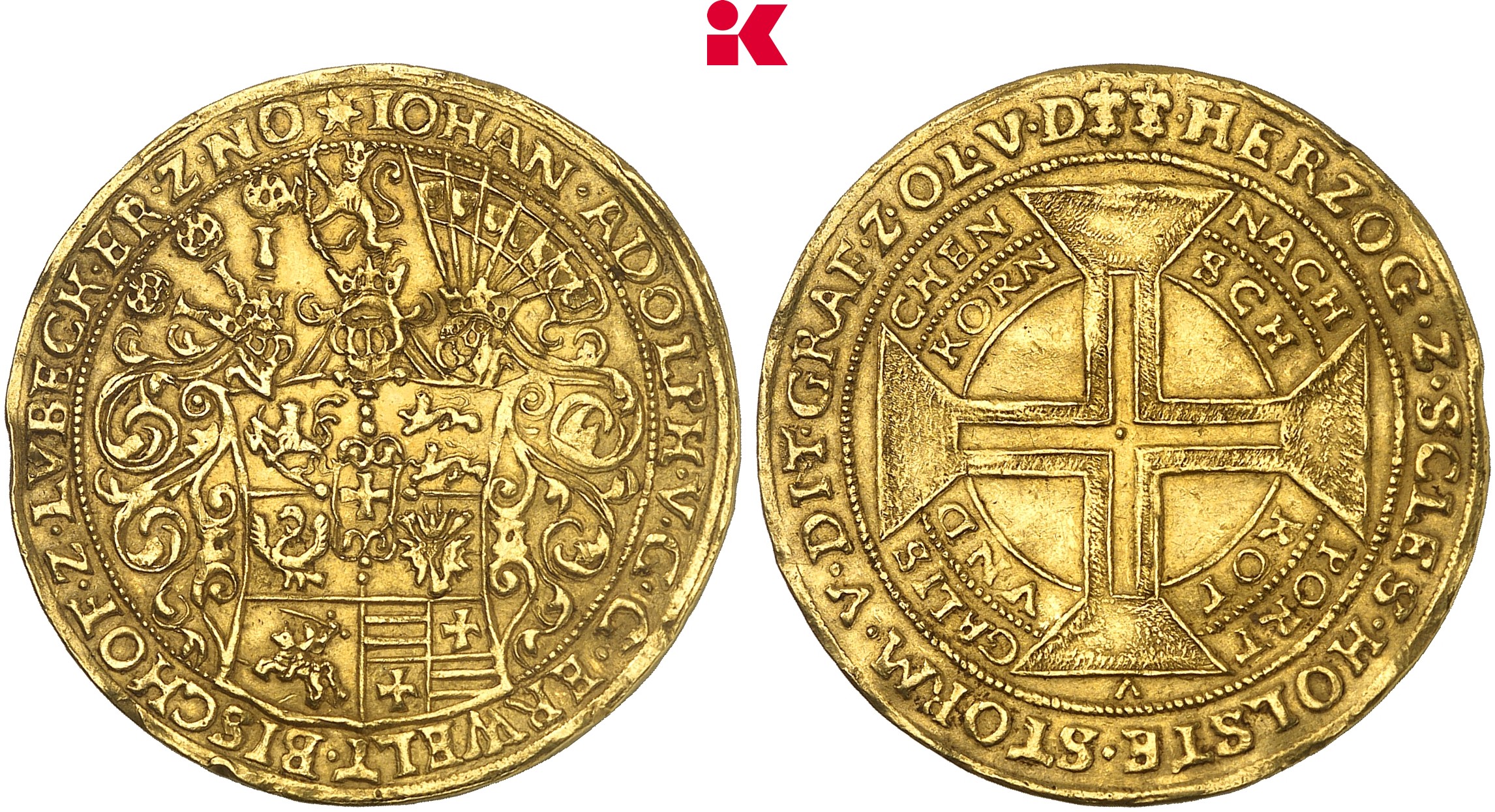
The geographical range of the issues from the German States offered at Künker’s Berlin Auction Sale covers everything from Anhalt to Würzburg. Fans of multiple gold coins in perfect condition are spoilt for choice. How about a Hamburg bankportugalöser with a detailed city view? Or a 10-fold ducat from Nuremberg that was intended to be a diplomatic gift? Or rather a piece from Regensburg? Not to forget, there is a magnificent example of one of the first portugalösers minted in Germany – a coin commissioned by Johann Adolf von Holstein-Gottorp. Lovers of yield and mining coins can look forward to an extremely rare 1855 ducat made of gold from Goldkronach. And those looking for Brunswick lösers will find plenty of opportunities.
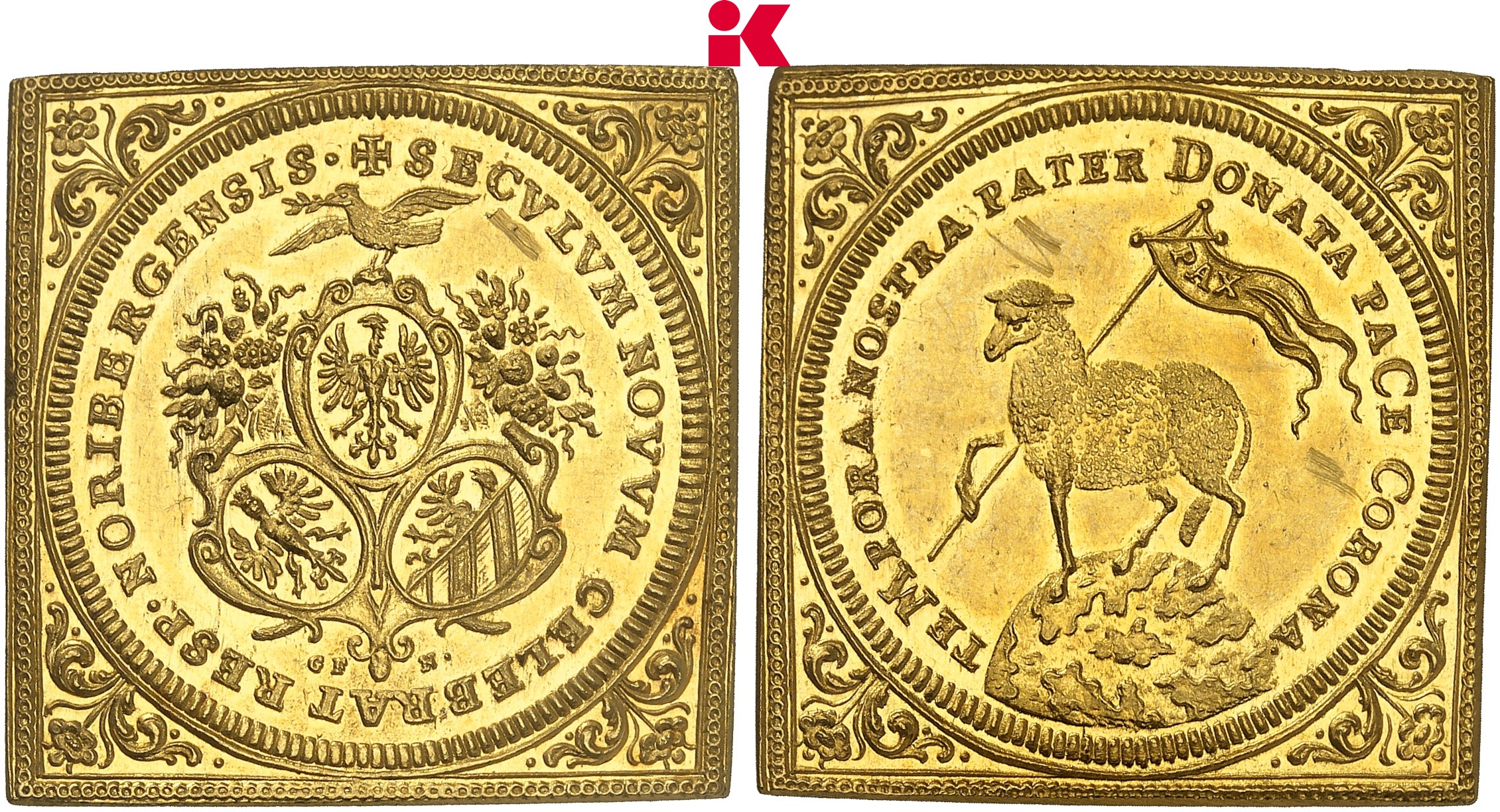
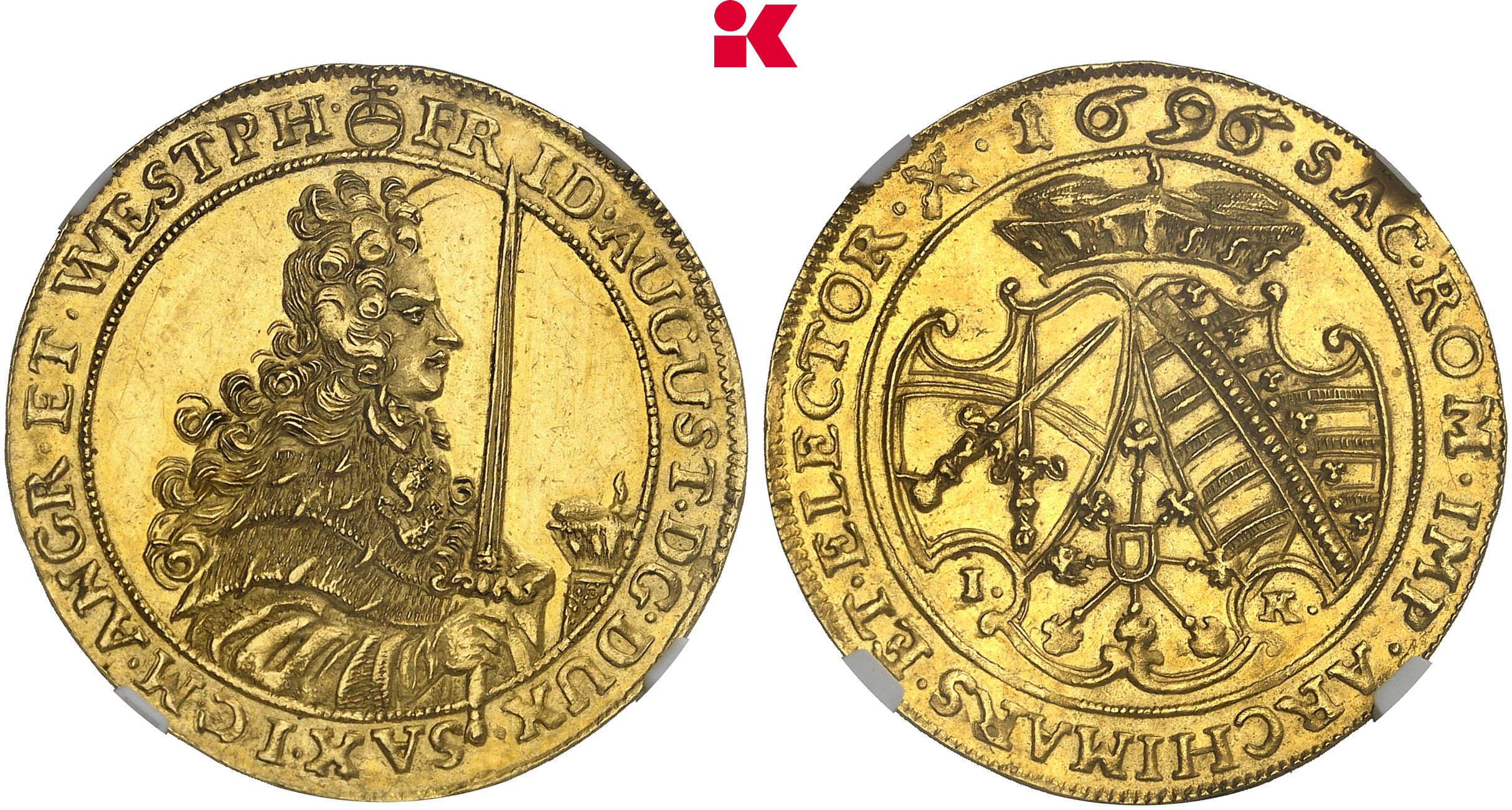
Be it Saxon coins and medals, “lamb ducats” from Nuremberg, rare talers or ducats – no matter what field of the German States you are interested in, you are sure to find the piece of your dreams!
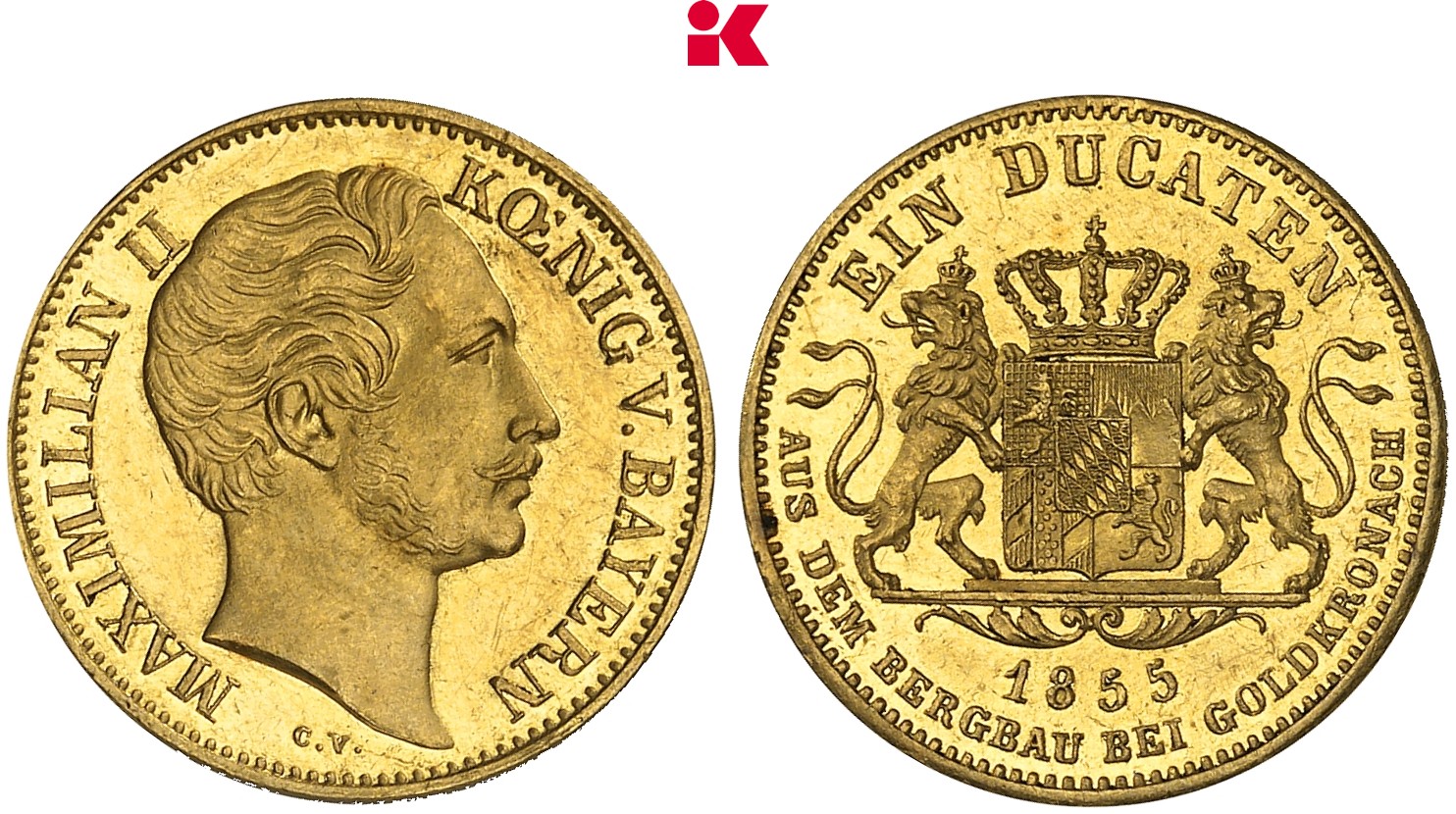
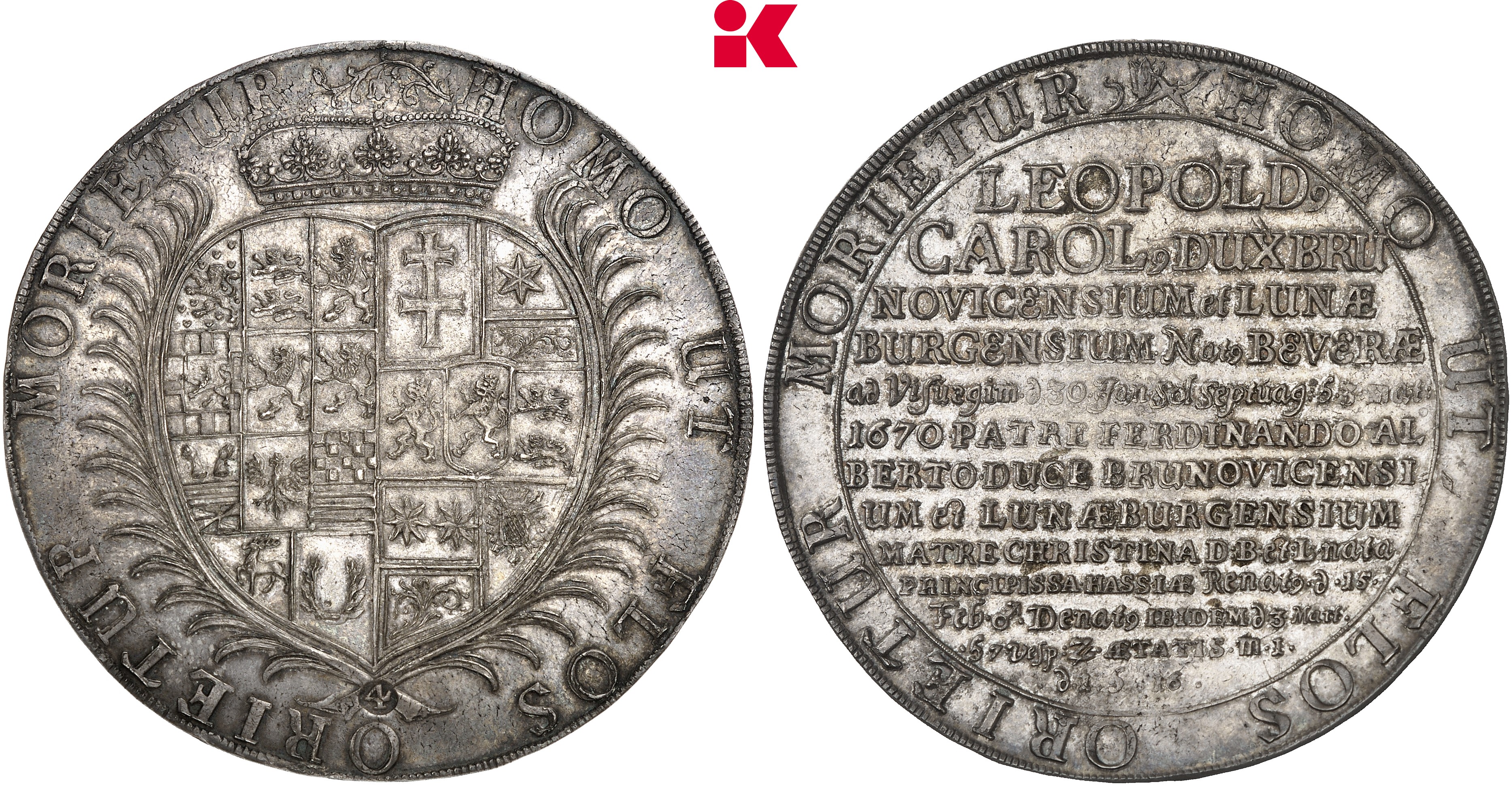
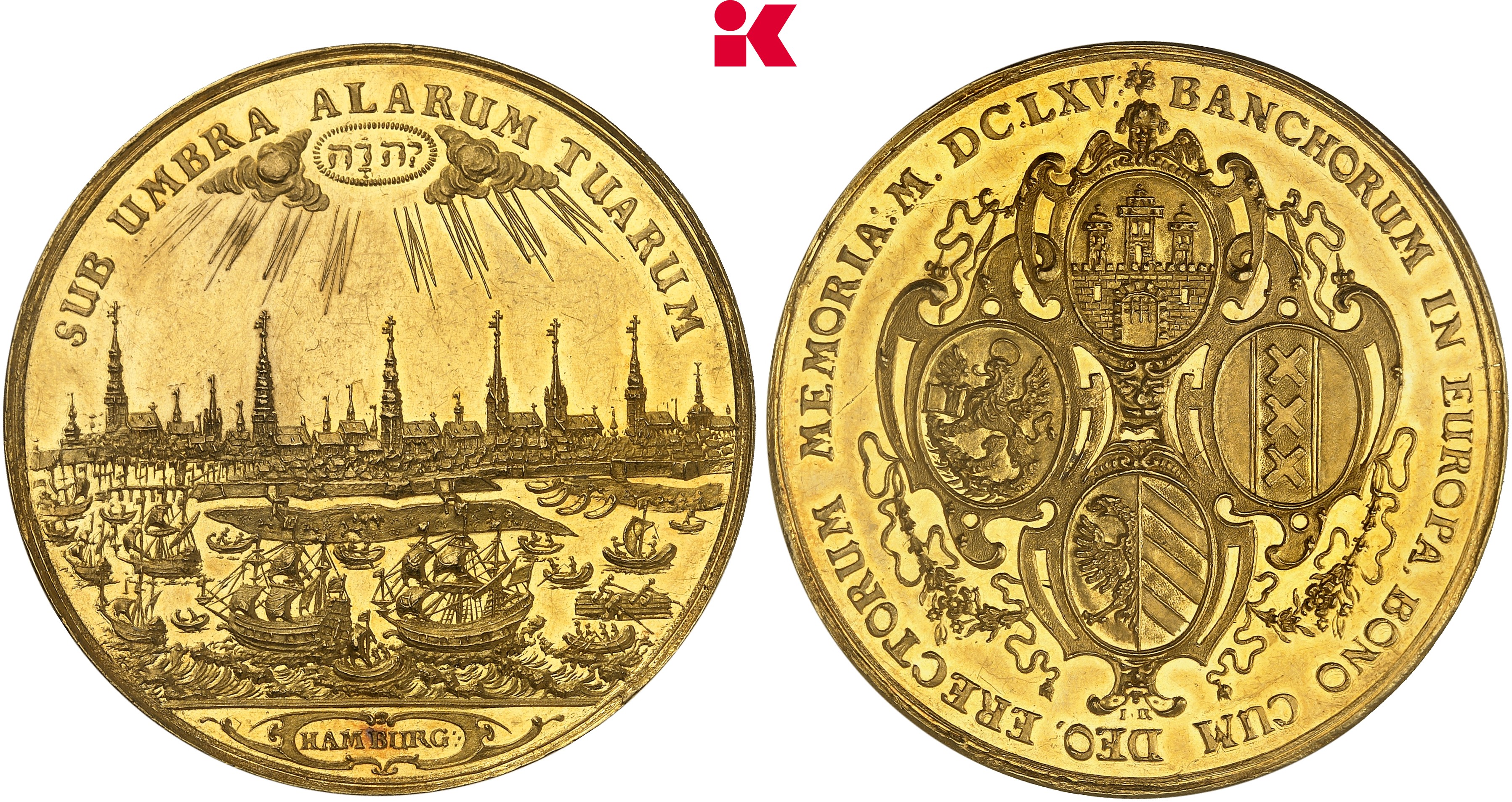
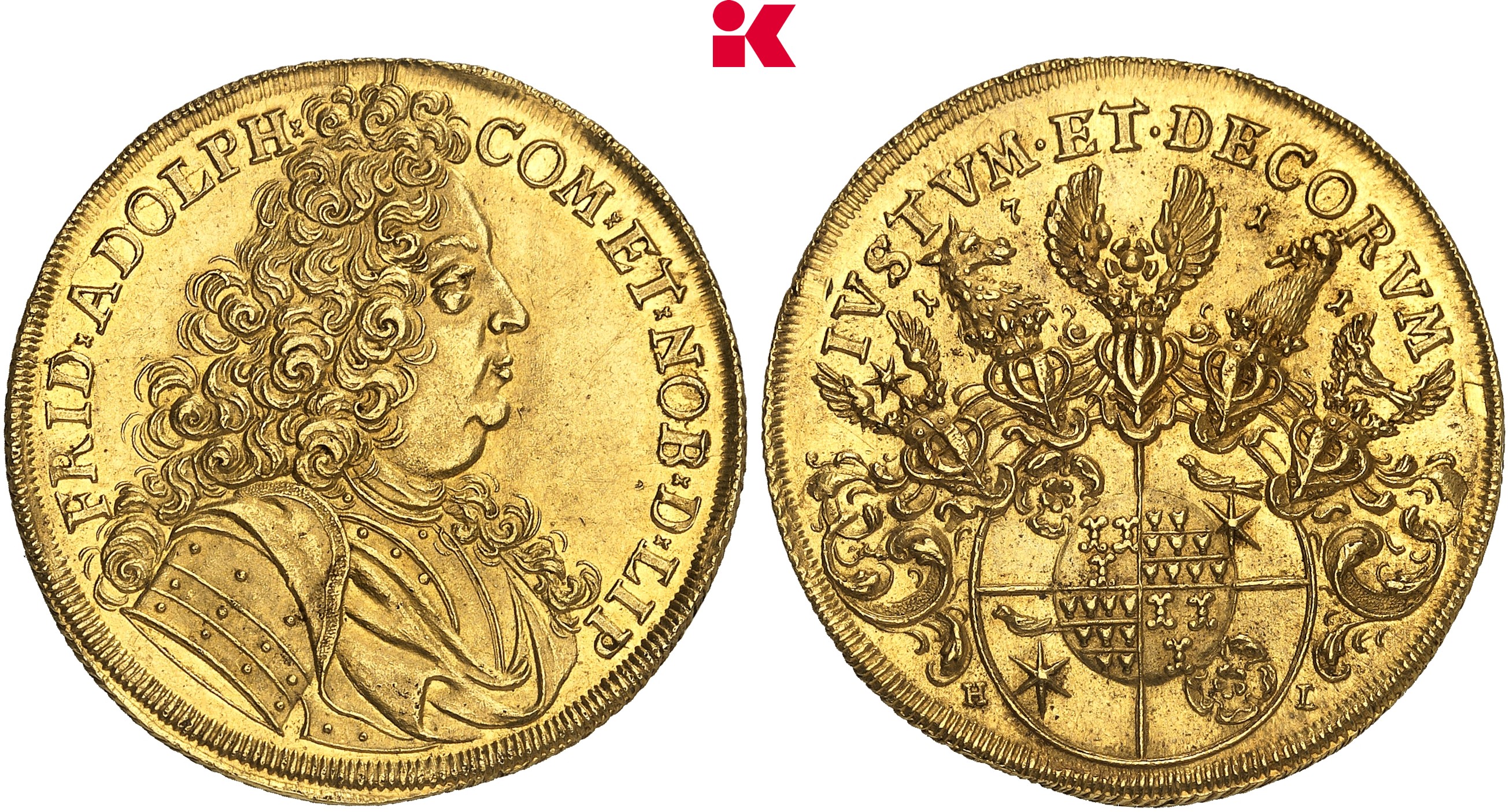
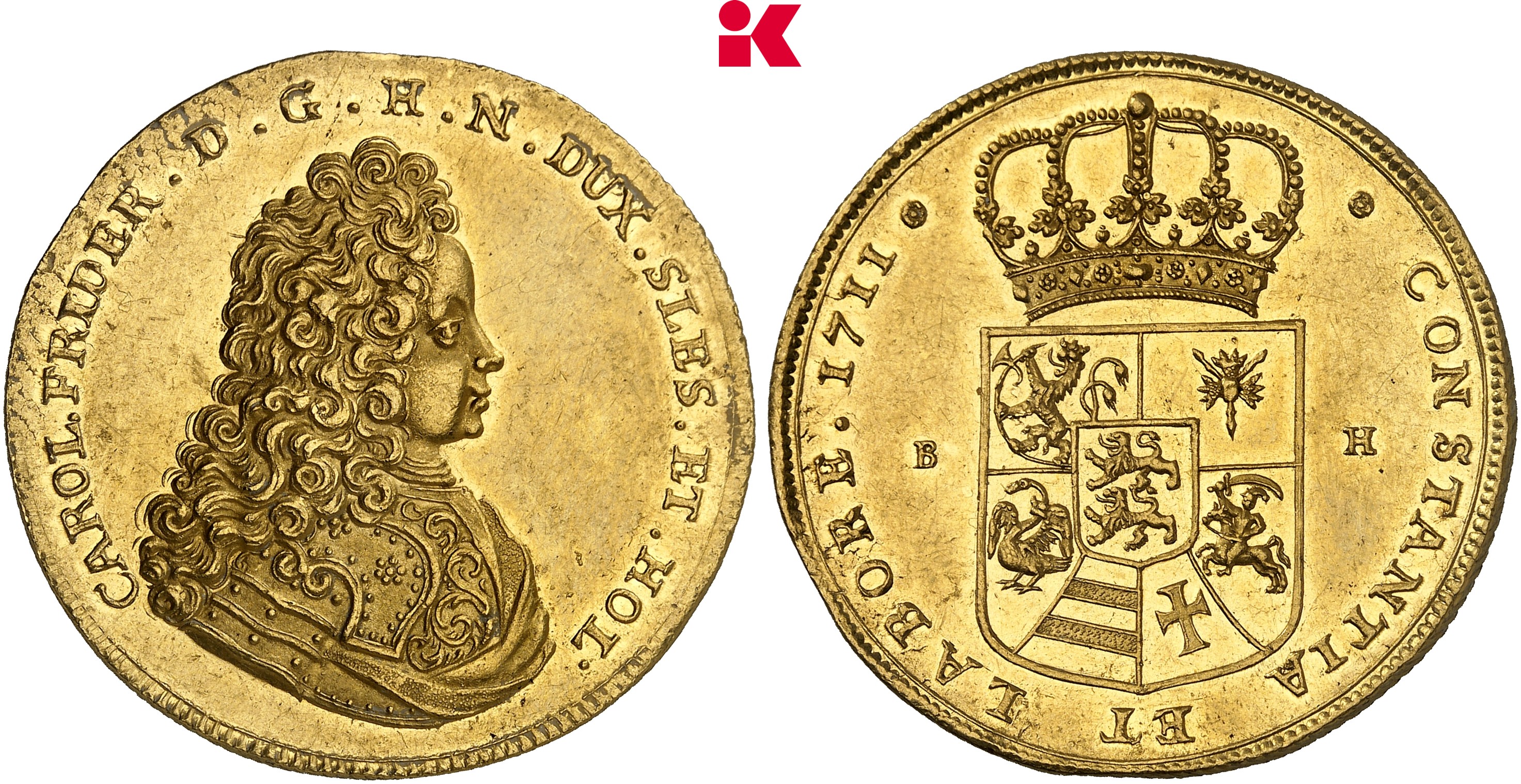
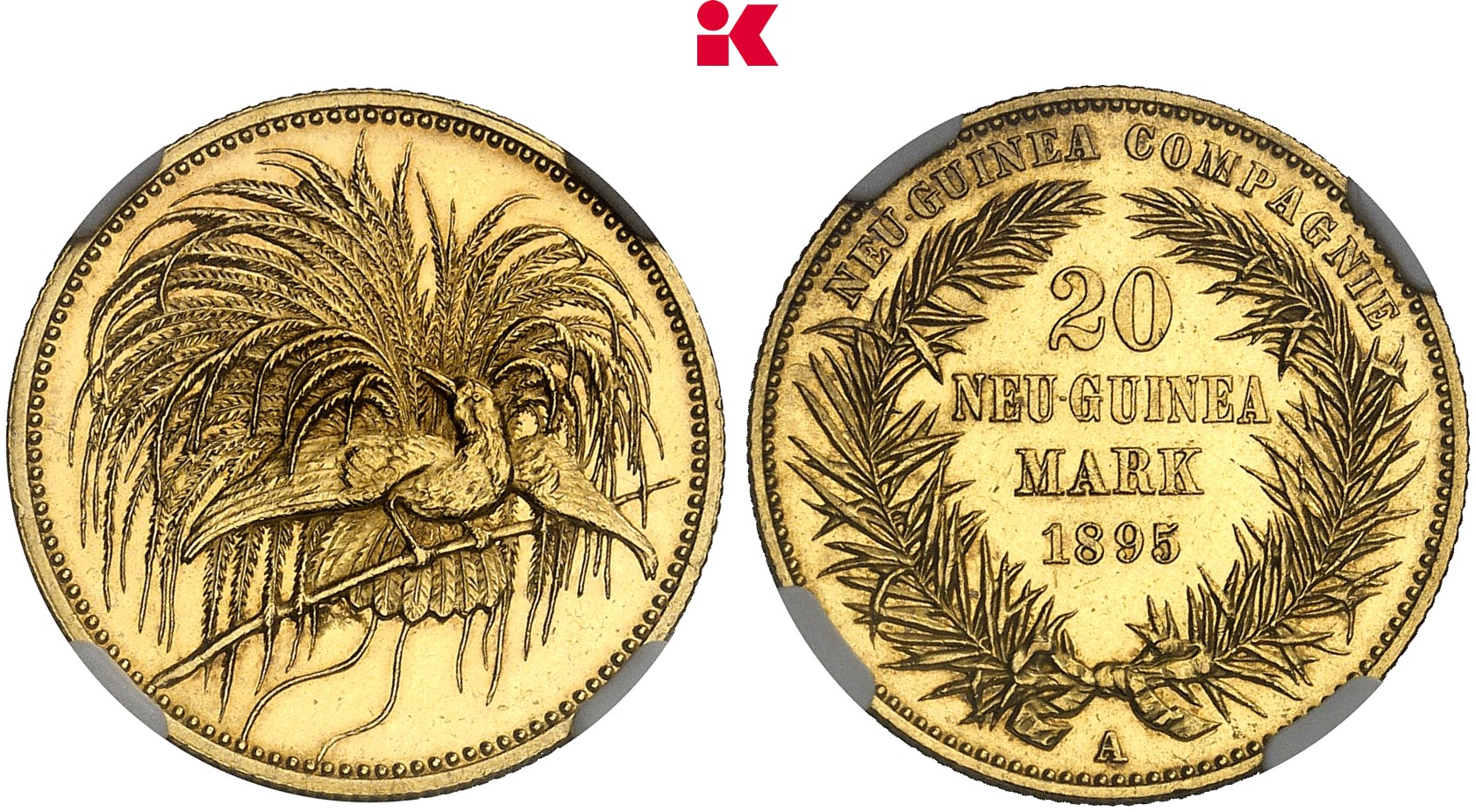
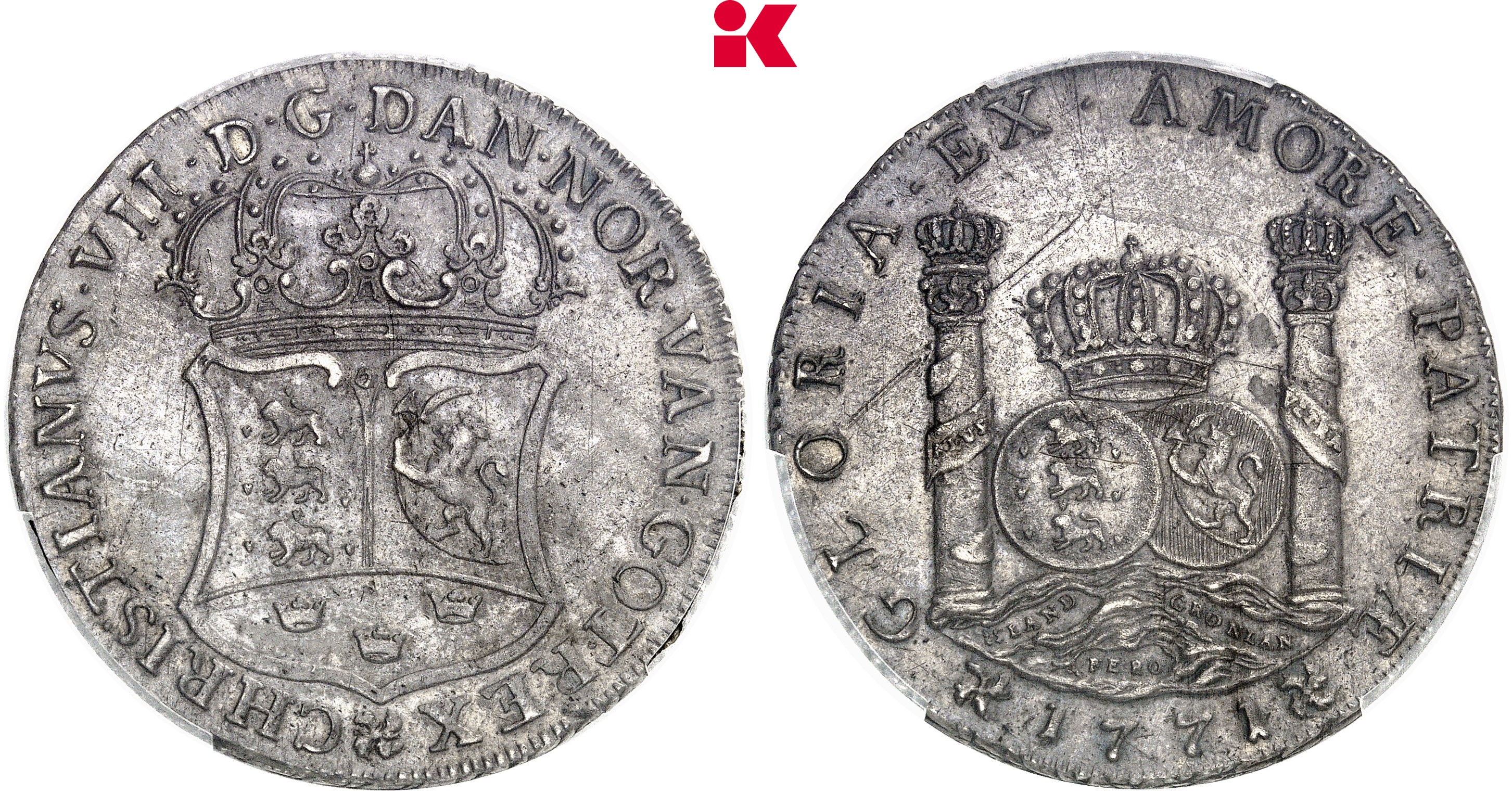
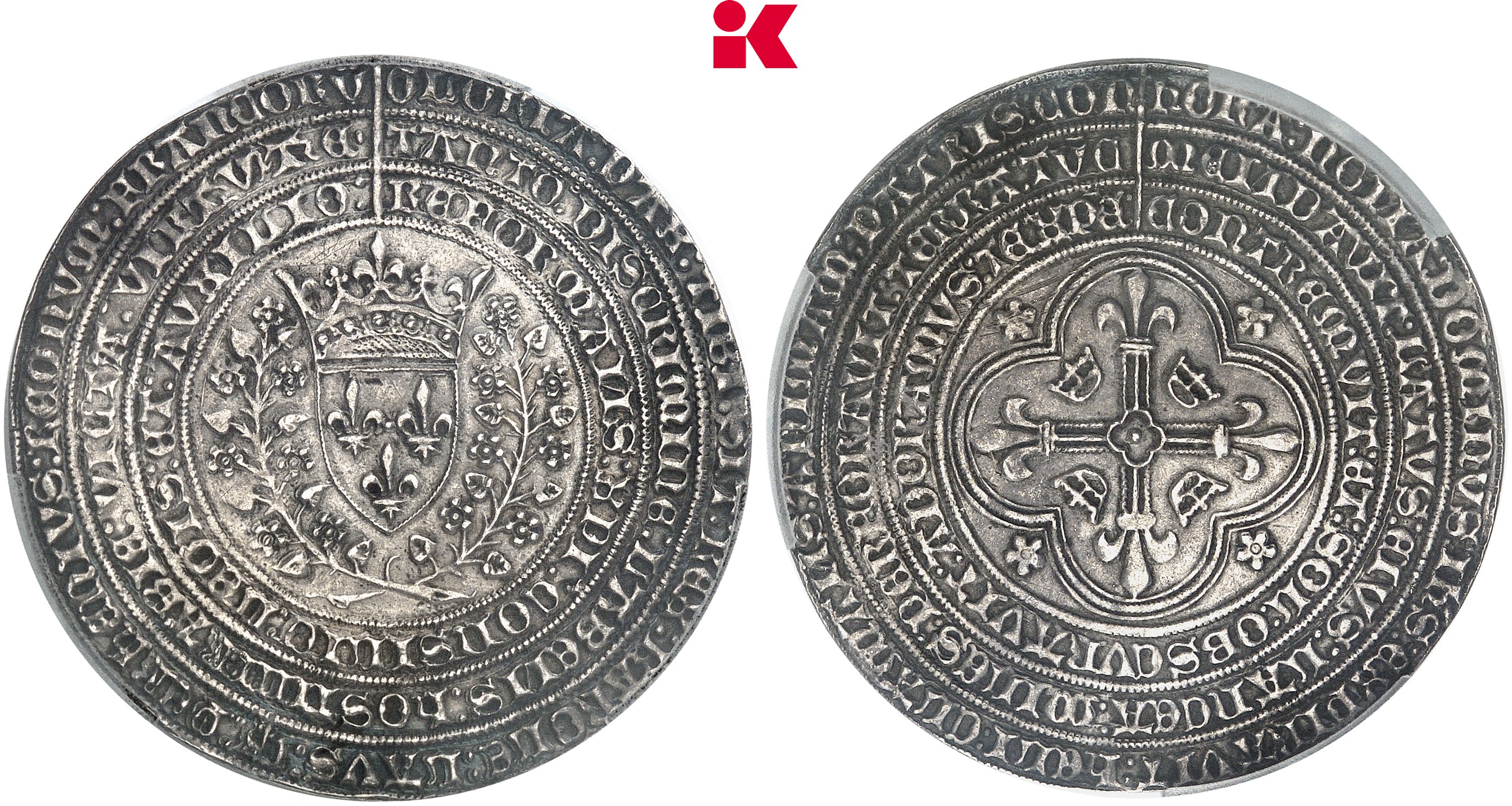
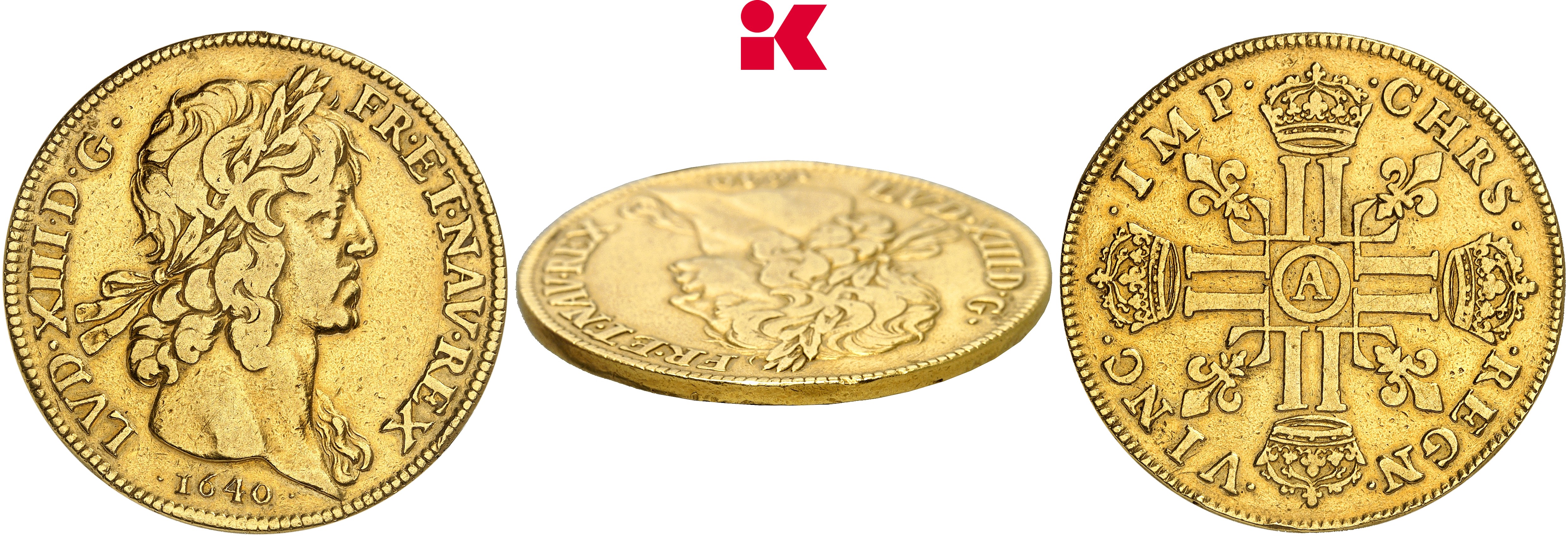
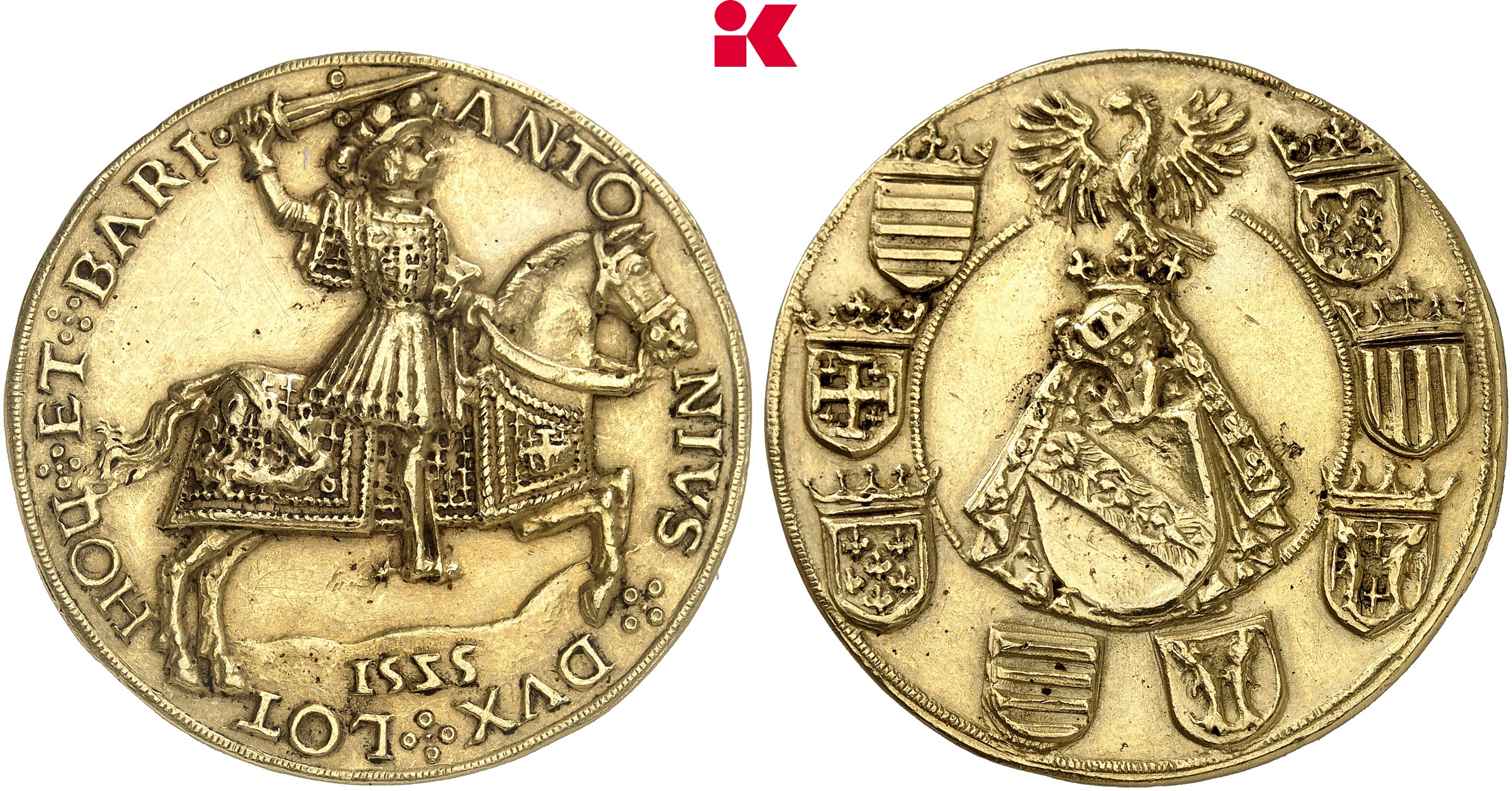
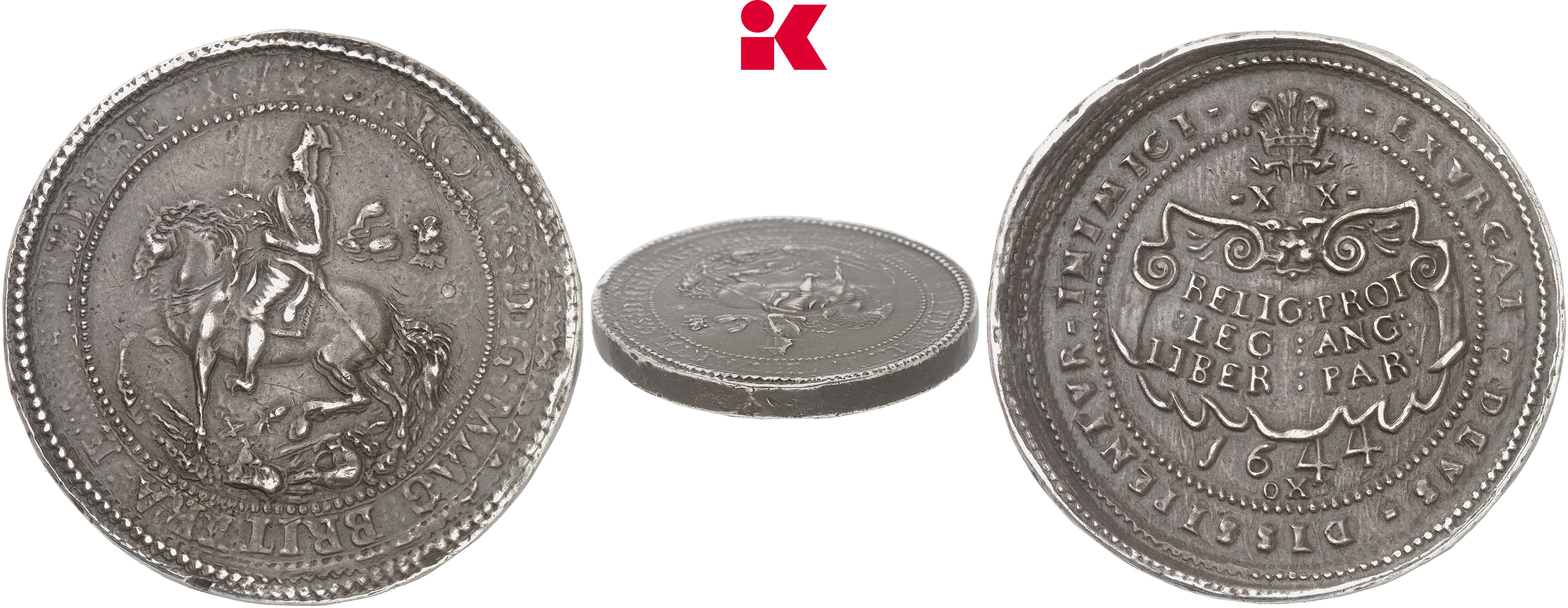
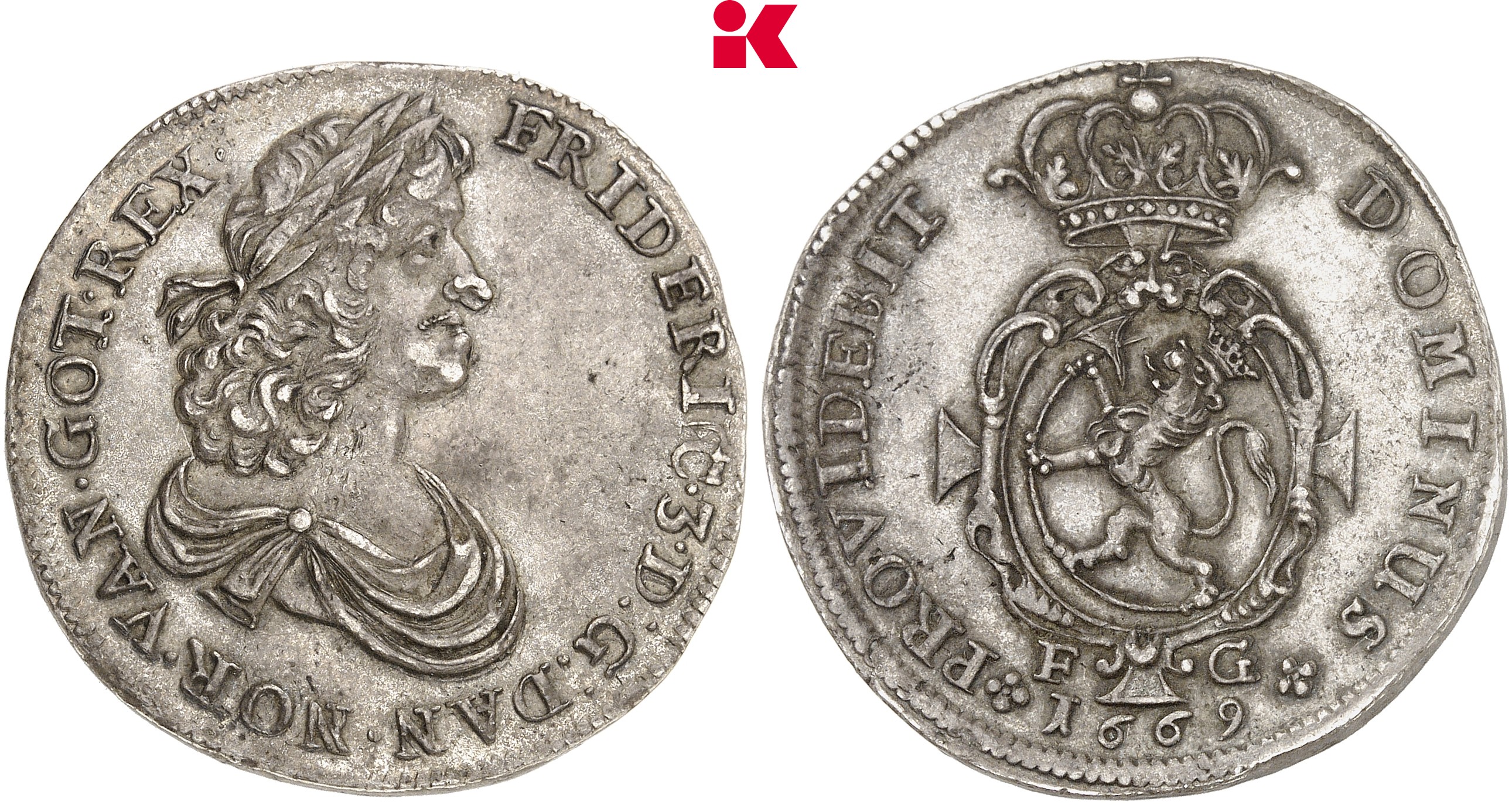
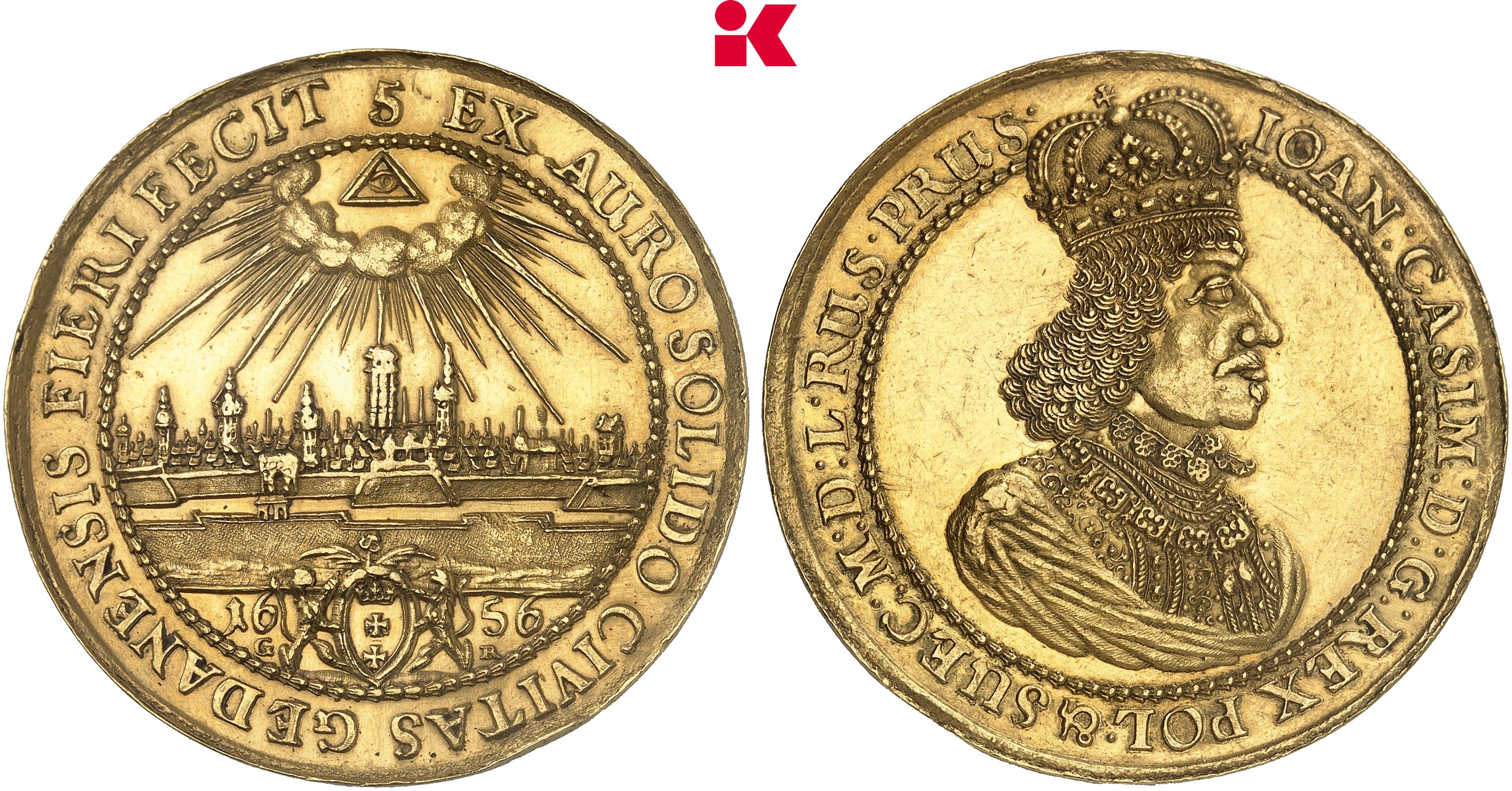
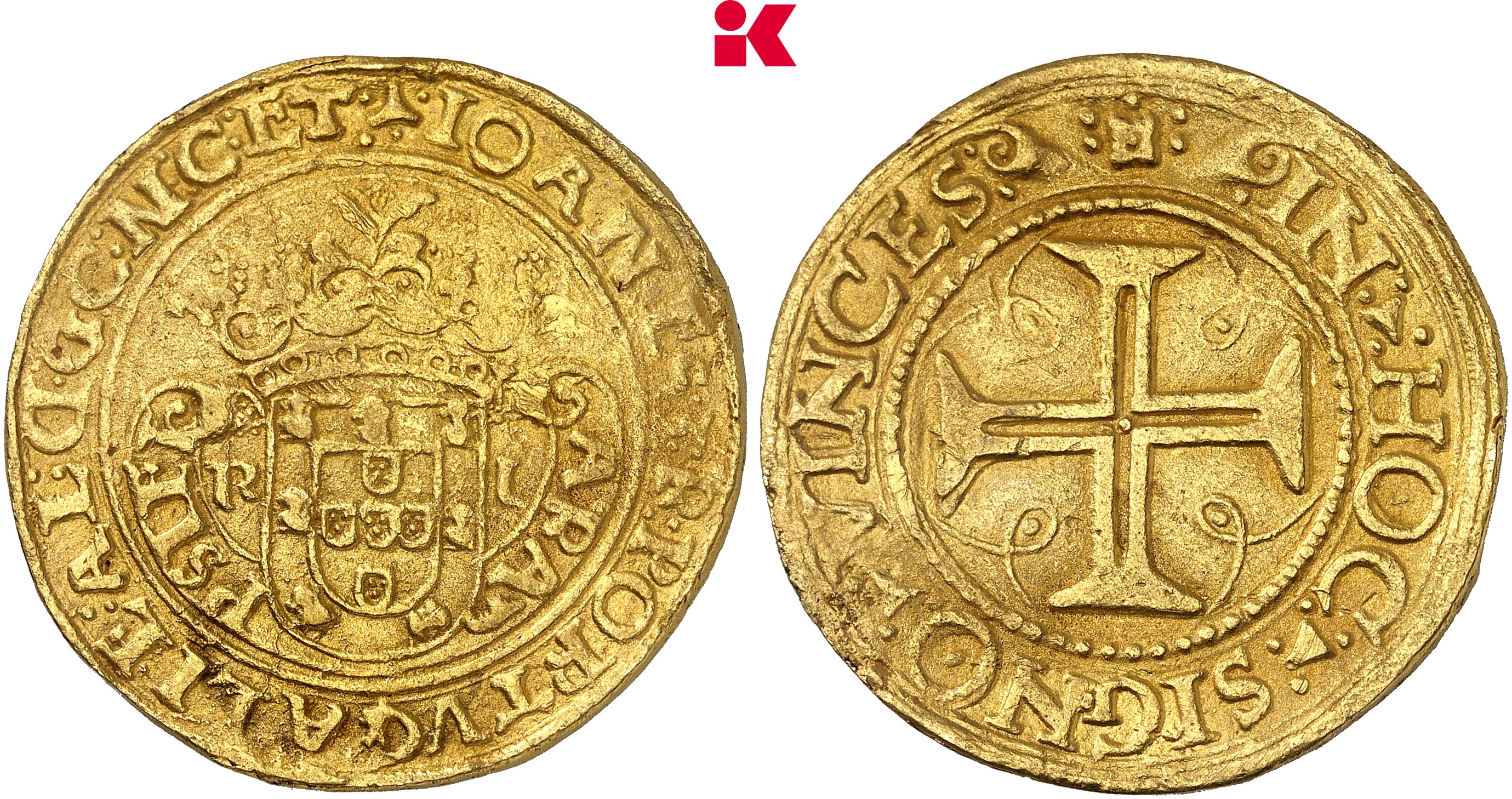
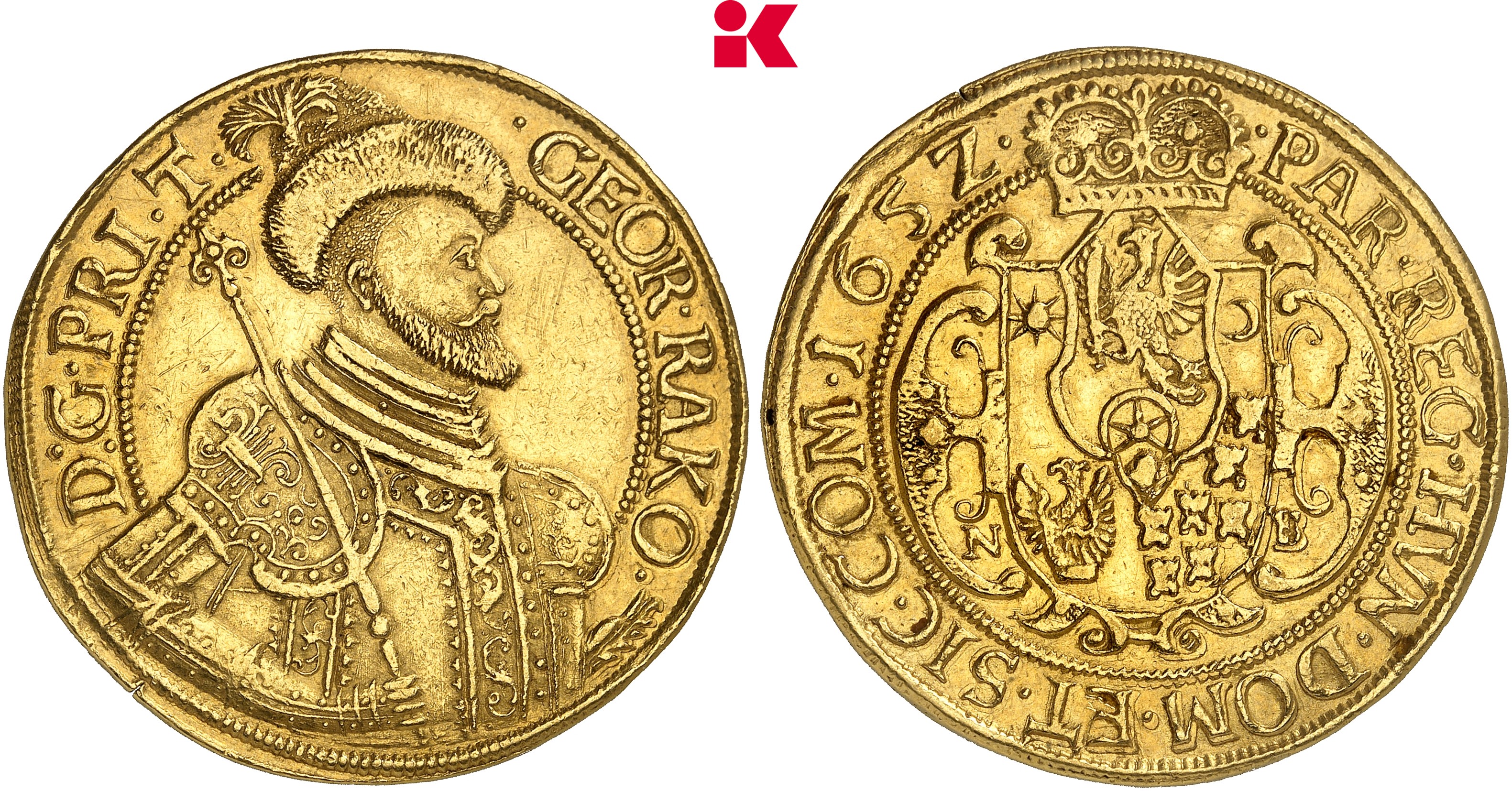
As our customers are used to, the chapter with world issues is rather extensive and features great rarities as well as pieces of great historical importance. A small focus is on issues minted by countries bordering the Baltic Sea such as Denmark, Sweden, Poland and Russia. Numerous numismatic treasures were created during the conflicts over control of the prime areas of this trading region. However, the regions of Flanders and the Netherlands that were already industrialized in the Middle Ages, as well as France and England or rather Great Britain, are also well represented. We present some particularly interesting coins and medals, which offer only a small selection of the wide variety of rarities that await you in auction 437.
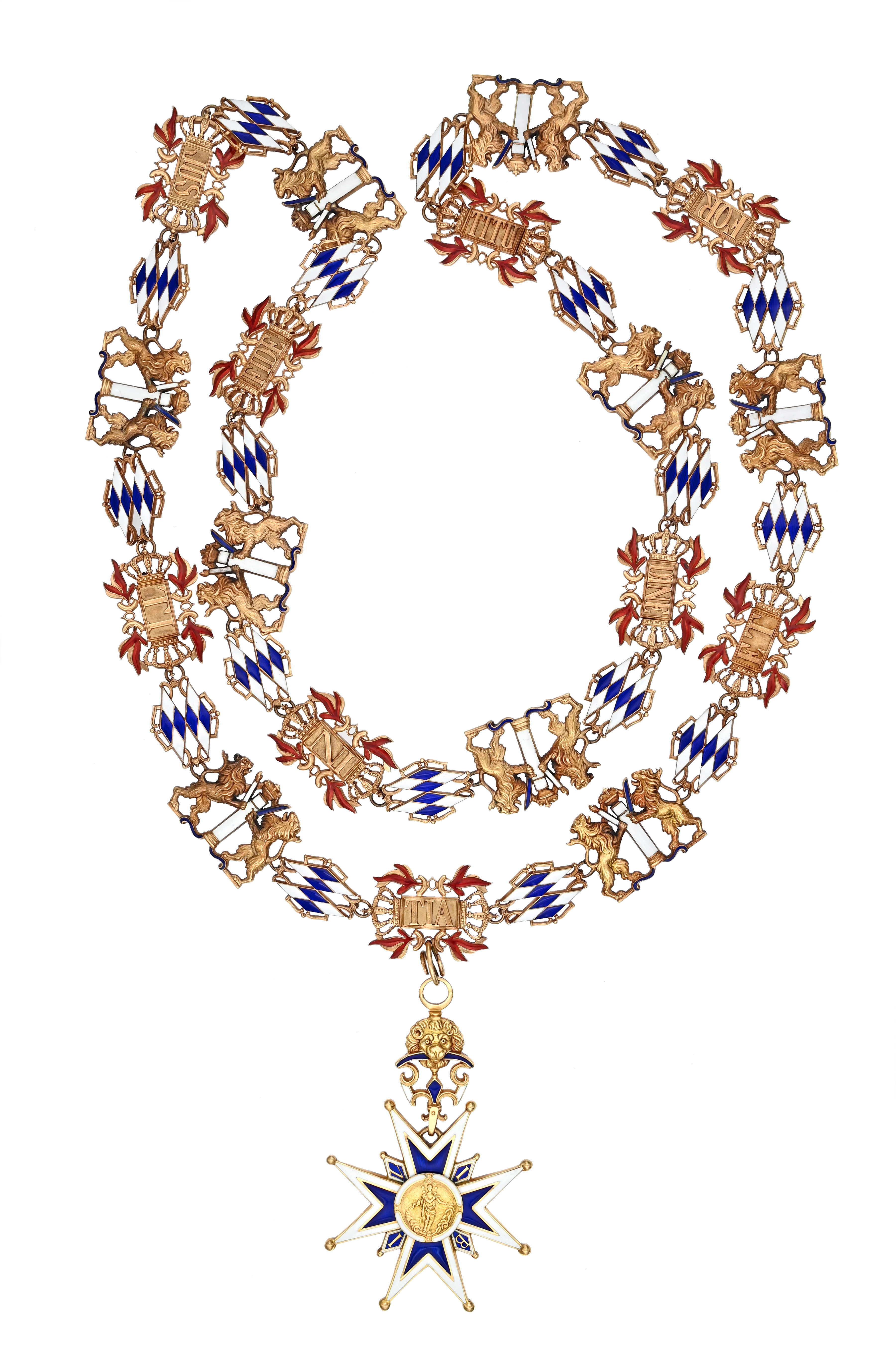
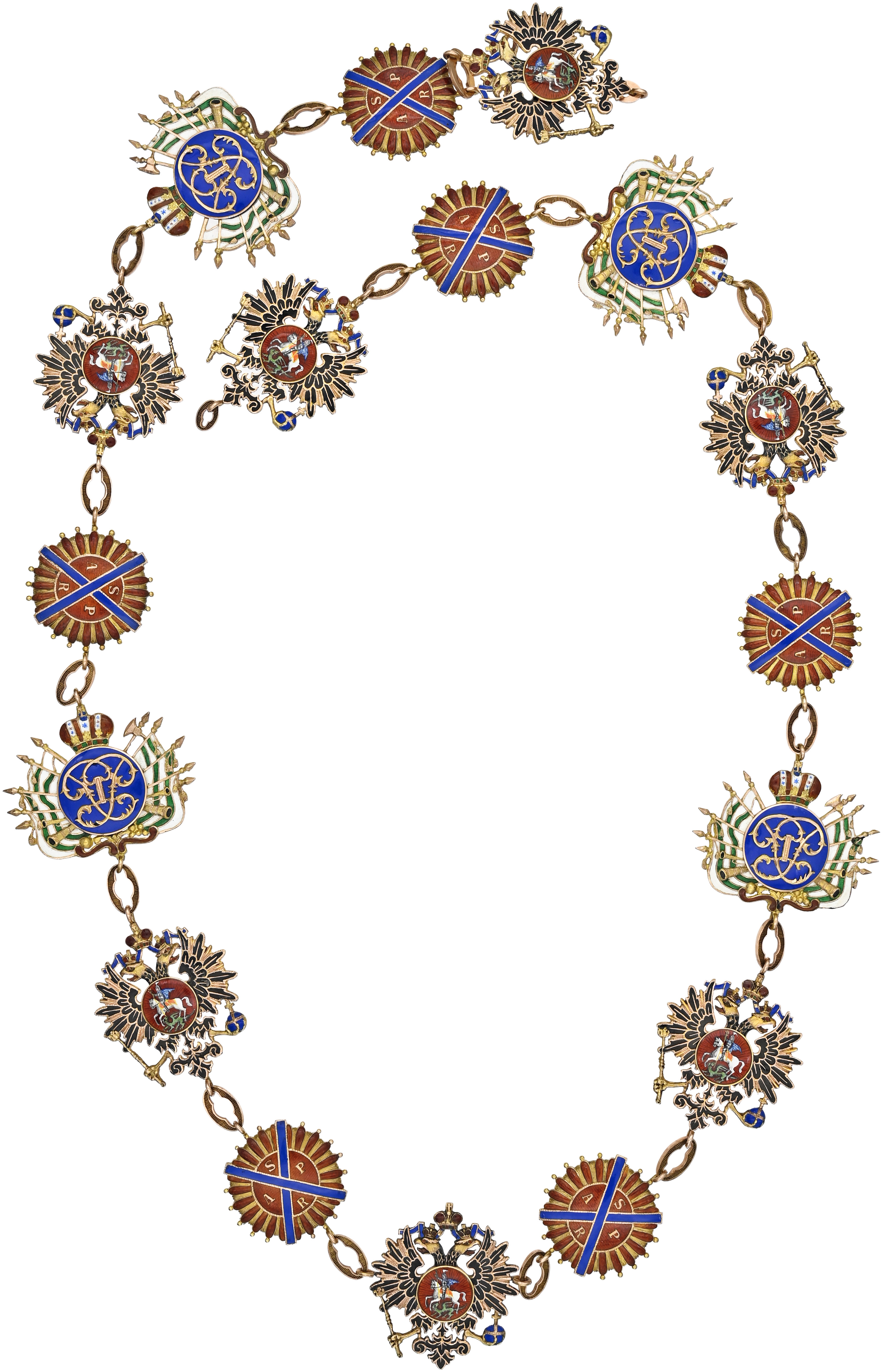
Last but not least,our Auction Sale 437 in Berlin ends with 14 exquisite objects and object groups from the phaleristic field. The highlight of this small but sweet section is a collar of the highest Russian order, the Imperial Order of Saint Andrew the Apostle the First-Called. The hallmark tells us that the piece was created in 1864 by the court supplier Keibel.
We do not know who used to wear the order, but a quick glance at the 1864 list of recipients gives us an idea of the social class of its wearer. Only 13 people were honored with it that year, including not only Russian celebrities but also the Prussian princes Alexander and George, Archduke Stephen of Austria, Grand Duke Karl August of Saxe-Weimar, Prince August Ernst of Hanover, Crown Prince Wilhelm Christian of Denmark and Duke Napoleon August Lannes de Montebello.
Auction Sale 437
Brandenburg-Prussia | Selected Coins and Medals from the German States and the Habsburg Empire | Numismatic Rarities from around the World | A Selection of rare Orders and Decorations
Bidding Sheet Auction Sale 437