

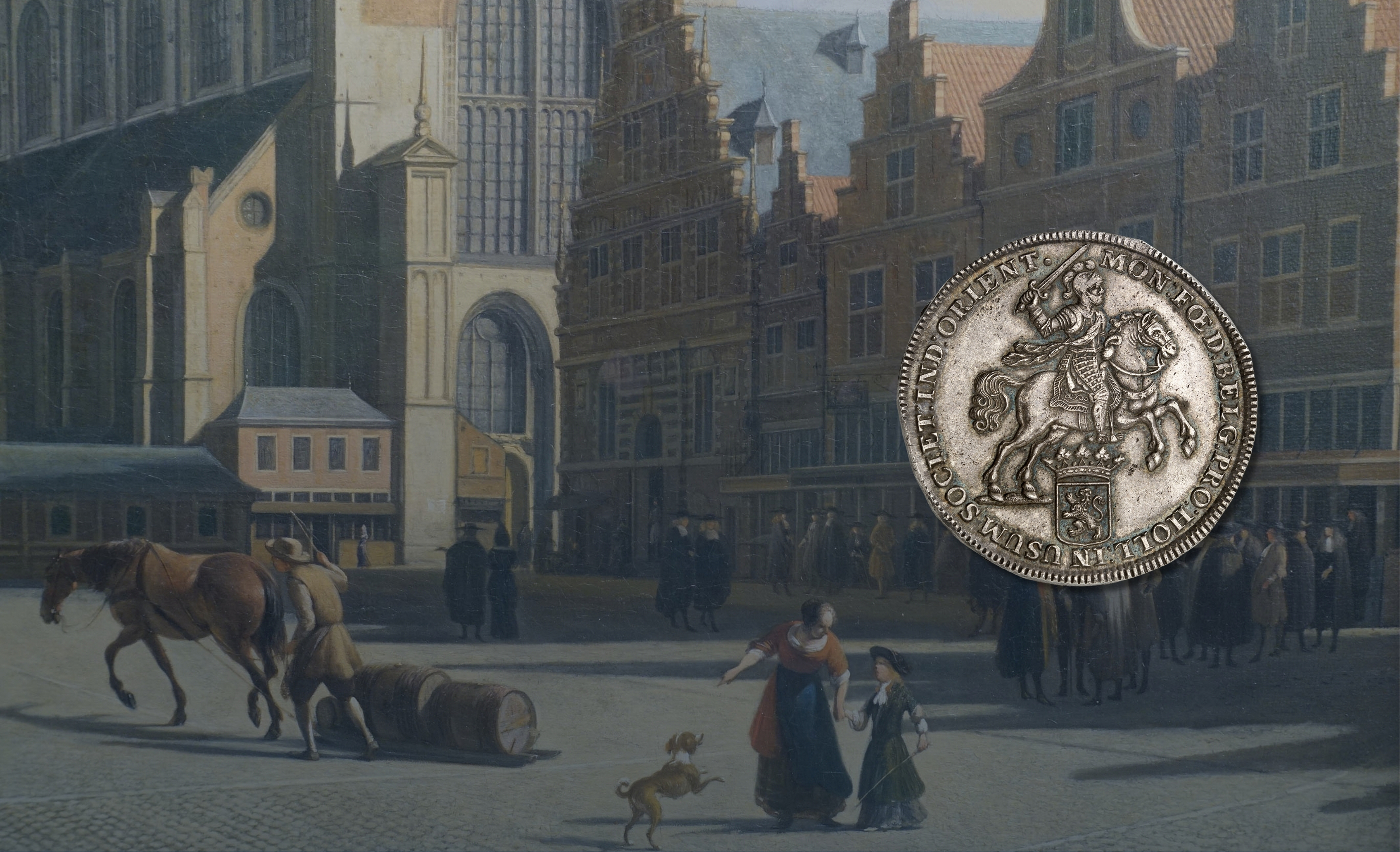
Coins and Medals of the Netherlands
We are proud to have auctioned off three of the most extensive and most significant collections of coins, medals and paper money from the Netherlands in recent years: the Beuth, Verschoor and Genaert Collections. If you own the catalogs of all three collections, you will hardly need any additional literature, as they cover almost every aspect of Dutch numismatics. In addition, interested collectors will find detailed historical and numismatic texts introducing you to the various fields. Our catalogs provide collectors with everything they need to know about Dutch coins.


Collecting Dutch coins and medals has a long-standing tradition. There is a historical reason for this: the Reformation. While Catholics preferred to travel to Catholic Italy, Protestant and Calvinist nobles favored the Netherlands for their grand tours. There, they established relationships with influential aristocrats and merchants, learned a great deal from them about stocks and long-distance trade, and – last but not least – acquired valuable pieces for their own collections. The Netherlands had a well-developed art trade from an early stage, which also included coins and medals. Young nobles particularly enjoyed to buy the numismatic relics of the Dutch struggle for liberation. This explains why so many siege coins minted during the Eighty Years’ War are now on display in public collections. The Dutch were masters of propaganda. They based their coin designs on ancient models, thereby popularizing many symbols that we still associate with freedom today. That is why Dutch coins and medals never fail to fascinate when examined in detail! The fact that coin series produced in the Netherlands were issued so continuously while also being extremely diverse at the same time was due to the extensive trading empire of Dutch companies. There are not only coins from the mother country, but also from the many trading posts operated by the VOC at the time. Or should we rather speak of colonies? It is only gradually becoming apparent today just how ruthlessly the representatives of the first joint-stock company exploited people and nature. As you can see, anyone interested in Dutch numismatics cannot study this field without also studying religious and economic history. And this is precisely what makes Dutch numismatics so exciting.
Like many other countries, the Netherlands has evolved from a variety of different regions. When collecting pieces from the Netherlands, you can either choose a specific region or collect coins from all areas. If you choose the latter, you will eventually need to decide how to arrange them. In a chronological order, thereby separating coins from the same series? Or in the way that has become customary for public coin collections? Following this approach, the different regions are carefully separated from each other. In this chapter, we will introduce you to the various collecting areas and suggest a possible order.
.jpg)
.jpg)
.jpg)
.jpg)
.jpg)
.jpg)
.jpg)
The fact that we refer to the “Netherlands” with a plural “s” indicates that it used to be a confederation of states rather than a single nation. Various entities joined forces to wrest control from the Spanish. Each republic retained its own independent right to mint coins, although the most important denominations could circulate throughout the Netherlands and were standardized for this purpose. This origin is reflected in the numismatic order of coinage from the Netherlands, because even today, coins are not arranged chronologically, but according to the provinces that issued them.
The seven provinces are:
• Holland and West Frisia
• Zeeland
• Utrecht
• Frisia
• Groningen
• Overijssel
• Gelderland
.jpg)
The matter is complicated by the fact that not only the provinces but also individual cities and noble families had the right to mint coins or issue tokens for local purposes. Those who wish to specialize further can choose to focus on one of these cities, some of which issued extensive series. It would be of little use to provide a complete list of the many different entities. Without intending to be exhaustive, we therefore list some of the more common or better-known cities below.
• Amsterdam (Holland)
• Deventer (Overijssel)
• Kampen (Overijssel)
• Nijmegen (Gelderland)
• Vianen (Holland)
• Zutphen (Gelderland)
• Zwolle (Oberijssel)
.jpg)
.jpg)
.jpg)
When referring to coins from the Southern Netherlands, this term encompasses the Catholic regions that are now mainly located in Belgium as well as the Dutch provinces of Limburg and North Brabant. Issues from these areas are often collected separately.
Without trying to be exhaustive, we mention the most important regions below:
• Brabant (Duchy)
• Flanders (County)
• Hainaut (County)
• Loon (County)
• Liège (Bishopric)
• Namur (County)
• Tournai (Dominion)
.jpg)
.jpg)
.jpg)
Dutch siege coins are among the most exciting items to collect. This is because they were always minted during life-or-death struggles. As the name suggests, the pieces were issued in besieged cities to facilitate the exchange of goods as normally as possible. As every mercenary was responsible for their own food, they depended on regular pay. If there was insufficient silver to pay the mercenaries, city authorities issued siege coins to try to prevent mercenaries from looting the civilian population. The Dutch believed that it was very important to communicate their military and human achievements to their fellow believers throughout Europe. Therefore, extensive historical records exist of every single siege in which coins were minted. Dutch siege coins have been collected since the 17th century. The city fathers kept the minting tools in town halls as relics of their history. Shortly after the end of a siege, siege coins were restruck to provide a wide coin-collecting elite with authentic testimonies of Dutch heroism. This is advantageous for today’s collectors because it means that many Dutch siege coins are available in large numbers and can therefore be purchased at a reasonable price.
Even though rare pieces can cost five-figure sums, most siege coins remain in the three-digit and lower four-digit range. The phenomenon of siege and emergency coins is, of course, not limited to the Netherlands. Wherever war interrupted the regular production of coins, such pieces were minted. However, the variety of siege coin produced during the Eighty Years’ War surpasses anything seen in other countries.
.jpg)
.jpg)
.jpg)
Medals, or “historiepenningen” as the Dutch would say, were minted in large quantities throughout the various republics. They are of great interest because the intellectuals of Antwerp, Leiden and Leuven strove to create innovative and emotionally stirring motifs. The fact that the Brutus denarius with the liberty cap is the most expensive ancient coin in the world can be traced back to the Dutch. They rediscovered this motif, re-interpreted it, and equated the Roman nobles’ struggles against Caesar with their struggle against the Spanish. Thus, the art of medal making already had a long tradition in the Netherlands by the time medal production flourished during the Golden Age. The skill of Dutch engravers is impressive indeed. Dutch medals are therefore among the most beautiful things you can collect!
By the way, they are usually not grouped together according to their place of origin, which is often difficult to determine anyway. Instead, medals are treated as a separate field or the pieces are grouped by theme.
.jpg)
.jpg)
.jpg)
.jpg)
It was the French who forced the Netherlands to overcome their local identities and unite as one nation. The history of the modern Netherlands begins with the Batavian Republic. For those who prefer simplicity, this strictly chronological sub-field of Dutch numismatics is highly recommended. Another advantage for beginners is that all coins were machine-minted and can therefore be graded comparatively reliably by grading institutes. This means that very little specialist knowledge is required to get started in this area.
The field divided into:
• Batavian Republic (1795-1806): This refers to the coins of the short-lived French satellite state. Within the Batavian Republic, the coins are further divided according to the provinces.
• Kingdom of Holland (1806-1810): This period covers the reign of Louis Napoleon.
• Netherlands under French rule (1810-1814): During these four years, the Netherlands was integrated into the Napoleonic Empire.
• Kingdom of the Netherlands (since 1815): Since 1815, the Netherlands has been ruled continuously by members of the House of Oranje-Nassau.
.jpg)
.jpg)
If you suffer from wanderlust or are interested in economic history, then collecting coins from the Dutch overseas territories is the right fit for you. You can also choose to specialize in a specific region.
A basic division is made between:
• Dutch East Indies
• Dutch West Indies with Curacao, Saint Eustatius, Surinam and the Dutch Antilles
.jpg)
.jpg)
.jpg)
And then, of course, there is Dutch paper money – a field that offers much more variety than the banknotes of most other countries.
A Bonaparte on Holland’s Coins
On 27 September 2022, we have auctioned off the collection of the Verschoor brothers. It contained what was probably one of the most important collections of coins from the Kingdom of Holland. Read about the fate of the short-lived kingdom and the numerous problems King Lodewijk had to deal with when introducing his new coins.
Bloody Flag and Scheepjesschelling
On 9 November 1670, the States of Holland and West Frisia decided to introduce a new coin. It depicts a ship with a very particular flag, the so-called Bloody Flag. We tell you more about the historical background.
The Lodewijk S. Beuth Collection: Coins of the Netherlands
In October 2023, the first part of the Lodewijk S. Beuth Collection was auctioned off in collaboration with Laurens Schulman B.V. On this occasion, we published an article on the collection that presented some of the most interesting coins from Auction Sale 393.
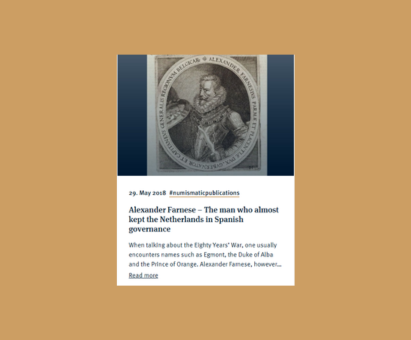
Alexander Farnese – The man who almost kept the Netherlands in Spanish governance
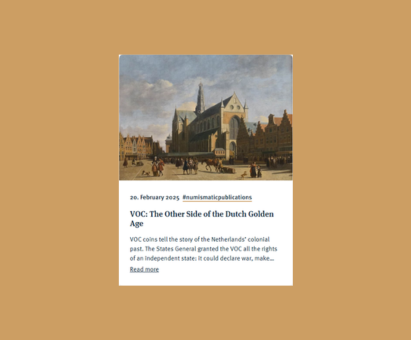
VOC: The Other Side of the Dutch Golden Age
VOC coins tell the story of the Netherlands’ colonial past. The States General granted the VOC all the rights of an independent state: it could declare war, make treaties and issue its own currency. Join us on a trip to Indonesia, the place where the spices grew that financed the Dutch Golden Age.
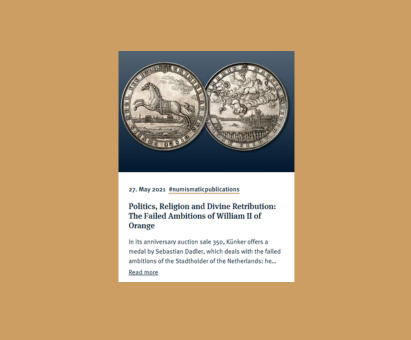
Politics, Religion and Divine Retribution: The Failed Ambitions of William II of Orange
In its anniversary auction sale 350, we offered a medal by Sebastian Dadler, which deals with the failed ambitions of the Stadtholder of the Netherlands: he would have liked for the Eighty Years’ War to go on for a bit longer.
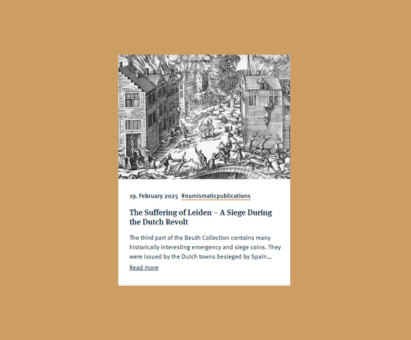
The Suffering of Leiden – A Siege During the Dutch Revolt
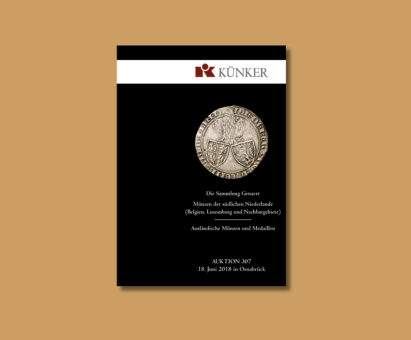
Auction Sale 307
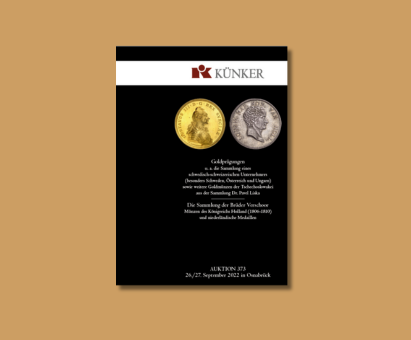
Auction Sale 373
26/27 September 2022 in Osnabrück
The Collection of the Verschoor Brothers: Coins of the Kingdom of Holland (1806-1810) and Dutch Medals
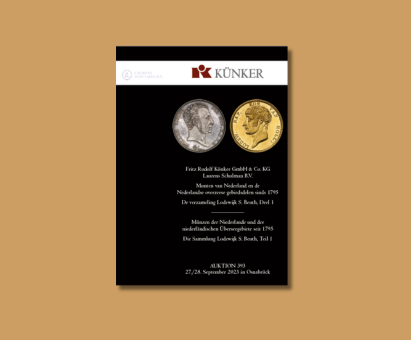
Auction Sale 393
27/28 September 2023 in Osnabrück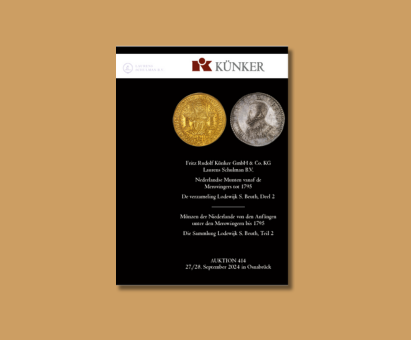
Auction Sale 414
27/28 September 2024 in Osnabrück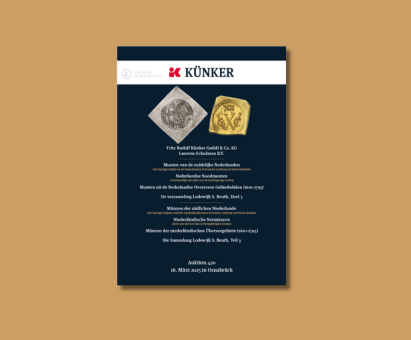
Auction Sale 420
18 March 2015 in Osnabrück

Historiepenningen of Auction Sale 387
Medals from the Netherlands (Auction Sale 373)
Dutch rarities from the King Farouk Collection of Auction Sale 393
Dutch siege coins from Auction Sale 420 (Beuth Collection, Part 3)
Highlights from Auction Sale 429 (The Henk Verschoor Collection)
Highlights from eLive Premium Auction 430 (Paper Money of the Netherlands)Highlights of the Lodewijk S. Beuth Collection (Auction Sale 414)
Medieval gold coins from the Netherlands (Auction Sale 414)
The most beautiful talers from the Netherlands of Auction Sale 414
Highlights of Auction Sale 420 (Lodewijk Beuth Collection, Part 3)